English
 Türkçe

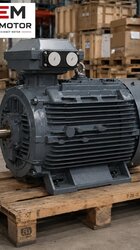

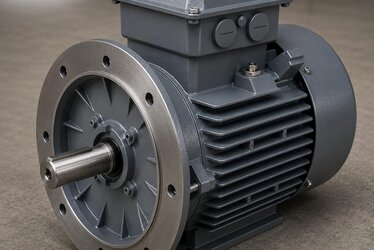
The 132 kW and 160 kW power class represents an important threshold in industrial electric motors. These powers appear frequently in large pumps, fans, compressors, conveyors, crushers and general process drives, and now fully exhibit the behavior of the high-power class. Motor selection in this class requires making a series of decisions correctly: from pole count and speed choice to frame size, from the IE3 efficiency mandate to starting and cooling strategy, to stock and lead-time planning. A poorly chosen motor can lead to starting problems on site, insufficient cooling or unnecessary energy consumption.
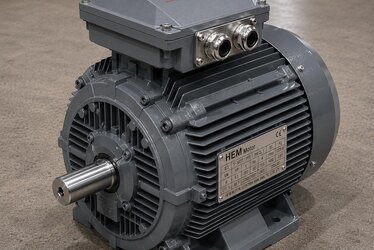
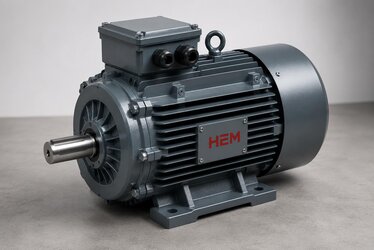
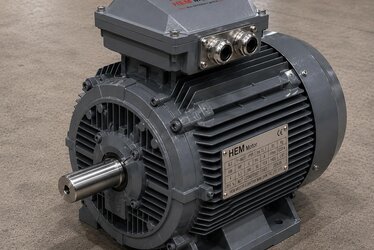
At HEM Motor, in supplying 132 kW and 160 kW IE3 motors, we aim to help our customers receive the right power in the right configuration and benefit from a fast-delivery advantage. In this article we examine pole/speed selection in these two power classes, frame choice (around 315), the IE3 efficiency mandate, starting and cooling at high power, and stock and lead-time planning from an engineering perspective.
IE3 Efficiency Class: Why Is It Mandatory?
IE3 means "Premium Efficiency" class and is now a legal requirement for motors in this power range. European and Turkish legislation requires three-phase asynchronous motors in certain power ranges to be at least IE3 efficiency class; 132 kW and 160 kW fall right within this scope. An IE3 motor runs with lower losses than its lower-efficiency counterparts; at high power this means significant savings in annual energy consumption.
The importance of efficiency grows even more at high power. When a 132 kW or 160 kW motor runs continuously, its annual consumption is very high; every point of efficiency turns into a large difference in the lifetime energy bill. So IE3 is the right choice both by legislation and economically. We covered the legislative framework of the IE3 efficiency mandate in our efficiency class mandate article.
Pole Count and Speed: 2, 4 or 6 Poles
In 132 kW and 160 kW motors, speed selection is made according to the speed and torque profile the application requires. There are three common options:
- 2-pole (~2980 rpm): High speed. Suitable for large compressors, high-speed pumps and some fans.
- 4-pole (~1485 rpm): The most common choice. Provides balanced speed and torque in pumps, fans, conveyors and general drives.
- 6-pole (~990 rpm): Low speed, high torque. Preferred in heavy drives, mills and processes requiring low speed.
Pole choice affects not only speed but also frame size, weight and starting behavior. At the same power, low-speed (more-pole) motors are generally in a larger frame and heavier; because producing the same power at lower speed requires higher torque and more material. The correct speed is determined by the need of the driven machine.
| Power | Pole / Speed (rpm) | Typical Frame | Typical Application |
|---|---|---|---|
| 132 kW | 2 / ~2975 | 315 | Compressor, high-speed pump |
| 132 kW | 4 / ~1485 | 315 | Pump, fan, conveyor |
| 132 kW | 6 / ~990 | 315 | Heavy drive, mill |
| 160 kW | 2 / ~2975 | 315 | Large compressor |
| 160 kW | 4 / ~1485 | 315 | Large pump/fan, process drive |
| 160 kW | 6 / ~990 | 315-355 | Low-speed heavy drive |
Frame values are typical; the exact frame may vary with manufacturer series and mounting form.
Frame Selection: Around 315 and the Reality of Weight
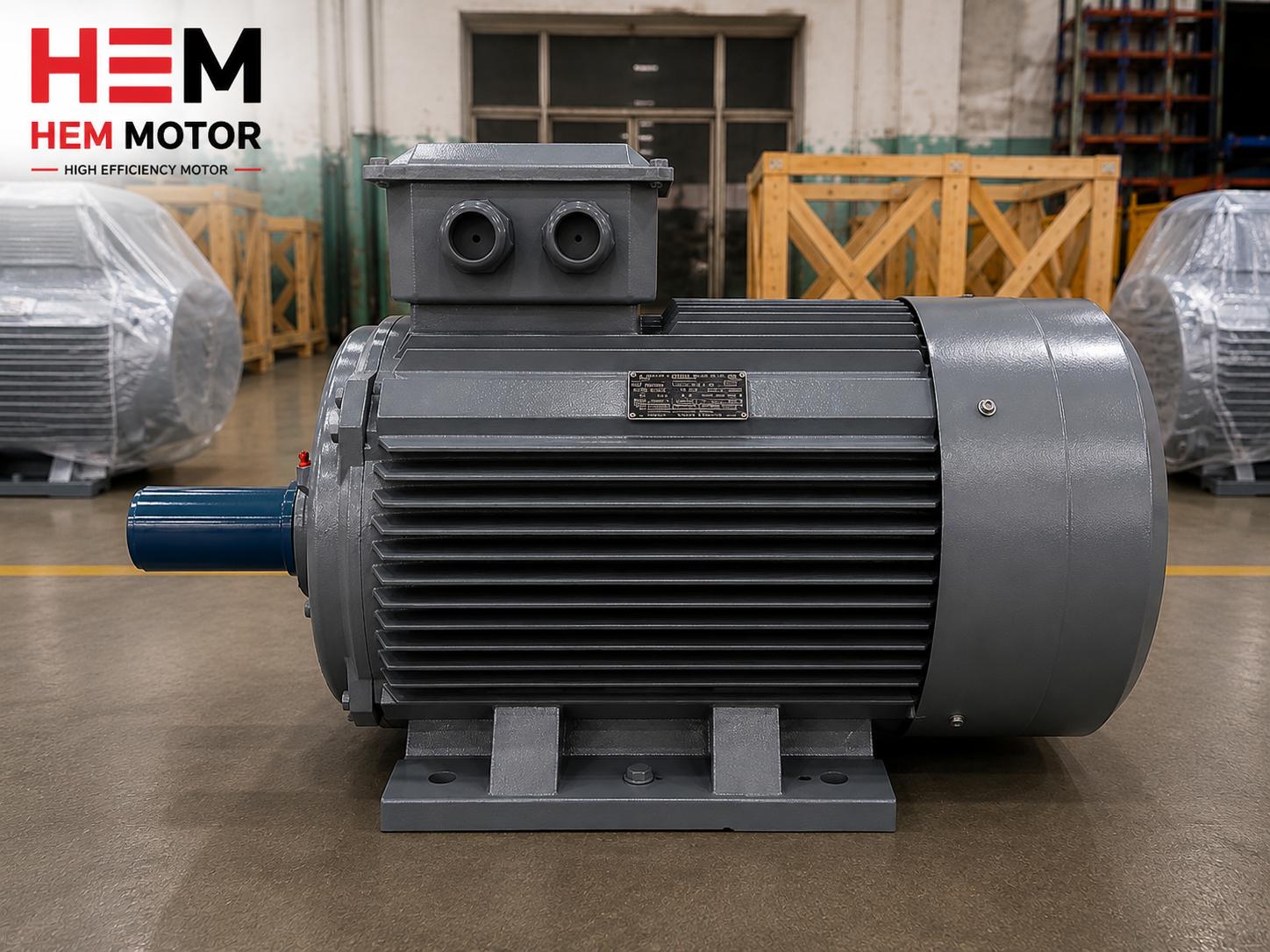
132 kW and 160 kW motors usually fall in the 315 frame class in the IEC frame system; some low-speed versions of 160 kW may move to the 355 frame. In this frame class the motor weight exceeds a ton, and installation, lifting and foundation design must be planned seriously. Frame size determines not only electrical performance but also shaft diameter, mounting dimensions and coupling selection.
At this power, shaft diameter and frame dimensions are critically important for compatibility with the driven machine. We covered the shaft diameter and frame table subject in our shaft diameter and frame table article. For weight and installation planning, the capacity of lifting eyebolts and crane access must also be evaluated from the outset.
Starting at High Power
132 kW and 160 kW motors are not suitable for direct (DOL) starting on most grids; the starting current reaches 6-7 times the rated current and can cause voltage dips, protection trips and mechanical shock. So at this power a soft-starting method is usually used: star-delta, softstarter or variable frequency drive. The method choice depends on the load's inertia, starting torque demand and grid capacity.
Star-delta is a simple and economical method but may be insufficient for loads with high torque demand. A softstarter provides a smoother and more controlled start. A VFD is preferred when both soft start and speed control are required. We covered the relationship between starting torque and rated torque in our starting torque article, and softstarter compatibility in our softstarter compatibility article.
Energy Efficiency and Payback
In the 132 kW and 160 kW class, efficiency must be at the center of the purchasing decision. A motor running continuously at this power consumes a very large amount of energy throughout the year; even a one-point difference in efficiency corresponds to a notable sum in the annual bill. An IE3 motor, though slightly more expensive in the initial investment than a lower-efficiency counterpart, more than pays back this difference through energy savings across its operating life. For this reason, making a high-power motor selection based only on the label price is often the most expensive option.
When calculating payback, the motor's annual operating hours, load ratio and unit energy price are considered. In a motor running continuously near full load, the payback period of a higher-efficiency choice is usually quite short. At HEM Motor we offer our customers this holistic cost view, helping them target not the lowest label price but the lowest lifetime cost. The correct efficiency class is the most profitable investment at high power.
Cooling and Protection
Removing the heat generated at high power effectively is critical. 132 kW and 160 kW motors are usually designed with shaft-end fan air cooling (IC411); this is sufficient for most applications. In situations with limited ventilation or high ambient temperature, water-cooled or forced-fan-cooled versions can be considered. Winding insulation is usually Class F and dimensioned with Class B temperature rise to leave a safety margin.
At this power, protection equipment is almost standard: PTC thermistors or PT100 sensors monitor winding and bearing temperature; an anti-condensation heater is recommended for motors that will sit in stock for a long time. These options ensure the motor's safe and long-life operation. For a broader IE3 stock guide, see our IE3 stock guide article.
Correctly Determining the Order Code and Options
Buying the right product in a high-power motor does not end with selecting power and speed; the order type code and options must be specified completely. Options such as mounting form (B3 foot-mounted, B5 flange-mounted, B35 combined), terminal box orientation, protection class, thermal sensor type (PTC/PT100), heater, forced-cooling fan and encoder ensure the motor fits the application exactly. If these details are not clarified at the quotation stage, it can cause incompatibility and delay on site.
Especially if the motor of an imported machine is to be replaced, the existing motor's mounting dimensions, shaft diameter and connection form must be carefully compared. Correctly decoding the order code prevents the wrong product arriving and speeds up the delivery process. At HEM Motor, we create the order code together with our customers, ensuring the arriving motor is correct and compatible the first time. This diligence is the most effective way to prevent time and cost loss in high-power motors.
Stock and Lead Time: The Importance of Fast Delivery
132 kW and 160 kW motors are stocked less frequently than smaller powers; therefore the supplier's stock depth and lead-time plan carry great importance. The failure of a high-power motor on a production line causes serious production loss when a fast replacement motor is not available. For this reason, the ability to supply the correct power-speed-frame combination from stock or with a short lead time is critical for operational continuity.
At HEM Motor, with our manufacturer stock and fast-delivery advantage in high-power IE3 motors, we aim to meet both the planned investments and urgent replacement needs of facilities. For options in other high-power classes, see our 90 and 110 kW IE3 motor article.
What Does the Difference Between 132 kW and 160 kW Mean?
Although these two power classes look close to each other, they create important differences in selection. The roughly 21% power difference between 132 kW and 160 kW can often be met in the same frame class (315); this means moving up to 160 kW does not bring a large mechanical cost jump. Therefore, in a borderline application, choosing the higher power class can be sensible to leave a safe margin against future load increases. Running the motor not continuously at full load but slightly below is generally advantageous for both efficiency and life.
However, one must not overdo this decision. A motor selected too large runs at a low power factor under light load and its efficiency can fall below its optimum point. The correct approach is to analyze the real load profile and select the motor to suit this profile. At HEM Motor, we help our customers make the right decision between 132 kW and 160 kW by evaluating not only the instantaneous power need but also the load profile and future growth plans together.
Load Profile and Duty Type
Correctly sizing a high-power motor depends not only on the peak power value but also on the duty type. A pump running continuously at constant load (S1 duty) and a process with frequent stop-start or variable load must be evaluated differently even at the same power. Frequent starting affects the motor's heating behavior and therefore its selection. So before selection, the application's daily operating profile, starting frequency and load variability must be clarified.
In variable-load applications, using a VFD provides energy savings through both soft starting and load-tracking operation. In constant-load applications, a simple softstarter or star-delta may suffice. The correct duty type definition guarantees the motor is selected neither unnecessarily large nor insufficient, and optimizes total cost.
Installation, Alignment and Commissioning
Installing these motors weighing over a ton requires a different discipline from small motors. The alignment between the motor and the driven machine must be done precisely with a laser alignment device; misalignment shortens bearing life, increases vibration and causes energy loss. A solid foundation, correctly torqued anchor bolts and a suitable coupling selection are the basis of the motor's long-life operation. At this power, vibration is one of the most frequent sources of problems on site and must be measured and recorded during commissioning.
On receipt, the motor's packaging, shaft direction and insulation resistance (megger measurement) must be checked; in a motor that has sat in stock for a long time, insulation resistance may have dropped due to moisture. At first start, the direction of rotation, phase sequence, vibration and temperature values are measured and recorded. This systematic acceptance and commissioning discipline prevents unplanned failures and ensures the motor delivers its expected life.
Frequently Asked Questions
In which frame do 132 and 160 kW motors come?
These two power classes usually fall in the IEC 315 frame class; some low-speed (6-pole) versions of 160 kW may move to the 355 frame. Frame size varies with speed and mounting form. The compatibility of shaft diameter and mounting dimensions with the driven machine is the most important point to watch in frame selection. The correct frame is critical for both mechanical fit and weight planning.
Is direct starting possible at this power?
It is not recommended on most grids. The starting current of 132 and 160 kW motors reaches 6-7 times the rated current and can cause voltage dips, protection trips and mechanical shock. So a soft-starting method such as star-delta, softstarter or VFD is usually used. The correct method is determined by the load's inertia, starting torque demand and grid capacity.
Can a lower-efficiency motor be bought instead of IE3?
No. In this power range the IE3 efficiency class is a legal requirement; lower-efficiency motors cannot be placed on the market. Moreover, at high power efficiency is the biggest determinant of lifetime energy cost; IE3 is the right choice both legally and economically. An IE3 motor more than pays back the efficiency difference over the years compared with a lower-efficiency counterpart.
Let us supply your 132 or 160 kW motor with fast delivery. At HEM Motor, in high-power IE3 motors, we determine the correct speed, frame and starting configuration together and offer solutions with the advantage of manufacturer stock and fast delivery. Share your application's speed and torque need; get a quote for the right motor and fast delivery.