English
 Türkçe

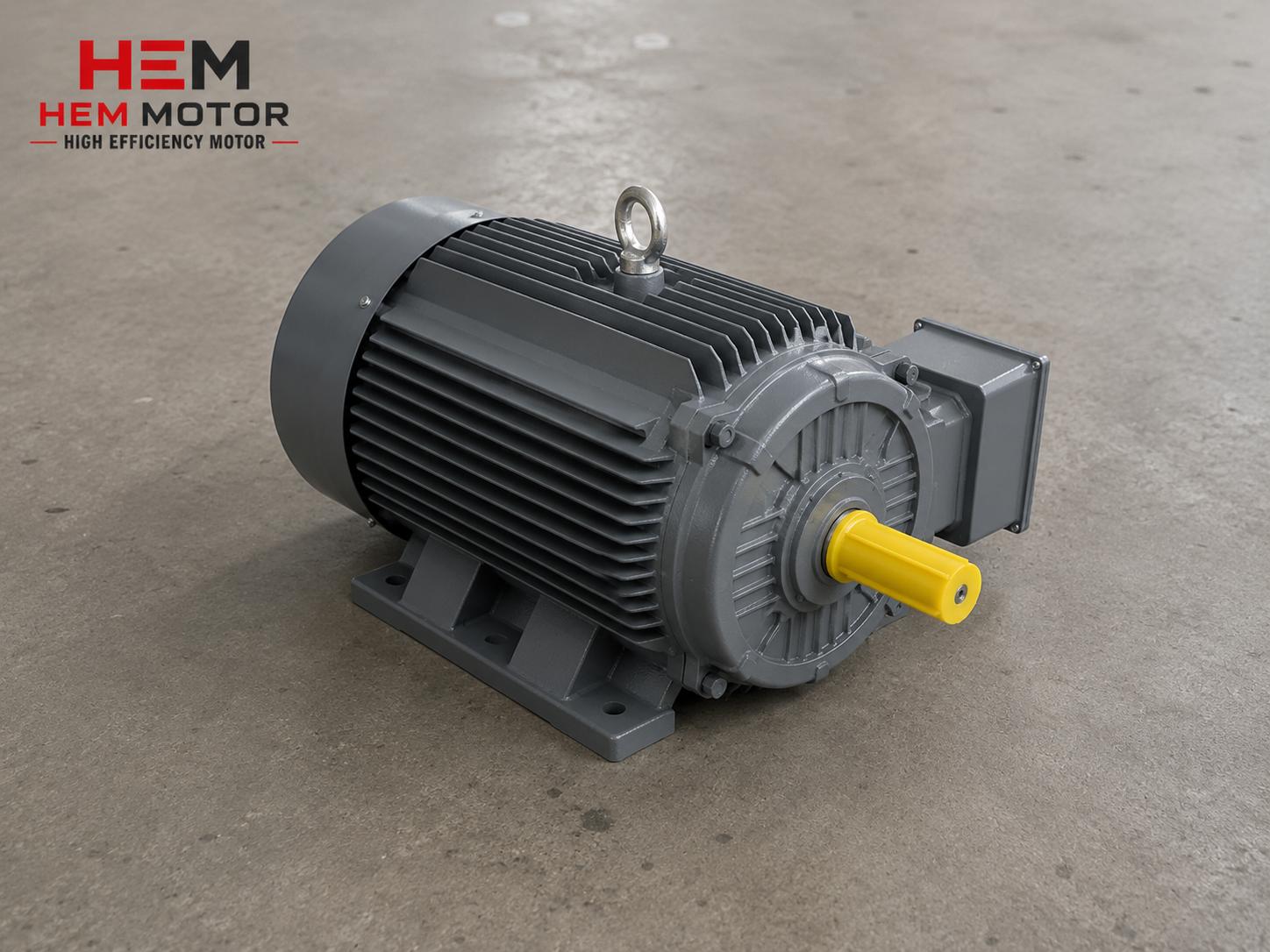

For an IE3 motor working in high-humidity, tropical or coastal environments, the greatest enemy is not load but moisture. When the temperature changes during the day and the motor goes idle, the air inside the frame cools and the moisture it contains condenses as water droplets on the winding surface. This invisible water lowers the insulation resistance, weakens the winding over time, and eventually causes the motor to fail on the first start one day. This is precisely why two basic protections stand out when selecting an IE3 motor for humid and outdoor applications: winding tropicalization (additional protective varnish/impregnation) and a space heater (anti-condensation heating element) that prevents condensation while the motor is idle. This article covers what tropicalization is, how the space heater works and is wired, its relationship with IP protection, and how to order these options in seasonal/outdoor IE3 motors.
Why Are Moisture and Condensation the Motor's Enemy?
While a motor runs, its windings heat up and the air inside the frame expands. When the motor stops, the frame cools, the air inside contracts and humid air is drawn in from outside. This cycle repeats with every stop-start. If the ambient humidity is high, the moisture inside the cooling frame drops below the dew point and forms water droplets on the winding and metal surfaces. This condensation is the greatest threat to the insulation.
The first effect of condensation is a drop in insulation resistance. When the insulation between winding and frame weakens, leakage currents begin; over time this can break down the winding insulation and cause the motor to burn out. In motors stored or running in humid environments, it is therefore recommended to measure the insulation resistance regularly. This check is explained in detail in our article on insulation resistance and the megger test. For moisture and bearings in long-stored motors, our article on motor storage, moisture and bearings is also an important resource.
When Does Condensation Form the Most?
The risk of condensation increases when the temperature difference is greatest. Outdoor motors that heat up during the day and cool at night, motors that stop after a hot process, and systems suddenly put into service during season changes experience condensation the most. Especially if the motor is to be started after a long standstill, the moisture accumulated inside the frame may have seriously lowered the insulation resistance. If the motor is started directly in this state, the weakened insulation can break down on the first energisation and the winding can burn out. The space heater exists precisely to eliminate this risk: by keeping the inside of the frame dry throughout standstill, it keeps the motor always ready to run.
Tropicalization: Extra Protection for the Winding
Tropicalization is the process of coating the motor winding with additional protective varnish or impregnation against moisture, mould, salt and chemical effects. The winding of a standard motor is already protected with insulating varnish; in a tropicalized motor, this protective layer is reinforced to withstand high humidity and aggressive environments. This way the winding retains its insulation for a long time even when exposed to continuously humid or salty air.
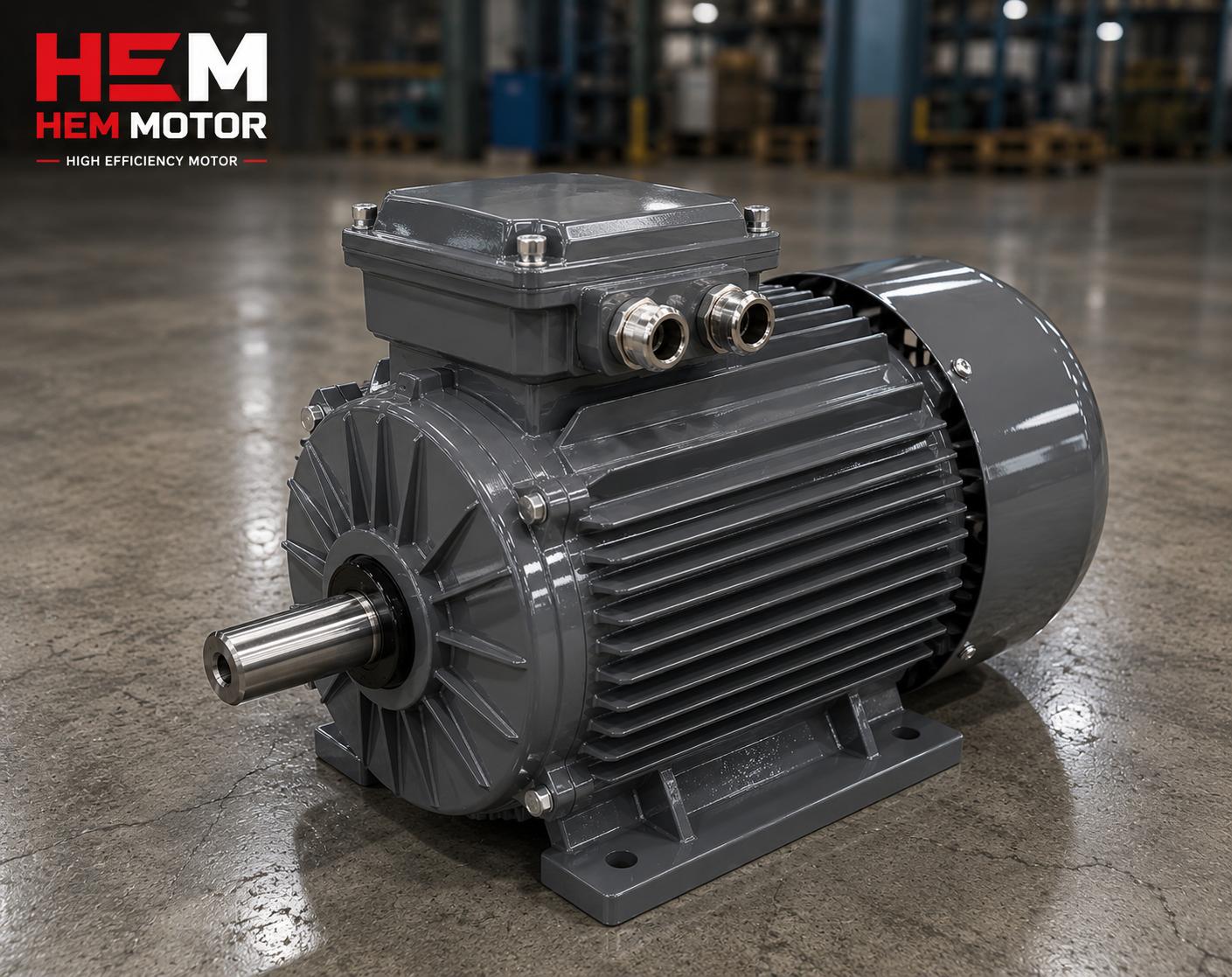
Tropicalization is especially necessary in environments such as tropical climates, the coast, cold storage, food washdown lines and chemical processes. When the winding insulation class (F or H) and tropicalization are considered together, the motor is strengthened in terms of both thermal and moisture resistance. For the effect of insulation class on life, our article on winding and insulation class (F/H) in IE3 motors provides basic information.
The protection that tropicalization provides is not limited to moisture alone. The additional varnish layer also protects the winding against fungus and mould growth, salty-air corrosion and some chemical vapours. For this reason, tropicalized motors become a standard choice in sectors such as food, chemicals and marine. Tropicalization does not change the visible performance of the motor; it does not affect power, speed or efficiency. Its effect appears in the long term, in the motor running for years in a humid environment while preserving its insulation. This makes it an invisible but very valuable investment.
Space Heater (Anti-Condensation Heater): Preventing Condensation
A space heater is a small heating element that keeps the inside of the frame a few degrees warmer than the surroundings when the motor stops, preventing condensation. This resistor, placed inside the motor usually under the winding, is energised when the motor stops and keeps the air inside the frame above the dew point, preventing moisture from condensing. Because the motor already heats up while running, the space heater is disabled; it only cuts in during standstill.
A space heater is very valuable especially for motors that stand idle for long periods or run seasonally. A fire pump motor on standby, an irrigation pump idle in winter, or an outdoor fan idle at night runs with dry, healthy insulation at every start-up thanks to the space heater. This greatly reduces the risk of the motor failing on the first start.
How Is a Space Heater Wired?
The space heater is fed by a separate supply line independent of the motor's main supply and is usually interlocked with the motor contactor: it is controlled so that the heater is off while the motor runs and on while the motor is idle. This interlock is provided with a simple auxiliary contact and relay. The heater's supply voltage (for example 230 V) and power are stated on the motor nameplate or wiring diagram; these values must be observed in panel design.
The space heater connection is present in the motor terminal box as separate terminals. Correctly controlling these terminals on the panel side is essential for the system to perform its function. On accessory options and stating them at the order stage, our article on accessory options in IE3 motors provides a useful framework.
The Relationship With IP Protection
Moisture protection is not limited to tropicalization and a space heater; the motor's IP protection class also determines moisture and water ingress. At least IP55 is standard in outdoor and humid applications; if there is direct water spray or washdown, higher protection is requested. However, while IP protection blocks water coming from outside, the space heater prevents condensation forming inside; the two complement each other. For the field meaning of IP classes, our article on IP55, IP65, IP66 selection is a good reference.
Condensation Drain Hole
Another element of moisture protection is the condensation drain hole at the lowest point of the frame. This hole lets condensation water that collects inside the frame flow out. Depending on the mounting position, it is important that the drain hole is open on the correct side. For condensation drainage in humid outdoor environments, our article on the condensation drain hole and humid outdoor environment in cast-iron motors contains practical recommendations.
Coastal and Salty Environment
Coastal and salty air is a more aggressive threat than humidity, because salt both accelerates corrosion and increases conductivity, stressing the insulation faster. In these environments, tropicalization, high IP protection, a space heater and a corrosion-resistant frame/paint are all needed together. For protection in marine and coastal environments, our article on marine, coastal and salty environment protection in cast-iron motors provides complementary information. In ship and marine applications, all of these protections become standard.
Seasonal and Outdoor IE3 Motors
Seasonally operating motors (agricultural irrigation, greenhouse ventilation, systems idle in winter) are the highest-risk group in terms of moisture and condensation, because they stand idle for a long time and are then suddenly put into service. A space heater is almost mandatory in these motors. Outdoor IE3 motors can also be exposed to voltage fluctuations; on this topic our article on voltage tolerance and grid fluctuation in IE3 motors is useful.
In export or multi-country facilities, the suitability of IE3 motors to different climate conditions is also important; moisture protection is a part of this suitability. For multi-voltage and export compatibility, our article on multi-voltage and 50/60 Hz compatibility in IE3 motors goes into detail.
How Are These Options Ordered?
Tropicalization and a space heater are order options added to the motor at the factory; adding them afterwards is not always practical. The environment the motor will work in (humidity level, tropical/marine/outdoor, seasonal operation) must therefore be clearly stated at the order stage. When the correct information is given, the appropriate insulation class, tropicalization, space heater power and IP protection are defined together.
When the motor is received, measuring the insulation resistance before commissioning (especially if it has been stored for a long time) is an important check. This is part of the stock-entry checks covered in our article on incoming, packaging and acceptance inspection in IE3 motors.
Choosing the Right Moisture-Protected IE3 Motor
At HEM Motor, in the IE3 motors we have offered since 1979, we evaluate humid and harsh-environment applications according to the real conditions of the motor. Alongside the high-efficiency IE3 class, class F insulation and a cast-iron frame, we add tropicalization, space heater and suitable IP protection options to offer a long-life solution in humid and outdoor environments. For our IE3 motor range you can review our IE3 electric motors category, and for cast-iron-framed motors our cast-iron body motors category.
Frequently Asked Questions
Does the space heater stay on while the motor is running too?
No. The space heater only cuts in while the motor is idle; because the winding already heats up while the motor runs, the heater is switched off. This control is usually done automatically by interlocking with the motor contactor: when the motor is energised the heater is cut off, and when the motor stops the heater is fed. This keeps the inside of the frame above the dew point during standstill and prevents condensation.
Are tropicalization and a space heater the same thing?
No, they are different and complementary protections. Tropicalization is making the winding resistant to moisture and aggressive environments by coating it with additional protective varnish; it is a passive protection. A space heater, on the other hand, is a heater that actively prevents condensation by warming the inside of the frame while the motor is idle. In high-humidity and seasonal applications, the best result is obtained by using the two together.
Can I add these protections to a standard motor afterwards?
Because tropicalization is a process applied during winding production, adding it afterwards is not practical; it must be ordered at the factory. Although a space heater can in some cases be fitted afterwards, the healthiest solution is to order the motor with a space heater from the start. Stating your environmental conditions at the order stage therefore lets you get the correctly protected motor from the beginning.
Get a Quote
Let us choose the IE3 motor with the right protection for your humid, tropical, coastal or seasonally operating application together. Our expert team evaluates your tropicalization, space heater, IP protection and insulation class requirements and provides a fast quote. You can call us at +90 (532) 345 49 86 or reach us through our contact page.
Checklist
- Determine the humidity level and climate (tropical/marine/outdoor) of the environment the motor will work in.
- Request winding tropicalization in high-humidity and aggressive environments.
- Add the space heater option in motors that stand idle for long periods or run seasonally.
- Plan the space heater's supply voltage and interlock with the motor contactor in the panel design.
- Choose at least IP55, and higher protection if necessary, in outdoor and humid applications.
- Make sure the condensation drain hole is open on the correct side according to the mounting position.
- Measure the insulation resistance before commissioning, especially in a stored motor.