English
 Türkçe

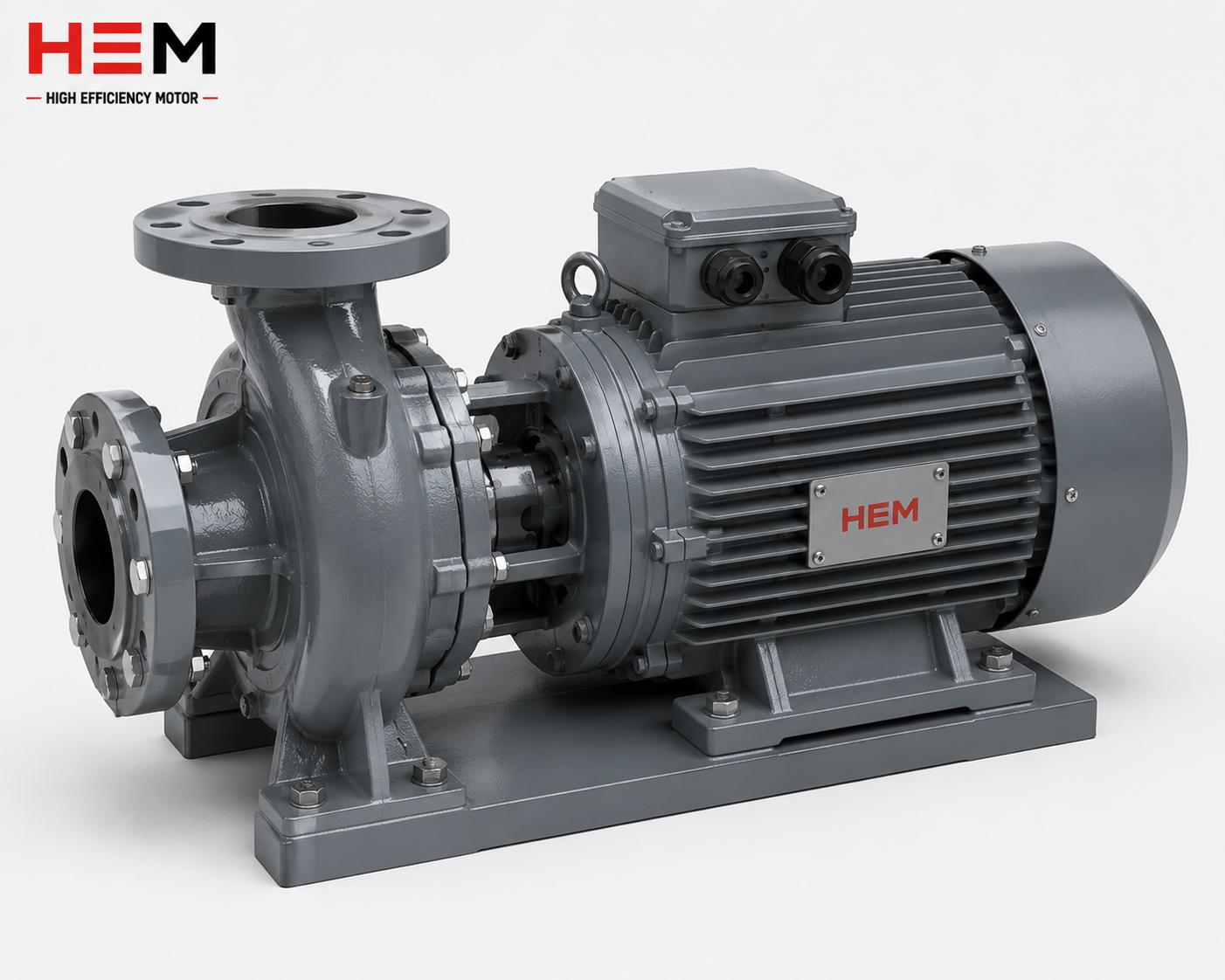

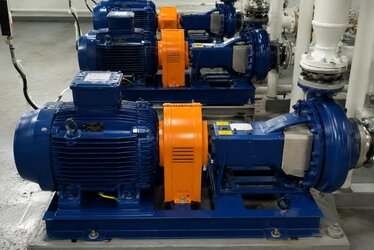
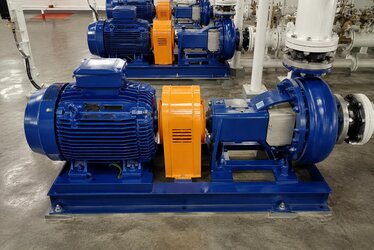
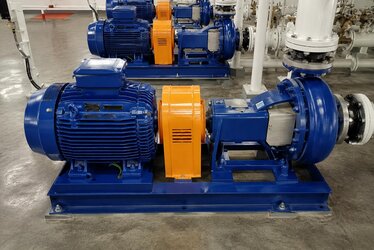
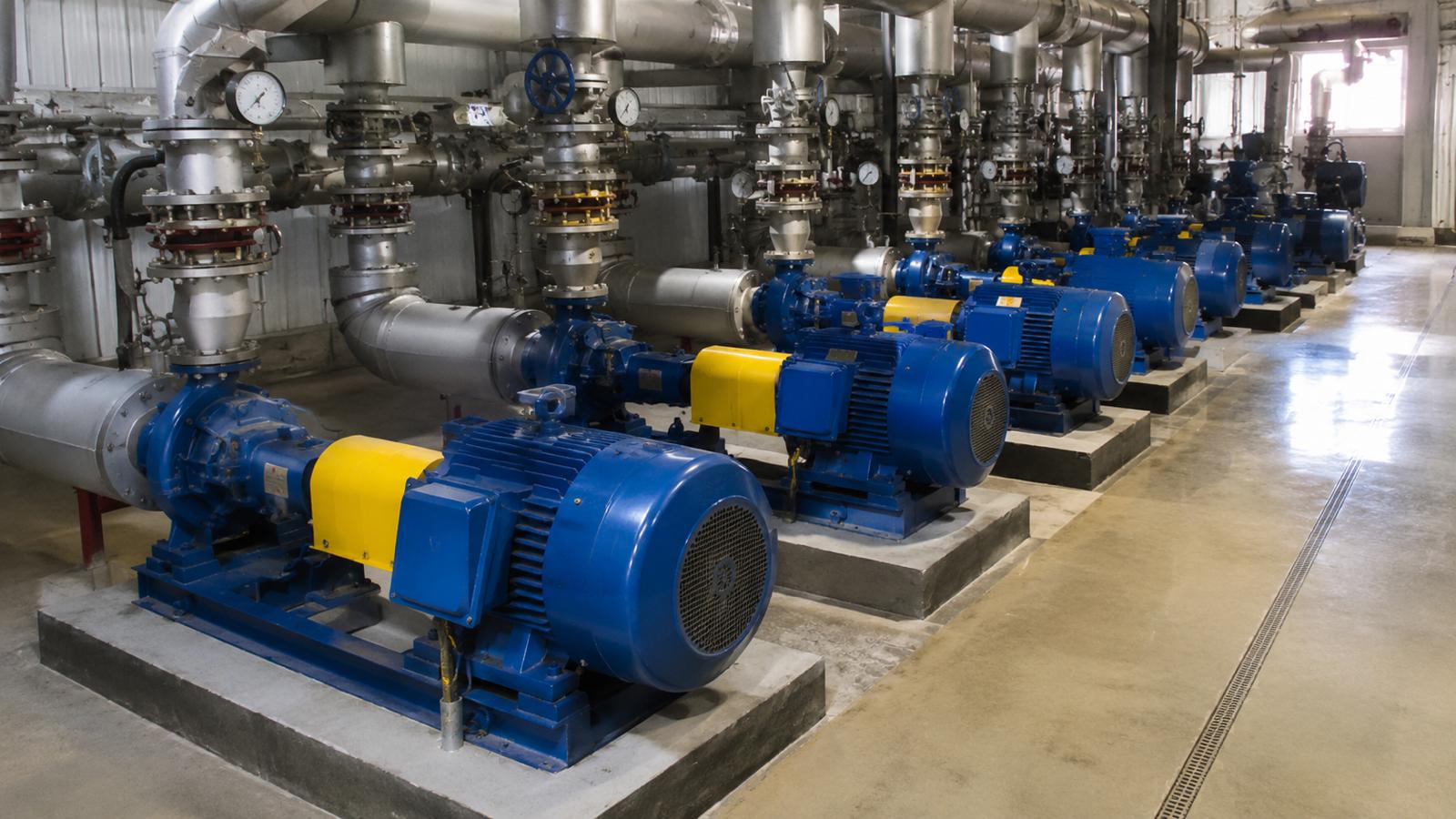
In boiler rooms, steam plants and central hot-water systems there is one component that is easy to overlook yet directly determines the continuity of the line: the condensate (return) pump. When steam finishes its work in a heat exchanger or process and condenses, what remains is hot water, the condensate. Small-power pumps collect this hot water from the condensate tank and push it back to the feed-water tank or boiler, protecting the energy efficiency, water balance and chemical-treatment cost of the system. Recovering condensate means the water entering the boiler is already heated and treated; this in turn means fuel savings, less scaling and lower water-treatment cost. The electric motor that drives the pump keeping this critical cycle alive demands a different engineering view from an ordinary centrifugal pump motor: the fluid sits in the 90-100°C band, sometimes higher; the duty often stops and starts frequently; and the environment, like a boiler room, is hot and humid. A wrongly chosen motor strains bearing life, seal endurance and insulation class here; a correctly chosen one runs for years maintenance-free. This guide explains step by step how to select a condensate pump motor through temperature, power, protection class, duty cycle and bearing/seal detail.
Why Is a Condensate Pump Motor Special?
The condensate transfer application has three decisive challenges, and all three concern the motor directly. First, temperature: the pumped fluid is close to saturated water, usually above 90°C. This temperature conducts heat from the seal region along the shaft toward the motor; the boiler room ambient temperature is also high. Second, duty: level switches in the condensate tank (float or level probe) start the pump when the tank fills and stop it when it empties. This means hundreds of starts and stops per day. Third, humidity: the boiler room is an environment prone to condensation because of steam leaks and high relative humidity.
When these three factors are evaluated together, motor selection must go beyond a standard IE3 industrial motor. High-temperature bearing grease, preferably H insulation class instead of F, a suitable protection degree (IP55 and above) and a duty type that tolerates frequent starting come to the fore. The motor power is usually small, because condensate flow rates and heads are moderate in most plants. Small power, when correctly chosen, offers a cost advantage, but when wrongly chosen it is the most fragile point for heat management, because small-frame motors have a small heat-dissipating surface. In other words, a small motor does not automatically mean an easy motor; on the contrary, because it operates in a narrow thermal window, selection errors reveal themselves faster than in larger motors.
The condensate pump is also the plant's "silent hero." Most of the time it works in a technical room, in a corner hard to see, and nobody remembers its existence until it fails. Yet when this pump stops, the condensate tank overflows, recovery is interrupted, and the feed-water tank starts being fed with cold mains water. For this reason reliability is not a luxury but a necessity in a condensate pump motor; and motor selection must be made according to this reliability goal.
What Changes on the Motor Side for Hot Fluid (90-100°C)?
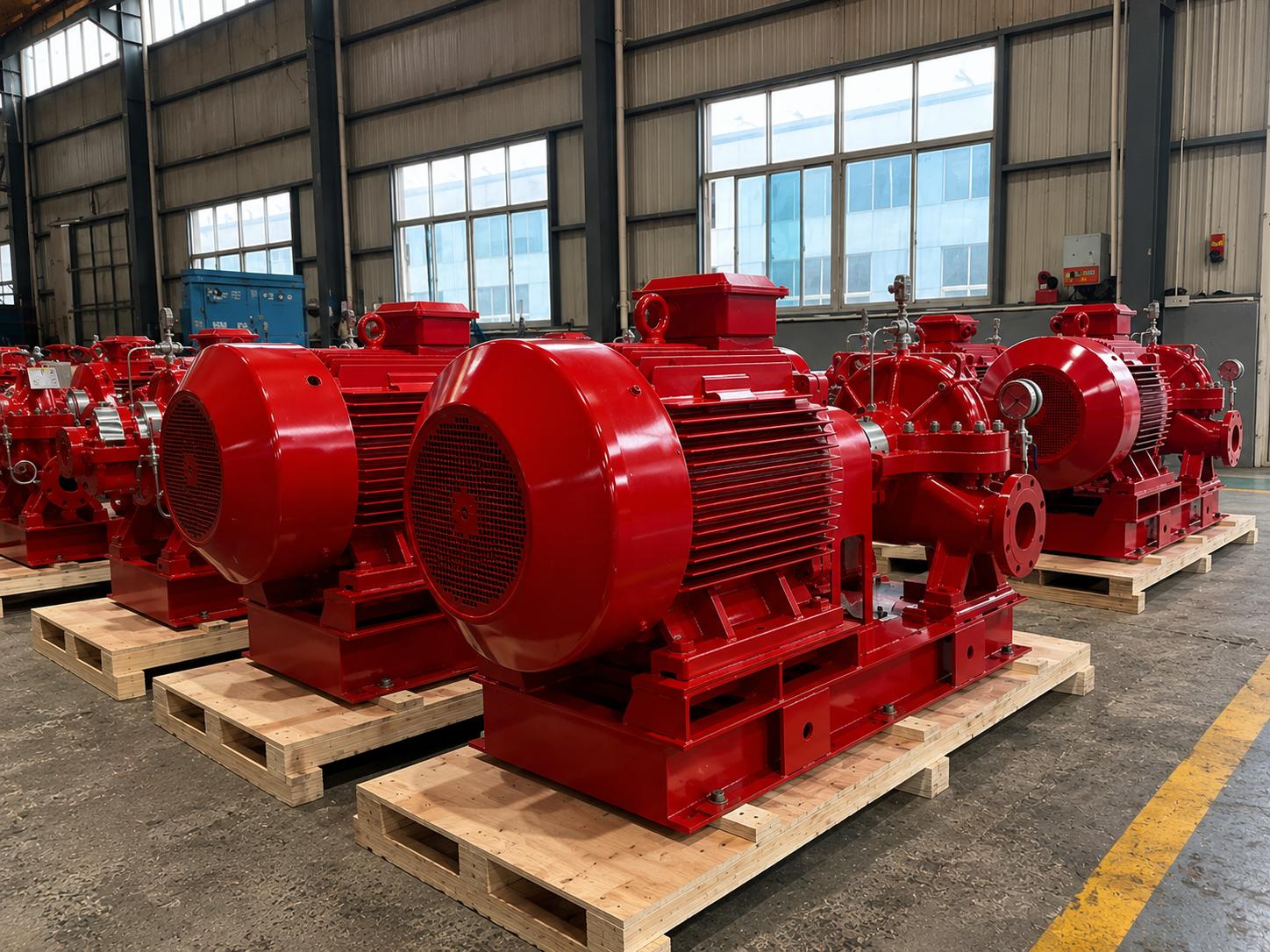
In pumps handling hot condensate, the shaft, gland/mechanical seal and bearing group are under the influence of temperature. Even though the motor does not contact the fluid directly, heat conducted through the shaft and the high ambient temperature raise the total bearing operating temperature. Therefore the temperature range of the bearing grease becomes critical; instead of standard grease, a high-temperature, wide-range grease should be preferred. In mechanically sealed pumps the fluid temperature also dictates seal selection; on the motor side the shaft-seal region must suit this temperature. In bearings operating at high temperature, grease life shortens; it is a general rule of thumb that every 10-15°C rise in temperature roughly halves grease life. For this reason the relubrication interval must be planned more frequently than usual in hot applications.
Insulation class comes to the fore at this point. Class F insulation is the common standard; however, in a condensate pump motor that will run at continuously high ambient temperature, class H insulation provides an extra safety margin. The insulation class determines the maximum temperature the winding can withstand; the difference between class F and class H directly affects motor life at high ambient temperature. If the ambient temperature exceeds 40°C the motor may need derating, which means selecting a motor one frame/power step higher. To read the ambient temperature and efficiency values on the nameplate correctly, our guide on reading the efficiency value and IE code on the nameplate is a practical reference. For plants that want to monitor winding temperature continuously, PTC or PT100 thermal protection can also be added; this provides early warning, especially in continuously running critical condensate pumps.
Temperature and Protection Class Selection Table
| Fluid / Environment | Recommended Insulation | Protection (IP) | Bearing / Grease Note |
|---|---|---|---|
| Condensate 70-85°C, dry boiler room | Class F | IP55 | Standard grease sufficient, periodic check |
| Condensate 90-100°C, normal humidity | Class F/H | IP55 | High-temperature grease recommended |
| Condensate ~100°C, high humidity/steam leak | Class H | IP56 / IP65 | High-temp grease, anti-condensation heater |
| Open/semi-open plant, outdoor effect | Class H | IP65 | Consider drain plug and protective canopy |
| Continuously running critical line | Class H | IP55+ | PTC/PT100 thermal protection recommended |
Small Power Selection: Flow, Head and Efficiency
The large majority of condensate pumps fall in the small-power band. To find the right power, the hydraulic power is calculated from the required flow (m³/h) and total head (m), divided by pump efficiency to obtain shaft power, and then the motor rated power is selected after adding a safety margin. In hot-water pumps the fluid density is lower than cold water, but calculations generally use the standard water assumption, with the safety margin compensating for it. When determining head, not only static lift but also pipe friction, valve and elbow losses and the pressure in the feed tank must be taken into account; otherwise the pump operates at a point higher than calculated and the motor is strained.
There are two common mistakes when selecting a small-power motor. First, choosing an oversized motor: this needlessly enlarges starting current and cost and creates an operating point inconsistent with the pump curve; an oversized motor also lowers efficiency by running the pump continuously at low load. Second, choosing too tight: when condensate flow momentarily rises or plant resistance increases, the motor is strained, the winding heats and the thermal protection trips. The correct approach is to define the operating point clearly and proceed with a reasonable service factor. For stock and speed combinations at small powers, the 0.75 and 1.1 kW IE3 motor stock guide and the 0.37 and 0.55 kW micro-power motor articles cover the most requested powers.
Speed selection also depends on pump type. Most small condensate pumps run with a 2-pole (3000 rpm) or 4-pole (1500 rpm) motor. For compact centrifugal pumps requiring high head, 2-pole is preferred, while 4-pole comes to the fore in quieter, low-NPSH applications. NPSH is especially important here: because hot water is close to its saturation pressure, it is more prone to cavitation at the pump suction; a lower-speed (4-pole) pump-motor group reduces the cavitation risk. For those wishing to evaluate the IE4 threshold in pump-fan groups, the IE4 threshold in pumps, fans and compressors article explains which application requires which efficiency class. To clarify the correct speed-power match, the IE4 2-pole 3000 rpm pump and fan power selection article also contains practical examples.
Duty Cycle: Continuous or Intermittent?
A condensate pump runs in two basic regimes. In some plants condensate flows continuously and the pump runs almost without interruption; this is S1 (continuous) duty and asks the motor to operate at thermal equilibrium. In other plants the level switch starts the pump when the tank fills and stops it when it empties; this is a frequent start-stop, intermittent regime. In the intermittent regime the motor draws several times rated current at each start and the winding heats briefly. When there are many starts per hour this heating accumulates and a new start arrives before the winding has cooled.
For this reason the duty type of frequently starting condensate pumps must be defined correctly. If the number of starts per hour is high, the motor must be selected to suit this start frequency; otherwise winding heating and bearing fatigue accelerate. For variable-speed and irregularly loaded scenarios, the motor duty type S7, S8 and S9 article details the effect of start frequency on motor selection. Smoothing the level control with a frequency inverter and running the pump continuously at low speed is also an effective method to reduce the number of starts; this method both eliminates starting-current surges and keeps the tank level more balanced. To understand the starting torque and the effect of direct-on-line (DOL) starting on the load, the starting torque and rated torque in IE3 motors article is also useful.
Humidity, Condensation and Protection in a Stopped Motor
The boiler room is a humid environment, and while the pump is stopped, condensation can form inside the frame as the motor cools. This water wears the insulation and bearing over time. Condensation is especially dangerous during night or weekend stops; as the motor cools after heating, the humid air inside condenses and leaves a water film on the winding surface. To manage this risk, options such as an anti-condensation heater (space heater) and a condensate drain hole (drain plug) come into play. You can find how the anti-condensation heater works and prevents moisture in a stopped motor in the anti-condensation heater (space heater) article; and for draining accumulated water from the frame, the condensate drain hole and drain plug in IE4 motors article explains the correct plug position.
In practice, in a condensate pump motor operating in a continuously humid environment such as a boiler room, using the anti-condensation heater together with the drain plug is the safest approach. The heater keeps the internal frame temperature above the dew point when the motor stops, preventing condensation; the drain plug, as a backup, expels accumulated water from the lowest point. These two simple options extend motor life appreciably at a small cost.
Frequently Asked Questions
Up to what °C fluid can a condensate pump motor withstand?
The motor does not contact the fluid directly; the limit is set by the pump seal, the shaft-seal region and the bearing grease. In a standard configuration, 90-100°C condensate is pumped without problems. At higher temperatures the motor and pump must be selected together with high-temperature grease, class H insulation and a suitable mechanical seal. What matters is that the motor ambient temperature and bearing temperature stay within the manufacturer limits; as long as these limits are not exceeded, the motor operates safely.
Should I prefer IE3 or IE4 in a small-power condensate pump motor?
If the pump runs many hours a day, moving from IE3 to IE4 provides energy savings and the payback period becomes reasonable. For short, intermittently running small pumps, IE3 is often sufficient. The decision depends on running hours and electricity consumption; in plants with high annual operating time an efficient motor pays back in the long run. Continuously running condensate lines are among the applications that benefit most from IE4.
Does frequent start-stop damage the motor?
When not correctly selected, yes. Each start means high current and heating; many starts per hour fatigue the winding and bearing. The solution is to define the duty type correctly, select a one-step larger motor if needed, or use a frequency inverter to run the pump softly and continuously at low speed, reducing the number of starts. A soft starter is also an alternative that softens the starting surges.
The condensate pump motor is a small-power but high-expectation choice: when the right insulation class, the right protection degree, suitable bearing grease and the correct duty type come together, it runs for years maintenance-free. Instead of reducing this choice to a single parameter, evaluating the quartet of temperature, humidity, duty and power together optimizes both the initial investment and the operating cost. At HEM Motor we offer suitable small-power IE3 and IE4 motors for boiler-room and hot-water applications with fast delivery from stock, and we determine the right motor together according to your temperature and duty conditions. Contact us for a motor suited to your plant's condensate line and get a tailored quote and technical support; benefit from fast supply from stock with manufacturer assurance.