English
 Türkçe



In IE4 super premium efficient motors operating in humid and outdoor environments, condensation water accumulating inside the frame is a problem that often goes unnoticed yet causes serious failures. As the motor runs and stops, the frame heats and cools; this thermal cycle causes humid air drawn from outside to condense on the inner surface of the frame. The accumulated water weakens winding insulation, causes corrosion in bearings and, over time, can lower insulation resistance to the point of burning out the motor. This is exactly where the condensation drain hole and drain plug come in. In this article we cover how condensation drainage works in IE4 motors, the open/closed/replaceable drain plug options, positioning the drain hole at the lowest point according to mounting position, compatibility with the IP protection class, and selecting the right option in humid/outdoor environments.
How Does Condensation Form and Why Is It Dangerous?
An electric motor frame is not fully sealed; even though the IP class protects against water jets and dust, the air inside the frame expands and contracts with temperature changes. When the motor stops the frame cools, the humid air inside condenses and water droplets collect at the lowest point of the frame. This accumulation accelerates especially in coastal, cold storage, open-field and tropical climate conditions where the day-night temperature difference is high.
- Drop in insulation resistance: Moisture on the winding lowers the megohm value, increasing leakage current risk.
- Bearing corrosion: Water mixes into the bearing grease and starts rusting in the journals.
- Terminal box moisture: Oxidation and short-circuit risk at connection points.
- Premature winding failure: Long-term moisture permanently degrades the insulation.
Because IE4 motors heat up less thanks to their low losses, their self-drying effect is paradoxically smaller than their asynchronous counterparts; this makes condensation management even more important. In traditional low-efficiency motors the heating of the frame partly evaporates the internal moisture, whereas in an IE4 motor the frame stays cooler, so this natural drying effect weakens and condensed water remains inside longer. For this reason drain drainage and moisture protection in IE4 motors are not merely an optional accessory but a design decision that directly affects service life. For complementary protection against moisture and condensation, our article on the anti-condensation heater (space heater) and, for the role of insulation class, our article on IE4 insulation and thermal class are valuable resources.
Drain Plug Types: Open, Closed and Replaceable
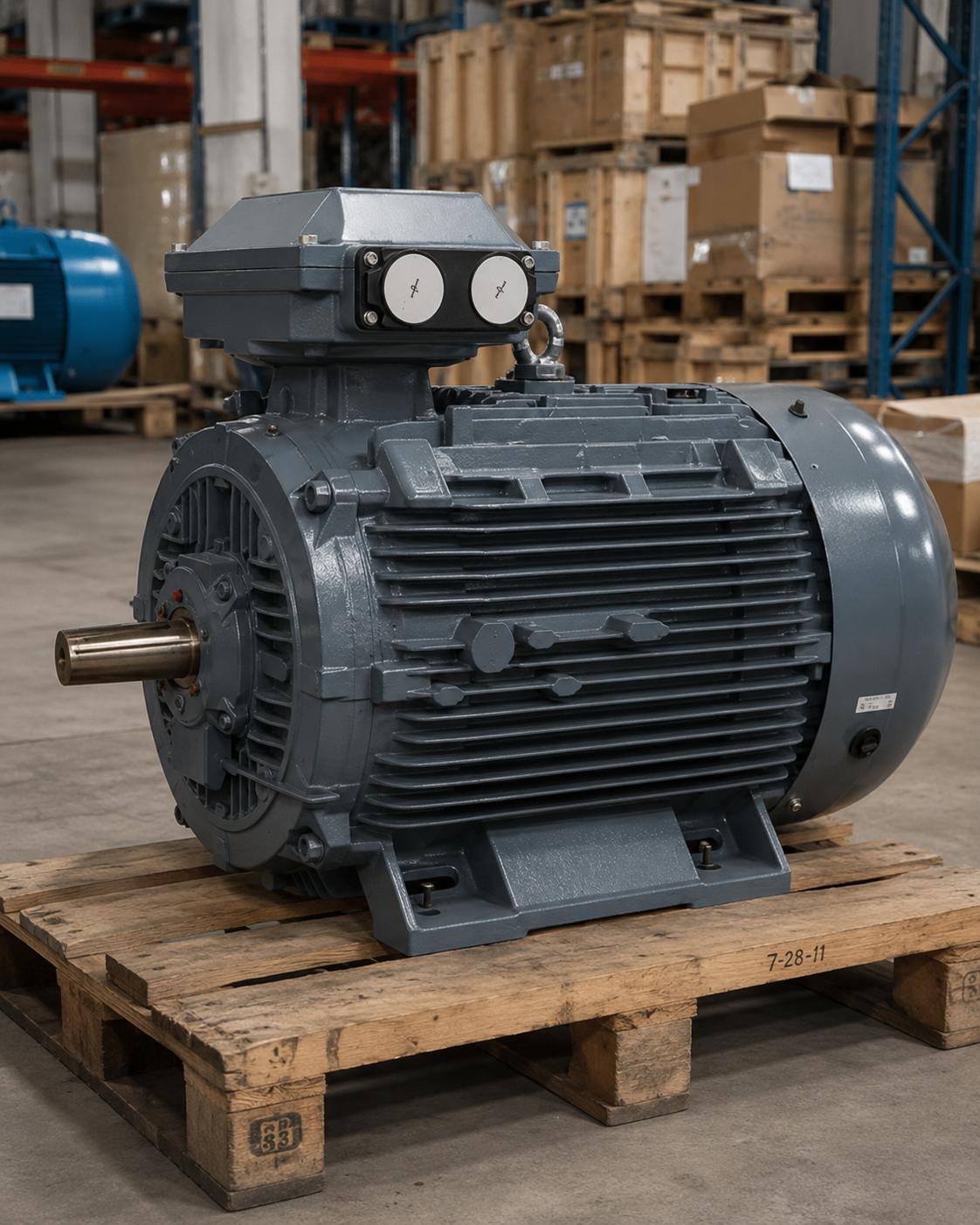
The condensation drain hole is a small hole or plug located on the lower side covers (front and rear) of the frame. How this hole is managed depends on the application, and there are three basic options:
| Drain Plug Type | Operating Principle | Suitable Environment | IP Effect |
|---|---|---|---|
| Closed plug (standard) | Hole plugged; no water drainage | Dry indoor | Full IP protected |
| Open plug (drain open) | Plug removed/perforated; water drains continuously | Very humid, outdoor | IP may drop one step |
| Replaceable plug | Opened and closed periodically | Seasonal/variable humidity | Full IP when closed |
| Membrane (breathing) plug | Passes water, blocks dust/jet | Humid + dusty environment | High IP retained |
The closed plug maintains full IP protection by preventing water from leaking out but allows condensation to accumulate. The open plug continuously discharges water but leaving the hole open can lower the protection class one step against dust and water jets. The replaceable plug is opened during maintenance to drain the water and then closed again; this is a practical solution for seasonal humidity. Membrane plugs, thanks to a hydrophobic film, pass water while blocking dust and water jets, providing both drainage and high IP.
Drain Hole Position According to Mounting Position
For the drain to work, the hole must be at the true lowest point of the frame. Water flows down by gravity; if the motor mounting position changes (horizontal B3, flanged B5, vertical V1 etc.), the lowest point also changes. Therefore the drain hole must be open on the correct side according to the mounting position, while the other (upper) holes are kept closed.
| Mounting Position | Lowest Point | Drain to Keep Open |
|---|---|---|
| B3 (horizontal, foot) | Lower half of side covers | Two holes on the bottom |
| B5 (flanged, horizontal) | Bottom of side covers | Bottom holes |
| V1 (vertical, shaft down) | Near lower bearing cover | D-side bottom hole |
| V5 (vertical, shaft up) | Near upper bearing cover | N-side bottom hole |
Therefore the mounting position must be clearly stated when ordering; the manufacturer can arrange the drain holes for the correct position. To read the mounting code correctly, our article on the IE4 flange and mounting range will be helpful. Similar principles apply on the cast iron side for vertical mounting condensation and seals; our article on the condensation drain hole on cast iron motors covers the topic on a different frame.
Compatibility with the IP Protection Class
Drain plug selection directly affects the motor's IP protection class. Leaving an open drain on a standard IP55 motor can weaken protection against dust and water jets depending on the direction and location of the hole. Therefore in applications requiring high IP (IP65, IP66), membrane or replaceable plugs are preferred instead of an open drain; this way water is drained while the protection class is maintained. For the general logic of IP protection class selection, our article on IP protection class selection is a fundamental guide.
- IP55 + closed plug: Standard, lightly humid indoor.
- IP55 + open/membrane plug: Continuous drainage in humid environment.
- IP65/IP66 + membrane plug: Both drainage and high protection in dusty-wet environment.
Condensation Symptoms and Field Diagnosis
It is not always easy to tell that water has accumulated inside the frame, because the problem usually develops while the motor is stopped and out of sight. However, an experienced maintenance team can diagnose a condensation problem early from a few simple symptoms. If these signs are ignored, the problem progresses into insulation failure and unplanned downtime.
- Low insulation resistance: Winding-to-frame resistance reading below expected in a megger test is the clearest sign of internal moisture.
- Water coming from the drain hole: Dripping from the bottom plug directly indicates condensation has accumulated inside the frame.
- Sweating in the terminal box: Moisture, oxidation or traces of green copper salt at connection points.
- Earth-fault trip at first start: The protection relay tripping due to moisture in a motor that has been idle for a long time.
- Early bearing noise: Water in the grease, rusting in the journal and noise starting early.
When one of these symptoms is observed, the insulation resistance should be measured before the motor is commissioned, and the winding should be dried in a controlled manner if necessary. This check is especially important before commissioning motors that have been stored for a long time or that run seasonally; correct practice in storage and moisture management determines whether the motor runs healthily from day one. Regular checking of the drain plug is the most practical part of this diagnostic process: looking at whether the bottom plug brings water at every scheduled maintenance gives valuable information about the moisture regime inside the frame.
Condensation in Drive (VFD) Operation
IE4 motors often run with a drive, at variable speed and in frequent start-stop regimes. This operating mode can increase condensation risk by making the motor's heat-cool cycle more frequent. Especially in motors that run long at low speed and then stop, moisture accumulation is more pronounced because the frame does not heat enough. In such applications both correct drain management and, if necessary, an anti-condensation heater should be evaluated together. For insulation and voltage spike management in inverter-fed IE4 motors, our article on inverter duty winding and du/dt is complementary.
Which Applications Have High Condensation Risk?
Condensation is not equally severe in every plant; the risk is directly proportional to the moisture profile of the environment and the operating regime of the motor. The following applications are typical scenarios where drain drainage and moisture protection stand out especially in IE4 motors:
- Coastal and port facilities: High relative humidity and salty air accelerate both condensation and corrosion; drain and protected insulation are needed together.
- Cold storage: Continuous low temperature and frequent door openings cause marked condensation inside the frame.
- Open-field pump and fan stations: Because the day-night temperature difference is high, condensation accumulates every night in the idle motor.
- Water and wastewater treatment plants: Harsh environments where high humidity, water jets and dust are present together.
- Tropical and humid climate regions: Year-round high humidity makes drain management mandatory along with tropicalization.
- Seasonally operating agricultural facilities: Moisture risk is high before commissioning motors that stay idle long and then run.
The common feature of these applications is that the motor is either in a very humid environment or its frame cannot heat enough due to frequent start-stop. In both cases the moisture inside the frame condenses and accumulates if not drained. A well-designed drain system continuously discharges this accumulation, protecting the winding and bearings. As the criticality of the application increases, the healthiest approach is to handle drain drainage as a package together with an anti-condensation heater and a suitable IP class.
Selecting the Right Option in Humid and Outdoor Environments
To select the right drain option, you first need to define the environment correctly. The following steps offer a practical decision path:
- Is the environment continuously humid or seasonal? Membrane plug for continuous humidity, replaceable plug for seasonal humidity.
- Is there dust and water jet? If so, IP65/IP66 + membrane plug.
- Does the motor start-stop frequently? If yes, also evaluate an anti-condensation heater.
- Is the mounting position clear? The drain hole must be set to the lowest point.
- Is there maintenance access? Plan periodic open-close for the replaceable plug.
In tropical and high-humidity environments, ordering the motor with full tropicalization (extra varnish, protected insulation) may also be considered; our article on tropicalization and moisture protection offers comprehensive information on this. The right combination of options extends the motor's life many times over and prevents unexpected downtime.
Frequently Asked Questions
Should I leave the drain plug open all the time?
No, it depends on the environment. In very humid and outdoor environments leaving it open allows water to drain continuously; however in dusty environments or those exposed to water jets, an open hole lowers the protection class. The most balanced solution is the membrane plug, which both provides drainage and blocks dust/jets. In dry indoor spaces keeping the plug closed is sufficient.
Does every IE4 motor have a drain hole?
Most cast iron framed IE4 motors have drain holes in the side covers; however these may be delivered from the factory with a closed plug. When ordering for a humid environment, specifying the drain option and mounting position ensures the manufacturer prepares the holes open/with the right plug in the correct position.
Does the drain hole completely solve condensation?
The drain hole discharges the accumulated water but does not prevent condensation from forming. In very critical or continuously idle applications, the best result is obtained by using drain drainage together with an anti-condensation heater; the heater prevents moisture while the drain discharges the water that forms. The two measures together provide the safest protection.
Long Life with Correct Condensation Management
The high efficiency and long life of IE4 motors are fully preserved only if moisture and condensation are managed correctly. The drain plug type, the drain hole position according to mounting position, compatibility with the IP protection class and, when needed, an anti-condensation heater all together protect the motor's winding, bearings and terminal connections. As HEM Motor we supply IE4 motors with drain options suitable for your humid and outdoor applications from stock with fast delivery; contact us for the most suitable configuration for your environmental conditions to request a quote.