English
 Türkçe

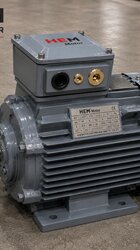
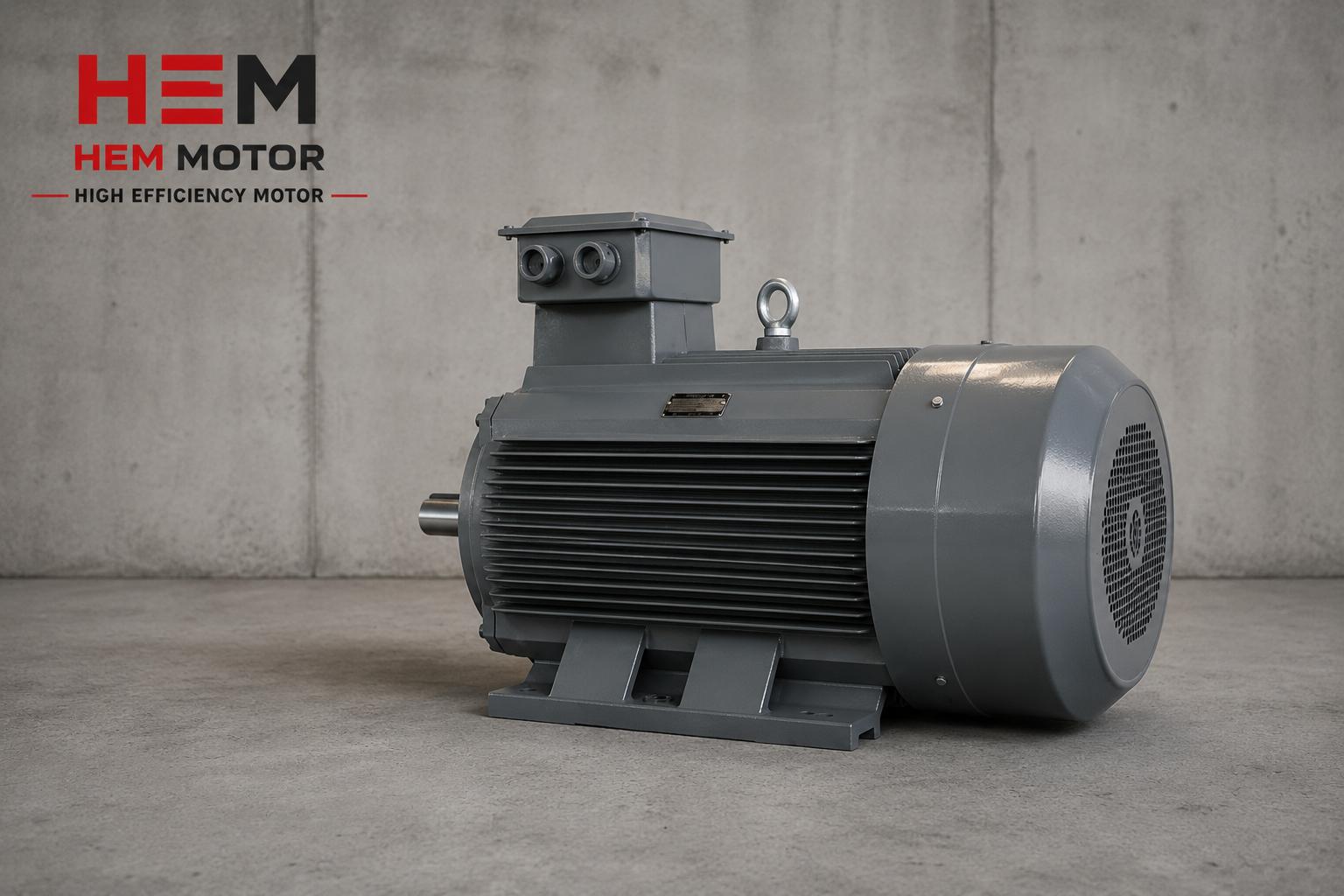

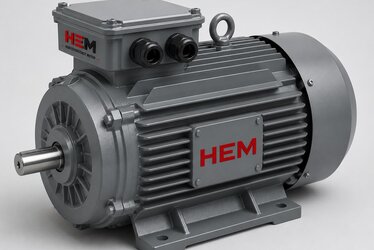
If you are evaluating the purchase of an IE5 synchronous reluctance motor, the first thing you need to know is not a technical curiosity but a fact that directly shapes your order decision: these motors do not run on their own when connected directly to the mains. Unlike a classic three-phase asynchronous motor, you cannot simply feed three phases from the panel and start it. An IE5 synchronous reluctance motor is always supplied together with a compatible variable frequency drive (VFD) as a motor-drive package. In this article we explain why this is the case, which package you should choose, and how to evaluate total cost from a buyer's perspective. As HEM Motor, a manufacturer-supplier that delivers both the motor and the matched drive from a single source, we recommend the correct package at the quotation stage, removing the risk of field mismatch and faulty commissioning.
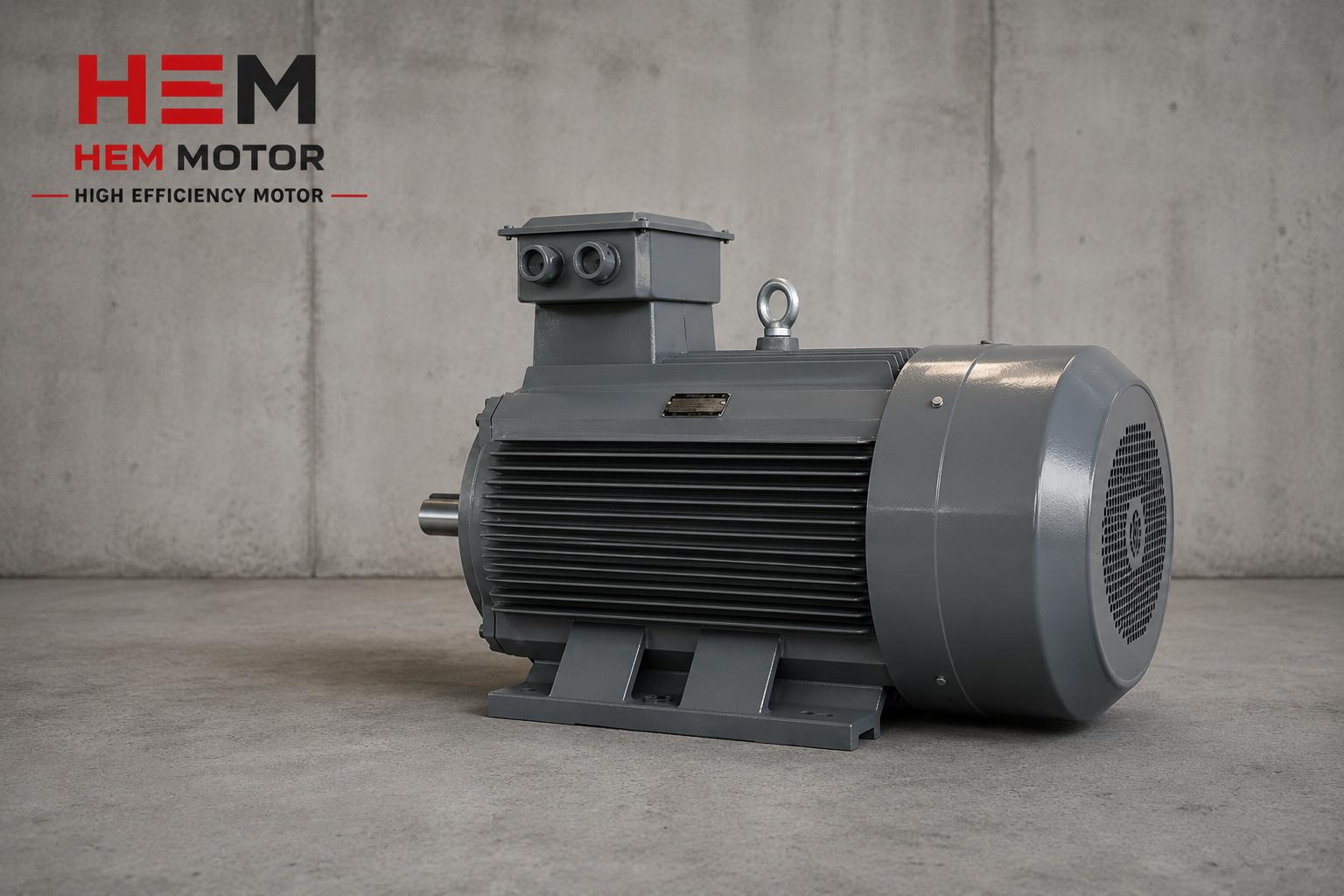
Why Can't an IE5 Synchronous Reluctance Motor Run Without a Drive?
The reason lies in the motor's operating principle. A classic asynchronous motor has a cage in the rotor, and the mains frequency creates a rotating field that drags the rotor along, so the motor starts by itself. A synchronous reluctance rotor has no conductive cage. Instead, it is made of specially shaped steel laminations that try to align with the path where magnetic flux flows most easily (lowest reluctance). For this rotor to start turning and remain stable at synchronous speed, the rotating field must be built up from zero in a controlled way. Only a frequency drive can do this.
The practical consequence is clear: if you connect an IE5 synchronous reluctance motor directly to the mains, it will not start, it will draw current, overheat and be damaged. That is why IE5 motors are always sized as "motor + drive", and the drive must come with the correct software/parameter set (SynRM mode) for the motor. A standard V/f drive is often not enough; the drive must support synchronous reluctance control. For the buyer this means: instead of treating the motor and drive as two independent products bought separately, you must handle them as a single matched system. Our article on the VFD with an asynchronous motor covers drive selection parameters that also apply here.
Let us also clarify one point: some synchronous reluctance motors come in designs with a small amount of magnet (PM-assisted); this improves the power factor but does not remove the drive requirement. Whatever the variant, an IE5 synchronous reluctance solution is always engineered together with a drive. So instead of searching for a "driveless IE5 motor" purchase option, evaluating it directly as a package saves time.
What Does the Difference Between Synchronous Reluctance and Asynchronous Mean for the Buyer?
An asynchronous motor has slip; the real speed is slightly below synchronous speed. A synchronous reluctance motor runs at exactly synchronous speed, with almost no copper/aluminum losses in the rotor. This means higher efficiency and lower rotor heating at the same power. Lower heating indirectly extends bearing and insulation life too; so the gain is not limited to the energy bill. For the buyer, to capture this gain you must accept the drive cost from the start. We detailed why slip lowers real speed in our slip and actual speed article.
Advantages That Come with the Drive
Although the drive looks like a mandatory cost in an IE5 package, it brings operational advantages. Thanks to soft starting, the inrush current is limited; this is a major convenience on generator-fed sites or weak grids. And thanks to speed control, in pump and fan applications the flow/pressure can be adjusted directly; instead of wasting energy with a throttle valve, lowering the speed delivers significant savings. So the drive is not just a requirement to run the motor but also a component that improves process efficiency. We covered how inrush current causes problems on generator sites in our motor selection on generator-run sites article.
How Much More Efficient Is IE5 Than IE4 and IE3?
Efficiency classes rise according to IEC 60034-30-1: IE3 Premium, IE4 Super Premium and IE5 Ultra Premium. Each class aims to cut losses by roughly 20% versus the previous one. So IE5 reduces losses by about a fifth compared to IE4. Absolute efficiency values depend on power and speed; the gap between classes is more pronounced at lower powers. In applications that run continuously, thousands of hours a year, this difference can pay back the drive investment over time. Our IE3 vs IE4 article, which uses a payback calculation, helps you adapt the same logic to an IE5 evaluation.
Another benefit of reducing losses concerns power factor and reactive energy. Efficient motors, together with the right drive, present a more balanced electrical load profile, which lowers the risk of a reactive penalty. We covered the topic in detail in our power factor and reactive penalty article. In the HEM Motor range, IE4 Super Premium IE4 motors are offered from 0.25 kW to 355 kW with cast iron body, IP55 protection and F class insulation. IE5 solutions are engineered as application-specific, drive-based packages. You can clarify which class is sufficient for you by sharing your operating hours and load profile with us at the quotation stage.
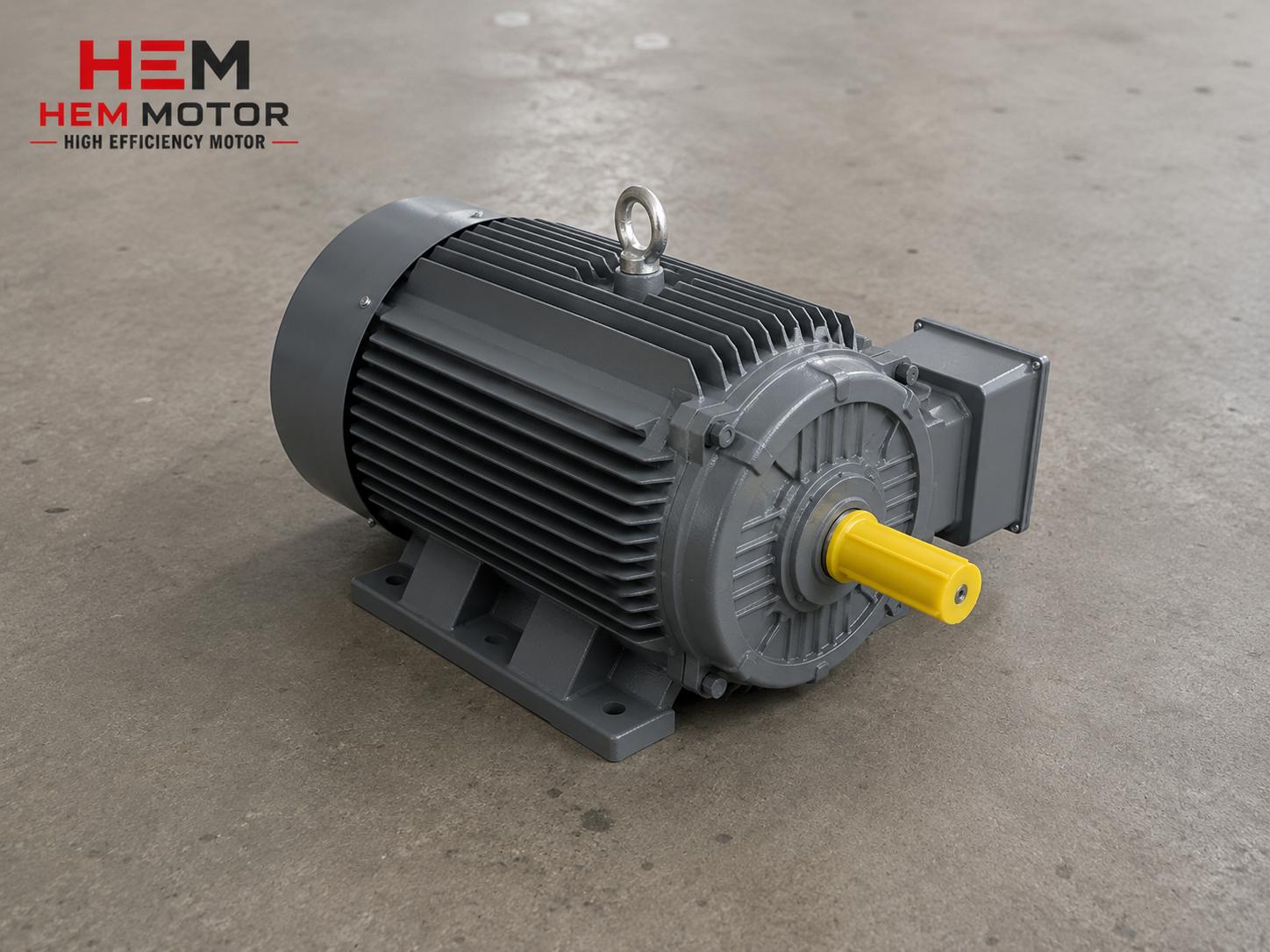
Choosing the Motor-Drive Package: What to Watch For
In an IE5 synchronous reluctance package, the motor and drive depend on each other. When choosing the right package, we recommend clarifying these points before the quotation:
SynRM Support and Power Matching of the Drive
The drive must support synchronous reluctance (SynRM) control mode and must suit the motor's rated current. The drive power is usually chosen equal to or one step above the motor power; in heavy-start applications, overload capacity is considered. With the wrong match, the drive faults or the motor cannot deliver its rated torque. That is why supplying the motor and drive as a matched package, rather than buying them separately from different suppliers, is the safest route. Another advantage of buying the package from a single source is that warranty and service responsibility sit at one point; in a fault, there is no "is it the motor or the drive" dispute.
Cable, EMC Filter and Panel Requirements
Cable length at the drive output, the need for shielded cable and the EMC filter are part of the package scope. Long motor cables may require an extra output reactor. These details also affect the motor's terminal box and cable connection; our terminal box and cable connection article helps with the right gland and IP protection choice. On the panel side, adequate ventilation for the drive's heat loss and the necessary protective devices must be planned.
Cooling and Operating Environment
With drive operation, the motor may run for long periods at low speed; in this case the shaft-mounted fan provides weaker cooling and forced cooling may be needed. We discussed the effect of cooling design on efficiency in our cooling and fan design article; the same principle applies to IE5 packages. In dusty and hot environments, the body material and insulation class also gain importance; a cast iron body offers an advantage in mechanical strength and heat dissipation.
Mounting Type and Mechanical Compatibility
If you will fit the IE5 motor to an existing machine, the frame size, foot dimensions, shaft diameter and mounting type (B3/B5/B35) must match the old motor exactly. Although the efficiency class rises, IEC standard frame dimensions are preserved; still, since longer frame variants may exist, confirmation is essential. We explained mechanical compatibility in the move to IE4 in our frame, foot and shaft compatibility article; the same checklist applies to IE5. You can review mounting type choices on our mounting types page.
IE5 Package Cost: How to Evaluate It at Purchase
The purchase cost of an IE5 motor-drive package is noticeably higher than a comparable driveless IE3 motor, because the drive, EMC filter and cabling are included. But the right comparison is not the "initial purchase price"; it is total cost of ownership. Over a motor's life, energy cost far exceeds the purchase price. To build this calculation step by step, see our total cost of ownership (TCO) article.
When deciding, answer three questions: How many hours a year does the motor run? Is the load constant or variable? Did you already need a drive (speed control, soft start)? If the application already requires a drive, the extra cost of moving to IE5 is only the motor difference, and the efficiency gain quickly makes sense. For fixed-speed, short-duty applications that do not need a drive, IE3 or IE4 is often the smarter investment. We clarified which power requires which class in our efficiency mandate regulation article.
Look also through the payback window: divide the drive difference by the annual energy saving to roughly see in how many years it pays for itself. As operating hours rise, this period shortens. In three-shift facilities this calculation usually favors IE5/IE4, while in applications running a few hours a day the payback lengthens. To plan your facility's motor fleet with this logic, our motor fleet management article will be useful.
IE5 Synchronous Reluctance or Permanent Magnet Motor?
Buyers seeking high efficiency usually face two options: synchronous reluctance motors and permanent magnet (PM) synchronous motors. Both can reach IE4/IE5 efficiency classes and both run with a drive; but they differ from a purchasing standpoint. Permanent magnet motors contain rare-earth magnets, so they are more sensitive to raw-material prices and supply fluctuations; the magnets carry a risk of demagnetization (losing magnetism) at high temperatures. A synchronous reluctance motor has either no magnets or very few; this offers more stable cost and a structure more tolerant to temperature. In return, at the same power the power factor of a synchronous reluctance motor may be slightly lower than a PM motor; this is compensated with proper drive sizing.
The practical summary for the buyer is this: if continuous high torque density and the highest possible power factor are critical, the PM motor stands out; if cost stability, temperature tolerance and long life are your priority, synchronous reluctance is a balanced choice in most industrial applications. In both cases a drive is mandatory and correct matching is essential. To clarify which motor type fits your application, our electric motor types and purchase map article points the way.
Commissioning and Parameter Setup: Why the Package Matters
Getting an IE5 synchronous reluctance motor to run correctly in the field does not end with buying the right drive; the drive must be parameterized for the motor (motor data, auto-calibration/identification, current limits). When you source it as a matched package, this parameter set is mostly prepared in advance and commissioning time is shortened. If you buy the motor and drive from two independent suppliers, resolving field mismatches can turn into lost time and cost. We compiled the general commissioning steps in our commissioning checklist article; in drive-based systems, parameter verification is added to these checks.
Another practical matter is redundancy and service continuity. If the drive of an IE5 package fails on a critical production line, the line stops. So in critical applications it is wise to plan a spare drive or a fast-service agreement. We covered which powers should be kept as spares in stock in our critical spare motor list article; the same logic applies to drive-based packages. As HEM Motor, by providing single-source supply and service continuity on both the motor and drive side, we reduce this risk.
IE5 and High-Efficiency Motor Supply from HEM Motor
As HEM Motor, manufacturing and supplying electric motors since 1979, we engineer IE3, IE4 and IE5 class solutions together with their drive-package requirements. Our broad efficient electric motors range is offered with cast iron body, 100% copper winding and continuous-duty design. If you are evaluating IE5, contact us for the correct motor-drive match and total cost. You can review our full product range from our home page.
Frequently Asked Questions
Can I run an IE5 synchronous reluctance motor with a standard frequency drive?
Not every drive is suitable. The drive must support synchronous reluctance (SynRM) control mode and come with the right parameter set for the motor. That is why we recommend supplying the motor and drive as a matched package; we build the compatible combination at the quotation stage, so you have no commissioning problems.
How much more expensive is an IE5 motor than an IE4 motor at purchase?
We cannot give a fixed price, because it depends on power, speed and drive scope. The general rule: since the package includes the drive, EMC filter and cabling, the initial investment is higher than IE4, but at high operating hours the efficiency gain pays back that difference over time. For a clear comparison, request a quote with a TCO calculation.
In which applications does moving to IE5 make sense?
IE5 makes sense in pump, fan and compressor applications that already require a drive, run very high hours per year and have high energy costs. For fixed-speed, short-duty, driveless applications, IE3 or IE4 is usually the smarter choice. To decide, just share your operating hours and load profile with us.
Get a Quote
The HEM Motor expert team is at your side for IE5 synchronous reluctance motor-drive packages or any high-efficiency motor need. Share your application, power, speed and operating hours; we will clarify the right package and total cost. Call now: +90 (532) 345 49 86 or reach us via our contact page. Browse our full range from the HEM Motor home page.