English
 Türkçe


Does "IE3" on a motor's nameplate guarantee that the motor is really in the IE3 efficiency class? The answer is yes if there is a test and a certificate behind the nameplate, and only a claim if there is not. The IE3 Premium efficiency class requires the motor to reach at least a certain efficiency value at a given power and speed; the accuracy of this value can only be proven by measuring it with a standard test method. That method is the internationally accepted IEC 60034-2-1 standard. This article looks at how efficiency is measured in an IE3 motor, how the IEC 60034-2-1 test method works, how losses are separated, what the test report and certificate are for, and why a buyer should ask for a certificate when purchasing. Although this topic looks technical, it directly concerns the purchasing decision: efficiency is the biggest single determinant of a motor's lifetime cost, and the way to secure this cost is to verify the declared efficiency with a certificate.
What Is Efficiency, and What Does the Nameplate Value Tell?
The efficiency of an electric motor is how much of the electrical power it draws from the grid it converts into useful mechanical power (the power delivered to the shaft). The difference goes to losses, that is, to heat. The higher the efficiency, the less electricity is spent to do the same work. The efficiency value on the nameplate (for example the percentage efficiency at rated load) tells how well the motor does this conversion. The IE1, IE2, IE3, IE4, IE5 classes define the lowest efficiency thresholds for a given power and speed; IE3 is "Premium", IE4 is "Super Premium" and IE5 is "Ultra Premium". An important point is that the efficiency threshold changes with power and pole count: the IE3 threshold for a small-power motor is lower than for a high-power motor, because it is physically easier to reach high efficiency in large motors. So "IE3" is not a single number but an efficiency limit defined separately for each power-speed combination.
But for this value to be meaningful, how it is measured is critical. Measure the same motor with different methods and you get different results. This is exactly why an international standard is needed. We covered reading the nameplate efficiency and rated values in our reading the IE3 motor nameplate article, and the difference between nameplate and field efficiency in our nameplate vs field efficiency difference content.
IEC 60034-2-1: The Standard for Efficiency Measurement
IEC 60034-2-1 is the international standard that defines how the efficiency and losses of rotating electrical machines are determined. Its purpose is to ensure that different laboratories and different manufacturers get consistent, comparable results when they measure the same motor. The standard offers basically two approaches to determine motor efficiency: the direct method and the indirect (loss-separation) method.
- Direct method: The motor's input electrical power and output mechanical power are measured directly; efficiency is the ratio of output to input. Although it looks simple, it may not be precise enough for small powers and high-efficiency motors, because input and output are very close and small measurement errors turn into large efficiency errors.
- Indirect method (loss separation): In this method the total loss is measured by separating it into individual components. Efficiency is calculated by subtracting these losses from the input power. IEC 60034-2-1 prefers this method for high-efficiency motors because it gives a more precise and repeatable result.
For correct classification of high-efficiency motors such as IE3 and IE4, the indirect method with loss separation forms the basis of the standard.
Loss Separation: How Is Efficiency Calculated?
The heart of the indirect method is splitting the motor's total loss into its components. IEC 60034-2-1 defines mainly these loss items:
- Stator copper loss: The loss in the winding resistance; calculated from winding resistance and current.
- Rotor loss: The loss in the rotor; determined from slip and air-gap power.
- Iron (core) loss: Hysteresis and eddy-current loss in the laminations; found from the no-load test.
- Friction and windage loss: Bearing and fan loss; separated from the no-load test.
- Stray load losses: Extra losses not included above; determined by the method the standard specifies.
Each of these losses is measured with separate tests. In the no-load test the motor is run unloaded; the power drawn then consists mainly of iron loss plus friction and windage loss. These two items are separated from each other by running the motor at different voltages. In the load test the motor is loaded step by step up to rated load, and at each point the current, voltage, power, speed and temperature are recorded. The winding resistance is measured separately and corrected for temperature, so the copper loss is calculated correctly. The stray load losses are then determined as a residual from the measured values by the method the standard specifies. When all these losses are summed, the motor's total loss is obtained. Efficiency is found by subtracting the total loss from the input power and dividing by the output (or as the ratio of output to input). We covered where these losses are reduced in which motor in our IE4 motor efficiency losses article, and the effect of copper and aluminium winding on efficiency in our copper and aluminium winding difference content.
Test Conditions: Temperature, Voltage and Load
For an efficiency measurement to be meaningful, the test must be done under standard conditions. IEC 60034-2-1 defines at which voltage, frequency, temperature and load points the measurement is made. For example, because winding resistance depends on temperature, the winding temperature must be known during measurement and a temperature correction applied to the resistance; otherwise a measurement made with a cold motor does not reflect the real loss at operating temperature. Likewise the supply voltage must be at the rated value and balanced, and the frequency held constant. Because these conditions are standardised, measurements made in different laboratories become comparable.
Efficiency is usually stated at rated load, but the standard also allows measurement at part-load points (for example three-quarter and half load). This is valuable for seeing the motor's efficiency at its real working load ratio, because most motors run at part load in the field, not at full load. We covered which load is ideal to run a motor at for efficiency in our motor load ratio and correct sizing article, and the effect of voltage tolerance on efficiency in our voltage tolerance and grid fluctuation content.
Why Is Measurement Harder on a High-Efficiency Motor?
As the efficiency class rises, measuring the motor's efficiency accurately becomes, paradoxically, harder. The reason is this: in a very efficient motor the losses are very small, so the input power and output power are very close. If in the direct method you try to find efficiency as the ratio of these two large and close numbers, even a small error in the instruments leads to a meaningful deviation in efficiency. For example, in a 95% efficient motor the loss is only 5% of the total power; measuring this small difference correctly requires high precision.
This is exactly why IEC 60034-2-1 favours the loss-separation indirect method for high-efficiency motors. Measuring the losses one by one is far more precise than measuring the small total loss directly. This distinction is the technical basis on which classes such as IE3, IE4 and IE5 can be reliably certified. We covered the real difference between efficiency classes and the total cost of ownership in our high-efficiency motor TCO article.
Test Report and Certificate: Documented Efficiency
When a motor's efficiency is measured to IEC 60034-2-1, the result is documented in a test report. This report includes the motor's efficiency at rated load (and often at part loads), the measured losses and the test conditions. The manufacturer can provide this report as a type test for series production or, on request, for an individual motor. A certificate issued by an independent laboratory or accredited body is impartial proof of the efficiency declaration.
For the buyer, the value of this document is that it turns the "IE3" on the nameplate from a claim into proven data. We covered the importance of asking for warranty and documentation when buying in our what an electric motor warranty covers and warranty and service network, 7 questions articles, and reading the efficiency label and MEPS regulation in our motor efficiency label and MEPS regulation content.
Verifying the Nameplate Efficiency: Why Does It Matter?
There can be motors on the market whose nameplate says IE3 but which do not actually deliver that efficiency. Printing a label is easy; really measuring and certifying that efficiency requires a careful test process. Even if a buyer cannot fully measure the motor's efficiency in the field by themselves, they can verify the declaration by asking the manufacturer for a test report or efficiency certificate issued to IEC 60034-2-1. This is a critical step especially in critical, high-running-hour applications, because there the efficiency class goes straight to the bill. A low-efficiency motor, even with IE3 on its nameplate, consumes more electricity than expected over the years, and this difference accumulates quietly. Asking for a document is a simple but effective measure that removes this risk from the start; if the manufacturer cannot provide the document, that itself is a warning sign.
We examined at which powers IE3 is mandatory and the regulatory framework in our IE3 efficiency class mandate and power table and IE3 and IE4 efficiency mandate regulation articles, and the difference between IE3 and IE2 and the logic of old-stock IE2 motors in our IE3 vs IE2 motor difference and old stock content.
What Does an Efficiency Certificate Provide When Buying?
An efficiency certificate has concrete benefits for the buyer. First, by guaranteeing that the declared efficiency is real, it puts the energy-saving calculation on a solid basis; in a high-running-hour application this turns into a meaningful gain over the years. Second, it proves regulatory compliance; since the IE3 efficiency class is a legal requirement in certain power ranges, the document keeps the plant out of trouble in audits. Third, it makes it possible to compare different suppliers' offers fairly; if both motors are certified to the same standard, their efficiency values are truly comparable.
So asking for an efficiency test report at the quotation stage is the strongest verification tool in the buyer's hands. We covered preparing for an energy-efficiency audit and building a plant motor inventory in our energy efficiency audit and motor inventory article, and measuring and certifying annual savings in our measuring and certifying annual energy savings content. We examined the document and warranty comparison in the imported vs domestic-from-stock choice in our imported motor vs domestic from stock article.
The Relationship of Winding and Insulation to Efficiency
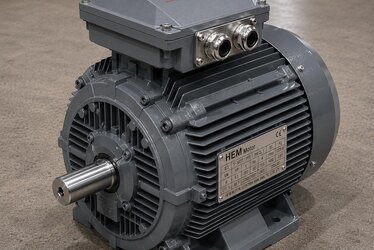
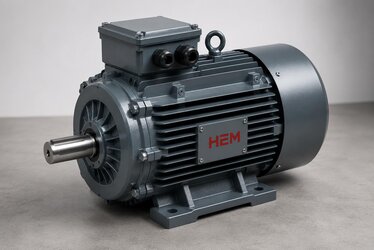
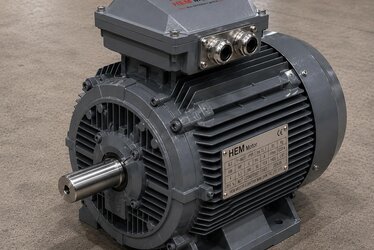
Efficiency is not only a test result but a reflection of the motor's material and manufacturing quality. 100% copper winding, a quality lamination stack and correct design reduce losses and make high efficiency possible. Because copper has lower resistance than aluminium, it reduces winding loss; thin, low-loss silicon steel reduces iron loss. So a motor reaching IE3 efficiency is not a coincidence but the result of material and workmanship quality. A test report is the measurable proof of this quality; a motor made with good material also shows high efficiency in the test. The IE3 motors in the HEM Motor range have 100% copper winding, a cast iron frame and class F insulation. We covered the effect of winding and insulation class on life and durability in our winding and insulation class (F/H) article, and the stay-with-IE3 vs move-to-IE4 decision in our stay with IE3 or move to IE4 content.
You can reach our range through our electric motors and the HEM Motor home page, and find the sectors where IE3 motors are most used in our IE3 motor use areas and sectors article.
Frequently Asked Questions
Is every motor with IE3 on its nameplate really IE3?
Not necessarily. The nameplate is a declaration; what proves the efficiency is real is a test done to IEC 60034-2-1 and the report/certificate based on it. So the buyer should, especially in critical applications, ask the manufacturer for an efficiency test report or certificate.
What is the difference between the direct and indirect method in IEC 60034-2-1?
The direct method measures input and output power directly; it is simple but on high-efficiency motors small measurement errors can cause large efficiency errors. The indirect method measures the total loss by separating it into components and calculates efficiency from that; it is more precise and the preferred method for high-efficiency motors.
From whom and how do I ask for an efficiency certificate?
An efficiency test report or certificate is requested from the manufacturer. A type test report can be provided for series production, or a report for that specific motor on individual request; an independent accredited laboratory certificate provides impartiality. Asking for this document at the quotation stage is the most solid way to verify the declaration from the start.
Get a Quote
Share the power, speed and application of your IE3 motor; we will quote your documented-efficient, 100% copper-wound IE3 motor together with a test report. For a fast quote call +90 (532) 345 49 86 or reach us via our contact page.
Purchasing Checklist
- Are the IE3 efficiency value and rated load on the nameplate clear?
- Has a test report/efficiency certificate to IEC 60034-2-1 been requested from the manufacturer?
- Does the report state rated and part-load efficiencies?
- Have the winding material (100% copper) and insulation class been confirmed?
- Do the power and speed meet the application's regulatory requirement (IE3 mandate)?
- Are the warranty scope and service network clarified?
- Is the efficiency document a priority in a high-running-hour application?