English
 Türkçe

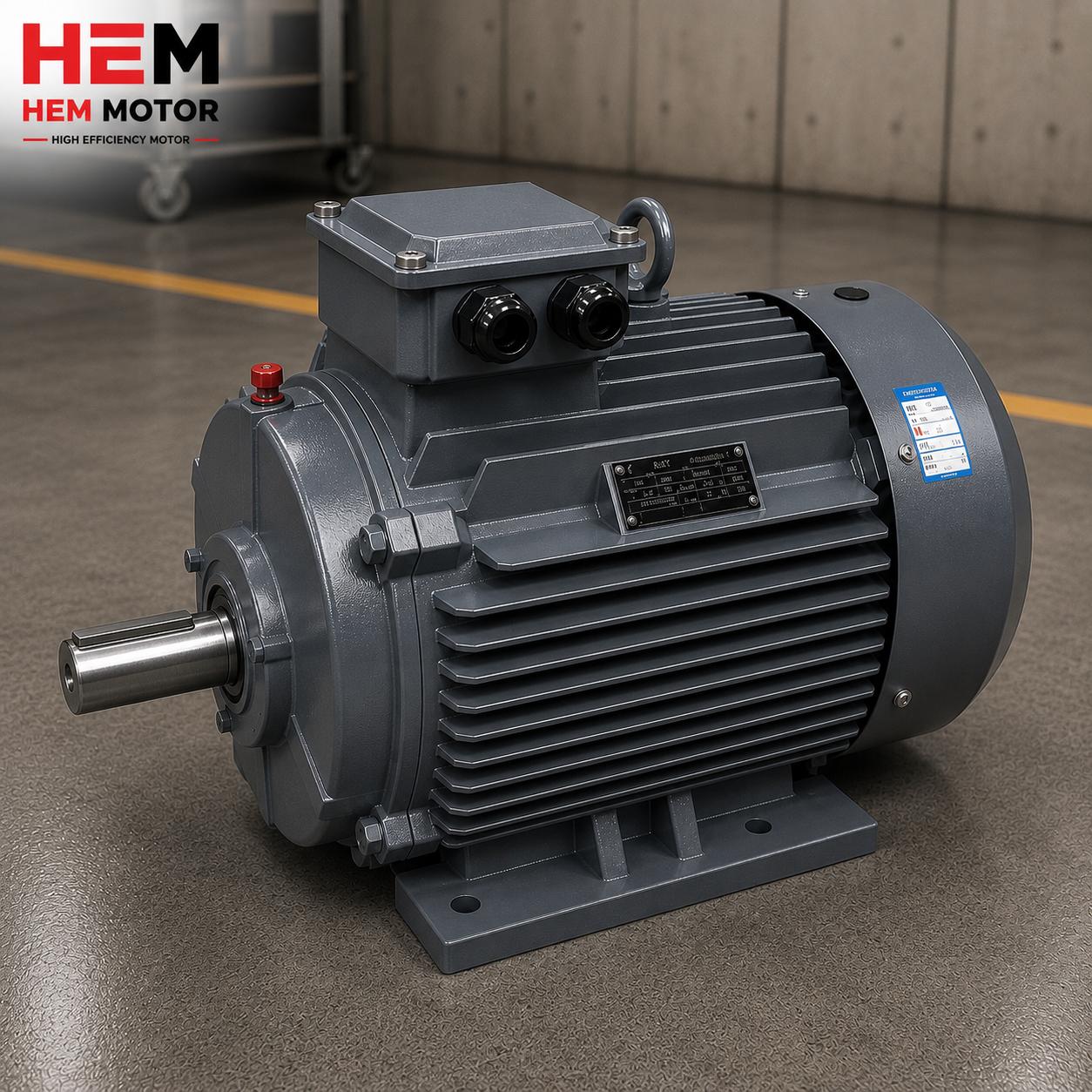

High-efficiency electric motors stand out for their long life and low fault rate in continuously running pump, fan, compressor and process lines. But the most critical maintenance item for the reliability of these motors is bearing lubrication. On a motor with regreasable bearings, determining the correct grease quantity and the correct lubrication interval directly affects bearing life. Too little grease means inadequate lubrication and wear; too much grease is the most common cause of overheating, grease churning and premature bearing failure. In this article we cover, in practical terms, the grease quantity formula, the factors that determine the lubrication interval, the correct grease type, and automatic lubricator selection.
The goal is to help you run your high-efficiency motor with correct grease management, preventing unnecessary downtime and bearing failures. The calculations are based on general engineering formulas; for exact values the data of the motor and bearing manufacturer should be used.
The Grease Quantity Formula
The amount of grease to add to a bearing during regreasing is calculated with a common engineering formula:
G = 0.005 × D × B
Where:
- G = grease quantity (grams)
- D = bearing outer diameter (mm)
- B = bearing width (mm)
For example, for a 6309 bearing with an outer diameter of 80 mm and a width of 21 mm: G = 0.005 × 80 × 21 = 8.4 grams. This is the amount of grease to add for periodic regreasing (not the initial fill; on the initial fill a certain proportion of the bearing cavity is filled). The formula shows that the required grease quantity increases as the bearing grows; this is why grease quantity and interval must be planned separately on large-frame motors.
Lubrication Interval: Speed, Bearing Diameter and Temperature
Just as important as the grease quantity is how often to regrease. The lubrication interval depends on three main factors:
- Speed (rpm): as speed rises, grease degrades faster; the interval shortens.
- Bearing diameter: larger bearings need more frequent lubrication.
- Operating temperature: every 15°C rise roughly halves grease life. At high temperature the interval shortens drastically.
The table below gives a general reference for approximate grease quantity and lubrication interval on 2-pole (3000 rpm) and 4-pole (1500 rpm) motors for typical frame sizes. At high ambient temperature the intervals must be shortened.
| Frame (IEC) | Typical Bearing | Grease Quantity (grams) | Interval 2-pole (~hours) | Interval 4-pole (~hours) |
|---|---|---|---|---|
| 132 | 6208 / 6308 | ~6-8 | ~3,500 | ~7,000 |
| 160 | 6309 / 6310 | ~8-11 | ~3,000 | ~6,000 |
| 200 | 6312 / 6313 | ~13-16 | ~2,500 | ~5,000 |
| 250 | 6314 / 6316 | ~18-22 | ~2,000 | ~4,000 |
| 315 | 6317 / 6319 | ~23-28 | ~1,500 | ~3,500 |
These values are for standard operating temperature and horizontal mounting. With vertical mounting, high temperature, dusty/humid environments or vibrating loads, the intervals are shortened. For grease nipple and regreasable bearing selection on a large cast iron frame, our article on grease nipple and regreasable bearing provides guidance.
The Correct Grease Type: NLGI 2 and NLGI 3
One of the most important parameters in grease selection is the consistency grade; this is expressed by the NLGI class. The two most common classes in electric motor bearings are:
- NLGI 2: medium consistency, general purpose; preferred at most standard speeds and temperatures. Good pumpability (application ease).
- NLGI 3: harder consistency; keeps the grease in place at high temperature, vertical mounting and high speed. Lower risk of bleeding and running off.
The thickener (lithium, lithium complex, polyurea), base oil viscosity and temperature range are also important in the grease type. Greases with different thickeners must not be mixed; incompatibility spoils the grease. For the general logic of NLGI consistency, grease type and lubrication interval, our article on bearing greasing: grease type, NLGI and interval provides the foundation.
The Harm of Over-Greasing
The most common misconception in the field is "more grease means better lubrication." The truth is the opposite. If the bearing cavity is over-greased:
- Overheating: excess grease gets trapped and churns between the rolling elements; it generates friction and heat.
- Grease degradation: at high temperature the grease oxidises, the base oil separates and the lubricating property is spoiled.
- Seal stress: excess pressure stresses the seals, grease bleeds out or the seal is damaged.
- Premature failure: the result is most often premature bearing failure and unexpected downtime.
For this reason it is good practice not to exceed the amount calculated by the formula during regreasing, to lubricate while the motor is running (so the grease distributes) and to keep the grease drain plug open (so old grease can exit). On bearing replacement and correct bearing selection, our article on bearing replacement and number selection is helpful.
Automatic Lubricator (Single-Point Lubricator)
In plants that run continuously, are hard to access or have many motors, manual greasing is both time-consuming and carries the risk of being forgotten/over-greased. An automatic single-point lubricator automatically dispenses a small, constant amount of grease to the bearing over a set period. Its advantages: correct and consistent quantity, lubrication while the motor is running, reduced human error and improved safety.
When selecting an automatic lubricator, the cartridge size, the discharge period (types adjustable from 1-12 months exist) and the grease type must be matched to the motor's calculated grease quantity and interval. For automatic grease lubricator selection, our article on automatic grease lubricator (single-point lubricator) provides detail.
How to Set Up Correct Grease Management?
For correct grease management on a high-efficiency motor: calculate the grease quantity from the bearing number with the formula, determine the interval by speed-temperature-mounting, select a grease of the appropriate NLGI class and thickener, use an automatic lubricator if possible, and avoid over-greasing. This approach extends bearing life, preserves energy efficiency and ensures fault-free operation.
Initial Fill vs Regreasing
A frequently confused topic in grease management is the difference between the initial fill and the regreasing quantity. On the initial fill a certain proportion of the bearing and housing cavity is greased (generally about 30-50% of the bearing free space and part of the cap cavity); this is done at the factory during motor manufacture. In regreasing, a smaller amount calculated by the formula G = 0.005 × D × B is added periodically. Confusing the two values and dispensing the initial-fill amount at every lubrication is a classic over-greasing mistake.
On low-speed (6-8 pole) motors the bearing turns more slowly, so grease life is longer and the interval is longer; on high-speed (2-pole) motors the interval shortens markedly. This is why speed is a vital parameter in the calculation.
Grease at Low Temperature and Cold Start
Operating temperature matters not only on the high side but also on the low side. In cold environments grease stiffens; the base oil viscosity rises and resistance in the bearing increases at first start, straining the motor. For this reason, suitable low-temperature greases (wide temperature range, low base oil viscosity) must be chosen for low-temperature applications. At high temperature the grease's dropping point and oxidation resistance become critical. Knowing your application's temperature window is the key to choosing the correct grease type.
- Cold environment: grease with low base oil viscosity and a wide temperature range.
- Hot environment: grease with a high dropping point and oxidation resistance (e.g. lithium complex/polyurea).
- Halve the interval roughly for every 15°C rise in temperature.
The Logic of the Lubrication Interval Calculation
The table values provide a practical starting point; but the lubrication interval is fundamentally calculated from the bearing's speed factor (n × dm). Here n is speed (rpm) and dm is the bearing's mean diameter (mm). As the speed factor rises, grease degrades faster and the interval shortens. Manufacturers give this relationship with a diagram or formula for a certain reference temperature (usually 70°C) and horizontal mounting; correction factors are then applied for operating conditions:
- Temperature factor: for every 15°C above the reference temperature the interval roughly halves.
- Mounting factor: in vertical (V) mounting the interval roughly halves.
- Environment factor: in dusty, humid, vibrating or dirty environments the interval is shortened.
- Load factor: under heavy radial/axial load (e.g. belt drive) the interval is shortened.
When these factors are applied together, the lubrication interval of a motor running in harsh conditions can drop far below the table value. So instead of blindly applying "standard" interval values, you must consider the motor's real operating conditions. For cylindrical roller bearing selection under heavy radial load, our article on cylindrical roller bearing (NU) provides guidance.
Grease Incompatibility and Mixing Risk
A common and serious mistake in maintenance is mixing different greases. The grease's thickener (lithium, lithium complex, polyurea, calcium sulfonate, etc.) and base oil define its identity. When two incompatible greases mix, the consistency can break down (the grease liquefies and runs out of the bearing), the dropping point can fall, or the lubricating property can be lost completely. The result is a bearing thought to be lubricated but actually left dry, and premature failure.
So the golden rule is: do not add a different grease without knowing the type of the existing grease. If the grease type must be changed, the bearing should be cleaned and purged of the old grease if possible, and during the transition to the new grease the old grease should be flushed out with several short-interval lubrications. The grease type used must be recorded on the motor nameplate or maintenance card; this prevents the wrong grease being used later.
Correct Practice During Lubrication
Just as important as the correct quantity and grease is the lubrication operation itself. A faulty application can cause failure even with the correct grease. The good-practice steps are:
- Clean the grease nipple and its surroundings before lubricating; do not let dirt and dust enter the bearing.
- Lubricate while the motor is running if possible; the grease then distributes evenly into the bearing cavity.
- Open the grease drain plug; let old/excess grease exit.
- Apply the grease slowly and in a controlled way; sudden high pressure stresses the seals.
- Do not exceed the calculated amount; do not add "a little more."
- Record the lubrication date and amount on a running-hours basis.
These steps eliminate the risk of both under- and over-lubrication and maximise bearing life.
Frequently Asked Questions
How do I calculate the grease quantity?
The common formula for regreasing quantity is G = 0.005 × D × B, where D is the bearing outer diameter (mm), B is the bearing width (mm) and G is the grease quantity in grams. For example, for a 6309 bearing (D=80, B=21) it comes to about 8.4 grams. This is the periodic regreasing amount; for the exact value the bearing manufacturer's data should be used.
Why is over-greasing harmful?
Excess grease gets trapped and churns in the bearing cavity, generating friction and heat. High temperature spoils the grease, stresses the seals and ultimately leads to premature bearing failure. For this reason you must not exceed the amount calculated by the formula, lubricate while the motor runs and keep the drain plug open. The belief that "more grease is better" is wrong.
Should I choose NLGI 2 or NLGI 3?
NLGI 2 is a medium-consistency general-purpose grease suitable for most standard speeds and temperatures. NLGI 3 is harder; it keeps the grease in place at high temperature, vertical mounting and high speed. The choice is made according to your application's temperature, speed and mounting conditions; greases with different thickeners must not be mixed.
At HEM Motor we supply high-efficiency motors with regreasable bearings, grease nipple and automatic lubricator compatibility — from stock and with fast delivery. Send us your motor's power, speed, mounting type and operating temperature; request a quote for correct grease management and motor selection, and let us plan your maintenance programme together.