English
 Türkçe

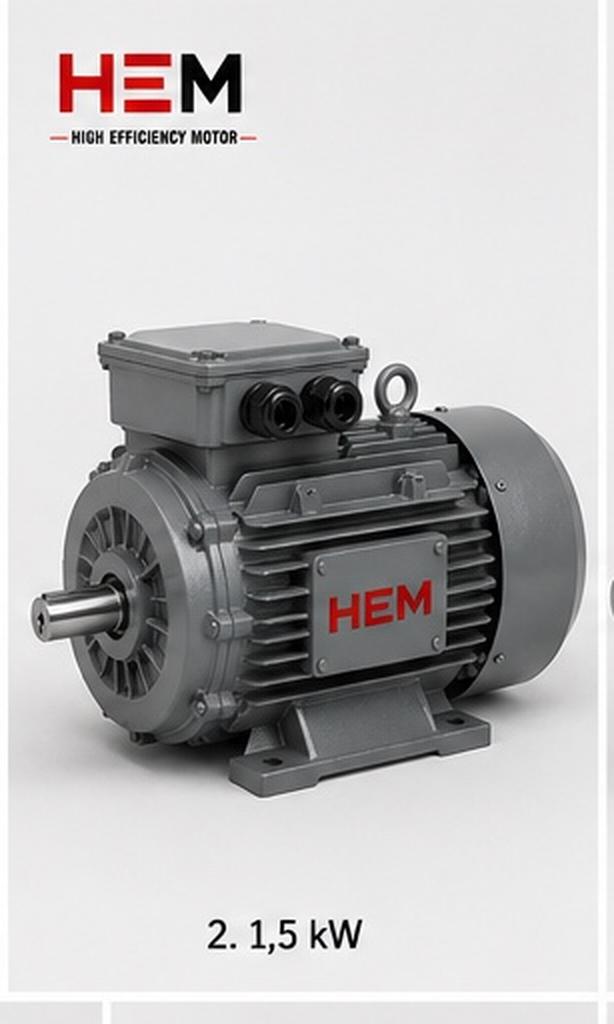

A high-efficiency motor does not merely consume low energy; it also stands out by being quiet, low in vibration and long in bearing life. At the root of these qualities lies a concept that is often overlooked: the rotor balance quality grade. Like any rotating part, a motor rotor is not perfectly symmetric in its mass distribution; even the smallest unbalance turns into centrifugal force at high speed and shows itself as vibration, noise and bearing load. The ISO 21940 standard (formerly ISO 1940) defines this unbalance with G quality grades; while G2.5 is a common standard for industrial motors, G1.0 is preferred for more precise, quieter and high-speed applications. In this article we examine the rotor balance quality grade, the concept of residual unbalance, the relationship between vibration and bearing life, why balance is critical at high speed, and how to choose the right balance grade, all with technical tables.
What a business investing in an efficient motor expects from it is not only a low bill; it is also low maintenance, long life and trouble-free operation. Rotor balance quality is the invisible foundation of these expectations. At HEM Motor we supply high-efficiency motors with their rotors balanced to a suitable balance quality grade; this article is a guide to clarifying the balance grade and vibration acceptance level suitable for your application before ordering.
What Are Rotor Balance and Residual Unbalance?
When a rotor is manufactured, due to small differences in material density, machining tolerances and assembly, the center of mass does not coincide exactly with the axis of rotation. This mismatch is called unbalance and is measured in gram-millimeters (g·mm). When the rotor turns, this unbalance produces a centrifugal force that increases with the square of the speed; that is, when the speed doubles, the force quadruples. This is exactly why balance is far more critical on high-speed motors than on low-speed ones.
The balancing operation is the correction of the mass distribution by adding weight to or removing material from (drilling, milling) certain points of the rotor. No rotor can be perfectly balanced; some residual unbalance always remains. The balance quality grade defines how small this residual unbalance is kept. The lower the number used to express the grade (such as G1.0), the smaller the residual unbalance, and the quieter and more vibration-free the motor.
| Balance Quality Grade (G) | Typical Application | Character |
|---|---|---|
| G6.3 | General-purpose, low-speed machine parts | Standard, economical |
| G2.5 | Electric motors (standard industrial) | Common motor standard |
| G1.0 | Precise motors, high speed, quiet application | Precision balance |
| G0.4 | Precision machine spindles, gyroscope | Ultra precise |

G2.5 or G1.0? The Meaning of the Quality Grade
The G number behind the balance quality grade is actually a measure of the permissible residual unbalance related to the rotor's angular velocity. ISO 21940 gives, for each G grade, a method to calculate the maximum permissible residual unbalance based on the rotor's weight and operating speed. In practice it means this: a G2.5 grade motor is quiet and vibration-free enough for the great majority of industrial applications. G1.0 roughly halves this unbalance; that is, it provides less vibration, less noise and potentially longer bearing life.
- G2.5: Industry acceptance for standard electric motors; sufficient in common applications such as pumps, fans and compressors.
- G1.0: Preferred on high-speed (2-pole, 3000 rpm) motors, in environments where quietness is critical (hospital, laboratory, HVAC), and in precision spindle applications.
- G0.4 and below: For very special, ultra-precise applications; rarely needed on standard motors.
An important point: raising the balance grade (for example moving from G2.5 to G1.0) is not always necessary and adds cost. The correct approach is to choose the grade according to the real need of the application. G1.0 is an unnecessary luxury on a low-speed conveyor motor where noise does not matter; whereas on a high-speed HVAC fan motor expected to run quietly, G1.0 makes a noticeable difference.
Single-Plane or Two-Plane Balancing?
Balancing is done in a single plane or in two planes depending on the rotor's geometry, and this choice directly affects the balancing quality. On thin, disk-like rotors (diameter larger than length), single-plane balancing is often sufficient, because the unbalance is concentrated in a single plane. But on long, cylindrical parts such as electric motor rotors, the unbalance can be at different angles at different points of the rotor. In that case, balancing in a single plane alone leaves a couple unbalance that swings from one end to the other when the rotor turns, and vibration persists.
This is why motor rotors are usually balanced with two-plane (dynamic) balancing; measurement and correction are made separately in the planes at the two ends of the rotor. Dynamic balancing eliminates both static (concentrated at one point) and couple unbalance; so the rotor truly turns vibration-free at operating speed. On high-speed, long-bodied motors, two-plane balancing is a practical necessity for quality balancing. The balancing machine turns the rotor at a speed close to operating speed, measures the residual unbalance in both planes, and shows the correction points.
Correct balancing does not merely remove gross unbalance; it makes the rotor's mass distribution most suitable for the operating conditions. This operation gives the healthiest result when done before motor assembly, during the manufacturing stage and on a suitable balancing machine. Balancing attempts made in the field with the motor mounted are both difficult and less reliable because they mix in bearing and mounting effects. That is why stating the desired balance quality grade at the order stage is the most correct approach.
The Relationship Between Balance, Vibration and Bearing Life
The centrifugal force produced by an unbalanced rotor presses directly on the bearings. Since this force is a dynamic load that changes direction on every turn, it continuously fatigues the bearings. A well-balanced rotor puts minimum dynamic load on the bearings; this extends bearing life, preserves grease life and provides quiet operation. Vibration is the most visible result of this unbalance and is measured and evaluated with ISO 20816 (the motor vibration standard).
| Vibration Class | Typical RMS Velocity Limit | Meaning |
|---|---|---|
| Class A (new motor) | up to ~1.4 mm/s | Well-balanced, low vibration |
| Class B | up to ~2.3 mm/s | Acceptable, continuous operation |
| Class C | up to ~4.5 mm/s | Limited, requires attention |
| Class D | above 4.5 mm/s | High vibration, intervention required |
The balance quality grade and the vibration class are related but not the same: balance defines the rotor's own equilibrium, while vibration also includes factors such as mounting, bearing condition, alignment and foundation. A well-balanced rotor is a precondition for low vibration, but poor mounting or soft foot can raise vibration even on the best-balanced motor. That is why balance and correct mounting should be considered together.
The Importance of Balance at High Speed
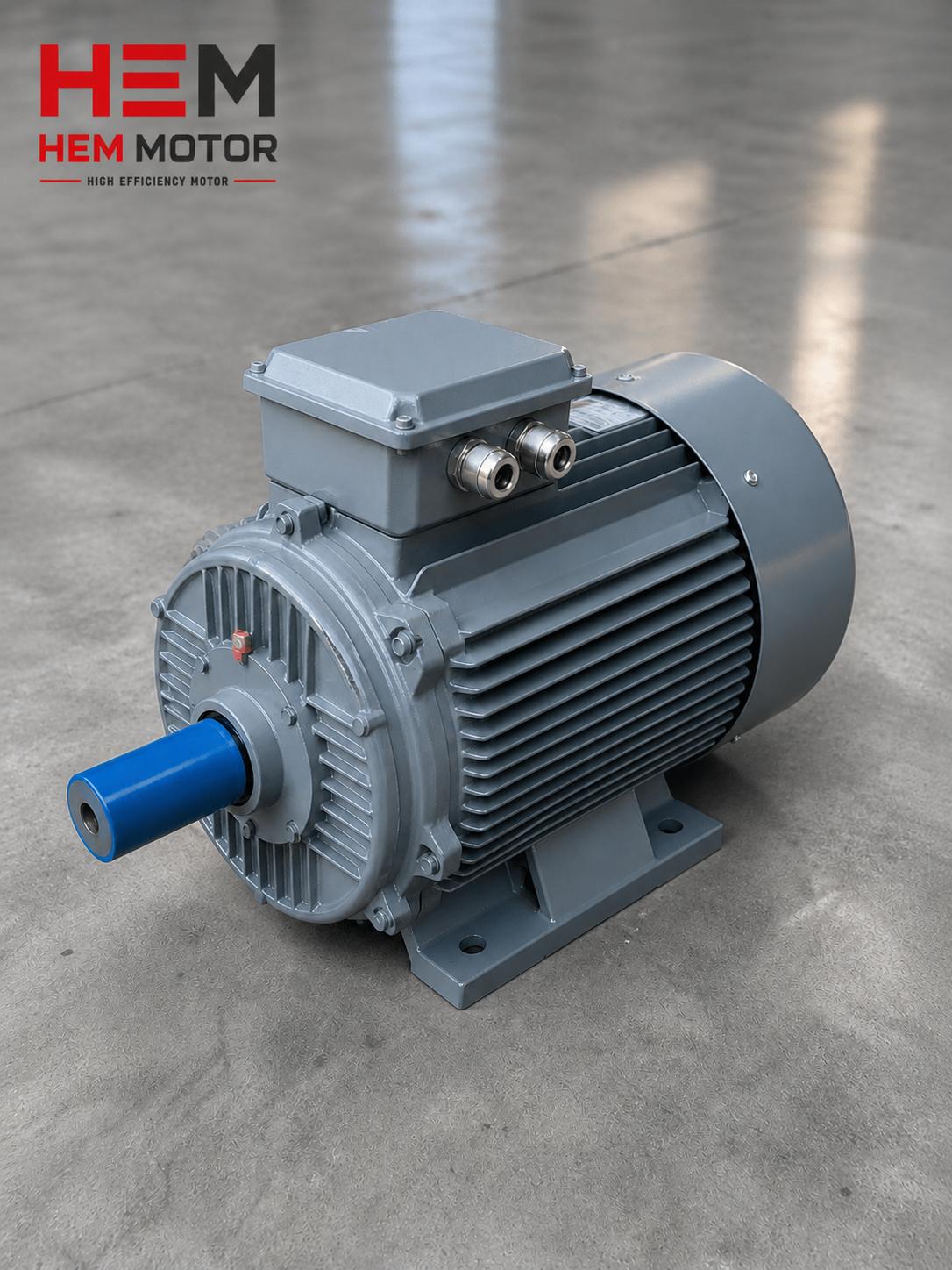
Because centrifugal force increases with the square of speed, the importance of balance quality grows exponentially as speed rises. A small unbalance may go unnoticed on a low-speed motor turning at 750 or 1000 rpm; but the same unbalance turns into a much larger force and vibration on a 2-pole motor turning at 3000 rpm. That is why precision balance (G1.0) often becomes a necessity rather than a luxury on high-speed motors. Especially on motors run at high frequencies by a drive, balance quality is directly decisive for quietness and bearing life.
The Effect of Balance on Efficiency and Total Cost
At first glance rotor balance seems to be only a matter of vibration and quietness; yet it also has an indirect but real effect on energy efficiency and total cost of ownership. The vibration produced by an unbalanced rotor creates extra friction and mechanical loss in the bearings; this loss quietly eats part of the savings promised by the motor's efficiency class. Investing in a high-efficiency motor and then running it with a poorly balanced rotor means spending part of the gained efficiency on friction. A well-balanced rotor, on the other hand, keeps mechanical losses to a minimum and helps the motor preserve in the field the efficiency promised in the catalog.
Looked at from the total-cost angle, the real return of balance appears in bearing life and maintenance frequency. Bearings running under low dynamic load last longer; this means fewer grease changes, fewer bearing failures and fewer unplanned stoppages. On a continuously and critically running motor, this saving over time more than covers the extra cost of precision balance. That is why the balance decision is not just a comfort preference but an engineering decision that affects lifetime operating cost.
Quiet operation often turns into a concrete value too. On motors running near offices, living spaces or laboratories where precise measurements are taken, low noise is sometimes not just comfort but a requirement. Precision balance noticeably lowers the sound level the motor produces in these environments and forestalls noise-related complaints. Therefore the right balance grade makes the motor a "good neighbor" both technically and environmentally.
Choosing the Right Balance Grade
The right balance grade becomes clear by answering a few questions. What is the motor's speed? Precision balance is more valuable on high-speed (2-pole) motors. How critical is quietness? In environments such as hospitals, laboratories and HVAC near offices, low vibration and noise matter. How important are bearing life and maintenance cost? On critical, continuously running motors, precision balance pays for itself by extending bearing life. Is the application precise? The strictest balance is required in applications such as machine-tool spindles and precision centrifuges.
- Standard pump/fan/compressor, medium speed: G2.5 is sufficient.
- High-speed (3000 rpm) motor, quiet HVAC: G1.0 is recommended.
- Hospital, laboratory, noise-critical environment: G1.0 and a low vibration class.
- Precision spindle, centrifuge: G1.0 or stricter, special request.
Balance forms a whole with the motor's other quality and quietness features; the low-vibration target is achieved together with both rotor balance and correct mounting and bearing quality. The full performance expected from an efficient motor emerges only when the rotor is balanced to the right grade.
Frequently Asked Questions
Is G2.5 balance enough, or should I request G1.0 on every motor?
For most industrial applications G2.5 is more than sufficient and is the standard acceptance. Requesting G1.0 on every motor creates unnecessary cost. G1.0 is meaningful on high-speed applications, where quietness is critical, or where bearing life is very important. The correct approach is to choose the grade according to the real need of the application; on low-speed coarse applications, settling for G2.5 is right.
Are the balance quality grade and the vibration class the same thing?
No, they are related but different concepts. The balance quality grade (G2.5, G1.0) defines the rotor's own equilibrium, that is, its residual unbalance. The vibration class (ISO 20816 A/B/C) measures the motor's total vibration when mounted; this includes, besides balance, the bearing condition, alignment, foundation and mounting quality. Good balance is a precondition for low vibration but not a guarantee on its own.
Can I have the rotor balanced more precisely later?
It is technically possible; a rotor can be dismantled and re-balanced more precisely on a balancing machine. But this requires dismantling the motor and expert workshop labor, and is often not economical. The best approach is to state the need at the order stage and request the motor in the desired balance grade from the factory. That is why clarifying the balance grade before purchase is important.
Let us determine the right rotor balance grade together to obtain full quietness, low vibration and long bearing life from your high-efficiency motor. Share with us the motor's speed, the operating environment and your quietness expectation; request a quote for high-efficiency motors from HEM Motor stock with rotors balanced to a suitable balance quality grade, with fast delivery and a correct grade recommendation. Quiet and long-lived operation begins with a correctly balanced rotor.