English
 Türkçe

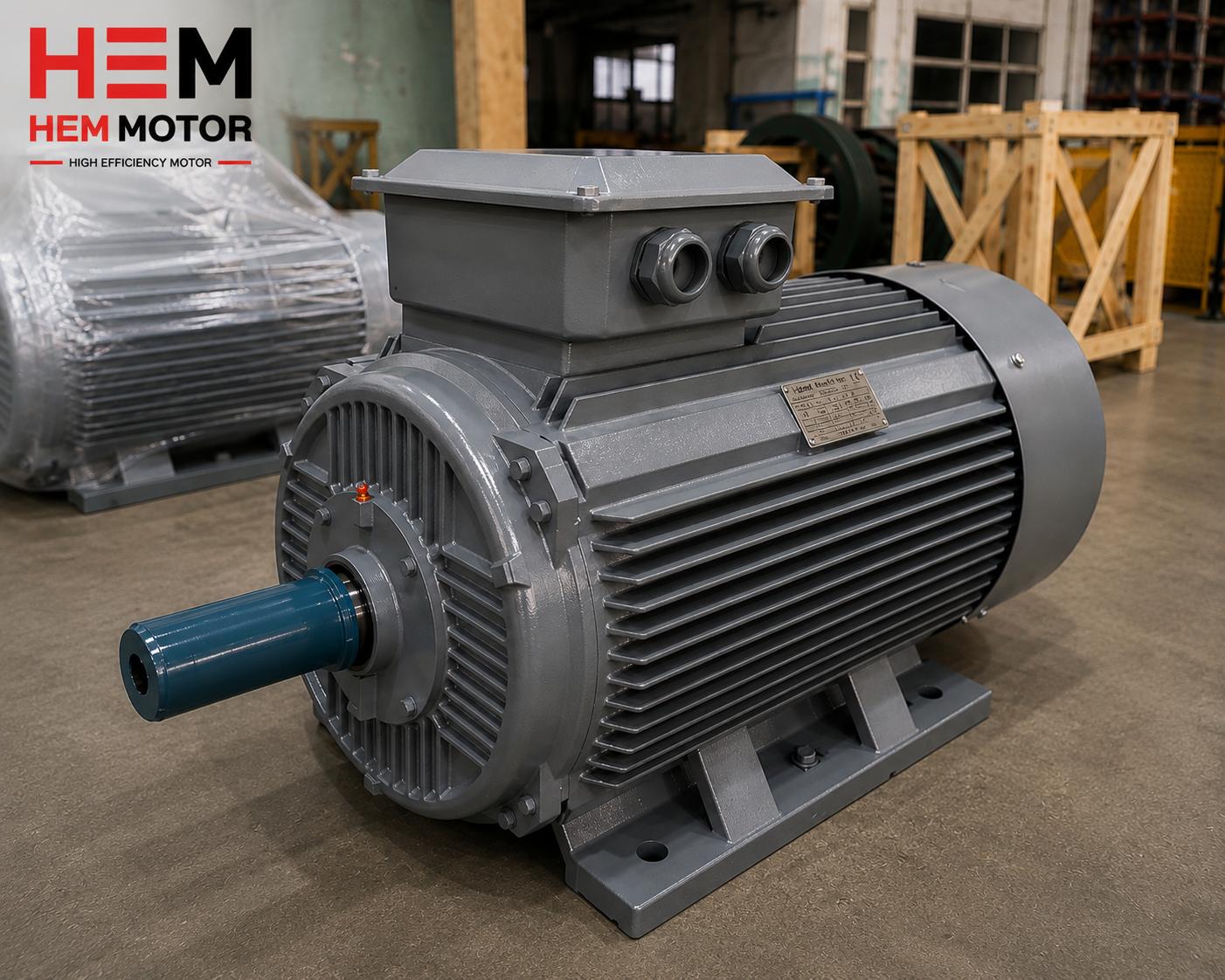

The great majority of asynchronous motors have a squirrel-cage rotor; these rotors are simple, robust and maintenance-free. But in applications with high inertia, demanding heavy starting, and a requirement for low current draw during start, a completely different type comes into play: the slip-ring (wound-rotor) asynchronous motor. Unlike the squirrel cage, this motor's rotor also carries windings, just like the stator; the ends of these windings are brought out through slip rings that rotate with the rotor, and from there via brushes to the outside. This allows an external resistance to be connected to the rotor circuit. The entire power and character of the slip-ring motor lies in this point: by varying the rotor resistance you can control the starting torque and the starting current. This article covers the working principle of the wound-rotor asynchronous motor, why starting via rotor resistance provides high starting torque and low starting current, brush/slip-ring maintenance, in which heavy applications it is preferred, and a comparison with the squirrel-cage type.
What Is a Slip-Ring (Wound) Rotor?
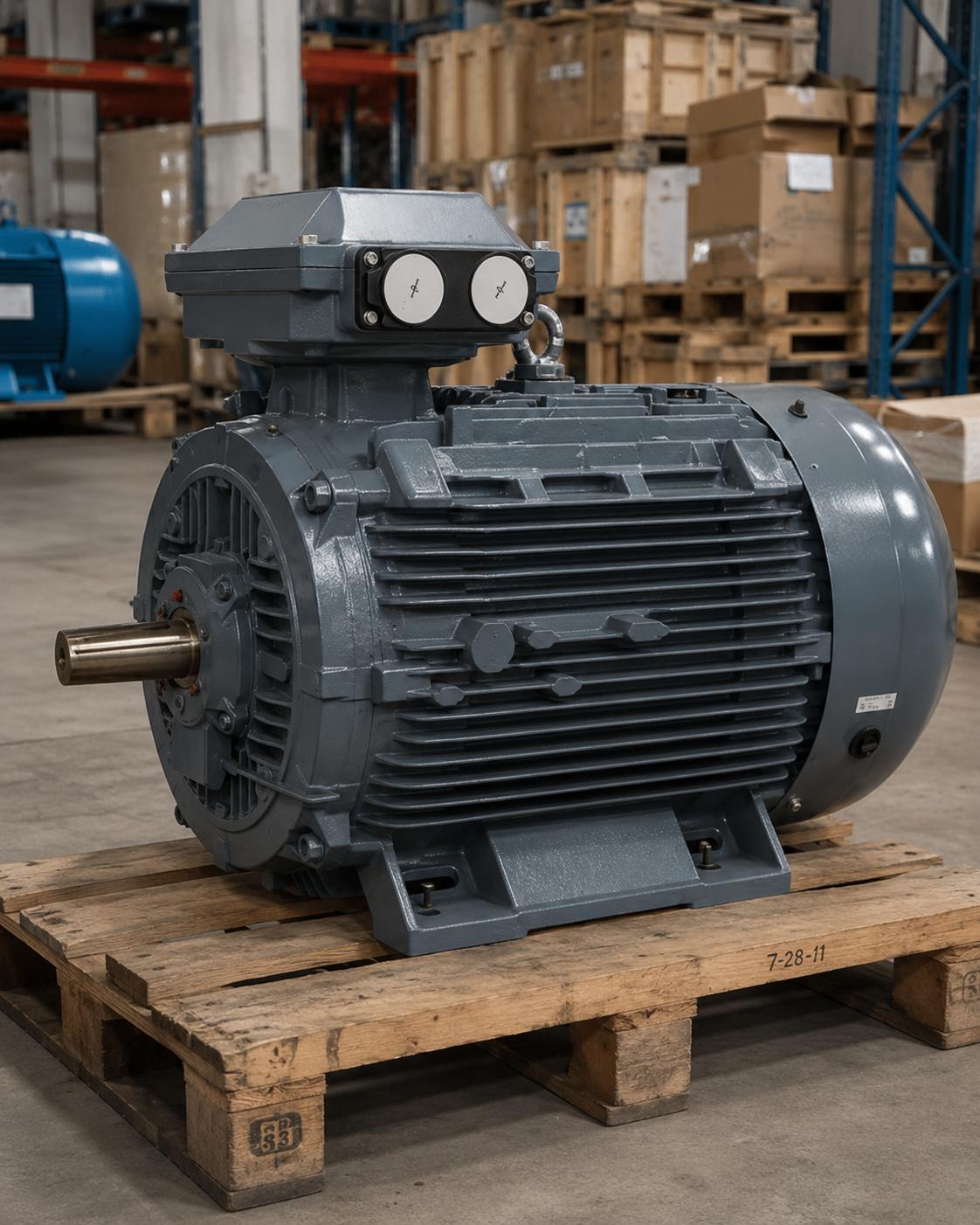
In a slip-ring motor the rotor consists not of short-circuited bars as in the squirrel cage, but of a three-phase winding wound similarly to the stator. The three ends of this rotor winding connect to three copper/bronze slip rings mounted on the shaft. Carbon brushes pressing on the rotating slip rings carry the rotor circuit to fixed (non-rotating) external terminals. Thus the rotor circuit, normally inaccessible, can be acted upon from outside; the most common action is to add a series resistance.
When external resistance is added to the rotor at the moment of starting, the motor's characteristic changes: starting torque rises while starting current falls. As the motor accelerates, these resistances are gradually removed from the circuit, and finally the slip rings are short-circuited so the motor runs like a normal squirrel-cage machine. This control capability makes the slip-ring motor indispensable, especially for demanding start applications. Our squirrel-cage versus slip-ring motor difference article, where we cover the basic distinction more broadly, is a good starting point on this topic.
Starting via Rotor Resistance
The most distinctive advantage of the slip-ring motor is that the starting characteristic can be tuned through external resistance added to the rotor circuit. A squirrel-cage motor on direct-on-line (DOL) start draws a high starting current of up to 6-8 times the rated current, with a fixed starting torque. In the slip-ring motor, by adding resistance to the rotor you can substantially reduce the starting current while at the same time raising the starting torque above the rated torque.
The physical reason is that the asynchronous motor's torque-slip curve shifts with rotor resistance: as rotor resistance rises, the point of maximum torque shifts toward low speed (high slip); that is, at the moment of starting (slip=1) you have high torque available. This lets you set heavy, high-inertia loads in motion smoothly yet powerfully. For a general comparison of starting methods, our star-delta or soft starter article, and for selecting starting torque by load, our torque classes article are complementary resources.
| Feature | Squirrel-cage (DOL) | Slip-ring (rotor resistance) |
|---|---|---|
| Starting current | High (~6-8x In) | Low (set by resistance) |
| Starting torque | Fixed, medium | High (above rated torque) |
| Starting under high inertia | Difficult, heating risk | Suitable, stepped |
| Maintenance | Maintenance-free rotor | Brush/slip-ring maintenance needed |
| Cost | Low | High |
High Starting Torque and Low Starting Current
The two most sought-after features of the slip-ring motor can be obtained at the same time: high starting torque and low starting current. In a squirrel-cage motor these two are usually opposites; star-delta or a soft starter is used to lower the starting current, but these methods also lower the starting torque. Trying to set a high-inertia load (for example a large crusher jaw or a hoist drum) in motion with low torque keeps the motor at high current for a long time and causes overheating.
The slip-ring motor solves this dilemma: thanks to rotor resistance, the starting current is kept low without straining the grid, while the starting torque is high enough to easily set the load in motion. That is why the slip-ring motor is preferred on weak grids, where frequent and heavy starting is required, and in high-inertia applications. You can find the effect of starting time and moment of inertia (J) on motor heating in detail in our starting time and moment of inertia article.
Brush and Slip-Ring Maintenance
The control capability the slip-ring motor provides comes with a maintenance burden. Brushes wear over time and must be replaced periodically; slip-ring surfaces need regular cleaning due to sparking, dust and wear. If brush pressure is not set correctly, sparking increases, the slip-ring surface is damaged and contact resistance rises. So the slip-ring motor does not have the "plug-run-forget" simplicity of the squirrel-cage motor; it requires a regular maintenance program.
- Brush wear: Periodic inspection and replacement are required.
- Slip-ring cleaning: The film and dust forming on the surface must be cleaned periodically.
- Brush pressure: Correct spring pressure is important for spark-free contact.
- Dust/carbon buildup: The terminal and slip-ring area must be kept clean.
Some modern slip-ring motors have a mechanism that short-circuits the slip rings and lifts the brushes after starting; this reduces brush wear, but the mechanism still needs maintenance. For a general motor maintenance schedule, our periodic check schedule article offers a useful framework.
In Which Applications Is It Preferred?
The slip-ring motor is the classic solution for heavy-industry applications where the starting characteristic is critical. Typical fields of use are:
- Crushers and breakers: High inertia and heavy starting; rotor-resistance starting is ideal.
- Cranes and hoisting systems: Where high breakaway torque and speed control are needed.
- Ball/rod mills: Smooth and powerful starting at very high inertia.
- Large fans and compressors: When low starting current is needed on a weak grid.
- Belt conveyors: Controlled starting on long, loaded lines.
The application of rotor resistance with a liquid resistance starter (LRS) on large crushers is one of the strongest use cases of the slip-ring motor; our liquid resistance starter and slip-ring motor article describes the field application. You can find high-torque mill drives in our ball and rod mill main drive motor article.
Comparison with the Squirrel Cage and Correct Selection
The slip-ring motor is not always better; it is superior only in the right application. The squirrel-cage motor is cheaper, more robust and maintenance-free; today, thanks to modern power electronics (soft starters and especially the variable frequency drive/VFD), many starting problems that once required a slip-ring motor can be solved with a squirrel-cage motor plus drive. Still, in conditions of very high inertia, very frequent heavy starting and weak grid, the slip-ring motor may still be the technically most suitable solution.
Correct selection is made by assessing together the starting torque requirement, the moment of inertia, the start frequency, the grid capacity and the maintenance capability. We explained when a VFD is needed in our frequency drive with asynchronous motor article; you can find the importance of rotor bar/winding quality in our broken rotor bar and quality article.
- If the load has very high inertia and there is frequent heavy starting: slip-ring is advantageous.
- If the grid is weak and starting current is limited: slip-ring or a drive.
- If there is no maintenance staff or program: squirrel-cage + drive is more practical.
Stepped (Multi-Stage) Resistance and Smooth Acceleration
A slip-ring motor's starter usually consists not of a single resistance but of several stages. At the moment of starting the highest resistance is in circuit; as the motor accelerates, the resistance is reduced step by step via contactors or the electrode movement in a liquid resistance starter. At each stage the torque-slip curve is repositioned and the motor reaches rated speed with a smooth, stepped acceleration. Thanks to this stepped structure:
- Starting current stays limited at each step; there is no sudden current surge on the grid.
- The mechanical system (coupling, gears, belt) is not subjected to a sudden torque shock.
- High inertia is accelerated in a controlled way without the motor overheating.
A liquid resistance starter (LRS), especially at very high powers, provides the smoothest start because it offers a continuously varying resistance. As the electrode is immersed, the resistance falls and the motor accelerates along an uninterrupted curve. This method is preferred on large crushers and mills. We covered the relationship of shock load, flywheel and inertia in crusher drives in our motor selection under shock load article.
Modern Alternatives: Slip-Ring or Drive?
In the past, the slip-ring motor was almost the only option for high inertia and heavy starting. Today, a squirrel-cage motor driven by a variable frequency drive (VFD) can in most cases provide the same smooth, high-torque start without maintenance-requiring brushes/slip rings. The drive limits starting current, controls torque and also offers speed adjustment during operation. For this reason, in new plants the preference is increasingly shifting toward squirrel-cage + drive.
Even so, there are cases where the slip-ring motor is still advantageous: applications at very high powers where drive cost is high, where there are harmonic constraints, or where an existing LRS infrastructure is to be retained. The decision requires assessing the technical requirement together with the total cost of ownership. You can find harmonic and extra-heating topics in drive operation in our VFD and harmonic-induced heating article, and the explosion-proof environment requirement in our explosion-proof or standard motor article.
| Criterion | Slip-ring motor | Squirrel-cage + VFD |
|---|---|---|
| Start control | Very good via rotor resistance | Electronic, very flexible |
| Maintenance | Brush/slip-ring maintenance | Low (motor maintenance-free) |
| Running speed adjustment | Limited | Full speed control |
| Cost at very high power | Competitive | High drive cost |
Points to Watch Before Selection
Selecting a slip-ring motor is not merely a matter of fixing power and speed. The load characteristic, the starting infrastructure and the maintenance capability must be assessed together. The following points should be clarified before ordering:
- Have the load's moment of inertia (J) and the required starting torque been determined?
- Have the start frequency (how many starts per hour) and the duty type been defined?
- Has the starter type (stepped-resistance or liquid-resistance/LRS) been chosen?
- Are staff and a program available for brush/slip-ring maintenance?
- Are the grid capacity and the permissible starting-current limit known?
Clear answers to these questions guarantee the selection of both the right motor and the right starter. A wrongly sized starter can eliminate the entire advantage of the slip-ring motor. In critical fields such as mining, redundancy and stock assurance also matter; our mining motor supply contracts article sheds light on supply strategy on this topic.
Frequently Asked Questions
Why does a slip-ring motor give high starting torque?
When external resistance is added to the rotor circuit, the motor's torque-slip curve shifts and the maximum torque moves toward the start (high slip). Thus high torque is obtained at starting while the starting current is kept low. As the motor accelerates, the resistances are gradually removed.
Is a slip-ring motor better than a squirrel-cage one?
Not always. The slip-ring motor is superior in applications requiring high inertia and heavy starting, but it is more expensive and needs brush/slip-ring maintenance. In many modern applications, a squirrel-cage motor plus a variable frequency drive offers a more practical, maintenance-free alternative.
What maintenance does a slip-ring motor need?
Periodic inspection and replacement of brushes, cleaning of slip-ring surfaces and adjustment of brush pressure are required. Dust and carbon buildup must be cleaned and sparking monitored. This maintenance is essential for reliable and long-lasting operation.
For your application under high inertia, heavy starting or weak-grid conditions, you can source a slip-ring (wound) rotor asynchronous motor, or the squirrel-cage + drive solution that may suit you better, from the manufacturer with stock availability and fast delivery. Share your load's inertia and starting details; we will determine the most suitable motor and starting solution together and prepare a tailored quotation for you.