English
 Türkçe

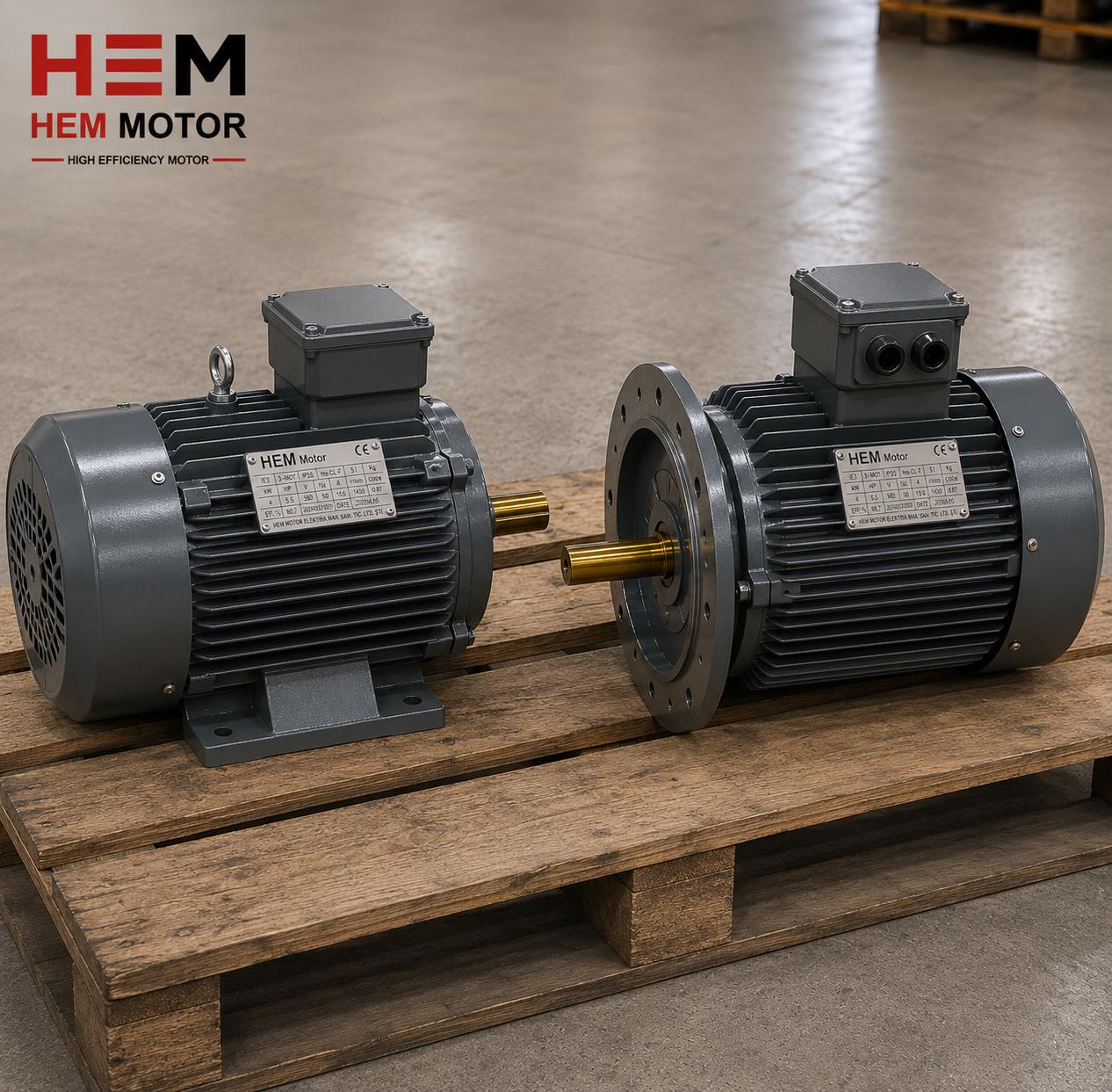

Restarting a motor after it has stood still for months, or even years, demands as much care as buying a new motor. Seasonal facilities, standby pumps, motors stored long-term in a warehouse, or machinery temporarily taken out of service can all meet unexpected failures on the first start after a long standstill. Rotor seizing in the bearing, rust on the shaft and bearings, moisture buildup in the windings and a drop in insulation resistance are problems that may go unnoticed at first yet stress the motor at startup, even burning the windings. As an electric motor manufacturer and supplier, we often hear the question: "What should I do before starting my long-idle motor, or should I just buy a new one?" This guide covers the risks of the first start after a long standstill on asynchronous motors, the checks to perform, and when replacing the motor is the wiser choice.
Rather than risking a long-idle motor, comparing current electric motor prices against the cost of a new motor is often smarter; because repairing a winding burned at startup and the resulting production downtime usually costs more than a new motor.
What Happens to a Motor During a Long Standstill?
When a motor does not run, several adverse processes develop inside it over time. Knowing these determines what you must check before the first start:
- Bearing and shaft seizing: When bearings stay motionless, the oil film thins as weight presses on the same point; over long periods, permanent marks (false brinelling) can form on the surface.
- Rust and corrosion: Rust can form on the shaft, keyway and bearing surfaces due to moisture, increasing friction and vibration at startup.
- Winding moisture: Windings absorb moisture and insulation resistance drops. Applying voltage to a damp winding can cause leakage current and winding burnout at startup.
- Seal and gasket hardening: Oil seals and gaskets can dry out and harden over time, compromising sealing.
Pre-Start Checklist
Blindly energizing a motor after a long standstill is the most common mistake. The following steps provide a safe start without damaging the motor:
1. Visual and Mechanical Check
- Turn the shaft by hand: does it rotate freely, is there any binding or resistance?
- Inspect the body, terminal box and fan for moisture, rust or damage.
- Clean the fan cover and cooling fins if dust/dirt has accumulated.
2. Insulation Resistance (Megger) Test
This step is critical. The winding-to-body insulation resistance must be measured with a megger (insulation tester). If the value is low, there is moisture in the winding and the motor must not be started directly. Drying is done first, then it is measured again. Our article on insulation resistance and megger testing on asynchronous motors explains how to interpret the test in detail.
3. Winding Drying
If insulation resistance is low, the winding must be dried. This is done at a controlled low temperature or by expert service methods. Applying full voltage to a damp winding can cause permanent damage within the first second.
4. Bearing Condition
Bearings should turn smoothly by hand; if there is noise, binding or stiffness, bearing replacement may be needed. Remember that grease may have hardened in long-stored motors. Our bearing types and life in asynchronous motors article provides guidance.
The Same Rules Apply to New Motors in Stock
These checks apply not only to used motors but also to brand-new motors that have sat in storage for a long time. If proper storage conditions (a dry environment protected from temperature swings) were not maintained, even a new motor can absorb moisture. That is why correct storage of motors to be kept long-term matters; we covered this in our electric motor storage and long-term standstill article. For the general steps to apply before commissioning, our motor commissioning and first-start checklist is a practical reference.
Repair or Buy New?
If serious rust, advanced corrosion, low insulation and bearing damage occur together after a long standstill, trying to save the motor is often not economical. Consider these criteria when deciding:
- Frame size and power: For small-frame, low-power motors, repair and rewinding costs approach those of a new motor; here a new one is more sensible.
- Efficiency loss risk: The motor's efficiency class may drop after rewinding; this matters in applications subject to efficiency requirements.
- Critical continuity: If a motor stoppage causes production loss, a reliable new motor and a spare in stock reduce downtime risk.
We detailed the rewind-versus-replace decision in terms of cost, efficiency and stock advantage in our rewind or buy new motor article. If a new motor is chosen, selecting an exact equivalent model from the existing motor's nameplate guarantees mechanical and electrical compatibility.
Selecting an Equivalent Motor From the Nameplate: Step by Step
If you have decided to replace the motor after a long standstill, the existing motor's nameplate is the most reliable starting point. Reading the nameplate data correctly prevents the wrong motor from being delivered and speeds up commissioning. Collect the following information in order:
- Rated power (kW): The mechanical power the motor can deliver at the shaft end; the basic criterion for equivalent selection.
- Speed / number of poles: Around 3000, 1500 or 1000 rpm; 2, 4 or 6 poles by application. The wrong poles mean the wrong speed.
- Voltage and connection (Y/Δ): Voltage suited to the grid and the star/delta connection information.
- Frame size (IEC frame): From 56 to 355; the foot hole pattern and shaft height depend on this frame.
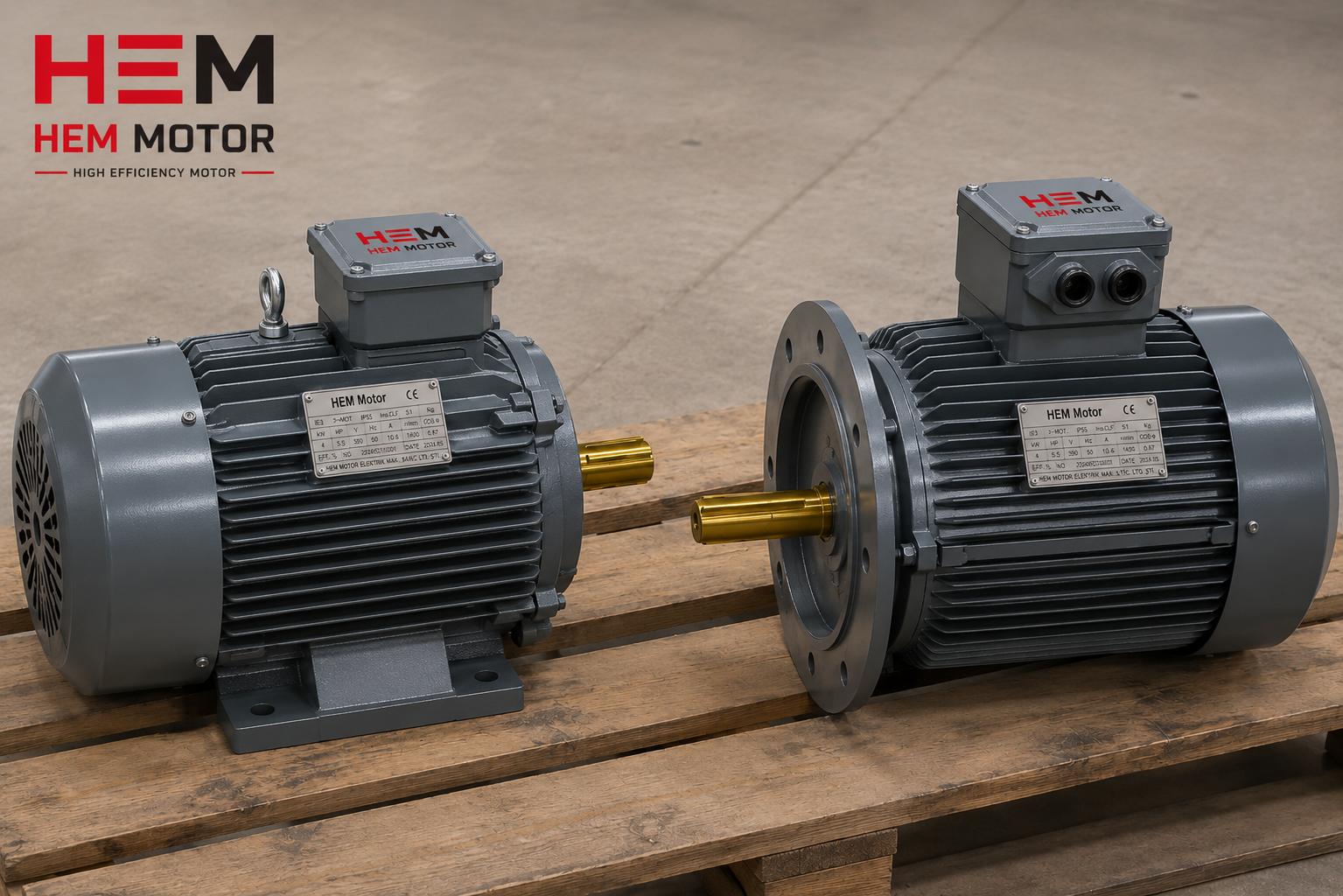
- Mounting type: B3 (foot), B5 (large flange), B35 (foot + flange); how it attaches to the machine.
- Shaft diameter and key: Critical for coupling or pulley compatibility.
- Protection and insulation class: IP55, class F and the like; suitability for the ambient conditions.
When an equivalent motor is selected with this information, mechanical and electrical compatibility is guaranteed. We covered the method of replacing an old brand motor exactly in our direct replacement of an old brand motor article, and the nameplate-reading details in our reading an IE3 motor nameplate article. When the right information is shared, fast delivery from stock becomes possible and a process already strained by a long standstill is prevented from dragging on further.
The Right Product Group and Supply
The right product group for an asynchronous motor to be replaced after a long standstill is asynchronous / AC electric motors and IE3/IE4 efficient motors with 100% copper windings, class F insulation, IP55 protection and designed for continuous duty (S1). For exact compatibility with the existing motor, the kW, speed/poles, frame size, mounting type (B3/B5/B35) and shaft diameter data must be clear. As a manufacturer and supplier, technical support is available both for fast delivery from stock and for equivalent selection based on the nameplate.
Special Cases in Seasonal and Standby Motors
The risk of a long standstill is seen most in certain motor groups. Each of these motors has a different prevention strategy:
Irrigation and Agricultural Pump Motors
Agricultural pump motors that stand idle for months outside the irrigation season are exposed to moisture and dust because they wait in open or semi-open environments. Before starting at the beginning of the season, insulation and shaft checks must be performed. We covered the supply and storage recommendations for these motors in our irrigation and agricultural pump motor supply article.
Fire Pump and Standby Motors
Motors waiting for emergencies, such as fire pump motors, stand idle for long periods yet must engage instantly and safely when needed. For these motors, periodic test runs, an anti-condensation heater and regular insulation measurement are vital. You can review critical spare motor planning for facilities in our critical spare motor list and stock planning article.
Seizing (False Brinelling) and Vibration Damage
A motor that stands motionless for a long time can suffer a special bearing damage if there is vibration nearby (for example, if other machines are running close by). When bearing balls are exposed to vibration at the same point, small dents form on the raceway surface; this is called false brinelling. This damage shows itself as noise and vibration when the motor is started and shortens bearing life. As prevention:
- Store stock or standby motors away from vibration sources,
- Periodically turn the shaft by hand so the balls load different points,
- On motors whose shaft must be secured during transport, remember to remove this restraint before commissioning.
We covered the factors affecting bearing life and the quality signs in our bearing and seat life in cast iron motors article.
A Gradual, Controlled Start at Commissioning
Even after the insulation and mechanical checks are complete, the first start after a long standstill must be done in a controlled way:
- No-load trial: If possible, first decouple the motor from the load and run it idle; observe noise, vibration and heating.
- Short run: At the first start, run the motor briefly and stop it, checking bearing and winding temperature.
- Current observation: Watch whether the current drawn is close to the rated value; excessive current can indicate a mechanical problem.
Make sure the rotation direction and phase sequence are correct; a wrong phase sequence can cause operation in the wrong direction on loads such as pumps. We covered this in our motor rotation direction and phase sequence article. You can find the causes of early failures and understanding quality at purchase in our electric motor lifespan and early failure causes article.
Frequently Asked Questions
What happens if I start a long-idle motor immediately?
The biggest risk is applying voltage directly to a moisture-laden winding; this can cause leakage current and winding burnout in the first seconds. Also, a seized bearing or rusted shaft can cause excessive current draw and mechanical damage at startup. So insulation resistance should be measured first, the shaft turned by hand, and the winding dried if necessary.
Insulation resistance came out low, is the motor scrap?
No, not necessarily. In most cases low insulation resistance is caused by moisture and the value returns to normal after controlled drying. If the value does not rise despite drying, there may be permanent winding damage; then rewinding or motor replacement comes into question. The decision should be based on measurement results and the motor's power/frame class.
How do I protect a standby motor against failure?
Store the motor in a dry environment away from temperature fluctuations. Periodically turn the shaft a few rotations to prevent the bearing loading the same point. If possible, use an anti-condensation heater and measure insulation resistance at intervals. These simple measures greatly reduce the risk of failure at the first start.