English
 Türkçe


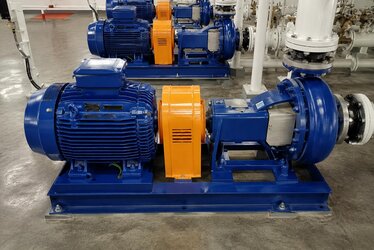
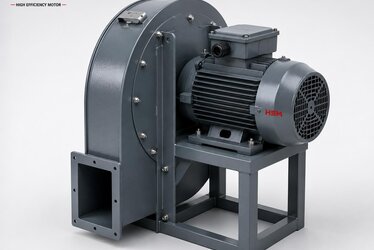
Choosing the right electric motor for field, garden and greenhouse irrigation depends on the pump type, the water source and on-site electrical conditions as much as on supply continuity. The irrigation season is short and intense; a stalled pump motor means crops left without water. As HEM Motor, with our identity as both manufacturer and supplier, we provide three-phase motors and cast iron body motors suitable for irrigation applications from submersible to centrifugal and surface pumps, from stock and with fast delivery. This guide approaches irrigation and agricultural pump motors from a purchasing perspective: which motor for which pump, IP protection in the open field, voltage fluctuation and long-cable effects, generator operation and the right steps to request a quote.
Motor Selection by Irrigation Pump Type
There are three main pump families in irrigation, and each creates a different motor requirement. For the right supply, you first need to clarify your pump type.
Submersible (Deep Well) Pump Motors
In submersible systems drawing water from a well, the motor is specially built to operate underwater, with a body and sealing structure different from a surface motor. In deep wells, the required power grows as flow rate and head increase. Without well diameter, static water level and dynamic drawdown figures, the correct motor cannot be determined. In our deep well pump motor selection guide we show the flow-head-speed calculation step by step. The deep well is the most common source in greenhouse and field irrigation, so keeping a spare motor significantly reduces downtime risk.
Centrifugal Pump Motors
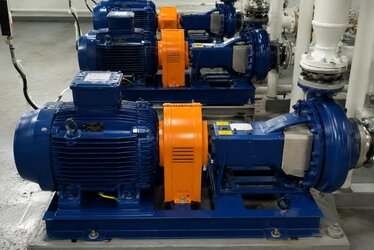
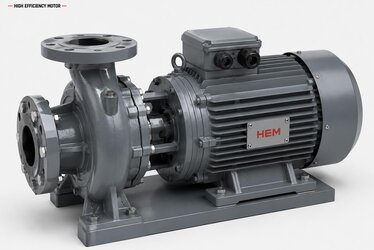
In centrifugal pumps drawing surface water from a pond, canal or tank, the motor is usually coupled directly or flange-mounted to the pump shaft. The critical point here is to select a motor that meets the power demand at the pump operating point. An undersized motor is constantly strained at overload; an oversized one means wasted investment and low-efficiency operation. To correctly calculate power from flow and head, our centrifugal pump motor selection: flow, head and power matching article clarifies the purchasing decision. In centrifugal pumps, 2900 rpm (2-pole) motors are preferred for high pressure, and 1450 rpm (4-pole) motors for more balanced, quieter applications.
Surface and Inline Pump Motors
Booster systems maintaining pressure in drip irrigation lines and surface monoblock pumps require compact motor solutions. When replacing the motor of an existing pump, exact matching from the nameplate is the safest way; we explained this approach in our booster motor replacement from the nameplate article. If you experience low pressure in your irrigation line, the problem is usually not the pump but an incorrectly sized or worn motor.
IP Protection Class in the Open Field: Field and Greenhouse Conditions
Irrigation motors do not operate in a controlled machine room; they work under dust, mud, splashing water, humidity and direct sunlight. Therefore the motor protection class (IP) is at the center of the supply decision. Our standard production is IP55 protection class; fully dust-protected and protected against water jets from all directions, safely covering most open-field applications. Higher protection may be required at points with high indoor greenhouse humidity, wet floors or temporary water accumulation. We compared which class suits which condition in our IP protection class selection: IP55, IP65, IP66 article. If installing in the open field, building a protective canopy over the motor extends its life and eases the maintenance interval.
In humid environments such as greenhouses and fields, where corrosive fertilizer/pesticide vapors may exist, the body material also matters. The cast iron body, with its mechanical strength and corrosion resistance, is suitable for the open field. We addressed this in our corrosion protection and open-field use in cast iron body motors article. The sealing of the terminal box and the cable gland selection at the cable entry are also decisive for IP protection to actually hold in the field.
Voltage Fluctuation and the Long Cable Problem
The most common problem in agricultural sites, and the one that shortens motor life the most, is unstable mains voltage and long supply cables running to the pump. A well or pond may be hundreds of meters from the transformer. A long cable causes voltage drop; a motor fed with lower voltage than its nameplate value draws more current, heats up and strains its windings.
This must be considered at the purchasing stage. The cable cross-section must be selected adequately, and if necessary the motor should be supported with the correct cross-section and proper protection relay rather than jumping to a larger power rating. In sites with high voltage fluctuation, motor protection devices (thermal, phase-protection relay) are essential. Requesting these devices together with the motor reduces the risk of mid-season failure; we detailed the subject in our electric motor protection devices: order them together when buying article. Phase loss is very common in agricultural sites, and an unprotected three-phase motor will burn out quickly if it runs on a single phase.
Generator-Powered Irrigation Systems
In fields where the grid is absent or unreliable, the irrigation pump is often fed from a generator. The critical point here is the high current the motor draws during start-up. A directly started pump motor draws a start-up current several times its rated current; if the generator cannot handle this sudden load, the voltage collapses and the motor cannot start. Therefore the generator must be selected significantly larger than the motor power, or the starting method must be softened.
We explained in detail how many kVA of generator handles how many kW of motor and how to manage start-up current in our how many kVA generator handles how many kW motor? and motor selection on generator-powered sites articles. In large irrigation pumps, starting with star-delta or a soft starter protects both the generator and the motor.
Special Conditions in Greenhouse Irrigation
Greenhouse irrigation brings challenges different from the open field. High relative humidity in the enclosed environment, chemical vapor formed during fertilizing and spraying, and temperature fluctuations constantly strain the motor. A pump motor working inside a greenhouse usually operates in continuous duty (S1); that is, it turns nonstop throughout the day. This makes the right choice essential in terms of both heat management and insulation class. The F-class insulation in our standard production is a suitable baseline for these conditions with its high-temperature resistance; H class can be considered in harsher environments. We addressed the effect of insulation class on life in our motor in hot and dusty environments: insulation class and cast iron body selection article.
Another critical issue in greenhouses is the motor terminal box and cable entry. Water condensing in a humid environment can seep in through a loose gland and reach the windings. Therefore making the cable connection sealed and with the correct gland ensures that IP protection works in the field, not just on paper. We detailed terminal box and correct gland selection in our motor terminal box and cable connection: IP protection and correct gland selection article. Paying attention to these points while moving and reconnecting the motor in greenhouse and portable irrigation lines prevents most mid-season failures.
Stock and Spare Motor Planning
The most expensive situation in irrigation is production stopping the moment the motor fails. Failing to deliver water for a day at the season peak can jeopardize an entire harvest. That is why it makes sense for agricultural businesses to keep a spare motor in their most-used power and speed combinations. We addressed which powers should be kept in stock in our critical spare motor list: which powers to keep in stock? article. We explained the importance of pre-season planning in motor purchasing in our motor purchase for agricultural machinery: pre-season stock planning article. Procuring the spare motor before the season starts is always more advantageous in terms of both price and lead time.
Speed, Power and Efficiency: Correct Sizing
Determining the correct kW for an irrigation pump affects both energy cost and motor life. The actual motor power is found by adding pump and motor efficiency to the hydraulic power calculated from the pump flow and head. We explained this calculation generally in our HP or kW? understanding motor power correctly article, and what load is efficient to run a motor at in our at what load should you run a motor? article.
Efficiency class also directly affects cost. Since irrigation pumps run long hours throughout the season, choosing a high IE3/IE4 motor provides tangible savings on the energy bill. Our IE3 electric motor and IE4 electric motor options are offered in a wide power range from 0.25 kW to 355 kW and at different speeds, from stock or with fast delivery. You can examine why high efficiency is a priority in intensive-use work like irrigation in our high-efficiency electric motors category.
The HEM Motor Advantage in Agricultural Irrigation Motor Supply
Irrigation is a calendar-bound business. As HEM Motor, with the manufacturer experience we have gained since 1979, we stand by you with stock depth and fast shipping during the periods when field and greenhouse irrigation intensifies. From our products page you can examine our pump, fan and general-purpose motors, our mounting types and reducer options. For foot-mounted (B3) motors coupled to the pump or flange-mounted (B5) motors connected directly, you can see the right connection type on our electric motor mounting types page. All our guides on other pump and fan applications are in our pump, fan and blower motors section.
Frequently Asked Questions
Which speed motor should I buy for my irrigation pump?
In deep wells and drip irrigation lines requiring high pressure, 2900 rpm (2-pole) motors are generally preferred. For surface irrigation requiring lower pressure, high flow and quieter, balanced operation, 1450 rpm (4-pole) motors are suitable. The correct speed depends on your pump's operating curve and required head; requesting a quote together with the pump nameplate or pump manufacturer's data is the soundest approach.
Is an IP55 motor sufficient in the open field?
In most open-field applications, IP55 protection class provides adequate protection against dust and water jets. However, if the motor may be submerged, exposed to heavy mud or pressure washing, a higher protection class should be considered. In any case, placing the motor under a canopy and checking the terminal box sealing significantly extends its life.
How should an irrigation motor be protected off-season?
When the season ends, store the motor in a dry, moisture-free environment; keep the terminal box closed; and before the first start of a long-idle motor, measure the insulation resistance (megger test). Moisture can accumulate in the windings of a long-idle motor. We explained how to perform this check on stock or standby motors in our asynchronous motor insulation resistance article; these simple checks are the key to starting the new season with confidence.
Get a Quote
Let us determine the right pump motor for your field and greenhouse irrigation together. Share your pump type, flow rate, head, voltage and site conditions; we will quickly recommend the suitable three-phase motor and efficiency class. For an immediate quote, reach us through our contact page or call our line at +90 (532) 345 49 86. HEM Motor keeps up with your irrigation season from stock and with fast delivery.