English
 Türkçe


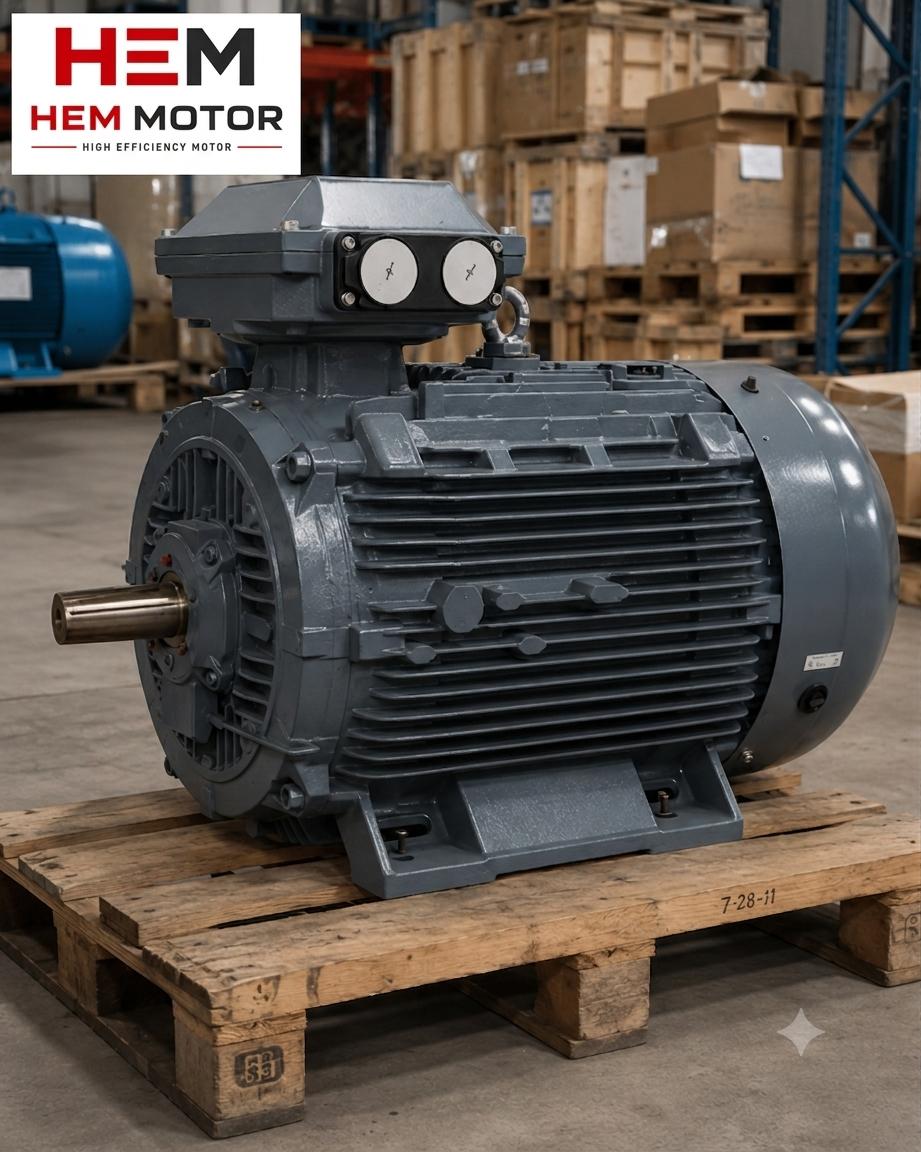

An electric motor that has waited in storage for weeks, even months, can look perfectly clean and sound from the outside. Yet an invisible danger may be quietly advancing inside the motor: moisture. The winding insulation slowly absorbs moisture from the air during storage, and this moisture can cause a serious winding failure the moment the motor is first energised. That is why the most critical check to perform before commissioning a motor that has come out of stock or stood idle for a long time is the insulation resistance measurement. In this guide we cover step by step what the megger test is, how it is done, what acceptable values are, and why this check is indispensable for stock motors.
Our goal is not just to give you a test procedure but to show you how to verify the health of an asynchronous motor with a simple measurement before energising it. Because a low insulation resistance value is often the only early sign of an approaching failure, with no visible damage at all.
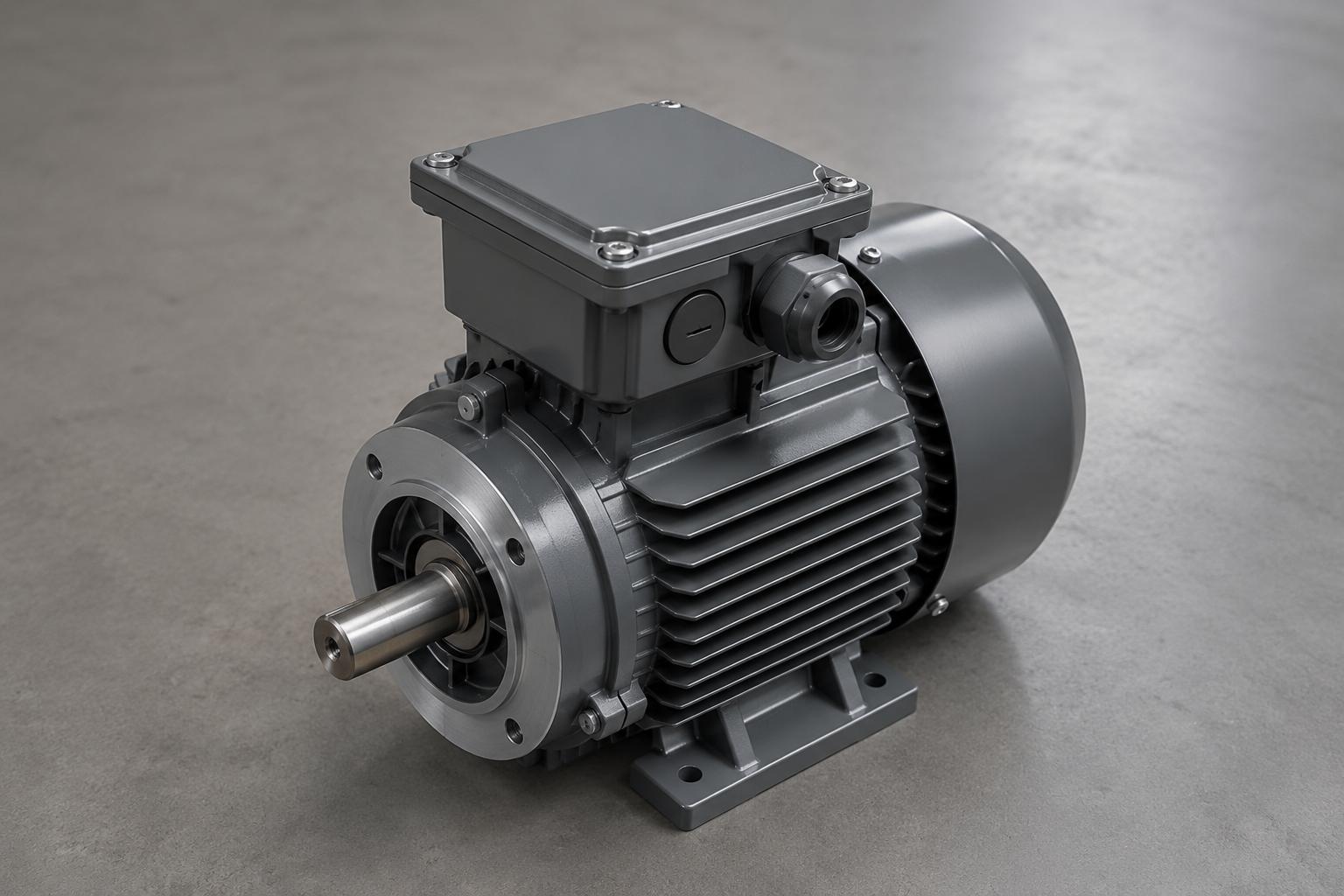
What Is Insulation Resistance and Why Does It Matter?
Insulation resistance is the measure of how well the insulation material between the motor's windings and its body (ground) blocks electricity. Sound insulation does not allow current to leak from the winding to the body; this resistance is measured in megaohms (MΩ), and the higher it is, the healthier the insulation.
Over time, moisture, dirt, heat and ageing weaken the insulation. As the insulation weakens, the insulation resistance drops. A low MΩ value indicates that the winding insulation has deteriorated and that there is a risk of ground leakage, even winding burnout, when the motor is energised. This is precisely why it is essential to perform this measurement before energising, especially on motors waiting in stock.
What Is the Megger (Insulation Resistance) Test?
The megger is a special device that measures insulation resistance. Its difference from an ordinary ohmmeter is that it performs the measurement by applying a high direct voltage (DC). This high voltage tests the insulation's true strength; weaknesses that cannot be noticed with low voltage emerge in this test.
- 500 V megger: Commonly used on low-voltage motors (for example, standard motors connected to a 400 V grid).
- 1000 V megger: Preferred on higher-voltage or critical motors.
The megger is connected between the winding terminals and the motor body (ground terminal), and the device applies voltage for a set period, reading the resistance in megaohms.
How Is the Test Done? Step-by-Step Procedure
The megger test is relatively simple, but safety rules must absolutely not be neglected.
- 1. Cut the power: Be absolutely certain that all electrical connections of the motor are disconnected and de-energised. This is mandatory for both personal safety and accurate measurement.
- 2. Separate the terminal connections: Separate the winding terminals from other circuit elements in the terminal box so that only the motor winding is measured.
- 3. Connect the megger: Connect one end of the device to the winding terminal and the other end to the motor body (ground).
- 4. Take the measurement: Start the device and read the value. The value at the end of one minute is usually taken as the basis.
- 5. Discharge: After the measurement, safely release the charge accumulated in the winding.

Acceptable Values and Interpretation
How high the insulation resistance should be depends on the motor's voltage and temperature. As a general rule of thumb, the insulation resistance should never be very low (for example, below a few megaohms); in a healthy motor this value is usually at the level of hundreds of megaohms. A low value is a warning that must always be investigated.
Temperature Correction
Insulation resistance is sensitive to temperature; as temperature rises, resistance drops. Therefore, to compare measurements taken at different temperatures, values are corrected to a standard temperature (usually 40°C). This correction is important for accurately tracking the trend over time.
Polarization Index (PI)
The polarization index is the ratio of the 10-minute measurement value to the 1-minute measurement value. This ratio is a valuable indicator of whether the insulation is dry and clean. A high PI value indicates that the insulation is healthy, while a low PI shows that the insulation has weakened due to moisture or contamination.
Why Is Insulation Checking Critical for Stock Motors?
A motor that has waited in storage for a long time may have absorbed moisture without any visible damage. Energising this motor directly can cause the moist insulation to break down and the winding to be damaged. The megger test protects both the motor and the commissioning process by revealing this risk before energising. When a low value is measured, the motor can often be dried (heated) to raise the insulation resistance again, which can save a motor from being scrapped.
In terms of stock and supply, performing this simple check on every motor to be commissioned prevents surprise failures in the field and the downtime they cause. When supplying a spare motor for a critical line, ensuring that the product comes from healthy stock increases confidence. For up-to-date electric motor prices and spare motor stock availability, the healthiest approach is to clarify your technical specifications and request a quote. For a wider product range you may also evaluate the IE3 electric motor and three-phase geared motor options.
Information to Send to Your Supplier
When supplying a motor, providing the nameplate data in full (power, speed, voltage, mounting type, insulation class) ensures the right product arrives fast. An insulation resistance measurement before commissioning should be a standard check step for both new motors and those that have waited in stock for a long time. An approach with this clarity guarantees that the right product arrives and minimises the risk of unplanned downtime.
What Should Be Done When Low Insulation Resistance Is Found?
A low value in the megger measurement does not necessarily mean the motor is faulty. There is a road map to follow, and in most cases the motor can be saved.
- Investigate moisture first: The most common cause of a low value is moisture. The motor's storage conditions and idle time should be reviewed.
- Apply controlled drying: The motor is dried in a controlled way using the manufacturer's recommended method (for example, heating with low voltage or hot air). During drying, the insulation resistance is measured periodically to track the rise in value.
- Measure again: If the value rises to an acceptable level after drying, the motor can be commissioned safely.
- Expert evaluation for persistent low values: If the value remains low despite drying, there may be permanent damage in the insulation; in this case an authorised evaluation is needed.
Regular Measurement and Trend Tracking
Measuring insulation resistance regularly within periodic maintenance, not only before commissioning, lets you see the insulation's behaviour over time. A continuously falling insulation resistance is the herald that the insulation is ageing and that intervention will soon be needed. This trend tracking is the basis of predicting a sudden winding failure in advance (predictive maintenance). Recording every measurement is essential to be able to see this trend; a single measurement shows only the current state, not the trend.
Safety and Correct Practice in the Megger Test
Insulation resistance measurement is a test in which a high direct voltage is applied; therefore safety rules must absolutely not be neglected. Being sure that the motor is disconnected from all energy sources before the measurement is mandatory for both the safety of the person performing the measurement and an accurate result. Safely discharging the charge accumulated in the winding after the measurement is equally important; otherwise the charge remaining in the winding can pose a danger.
- Correct voltage selection: A megger voltage suitable for the motor's rated voltage (for example, 500 V or 1000 V) must be chosen; an excessively high voltage can damage even sound insulation.
- Clean and dry surface: Having the terminal box clean and dry before measurement prevents misleadingly low values caused by surface leakage.
- Record keeping: Every measurement should be recorded together with the temperature information, so the trend over time can be compared correctly.
When these simple rules are followed, the megger test becomes both a safe and a reliable diagnostic tool. Making this short check standard on every motor that comes out of stock prevents surprise winding failures that could occur in the field.
Frequently Asked Questions
Should I run an insulation resistance test even on a new motor?
Yes, especially if it has waited a long time in stock or in a humid environment. Even though a new motor left the factory sound, it can absorb moisture during storage and transport. A short megger measurement before commissioning catches a moisture problem that gives no visible sign early and prevents a possible winding failure.
I measured a low insulation resistance value; is the motor scrap?
Not necessarily. The most common cause of a low value is moisture. When the motor is dried (heated) in a controlled way, the insulation resistance often rises back to an acceptable level. However, if the value remains low despite drying, there may be permanent damage in the insulation, and expert evaluation is needed.
Why is the polarization index (PI) measured?
The PI shows the overall health of the insulation beyond a single instantaneous measurement. It is calculated as the ratio of the 10-minute and 1-minute values; a high ratio points to dry and clean insulation, while a low ratio points to insulation weakened by moisture or contamination. This is a valuable diagnostic tool, especially on critical motors.