English
 Türkçe


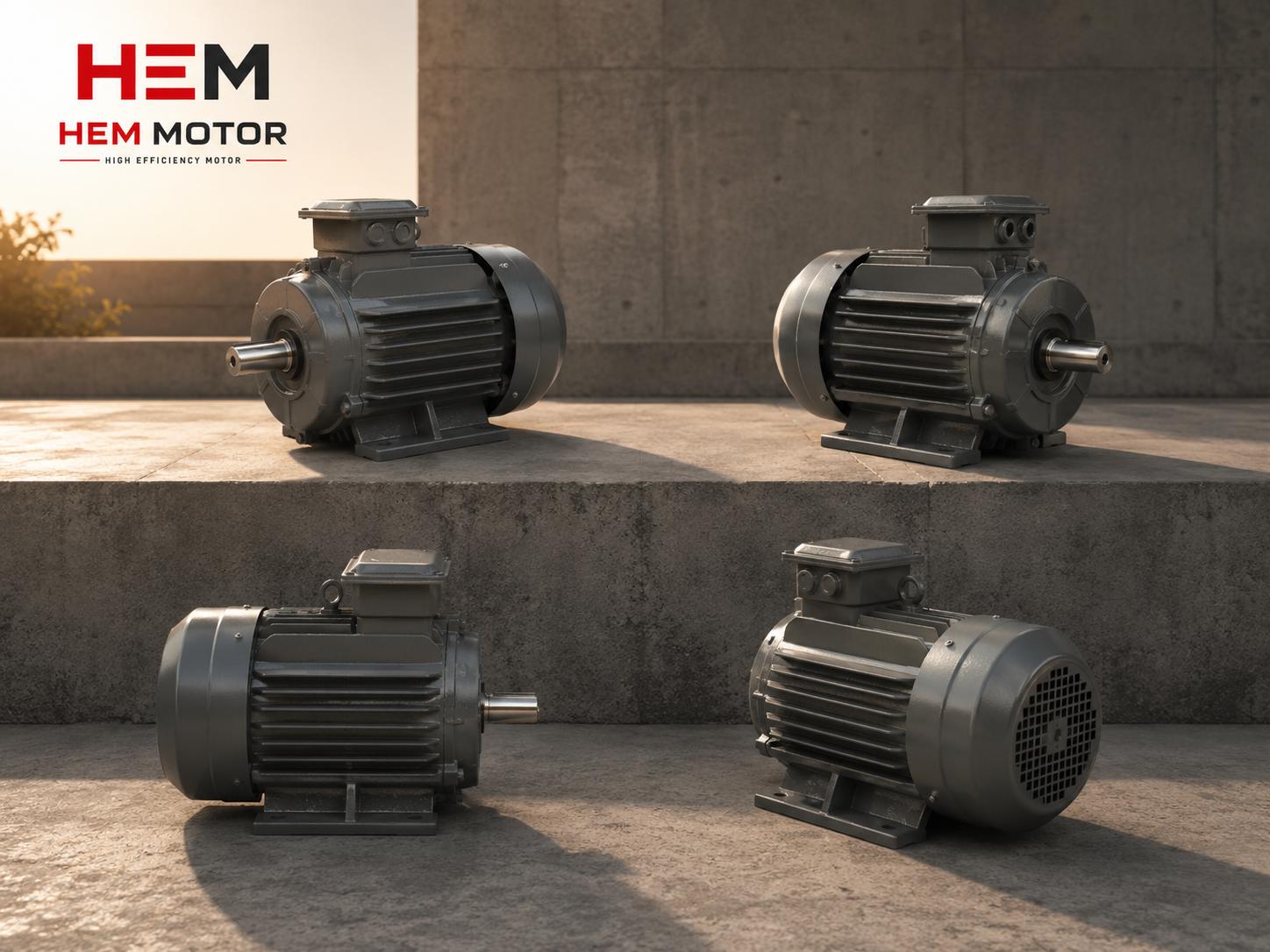

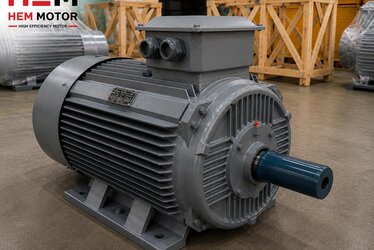
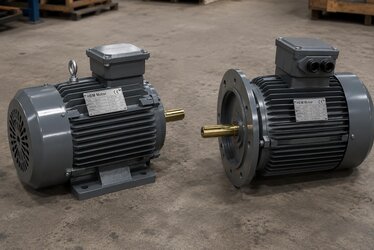
Cast iron body electric motors are noticeably heavier than their aluminium-bodied counterparts. In the field this weight provides a great advantage as mechanical strength and vibration damping; however, when it comes to transport, packaging, stacking and storage, the same weight turns into a risk item. A cast iron motor that is lifted incorrectly, tipped over, or stored under unsuitable conditions may suffer permanent damage to its shaft, terminal box, cooling fins or bearings. Moreover, some of this damage goes unnoticed until the motor is commissioned. In this article we have compiled the practical steps to follow in order to deliver heavy cast iron motors from the warehouse to the field without damage, to package them correctly, to stack them safely, and to protect them during long-term storage.
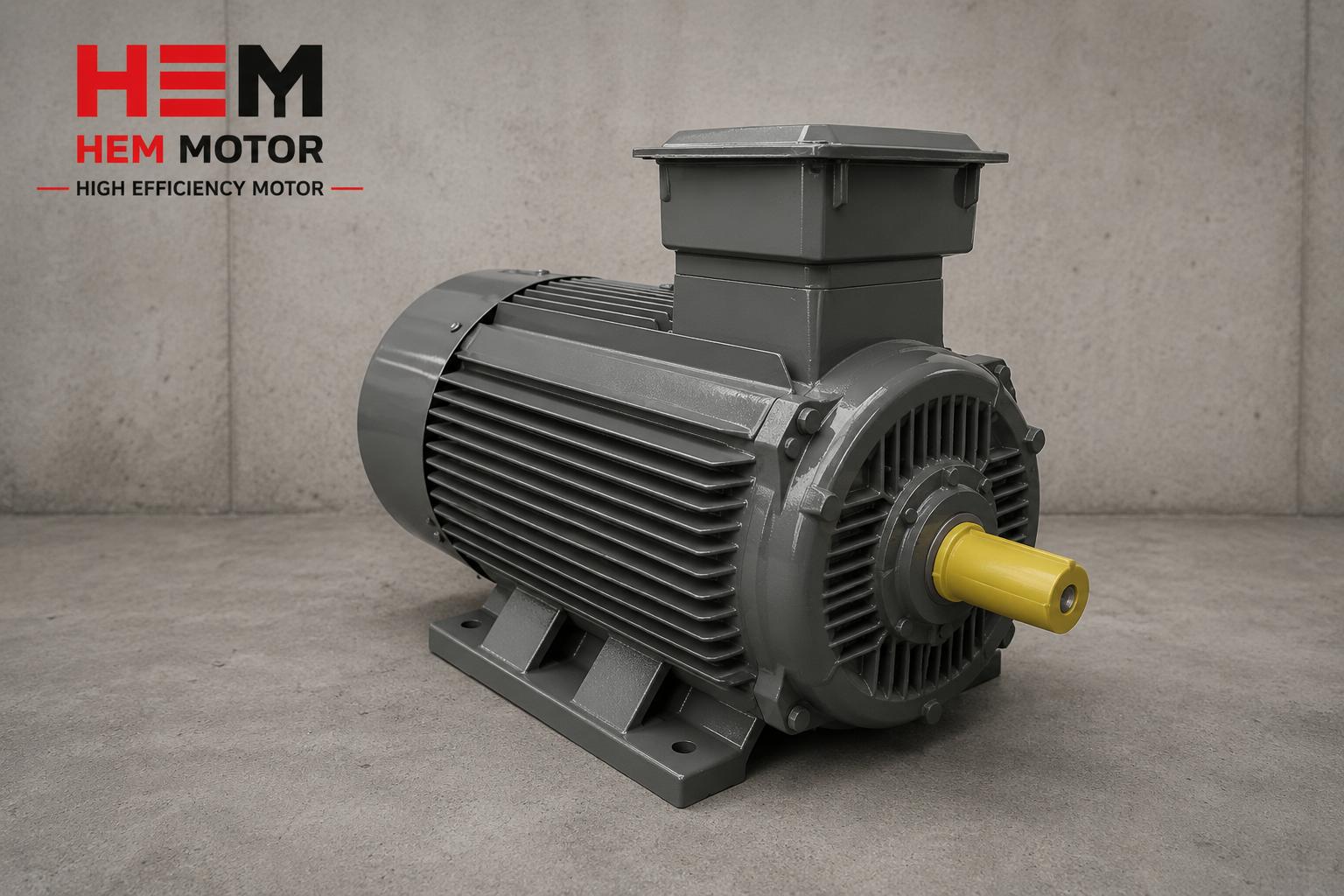
Why Is Handling a Separate Topic for Cast Iron Motors?
The cast iron body is offered in our catalogue range over a wide power span from 0.55 kW to 355 kW and grows from IEC 56 to 355L frame. As the frame grows, the weight increases exponentially; in large frames a single motor can exceed several hundred kilograms. For this reason, handling is not a logistics detail but the backbone of damage-free delivery. We explained the relationship of frame size, power and weight in a table in our article cast iron motor frame sizes (IEC 56-355): weight and handling. We compared the basic difference between cast iron and aluminium in cast iron or aluminium frame.
The cast iron body has high impact resistance; however, this does not mean the motor will withstand every impact. An impact stresses not the body but the sensitive parts attached to it (shaft end, terminal box, fan cover, bearings). We addressed why frame rigidity matters in impact resistance and rigidity in the cast iron body.
Correct Packaging: Pallet, Crate and Stretch Wrap
For heavy cast iron motors, the purpose of packaging is to secure the motor and protect the shaft and sensitive surfaces from impact.
Pallet and Crate Selection
Small and medium frame motors (roughly 56–132 frame) are usually palletised in a sturdy carton box. For large frame motors (160 and above) a wooden crate is preferred; bolting the motor to the crate base through its feet prevents sliding and tipping during transport. Because the centre of gravity of the motor is high, a motor not fixed by its feet can tip over at the slightest jolt and break the terminal box or fan cover.
Shaft and Sensitive Surface Protection
The shaft end is the most critical surface where the coupling or pulley will be mounted; even the smallest nick leads to an alignment error. The shaft must be protected with a plastic sleeve or foam cap, and no foreign object must enter the keyway. We explained the importance of shaft-key-coupling compatibility in cast iron motor shaft diameter, key and coupling. The terminal box cover must be closed and the gland holes plugged, with no moisture or dust entering.
Stretch Wrap and Moisture Barrier
A motor stretch-wrapped on a crate or pallet is both held as a unit and protected against dust. In an open environment or sea freight, moisture is the biggest enemy; in this case it is recommended to place a desiccant (silica gel) pouch inside the motor and wrap it with VCI (volatile corrosion inhibitor) film. We detailed the topic of corrosion protection in corrosion protection and open-field use in cast iron motors.
Stacking: The Limit of Placing One on Top of Another
The weight of cast iron motors is the source of the most common mistakes in stacking. The approach “sturdy body, I can put anything on top” is wrong. Points to watch when stacking:
- Load path: If crates are to be stacked, the weight must rest on the crate construction, not on the motor of the lower crate. Carton boxes on their own cannot carry the load of heavy motors.
- Stack height: For large frame motors, stacking is limited; often a single tier or at most two tiers is recommended. The manufacturer’s stacking mark on the crate (e.g. “maximum 2 tiers”) must be respected.
- Terminal box and fan cover orientation: When the motor is stacked, the terminal box or fan cover must not be under pressure; the load must be transferred to the main load-bearing parts of the body.
- Tipping prevention: Tall and narrow motors (e.g. designed for vertical mounting) must be chocked to prevent rolling when stacked horizontally.
Lifting With the Eyebolt: The Most Critical Moment
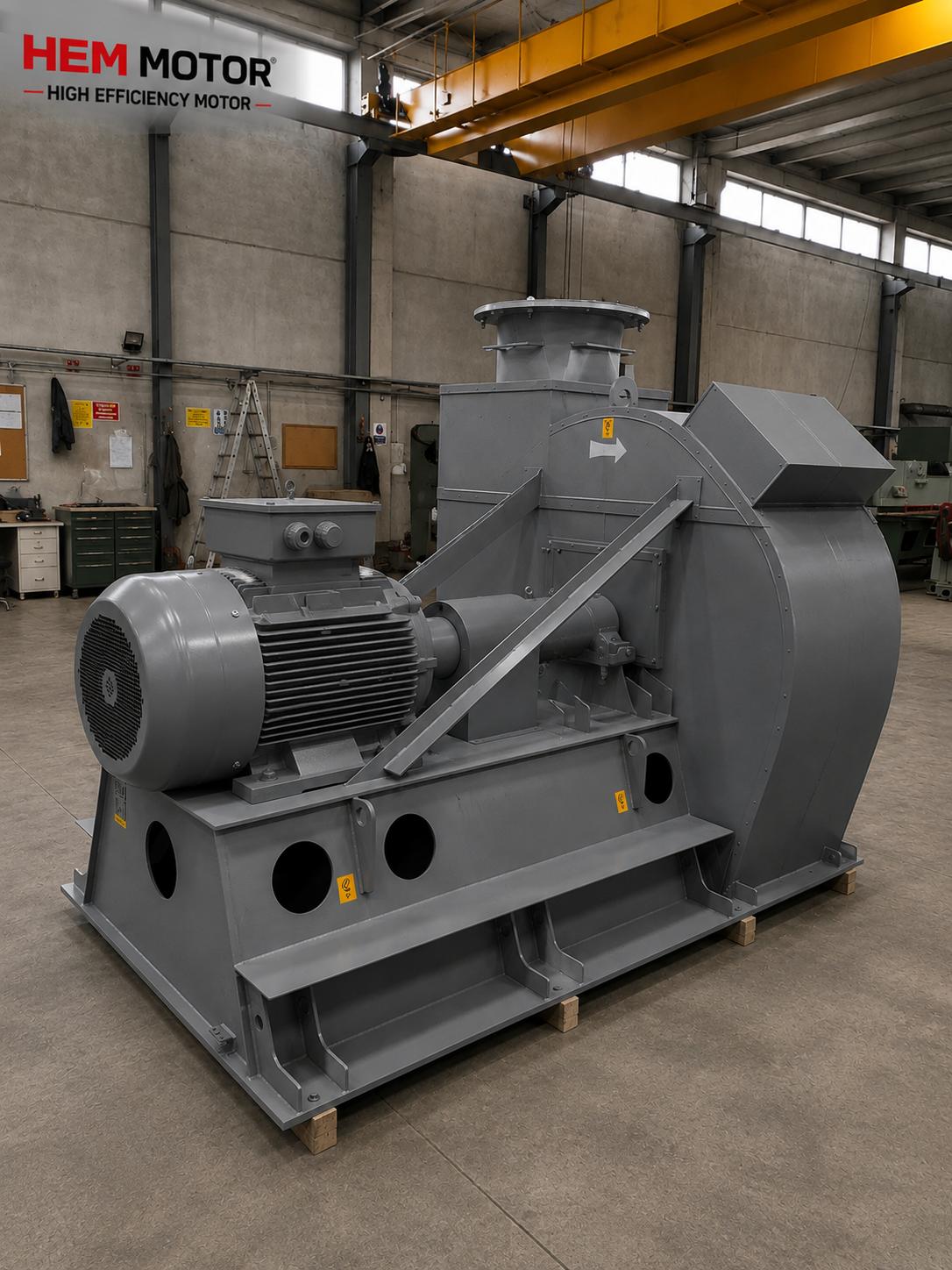
Lifting a heavy cast iron motor is the most critical stage in terms of damage and occupational safety. The lifting eyebolt on the motor is designed only to carry the motor’s own weight; it cannot be used to lift a complete assembly such as motor + gearbox or motor + pump.
- Before lifting, it must be checked that the eyebolt is fully seated and tight on the body.
- The sling angle matters; the eyebolts must be loaded vertically and not forced at a horizontal angle.
- The motor weight must not exceed the sling and crane capacity.
We covered correct eyebolt use, weight estimation and safe lifting steps in detail in motor lifting eyebolt, weight and safe handling. You can find the lead-time, transport and commissioning planning for high-power motors in supply of high-power motors above 90 kW.
Storage: Moisture, Condensation and Long-Term Holding
If the motor will not enter the field immediately but wait in the warehouse, storage conditions directly affect bearing and shaft life. Because the thermal mass of the cast iron body is high, condensation can form on the body surface during daily temperature swings; if this moisture seeps into the bearing and winding it causes corrosion and a drop in insulation.
Warehouse Environment
Motors must be stored in a dry, ventilated environment with low temperature fluctuation. They must be kept on a pallet, not directly on the floor, and insulated from damp concrete. We explained the role of the condensation drain hole in cast iron motors in condensation drain hole in cast iron motors.
Bearing and Shaft Protection in Long-Term Holding
In a motor that stays motionless for months, because the bearing balls carry the load at the same point, there is a risk of false brinelling and grease migration in the bearing seat. In motors held for a long time, periodically turning the shaft a few turns by hand redistributes the grease in the bearing onto the balls. The shaft end must be protected with a rust preventive and the terminal box kept closed. Winding insulation must be checked with a megger before commissioning after long holding. You can find all aspects of storage and long-term holding in electric motor storage and long-term holding, and bearing life in bearing and bearing life in cast iron motors.
The Handling Difference in Horizontally and Vertically Mounted Motors
Cast iron motors can be designed for horizontal (B3, B5, B35) or vertical (V1, V5) mounting; the handling and stacking approach changes accordingly. A horizontally mounted motor naturally rests on its feet or flange and is stable in handling. Vertically mounted (especially shaft-down V1) motors are usually transported and stored in a horizontal position; because the risk of tipping is high in the vertical position. However, because the oil seal and bearing structure of a vertical motor are designed for vertical operation, the manufacturer’s recommendation must be followed for long-term horizontal holding. We addressed vertical motor selection and the oil seal in vertically mounted electric motor selection (V1/V5) and reading the mounting code in motor IM mounting code reading.
In flanged (B5/B14) motors, the flange surface is a precise centring surface; it must not be struck during handling, and the flange holes must not be damaged. If the centring surface of a flanged motor gets nicked, an alignment problem arises when seating on the gearbox or pump flange. We detailed mounting type selection in B5 flange or B14 flange.
Protecting the Cooling Fins and Fan Cover
The cooling fins on the outer surface of the cast iron motor are critical for dissipating the heat the motor produces. Nicking or crushing these fins during handling reduces the cooling surface; in the field the motor runs hotter than expected. Likewise, because the fan cover (fan cowl) is made of thin sheet metal, it is one of the parts most exposed to impact; a crushed fan cover can rub against the cooling fan inside, causing noise and additional heating. Therefore, in packaging the fan cover side must be protected, and no load must rest on this side during stacking. We explained the relationship between dirt build-up on the cooling fins and efficiency in cooling fins and dirt build-up in cast iron motors.
Additional Precautions in Open-Field and Sea Shipment
If the motor will be shipped to an open field or a coastal/marine environment, standard packaging is not enough. Salt-air corrosion quickly forms rust on the machined surfaces of the cast iron body (shaft end, flange, foot base). In this case the machined surfaces must be coated with special protective grease or rust preventive, the motor wrapped with VCI film, and the crate prepared waterproof. We addressed protection selection in marine and coastal facilities in cast iron motors in marine and coastal facilities and the contribution of paint and cataphoresis coating to corrosion in paint and cataphoresis coating in cast iron motors. You can find export shipment from Turkiye to neighbouring countries in motor supply to neighbouring countries.
Checking on Receipt
Damage inspection on receipt of the motor prevents disputes that may arise later. The packaging should be checked for impact marks, the crate for breakage, the shaft for nicks, the fan cover for crushing, and the terminal box for cracks. Insulation resistance and rotation direction checks should also be done before commissioning. We explained incoming and acceptance inspection step by step in electric motor incoming and acceptance inspection and transport damage risks in damage risks in electric motor transport. You can find shipping options to Anatolia and other cities in motor shipping to Anatolia facilities, and visit our home page for our product range.
Frequently Asked Questions
How many tiers can I stack cast iron motors?
This depends on the frame size and crate construction. While small frame motors can be stacked a few tiers on sturdy pallets, for large frame (160 and above) heavy motors often a single tier or at most two tiers is recommended. The key is that the upper load rests on the crate construction, not on the lower motor, and that the manufacturer’s stacking mark on the crate is respected.
Can I lift the motor together with a pump or gearbox using the eyebolt on it?
No. The lifting eyebolt on the motor is designed only for the motor’s own weight. To lift a complete assembly such as motor + pump or motor + gearbox, the appropriate lifting points on the assembly base must be used; otherwise the eyebolt is overloaded and the body may be damaged.
What should I do with a motor to be held for a long time?
Store the motor on a pallet in a dry, ventilated environment with low temperature fluctuation. Protect the shaft end with a rust preventive and keep the terminal box closed. Periodically turn the shaft a few turns by hand to redistribute the bearing grease. Measure the winding insulation with a megger before commissioning.
Get a Quote
Contact us to have your heavy cast iron motors delivered correctly packaged, crated and damage-free. Share the power, frame size and delivery address; let us create the appropriate packaging and shipping plan together. To get a quote right away, call us on +90 (532) 345 49 86 or reach us through our contact page.
Transport and Storage Checklist
- Are motor weight and frame size clarified to decide the packaging type (carton/pallet/crate)?
- Is the large frame motor fixed to the crate base through its feet?
- Is the shaft end protected with a sleeve/cap, and the terminal box closed with gland holes plugged?
- Are VCI film and desiccant used for humid/sea shipment?
- Are the stack height and crate stacking mark respected?
- Is the lifting eyebolt checked, and the sling angle and crane capacity verified?
- Is the warehouse dry, ventilated and on a pallet; is the motor insulated from damp concrete?
- Is a periodic shaft-turning plan made for long-term holding?
- Is damage inspection done on receipt and a megger measurement before commissioning?