English
 Türkçe

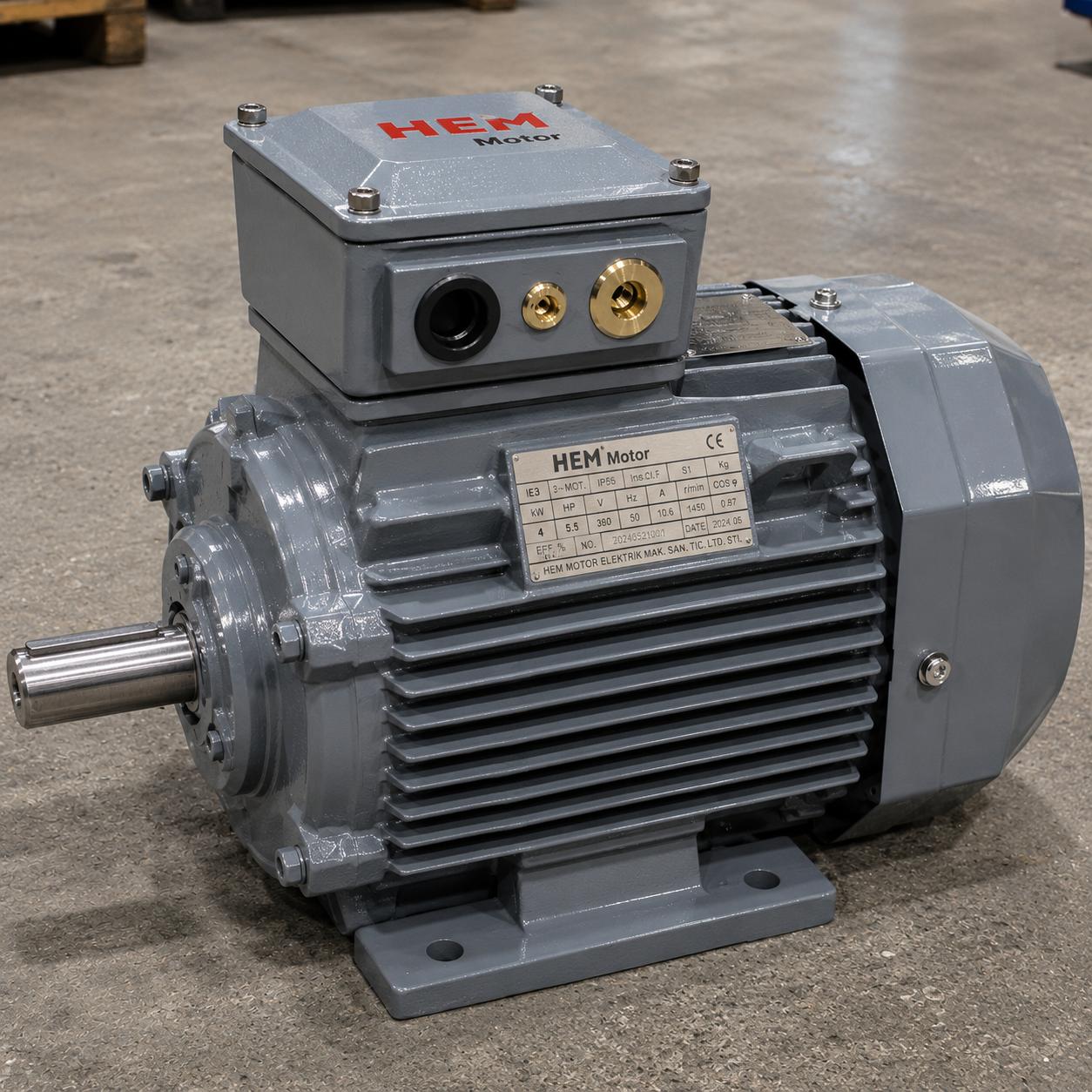

For a cast iron framed motor working outdoors, in front of a cold store, or in a high-humidity plant, the quietest enemy is not the rain outside; it is the water that condenses inside the frame. The motor heats up under load and cools down when stopped. Through this heat-cool cycle, the air inside the frame expands and contracts; in other words, the motor effectively breathes. As a hot motor cools after stopping, internal pressure drops and humid outside air is drawn in through gaskets, the shaft seal and the terminal entry. This humid air condenses into water droplets on the cold winding and frame surfaces. Over time this water lowers the insulation resistance of the winding, contaminates bearing grease and starts corrosion on the inner frame surfaces. This is exactly where the breather valve and the condensation drain plug come in.
Cast iron frames have thicker walls and higher thermal mass than aluminium, so they release heat slowly; this prolongs the condensation cycle and increases moisture build-up. A cooling thick cast frame offers surfaces that stay below the dew point for a long time, and these surfaces are perfect condensation foci. Therefore a breather valve and drain plug are not a luxury on cast iron motors; in open-field and humid environments they are an option that directly determines service life. The higher a winding's insulation resistance, the lower its annual failure probability; moisture management is precisely an investment to preserve that resistance. In this article we explain how the breather valve works, where the drain plug is positioned, how to select it in line with the IP protection class, and which combination is needed in which environment, supported by technical tables, field examples and an ordering checklist.
Why Does a Motor "Breathe"? Thermal Cycling and Condensation Mechanics
A closed motor frame appears sealed together with its internal air volume; however, no gasket is absolute. While the motor runs, the winding and frame reach 60-90°C, the internal air expands and excess air escapes through the gaskets, shaft seal cavity and terminal entry. When the motor stops and returns to ambient temperature, the air in the internal volume cools and contracts, pressure drops, and this vacuum effect draws air in from the surroundings. If the ambient air is humid (coastal area, greenhouse, cold store, open field, washdown food plant), the water vapour in the drawn-in air condenses on the coldest surface of the frame. The physics is simple: when the temperature falls below the dew point, the moisture in the air turns to liquid and clings to the metal.
In a motor that performs several stop-starts per day, this cycle repeats hundreds or even thousands of times. Each cycle deposits a tiny amount of moisture, and over time water collects at the bottom of the terminal box, on the lower inner frame surface and in the NDE bearing cavity. The water does not act alone; together with dust, salt and chemical vapours that enter, it forms a conductive film. This accumulated film lowers the winding insulation resistance (megger value) from hundreds of MΩ to single-digit MΩ, even down toward the kΩ limit. When insulation resistance drops, leakage current rises, partial discharges between phase and ground begin, and finally the winding burns out. A motor expected to run trouble-free for years is taken out of service by an unexpected stoppage caused by this invisible moisture build-up.
Seasonal effects also matter: in regions with large day-night temperature swings, even if the motor never runs, the frame temperature rises during the day and falls at night, and this natural oscillation also creates a breathing effect. So it is not only the operating cycles but also the daily thermal swing of the environment that produces condensation. For this reason moisture management should be considered even for spare motors standing idle for long periods.
What Does the Breather Valve Do?
The breather valve provides a controlled and filtered air path between the frame interior and the outside environment. When a pressure difference arises, the valve membrane opens, passing the dry side of the air while largely retaining moisture and dust particles. So while the motor "breathes", the moisture load of the incoming air is reduced and pressure build-up inside the frame is prevented. Advanced types use a moisture-blocking (hydrophobic) membrane; this membrane blocks water molecules while passing air molecules. As a result the pressure is equalised but moisture cannot enter. A well-designed breather valve also reduces the pressure stress on the gaskets, extending seal and o-ring life, because the pressure difference acting on the seals during each thermal cycle is lowered.
The flow capacity of the breather valve is selected according to the motor's volume and thermal cycling rate. Large-frame motors with frequent stop-starts require a high-flow valve; otherwise the valve cannot equalise the pressure fast enough and the excess pressure again draws unfiltered air through the gaskets. Therefore valve selection is not merely "present/absent" but must be of the correct capacity.
What Does the Drain Plug Do?
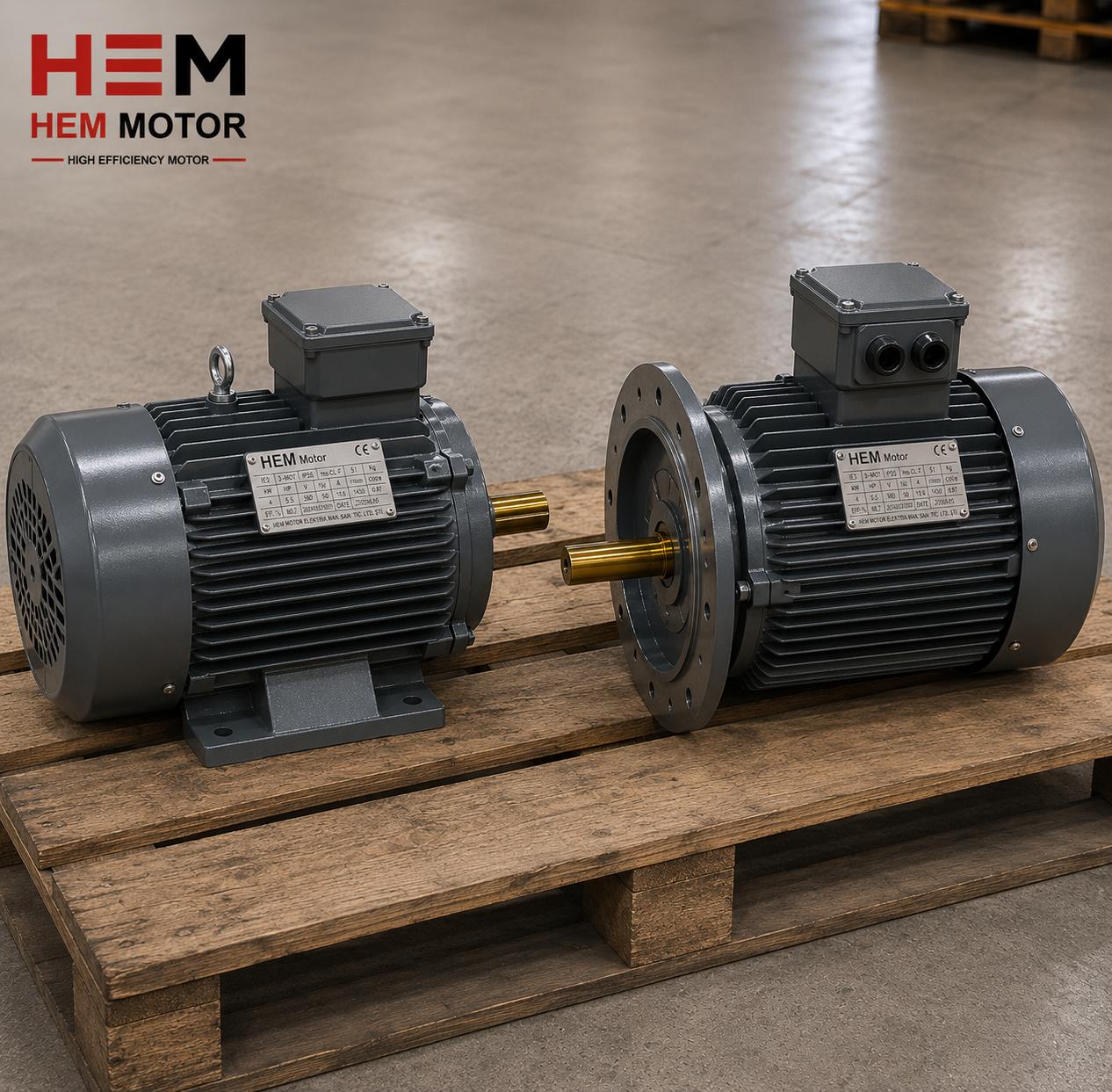
The drain plug is a discharge element placed at the lowest point of the frame, allowing collected condensation water to flow out by gravity. Two types are common: (1) a periodically opened threaded plug (loosened by hand during maintenance to drain water, then retightened), (2) an automatic labyrinth drain (continuously open but preserving IP, releasing water drop by drop and blocking dust/water ingress with its labyrinth geometry). Correct mounting position is critical: when the motor is installed on site, the drain plug must be physically at the lowest point of the frame. Because the lowest point changes between horizontal (B3) and vertical (V1) mounting, the drain position must be specified according to the mounting arrangement. Many motors have two separate drain points, for both the drive-end (DE) and non-drive-end (NDE) bearing areas; since water can collect in both regions, twin drains are the safest solution.
With periodic threaded plugs, maintenance discipline is essential: if the plug is not opened and the water not drained and is forgotten, the drain loses its purpose. Therefore on motors mounted high, hard to reach, or running continuously, an automatic labyrinth drain is preferred. The automatic drain discharges collected water continuously but in a controlled way, removing the maintenance burden while maintaining IP protection.
Compatibility with IP Protection Class: Does the Breather Valve Degrade IP?
A common concern is: "If I drill the frame and fit a valve, won't my IP66 protection drop?" A correctly selected breather valve and drain plug preserve the motor's IP class. These are elements that replace the standard plug hole and have their own sealing rating. Hydrophobic-membrane breather valves and labyrinth drain plugs are supplied certified in the IP55-IP66 range. What matters is that they are mounted into the motor's existing plugged/threaded standard points, with the correct thread and the correct seal. An arbitrarily drilled hole lowers IP; but a valve seat designed by the manufacturer preserves IP. The table below summarises the recommended combination by environment and IP class.
| Environment / Use | Recommended IP | Breather Valve | Drain Plug |
|---|---|---|---|
| Indoor, dry plant | IP55 | Not required | Threaded (periodic) |
| Humid production / washdown area | IP65 | Hydrophobic membrane | Labyrinth automatic |
| Open field / coastal / high humidity | IP66 | Hydrophobic + stainless | Labyrinth + stainless |
| Cold store / frequent stop-start | IP66 | Membrane, high flow | Twin drain (DE+NDE) |
| Salt coastal / off-shore | IP66 + C5 paint | Stainless, membrane | Stainless, automatic |
Open Field and High Humidity: The Cast Iron Frame's Advantage and Risk
The cast iron frame is superior in impact and mechanical strength in open field; thanks to its thick walls and high rigidity it also damps vibration well. However its high thermal mass prolongs the condensation period: after the motor stops, the frame stays cold for a long time, and during this period moisture keeps condensing. For this reason a breather valve + drain combination is almost mandatory on cast iron motors placed outdoors. The additional options that strengthen moisture management are:
- Anti-condensation heater (space heater): Keeps the winding 5-10°C above ambient while the motor is stopped, preventing condensation at source; together with a breather valve it gives the strongest protection. By keeping the frame above the dew point, the heater makes it physically impossible for moisture to turn liquid.
- Tropicalisation: Protection of the winding against moisture and fungus with extra impregnation/varnish; extends life in humid climates and reduces the effect of moisture on insulation resistance.
- Stainless accessories: In coastal (salt-mist) environments, stainless valves and plugs prevent corrosion; otherwise the valve itself can rust and clog.
- Correct mounting orientation: The drain must always be at the physical lowest point; otherwise water is not discharged but instead accumulates. This rule is especially critical in vertical mounting.
- Corrosion-resistant paint (C4/C5): Extra paint systems extend frame life so the outer surface does not rust in high-humidity and salt environments.
These options complement each other. Evaluating them one by one when selecting a motor for open field, coast or a high-humidity food plant ensures the motor runs trouble-free for years. Conversely, relying only on a high IP class and neglecting moisture drainage is a common mistake: IP66 prevents water ingress from outside but does not drain the condensation produced inside. This is exactly where the critical importance of the drain plug lies.
Selecting the Right Option: Pre-Order Checklist
When ordering a cast iron motor for a humid/open-field application, clearly providing the following information guarantees the correct breather and drain configuration:
- Mounting position (B3 horizontal, B5 flange, B35, V1 shaft down) — determines drain position.
- Ambient humidity and temperature range; presence of salt, chemical or steam moisture.
- Daily number of stop-starts (condensation cycle frequency).
- Target IP class (IP55 / IP65 / IP66) and paint class if required.
- Whether anti-condensation heater, tropicalisation and stainless accessories are required.
- Whether the motor runs continuously or intermittently; whether it is a long-standing spare.
When this information is provided, the motor is prepared at the factory with the correct drain position, correct valve flow and suitable heater voltage; there is no need for later on-site interventions such as drilling holes or adding plugs that put IP at risk.
Drain Plug Types Comparison
| Property | Threaded Plug | Labyrinth Automatic Drain |
|---|---|---|
| Discharge method | Manual, periodic | Continuous, self-acting |
| Maintenance need | Regular opening required | Minimal |
| IP protection | High when closed | IP55-IP66 continuous |
| Clogging risk | Low | Labyrinth may clog if dust is heavy |
| Suitable environment | Low humidity, planned maintenance | High humidity, frequent cycling |
Frequently Asked Questions
Does fitting a breather valve reduce the motor's IP protection?
No. A correctly selected hydrophobic-membrane breather valve and labyrinth drain plug provide IP55-IP66 protection with their own sealing classes. When a certified valve is used instead of a blank plug, the IP class is preserved; in fact, by draining condensation, the motor's real protection improves. What matters is that the valve is mounted onto the manufacturer-designed correct thread and seal; a hole drilled arbitrarily on site breaks the IP.
Where should I place the drain plug?
The drain plug must be at the physical lowest point of the frame when the motor is installed on site. This point changes between horizontal (B3) and vertical (V1) mounting; therefore the mounting position must be stated at the ordering stage. A drain in the wrong position will not discharge water and may even cause water to accumulate. If water may collect in both the front and rear bearing areas, twin drains are recommended.
Do I still need a breather valve if an anti-condensation heater is fitted?
The two serve different functions and together provide the strongest protection. The heater keeps the winding above the dew point while the motor is stopped, preventing condensation at source; the breather valve handles pressure equalisation and acts as a moisture filter for the incoming air. In open-field plants with frequent stop-starts, using both together with the drain plug is recommended.
Conclusion and Supply
On a cast iron motor, the breather valve and condensation drainage are critical options that directly protect winding life and insulation resistance in open-field and high humidity. A high IP class prevents water ingress from outside; but only the drain plug discharges the condensation produced inside, and only the breather valve and anti-condensation heater balance the effect of humid air. The right combination is determined by the ambient humidity, the mounting position and the target IP class. HEM Motor supplies its cast iron framed motors with breather valve, drain plug, anti-condensation heater and tropicalisation options from stock with fast delivery. Share your environmental conditions and request a quote for a moisture-management configuration suited to your application; let our project team recommend the right option combination according to the mounting position.
Related content: IP protection class selection, anti-condensation space heater, cast iron motor corrosion and open field, terminal box and cable gland selection and motor storage and moisture management.