English
 Türkçe

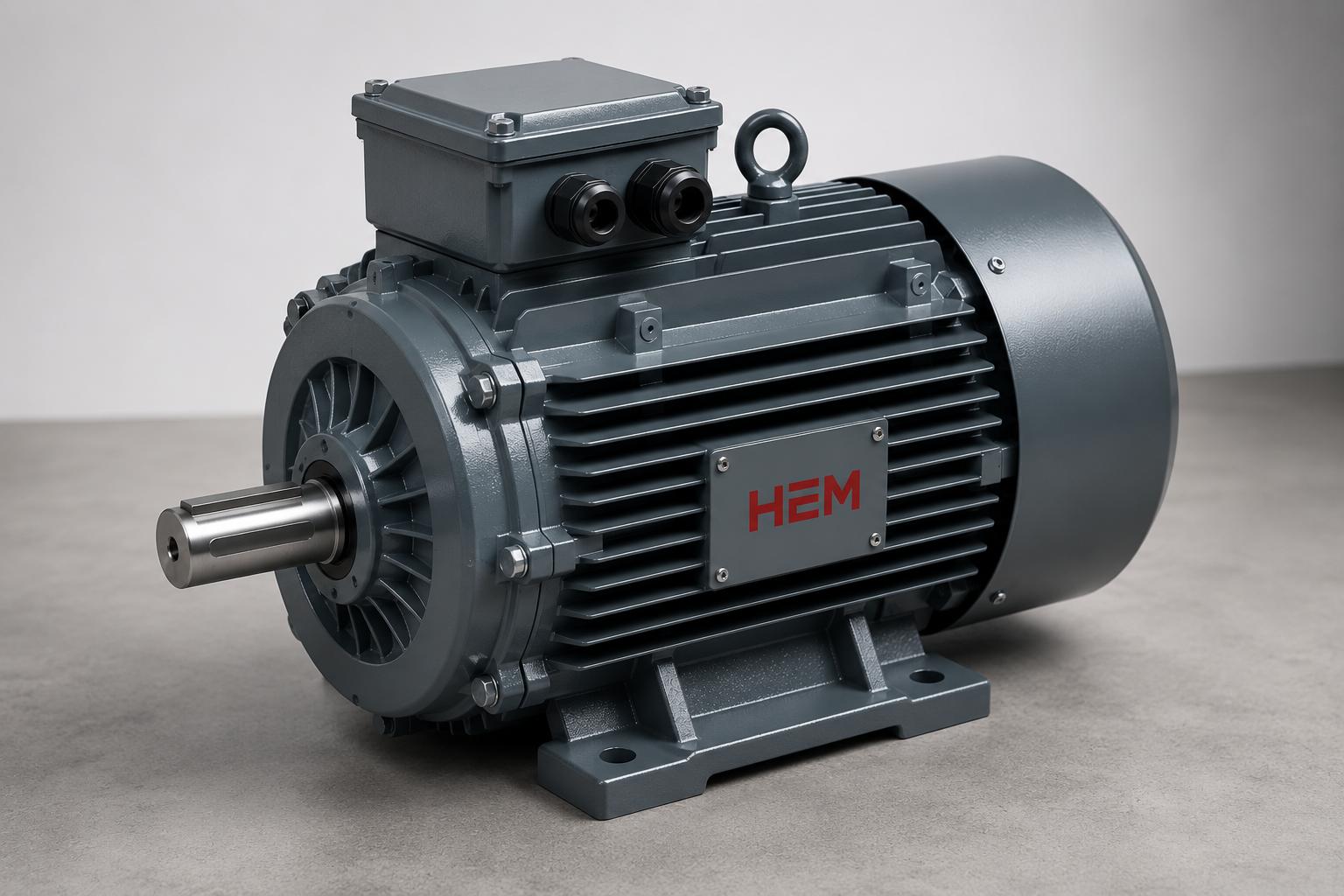

On an IE3 motor running in high-power and critical applications, measuring winding and bearing temperature at only one point is not sufficient. Different regions of the motor heat up at different rates; one phase winding can be hotter than the others, and the front bearing can be loaded differently from the rear bearing. For this reason, a multi-point RTD (Resistance Temperature Detector) temperature monitoring architecture is used in high-power and important motors: typically 6 winding RTDs (two per phase) and 2 bearing RTDs (one each on the front/rear bearings). These eight sensors are read in sequence by an RTD scanner, and the thermal map of the motor is monitored in real time.
The first decision in RTD monitoring is the sensor type: PT100 or PT1000? Both are platinum resistance temperature sensors; the difference is in their resistance at 0°C (PT100 = 100 ohms, PT1000 = 1000 ohms). This difference determines the effect of cable resistance on the measurement and the sensitivity. The correct sensor type, the correct wiring (especially 3-wire), and the correct alarm/trip thresholds protect the motor from early failure. As HEM Motor, we supply high-power and critical IE3 motors with the correct RTD architecture. In this article we cover the difference between PT100 and PT1000, the 6+2 RTD layout, the RTD scanner, the 3-wire connection and the alarm/trip strategy.
PT100 and PT1000: Which RTD Sensor Should Be Chosen?
PT100 and PT1000 use the near-linear change in the resistance of the platinum element with temperature. The basic differences between them:
- Resistance value: PT100 is 100 ohms at 0°C, while PT1000 is 1000 ohms. The resistance of the PT1000 is ten times higher.
- Effect of cable resistance: The cable's own resistance makes up a larger percentage of the total measurement in the PT100; therefore cable compensation (3-wire connection) is critical in the PT100. In the PT1000 the effect of cable resistance is relatively small.
- Sensitivity: Because the PT1000 gives ten times more resistance change per degree, it provides a better signal-to-noise ratio at low current.
- Prevalence: In industrial motors, PT100 is the de facto standard, and most RTD scanners/relays are compatible with PT100. PT1000 is preferred in special cases requiring a long cable or low power consumption.
We explained in detail the basic logic of motor winding temperature monitoring and the difference between PT100 and the PTC thermistor in our article on motor winding temperature monitoring: PT100 and PTC thermistor.
6 Winding RTDs + 2 Bearing RTDs: Why This Architecture?
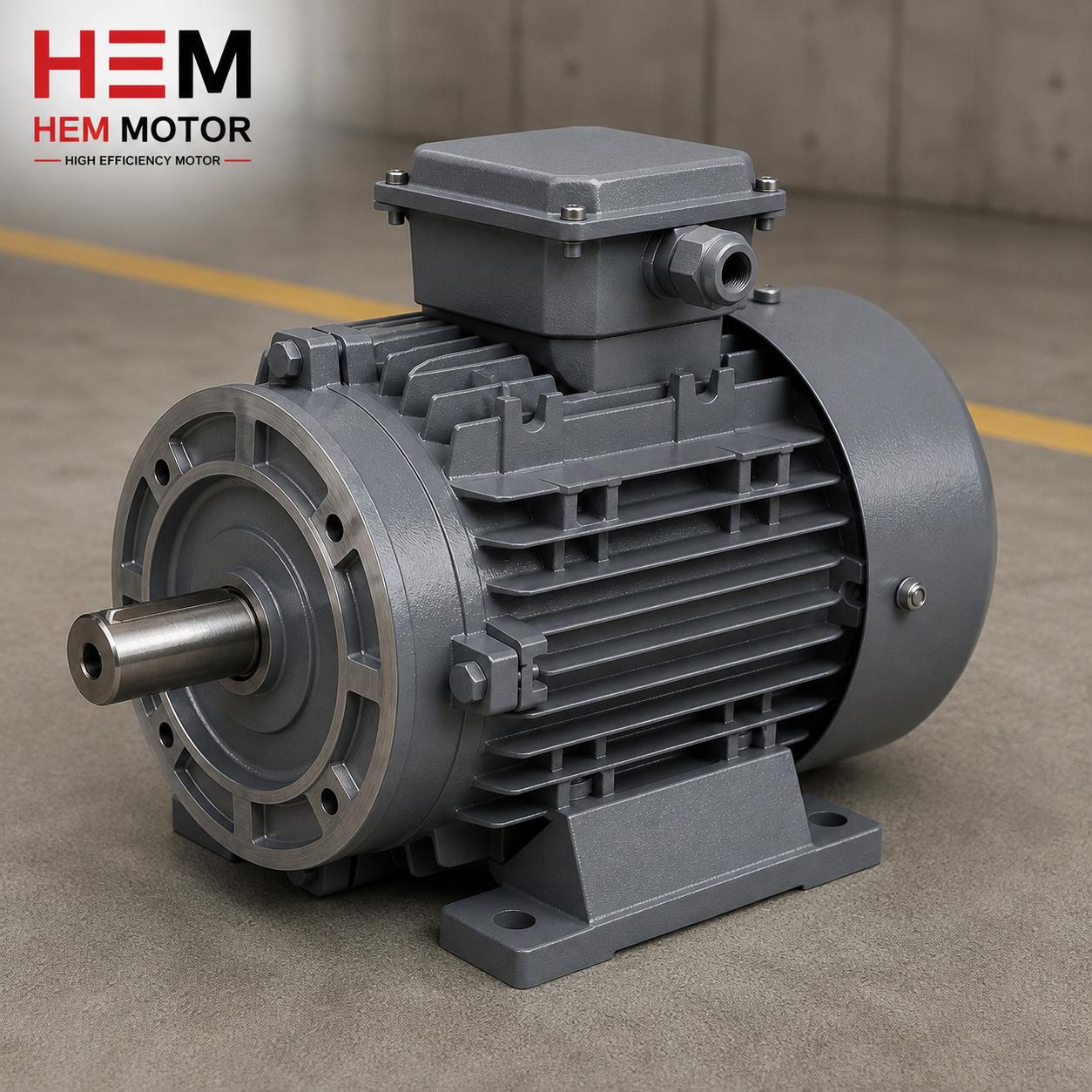
In large IEC/NEMA motors, the standard temperature monitoring architecture is 6 winding + 2 bearing RTDs. The logic of this layout is as follows:
- 6 winding RTDs (two per phase): Two RTDs are embedded at the slot bottom of each phase winding. The two sensors provide redundant measurement even if one fails and increase the probability of capturing the hottest point of the phase. Even if the three phases are loaded in balance, an insulation fault or phase imbalance can make one phase hotter than the others; therefore each phase is monitored separately.
- 2 bearing RTDs (front/rear): One RTD is placed on each of the front (drive / DE) and rear (non-drive / NDE) bearings. A rise in bearing temperature is an early sign of lubrication failure, overload, misalignment or bearing damage.
These eight sensors monitor both the electrical (winding) and mechanical (bearing) health of the motor simultaneously. Double RTDs per phase ensure continued protection in critical applications in case of a sensor failure. You can find how to correctly install temperature protection in our article on temperature protection (PTC/PT100) wiring in IE3 motors.
3-Wire Connection: Why Does It Compensate for Cable Resistance?
The resistance of an RTD changes with temperature; the measuring device reads this resistance to calculate the temperature. However, the connecting cable between the sensor and the device also has a resistance, and this is added to the measurement as an error. There are three connection methods to eliminate this error:
- 2-wire: The simplest but least accurate method. The cable resistance is added directly to the measurement; used where a short cable and low accuracy are required.
- 3-wire: The standard method in industrial motors. The third wire makes it possible to measure and compensate for the cable resistance; it gives an accurate measurement even on long cables. It is almost mandatory for PT100.
- 4-wire: For laboratory and the highest-accuracy measurements; it completely eliminates the cable resistance.
The 3-wire connection is the de facto standard for motor RTDs; it balances correct accuracy with practical installation. You can review the terminal-side details of the 3-wire connection in our article on Pt100 (RTD) 3-wire connection and terminal selection.
PT100 / PT1000 RTD Architecture and Connection Table
| Feature | PT100 | PT1000 |
|---|---|---|
| Resistance at 0°C | 100 ohms | 1000 ohms |
| Cable resistance effect | High (3-wire required) | Low |
| Prevalence (motor) | De facto standard | Special cases |
| Recommended connection | 3-wire | 2 or 3-wire |
| Number of winding RTDs | 6 (two per phase) | |
| Number of bearing RTDs | 2 (front DE + rear NDE) | |
| Reading | RTD scanner (8 channels sequential) | |
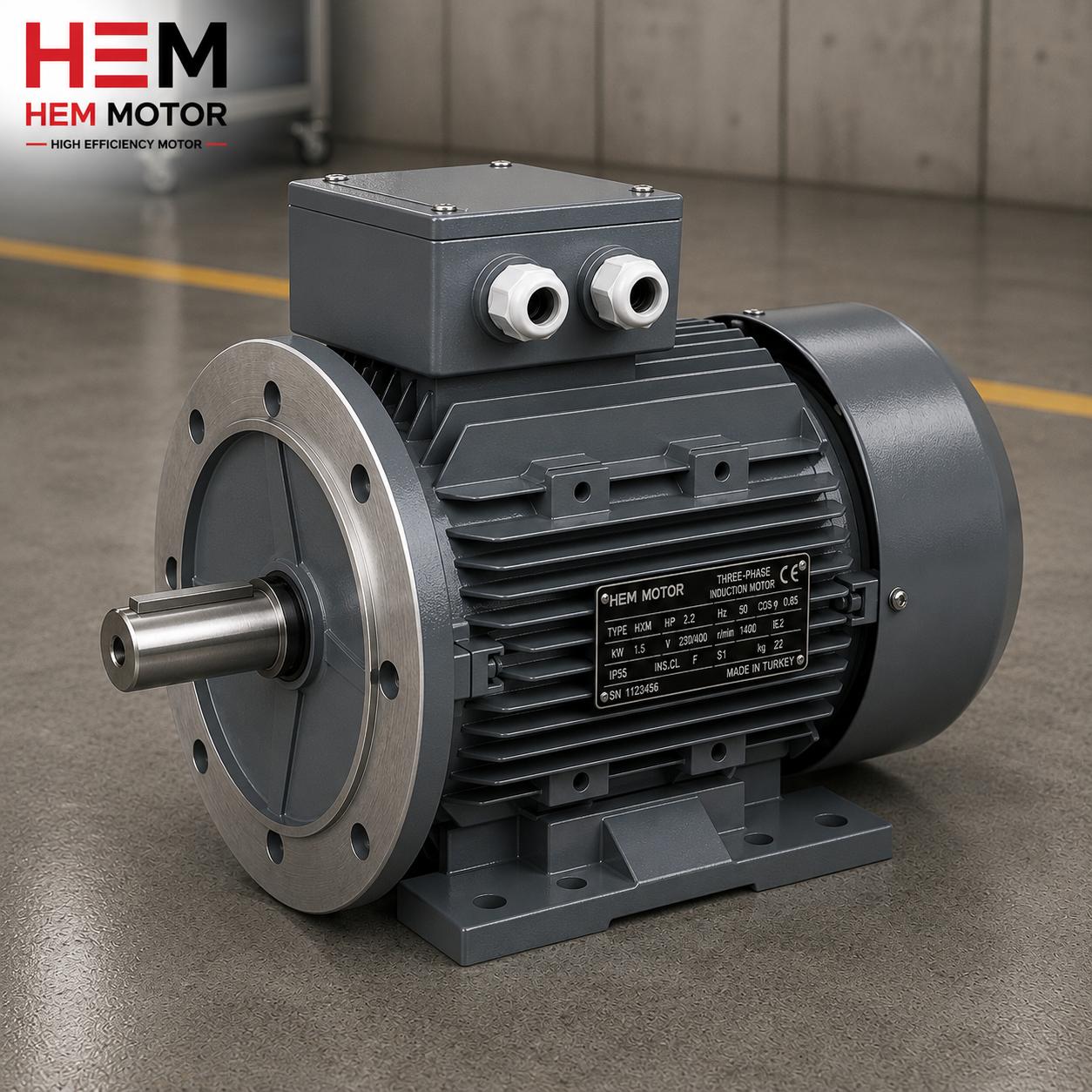
RTD Scanner: Monitoring Eight Sensors with One Device
Monitoring eight RTDs individually is not practical. The RTD scanner reads the temperature of each sensor by scanning all channels in sequence, displays it on the screen, and allows a separate alarm/trip threshold to be defined for each channel. The features of a typical RTD scanner:
- Multi-channel: Supports 8, 12 or more RTD channels; the 6+2 architecture fits into a single device.
- Threshold per channel: A separate alarm and trip temperature is set for each winding and bearing.
- Communication: Sends data to a PLC or SCADA via Modbus/RS485; remote monitoring becomes possible.
- Logging and trend: Stores temperature history, enabling trend analysis for predictive maintenance.
The scanner protects the motor by continuously monitoring the hottest channel; when one sensor exceeds the threshold it first gives an alarm, and if it rises further it gives a trip.
Alarm and Trip Thresholds: Two-Stage Protection
The power of RTD monitoring is that it offers two-stage protection. Unlike single-stage (trip only) protection:
- Alarm threshold: Gives a warning when the temperature approaches a dangerous level; the operator can reduce the load or investigate the cause. The motor does not stop, production continues.
- Trip threshold: Stops the motor when the temperature reaches the critical limit; prevents the winding from burning.
The thresholds are determined according to the insulation class of the winding. We explained the temperature limits of the insulation class and its effect on life in our article on winding and insulation class (F/H) in IE3 motors. The general approach is to set the alarm a few degrees below the trip to give the operator a chance to intervene.
The Difference Between RTD, PTC and Bimetal Protection
Three different sensor technologies are used in motor temperature protection, and they serve different purposes. Knowing the difference between them is necessary to set up the correct architecture:
- RTD (PT100/PT1000): Measures temperature in an analog and continuous way; reads the actual degree. Separate thresholds can be defined for alarm and trip, and a trend record can be kept. Ideal for monitoring and predictive maintenance in large and critical motors.
- PTC thermistor: A threshold sensor whose resistance rises sharply at a certain temperature. It does not show the degree; it only triggers when the threshold is exceeded. It provides simple and reliable trip protection and is inexpensive.
- Bimetal (Klixon): A mechanical thermal switch; it opens a contact at a certain temperature. Like the PTC it gives single-stage protection, is economical, but has limited accuracy.
While continuous monitoring with RTDs is preferred in high-power and critical motors, single-stage PTC or bimetal protection may be sufficient in small and medium motors. In most applications, RTD (monitoring) and PTC (backup trip) are used together; one monitors the degree, the other forms an independent safety layer. Our article that compares these three technologies in detail, bimetal klixon, PTC and PT100 thermal protection comparison, guides the correct selection.
Remote Monitoring with SCADA and PLC Integration
One of the greatest advantages of the multi-point RTD architecture is that the thermal state of the motor can be monitored remotely and continuously. The RTD scanner transfers all channel temperatures to a PLC or SCADA system over Modbus RTU (RS485) or Modbus TCP. This integration provides the following capabilities:
- Centralized monitoring: The winding and bearing temperatures of dozens of motors are monitored from a single control screen.
- Trend and history: Temperature data is logged and the change over time is analyzed; a slowly rising bearing temperature gives advance warning that the bearing is nearing the end of its life.
- Automatic alarm management: When a threshold is exceeded, an automatic notification is sent to the operator; the response time is shortened.
- Predictive maintenance: The collected data enables maintenance to be planned before a failure occurs; unplanned downtime is reduced.
This architecture turns the motor from a passive protection device into an active data source, especially in plants with continuous production and high downtime costs. Monitoring the temperature trend produces value not only for instantaneous protection but also for long-term maintenance planning.
Correct RTD Architecture Selection: A Checklist
- Sensor type: PT100 and 3-wire connection in most motors; PT1000 is considered for long cables.
- 2 RTDs per phase for the winding (6 total), 2 RTDs front+rear for the bearings.
- The RTD scanner channel count must be sufficient for the 6+2 architecture; SCADA integration via communication (Modbus).
- Alarm and trip thresholds must be set separately according to the insulation class.
- Redundant (double) winding RTDs should be preferred in critical motors.
- Ordering the motor from the factory with the RTD option is more reliable than later installation.
Frequently Asked Questions
Should I choose PT100 or PT1000?
In most industrial motors, PT100 with a 3-wire connection is the de facto standard, and most RTD scanners/relays are compatible with PT100. Because the resistance of the PT1000 is ten times higher, the effect of cable resistance is felt less; it is therefore preferred in special cases requiring a very long cable or low current/low power consumption. Choosing according to which type your existing monitoring device supports is the most practical approach.
Why are two RTDs used per phase?
Two RTDs per phase increase both redundancy and the probability of capturing the hottest point. Even if one sensor fails, the other continues to measure; in addition, the chance of capturing the hottest region of the winding rises. Even if the three phases are loaded in balance, an insulation fault or phase imbalance can make one phase hotter than the others, so each phase is monitored separately with two sensors. This is the standard approach in high-power and critical motors.
What is the difference between an RTD scanner and a simple thermal relay?
A simple thermal relay makes an indirect temperature estimate by looking at the motor current and generally provides single-stage tripping. An RTD scanner, on the other hand, reads the actual temperature directly from sensors embedded in the windings and bearings, defines a separate alarm and trip threshold for each channel, sends data to SCADA via Modbus, and keeps a trend record. In high-power and critical motors, an RTD scanner provides much more precise protection suitable for predictive maintenance.
HEM Motor supplies high-power and critical IE3 motors with a 6 winding + 2 bearing PT100/PT1000 RTD architecture and the correct 3-wire connection. Share your motor power, criticality level and existing monitoring device with us; we will provide a quote for the correct RTD sensor architecture and scanner selection with manufacturer stock advantage and fast delivery.