English
 Türkçe

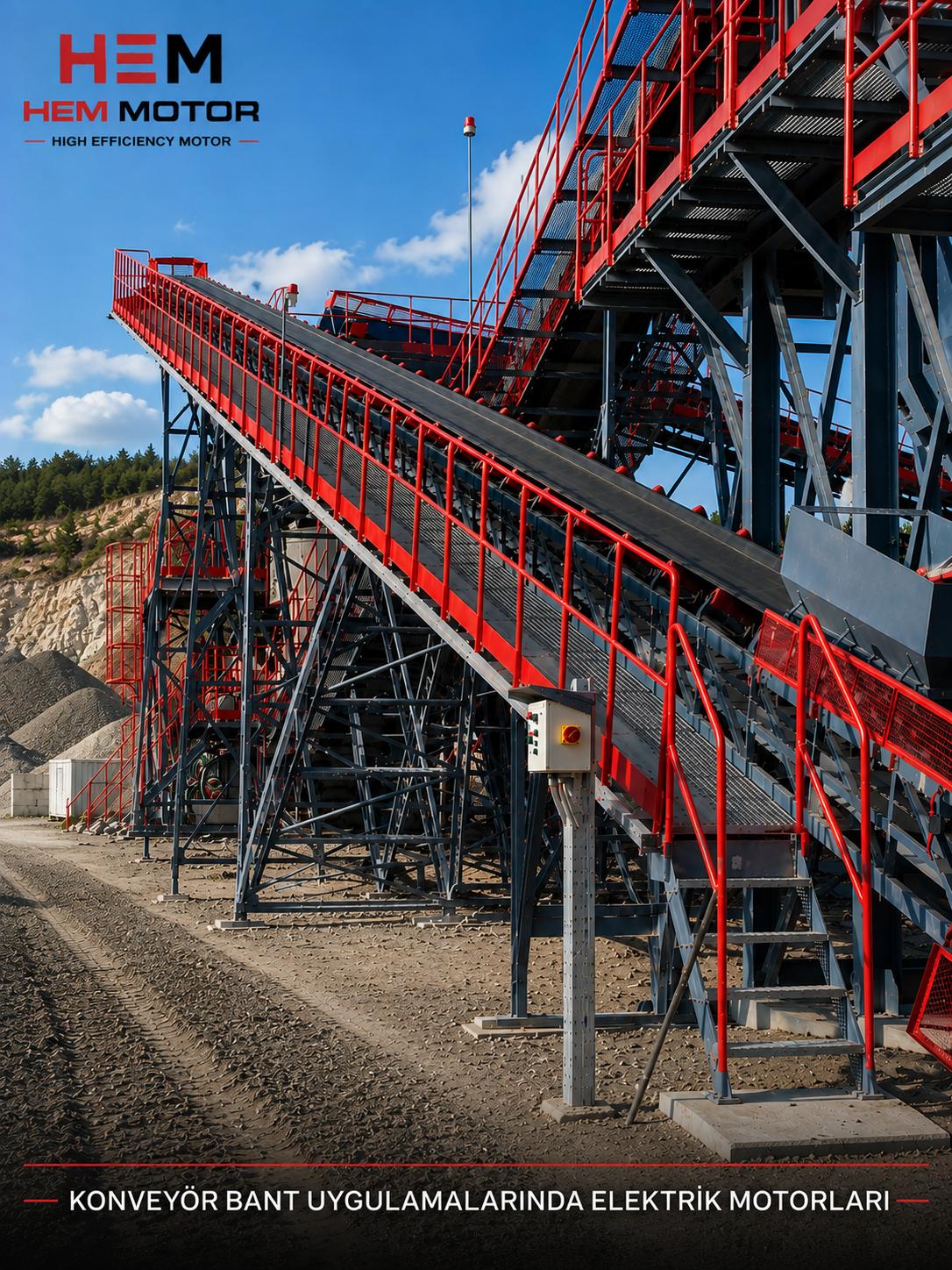

The plug fan (also called plenum or free-running impeller) sits at the heart of modern air handling units (AHUs). With no scroll housing and the impeller coupled directly to the motor shaft, this arrangement eliminates belt-and-pulley losses, lowers maintenance and enables continuous speed control through a variable frequency drive (VFD). Yet selecting a direct-drive fan motor demands a different engineering approach than a classic belted system: the motor speed must match the impeller's operating speed exactly, axial and radial loads must be calculated correctly, cooling must be secured even at low speed, and the efficiency class (IE) must be chosen wisely. In this guide we walk through direct-drive fan motor selection for plug fans step by step, covering power, speed, drive compatibility, ingress protection and bearing life, so you can order the right motor correctly the first time.
What Is a Plug Fan and Direct Drive?
A plug fan is a backward-curved radial impeller without a volute (scroll) housing. Air is drawn through the center of the impeller and discharged directly into the surrounding plenum. The impeller is typically mounted straight onto the motor shaft, with no belt, pulley or gearbox in between. This direct-drive structure brings several key advantages:
- No belt loss: Belt-pulley systems incur 3-8% mechanical loss. Direct drive removes this loss entirely, raising overall system efficiency.
- Low maintenance: Belt tensioning, belt replacement and alignment routines disappear. Maintenance is reduced to motor bearing greasing.
- Precise speed control: When the motor is connected to a VFD, impeller speed is controlled directly, allowing fine adjustment of flow and pressure.
- Compact layout: Without a scroll housing, several small plug fans (a fan array or fan wall) can share one AHU cell.
This layout is preferred in AHU design, particularly in variable air volume (VAV) systems and fan array applications. The right motor selection directly determines the system's energy performance.
Power and Speed Selection: Matching the Impeller to the Motor
In a direct drive, the motor speed is the impeller's operating speed. In a belted system you can reach any speed via the pulley ratio; with direct drive the motor pole count and drive frequency set the impeller speed. Therefore impeller diameter, the required flow-pressure point and the target speed must be evaluated together.
Plug fans are typically paired with 4 or 6 pole motors (1500 / 1000 rpm synchronous); 2 pole (3000 rpm) appears at smaller diameters. With a drive, operation below and above nominal speed (over 50 Hz) is possible, but cooling and mechanical limits must then be respected.
| Impeller Dia. (mm) | Recommended Poles | Synchronous Speed (rpm) | Typical Power Band | Typical Application |
|---|---|---|---|---|
| 250-355 | 2-4 pole | 3000 / 1500 | 0.55-2.2 kW class | Small AHU, fan coil support |
| 355-450 | 4 pole | 1500 | 1.5-5.5 kW class | Medium AHU, fresh air unit |
| 450-560 | 4-6 pole | 1500 / 1000 | 4-11 kW class | Large AHU, fan wall module |
| 560-710 | 6 pole | 1000 | 7.5-22 kW class | High-flow unit, exhaust |
The power bands are indicative; the real choice follows the impeller manufacturer's power-speed curve and the absorbed power at the duty point. Always select the motor above the shaft power at the operating point, with a sensible safety margin. Oversizing, however, causes efficiency loss at low load; we covered this balance in our article on part and low load efficiency.
Drive (VFD) Compatibility and Speed Control
The strongest feature of a plug fan is the continuous, quiet speed control it offers together with a drive. By the fan laws, flow varies directly with speed, pressure with the square of speed, and power with the cube of speed. So a 20% speed reduction roughly halves power consumption. In AHUs this means substantial annual energy savings.
- Inverter duty winding: du/dt voltage spikes from the drive stress the winding insulation. A plug fan motor should use reinforced, inverter duty winding insulation.
- Cooling at low speed: In a standard motor the cooling fan is shaft-mounted; as speed drops cooling weakens. For continuous operation over a wide speed range, external forced cooling should be considered.
- Bearing current protection: Drive operation can induce shaft bearing currents; grounding and, if needed, insulated bearings protect the bearings.
You can find when a VFD is necessary and how to choose it in our article on VFD with asynchronous motors, and efficiency and quiet running in HVAC fan supply in our IE4 air handling unit fan supply article.

Axial and Radial Load: The Critical Point of Direct Drive
Because the impeller sits directly on the motor shaft in a direct drive, the motor bearings carry the impeller weight and aerodynamic forces. As a radial impeller, a plug fan mainly produces radial load; however the pressure difference on the suction side also creates some axial thrust. The motor bearings must be selected to carry impeller weight + dynamic forces + running unbalance forces throughout their life.
For this reason plug fan motors often use reinforced (upgraded) bearings or a fan-specific bearing configuration. The shaft-end load limits and bearing life calculation method in our article on shaft radial and axial load limits apply directly.
| Selection Parameter | Belted System | Direct Drive (Plug Fan) |
|---|---|---|
| Mechanical loss | 3-8% belt loss | None (impeller on shaft) |
| Speed adjustment | Via pulley ratio | Motor pole count + VFD |
| Bearing load | Belt tension (radial) | Impeller weight + aerodynamic |
| Maintenance | Belt change/tension | Bearing greasing only |
| Balance sensitivity | Medium | High (impeller direct on shaft) |
Ingress Protection (IP) and Efficiency Class (IE)
The inside of an AHU may look relatively clean, but the fresh air side can carry moisture, condensation and dust. IP55 is the minimum standard for a plug fan motor; IP56/IP65 can be considered in humid or near-outdoor positions. On efficiency, EU EcoDesign rules already mandate IE3 for certain ratings; for continuously running AHU fans, IE4 or higher efficiency provides fast payback.
Frequently Asked Questions
Why is a plug fan motor more efficient than a belted fan?
Because the impeller is coupled directly to the motor shaft, the 3-8% mechanical loss of a belt-pulley system disappears. Plus, with drive speed control, the fan laws mean power consumption falls with the cube of speed at low flow, creating large annual energy savings.
Which speed should I choose for a direct-drive fan motor?
The impeller's operating speed is the motor speed. Check the impeller manufacturer's power-speed curve, find the speed that gives the desired flow-pressure point, then choose the nearest pole count (2/4/6 pole) and fine-tune with a VFD if needed. Speed selection must always be done together with impeller diameter.
Is motor cooling sufficient when running at low speed via a drive?
In a standard motor the cooling fan is shaft-mounted, so cooling weakens as speed drops. For wide speed ranges and long low-speed operation, a constant-speed external forced cooling fan is recommended, keeping the motor at a safe temperature at every speed.
Plug Fan vs Scroll Fan Comparison
Classic scroll (volute-housed) radial fans were the standard for many years; however, in modern air handling units the plug fan is becoming increasingly common. Knowing the key differences between the two approaches is important for setting up motor selection and system performance correctly. In a scroll fan, air is directed through a single outlet and ductwork is required; in a plug fan, air is discharged directly into the plenum, enabling modular solutions such as a fan array (fan wall). While a scroll fan runs on one large motor, a plug fan wall provides redundancy with several small motors: even if one module fails, the system keeps running at reduced capacity.
From the motor's perspective, a scroll fan is mostly belt-driven while a plug fan is direct-coupled. Therefore, balance sensitivity, bearing selection and drive compatibility become more critical on a plug fan motor. The fan array approach also provides extra energy savings by running only as many fans as needed at part load; this is a significant advantage in variable air volume (VAV) systems.
Motor Cooling Method and IC Code
The cooling method in plug fan motors must be chosen carefully, especially in drive systems running over a wide speed range. Standard motors are IC411 (surface-cooled by their own shaft-mounted fan); as speed drops, cooling weakens. In a plug fan motor that will run continuously at low speed, IC416 (constant-speed external forced fan) is preferred to keep the motor at a safe temperature at every speed.
- IC411: Shaft-mounted fan; cooling weakens at low speed. Suitable for constant-speed fans operating near the rated point.
- IC416: Independently supplied external fan; full cooling at every speed. Ideal for wide speed ranges and prolonged low-speed running.
- IC418: Cooling only by the passing airflow; seen in special applications.
Choosing the correct IC code directly affects motor life. If the AHU fan often runs at part load, the forced-cooling investment pays for itself quickly.
Acoustic Performance: Why Does Quiet Running Matter?
Air handling units are often located close to living and working spaces, so acoustic performance is a critical selection criterion. The direct-drive structure of a plug fan eliminates belt-and-pulley mechanical noise, offering fundamentally quieter operation. However, the motor's own noise, balance quality and speed choice also determine the total sound level.
- Lower speed, lower noise: Achieving the same flow with a larger impeller and lower speed usually gives a quieter result.
- Good balance: Because the impeller sits on the shaft in direct drive, unbalance turns into both vibration and noise; a high-balance-quality motor is important.
- Speed reduction via drive: Trimming the speed when possible also markedly lowers the sound level.
Commissioning and Maintenance Checklist
As important as selecting the right motor is commissioning it correctly and planning its maintenance for the plug fan to run long and efficiently. The checklist below serves as a guide before installation and operation:
- Rotation direction: Correct rotation of the plug fan must always be checked before commissioning; the wrong direction causes serious flow loss.
- Balance check: After the impeller is fitted to the shaft, balance should be verified with a vibration measurement.
- Bearing greasing: Periodic greasing should be planned following the manufacturer's grease type and interval.
- Drive parameters: Minimum and maximum frequency, ramp times and protection thresholds should be set per the application.
- Temperature monitoring: Monitoring winding temperature with PT100 or a thermistor provides early warning.
Applying these steps regularly secures years of trouble-free, efficient operation from the direct-drive fan system.
Common Selection Mistakes and How to Avoid Them
The most common field mistakes in direct-drive fan motor selection often stem from belted-system habits. Knowing these mistakes in advance reduces both the risk of wrong orders and post-commissioning problems. The most common ones are:
- Assuming speed is set by a pulley: There is no pulley in direct drive; speed is set by motor poles and drive frequency. Impeller diameter and target speed must therefore be matched correctly from the start.
- Settling for standard bearings: Because the impeller sits on the shaft, bearing load rises; a reinforced-bearing motor may be needed instead of a standard one.
- Ignoring cooling: In a system running over a wide speed range, shaft-fan cooling falls short; external forced cooling may be required.
- Disregarding balance: In direct drive, unbalance turns directly into vibration and noise; high balance quality is essential.
The most practical way to avoid these mistakes is to start the selection from the impeller manufacturer's power-speed curve and set the motor parameters (poles, bearings, cooling, IP, balance) according to this data. A correctly built plug fan system runs for years with low maintenance and high efficiency, while a wrong choice returns as constant vibration, noise and premature failure. Time spent on the pre-engineering stage therefore turns into gains over the whole life of the system.
Energy Efficiency and Payback
The greatest return of a plug fan and direct-drive motor is long-term energy savings. Air handling units run most of the year, often all day; therefore even a small efficiency difference reaches large figures in total. When the elimination of belt loss, a high efficiency class and drive speed control come together, a correctly built plug fan system amortizes itself quickly. In the investment decision, not only the initial cost but also the energy the motor will consume over its life must be considered; because on an AHU fan, energy cost is far above the initial investment.
Source the Right Plug Fan Motor from Stock
Choosing the right power, pole count, mounting and efficiency class the first time in plug fan and direct-drive applications secures both energy performance and long life. As HEM Motor we offer manufacturer stock and fast delivery across a wide power-speed range for AHU fan motors. To determine the right motor for your project together and to request a tailored quote, get in touch; our technical team will recommend the correct motor based on your impeller data.