English
 Türkçe

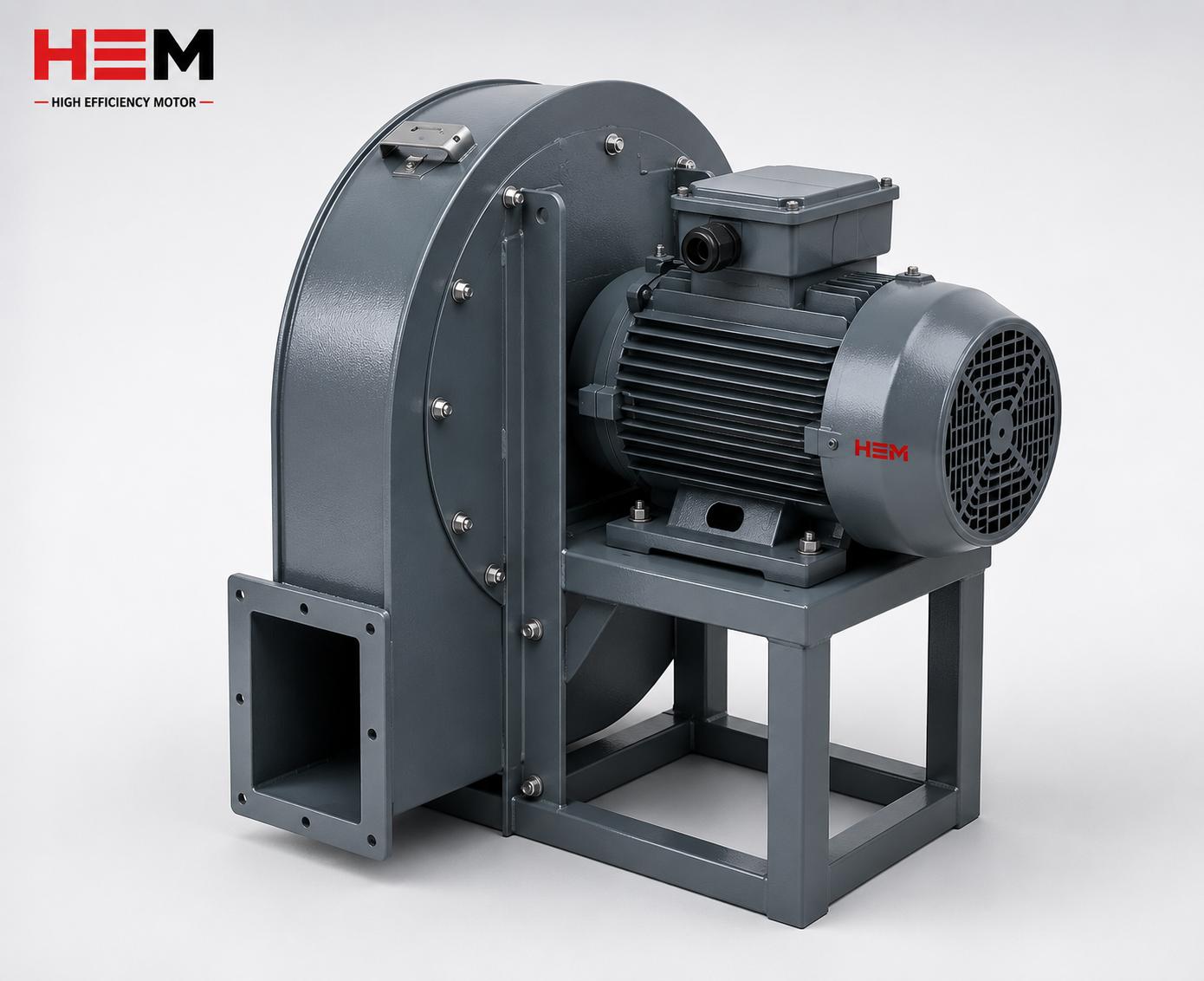

The heart of any dehumidification system is a component that is often overlooked yet determines the entire process efficiency: the desiccant dryer fan motor. Rotor-type (desiccant) dehumidifiers used in industrial drying, packaging lines, pharmaceutical and food storage, compressed-air networks and plastic granule feeding systems rely on two separate fan groups that continuously move both the process air and the regeneration air. When the electric motor driving these fans is selected incorrectly, the system either fails to deliver the required airflow, cannot handle the regeneration temperature, or overheats in continuous duty and fails prematurely. As an electric motor manufacturer and supplier, the most frequent question we hear from dehumidifier builders and maintenance teams is: "Between two motors delivering the same airflow, which one should I buy?" This guide examines the balance between regeneration temperature, airflow, continuous duty (S1) class and efficiency class from both a technical and a procurement perspective.
When sourcing the right motor, current electric motor prices and stock availability matter, but so does defining the operating temperature and duty profile up front; a motor of the wrong class may look cheap yet cost far more in process downtime and energy loss.
What Is the Fan Motor's Role in a Desiccant Dryer?
A rotor-type dehumidifier contains a rotating wheel (desiccant rotor) impregnated with silica gel or molecular sieve. As process air passes through one section of this rotor, moisture is captured on the rotor surface and dried air is delivered to the space. Heated regeneration air is passed in the opposite direction through another section of the rotor, expelling the captured moisture so the rotor can dry again. The fans producing these two airflows are the lifeline of the system:
- Process fan motor: Pushes the air to be dried through the rotor; it typically works at higher flow and close to ambient temperature.
- Regeneration fan motor: Pushes heated air through the regeneration section of the rotor; the motor may sit next to or in the path of hot air, so thermal loading is the most critical issue.
Both fans must run uninterrupted. If the regeneration fan stops, the rotor saturates; if the process fan stops, no drying occurs. Therefore both applications favour motors designed for continuous duty (S1), with 100% copper windings and a high insulation class.
Regeneration Temperature and Motor Thermal Capability
To regenerate the desiccant rotor, the regeneration air is heated. While this temperature varies by application, the ambient temperature the motor is exposed to is noticeably higher than in an ordinary fan application. Two distinct concepts must not be confused here:
Ambient Temperature and Derating
Standard electric motors are usually rated at their nominal power based on a 40 °C ambient. If the regeneration fan motor operates above this temperature, the power it can deliver decreases (derating). There are then two options: select a motor one frame/power class higher, or choose a motor with a higher insulation and thermal class. Class F insulation is the common standard; in hotter environments, class H insulation may be requested.
Winding Temperature Protection
Monitoring winding temperature is vital for regeneration fan motors operating continuously in hot conditions. Specifying a PTC thermistor or PT100 sensor option at the order stage prevents sudden thermal faults and winding burnout. Adding this to the purchasing list is far cheaper than the cost of later removing and rewinding the motor; see our guide on motor winding temperature monitoring (PT100/PTC).
Airflow and Correct Power (kW) Matching
The basis of fan motor selection is correctly calculating the power the fan requires. Fan power depends on the desired airflow (m³/h) and the total pressure loss of the system (Pa). In desiccant units, pressure loss is determined by rotor resistance, filters, the heater battery and the duct system. Practical points to watch:
- Operating point shift: As filters clog, pressure loss rises and the fan operating point shifts. A power margin must be left to cover this increase.
- Speed (pole) selection: High-flow, low-pressure applications usually favour 2 poles (around 3000 rpm) or 4 poles (around 1500 rpm). Axial fans run more efficiently at high speed; large-diameter radial fans at lower speed.
- Service factor: In continuous duty, evaluate the service factor that provides capability slightly above nominal power so the motor is not constantly pushed to its limit.
To calculate the required kW correctly in fan, pump and conveyor applications, our motor power calculation for pump, fan and conveyor article gives a step-by-step approach.
Continuous Duty (S1) and Efficiency Class
Dehumidifiers mostly run 24/7. This means high motor operating hours, so the efficiency class is directly reflected in the annual electricity bill.
Why IE3 and IE4?
Under Turkish and EU regulations, three-phase DOL motors of 0.75 kW and above must meet at least IE3 efficiency class; in certain power and pole ranges IE4 Super Premium comes into play. In a continuously running fan motor, a higher efficiency class quickly repays the small purchase price difference through energy savings. You can find the dates these efficiency requirements apply in our IE3 and IE4 efficiency mandate regulation article.
Protection Class (IP)
In dehumidification the motor is usually inside an enclosed cabinet; still, at least IP55 protection is recommended as standard against dust, condensate and ambient conditions. In food, pharmaceutical and high-hygiene facilities, higher washdown-resistant IP classes may be requested.
Mounting Type and Mechanical Compatibility
For fan motors, mounting type is chosen based on how the motor connects to the fan hub or the duct system:
- B3 (foot-mounted): Common in coupled or belt-pulley fan drives.
- B5 (large flange): Used in compact applications that flange directly to the fan housing.
- B35 (foot + flange): Preferred in systems that must bolt to both the chassis and the fan housing.
When replacing an existing motor, the frame size (IEC frame), shaft diameter, key dimension and flange hole pattern must match exactly. Otherwise fan impeller balance and vibration problems arise. We compare the difference between B5 and B14 and when each is suitable in our B5 vs B14 motor mounting type selection article.
Providing the Right Information During Procurement
For the correct fan motor to be supplied quickly, the existing motor's nameplate data and application details must be clear. Information to share before requesting a quote:
- Rated power (kW) and speed/number of poles
- Voltage and frequency values
- Mounting type (B3/B5/B35), frame size and shaft diameter
- Ambient and regeneration air temperature, operating duration (continuous/intermittent)
- Required protection class (IP) and insulation class (F/H)
- Whether temperature protection (PTC/PT100) is needed
This checklist prevents the wrong motor from being delivered and shortens commissioning time. For all details that speed up the quoting process, our information to provide when requesting an electric motor quote guide offers a practical template. For bulk fan motor supply in HVAC and ventilation projects, our fan motor supply for HVAC projects article explains project-based planning.
The Right Product Group: Fan and Ventilation Motors
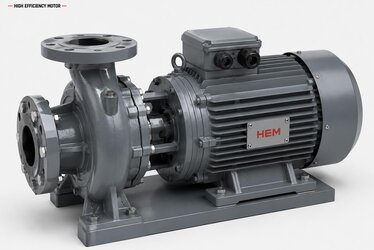
For desiccant dryer applications, industrial fan motors and ventilation electric motors designed for continuous duty form the correct product group. These motors are positioned specifically for fan applications with cast iron bodies, IP55 protection, class F insulation, 100% copper windings and a wide power range (generally from small to large powers). As a manufacturer and supplier, both fast delivery from stock and supply with special temperature/protection options can be arranged.
Axial Fan or Radial (Scroll) Fan? Effect on the Motor
The fan type used in a desiccant dryer directly affects motor selection. There are two basic fan families, and each loads the motor differently:
- Axial fans: Push air along the axis; suitable for high-flow, low-pressure applications. If duct resistance is low and air only passes through the rotor, an axial fan and usually a 2-pole high-speed motor are preferred.
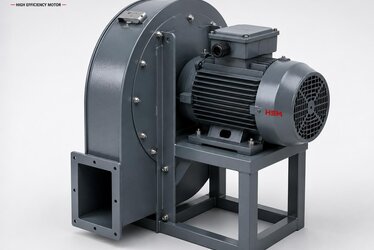
- Radial (scroll / centrifugal) fans: Throw air from the center to the perimeter; superior in high-pressure, long-duct and filtered systems. Since these fans can have a higher inertia, the motor's starting torque and frame strength become important.
In desiccant units, pressure loss is usually high because of rotor resistance, the heater battery and filters; so radial fans are common. If the radial fan's inertia is high, the motor strains more at startup and the correct torque class must be selected. We covered the power and supply decision by fan type in detail in our centrifugal and axial fan motor selection article.
Motor Protection in Humid and Condensing Environments
By the nature of a dehumidifier, the moisture collected from the environment on the process side is high. When the unit cycles on and off or cools down, condensation can form on the motor body and in the terminal box. Over time this water lowers the winding insulation resistance and causes corrosion at the terminal connections. Measures to reduce this risk:
- Anti-condensation heater: Slightly warms the winding while the motor is stopped to prevent internal condensation; especially valuable in seasonal or intermittently running dryers.
- Correct cable entry and gland: A suitable IP-rated gland and correct mounting are essential to prevent water entering the terminal box.
- Drain plugs: Some motors have drain holes in the body to discharge condensation water; the correct side must be open according to the mounting position.
We covered moisture and bearings in fan motors to be stored or kept long-term in our electric motor storage and long-term standstill article. To choose the IP protection class by environment, our IP protection class selection in electric motors article gives guidance.
Energy Consumption and Total Cost of Ownership
In a continuously running fan motor, the purchase price is only a small part of the total cost. The electricity the motor consumes over its life far exceeds the initial investment. So a total cost of ownership (TCO) view is important in fan motor selection:
- Efficiency class difference: Choosing IE4 instead of IE3 noticeably reduces annual consumption in a continuously running application; the small price difference usually pays back quickly.
- Correct sizing: An oversized motor runs inefficiently at low load; an undersized motor is constantly strained and fails early. The right power margin protects both efficiency and life.
- Frequency drive contribution: Adjusting speed to the changing moisture load provides significant savings compared with running at fixed speed.
We explained how to calculate total cost of ownership step by step in our total cost of ownership (TCO) in high-efficiency motors article. The right motor investment requires accounting not only for today's price but also for the future energy bill.
Frequently Asked Questions
Should the regeneration fan motor be different from the process fan motor?
Usually yes. The regeneration fan motor works in a hotter airflow and is therefore more thermally stressed. This motor should consider a higher insulation class, temperature protection and, where needed, derating. The process fan motor runs close to ambient temperature, so a standard continuous-duty fan motor is generally sufficient. Even so, both motors should be 100% copper wound and selected for continuous duty (S1).
Can I choose a lower-power motor that delivers the same airflow?
Fan airflow depends not only on power but on the fan operating point and system pressure loss. As filters clog and duct resistance rises, the required power increases too. A motor that delivers "the same airflow on paper" but leaves no power margin can fall short in the field and overheat by running constantly at its limit. The correct approach is to add a reasonable power margin to the actual operating point.
Does running the motor with a variable frequency drive (VFD) provide an advantage?
Yes. Using a frequency drive to adjust fan airflow according to the changing moisture load offers significant energy savings compared with running constantly at full speed. However, the motor used with a drive must have suitable insulation and cooling characteristics; if it will run for long periods at low speed, forced cooling should be considered. For correct motor selection in drive-fed use, you can get technical support from our sales team.