English
 Türkçe

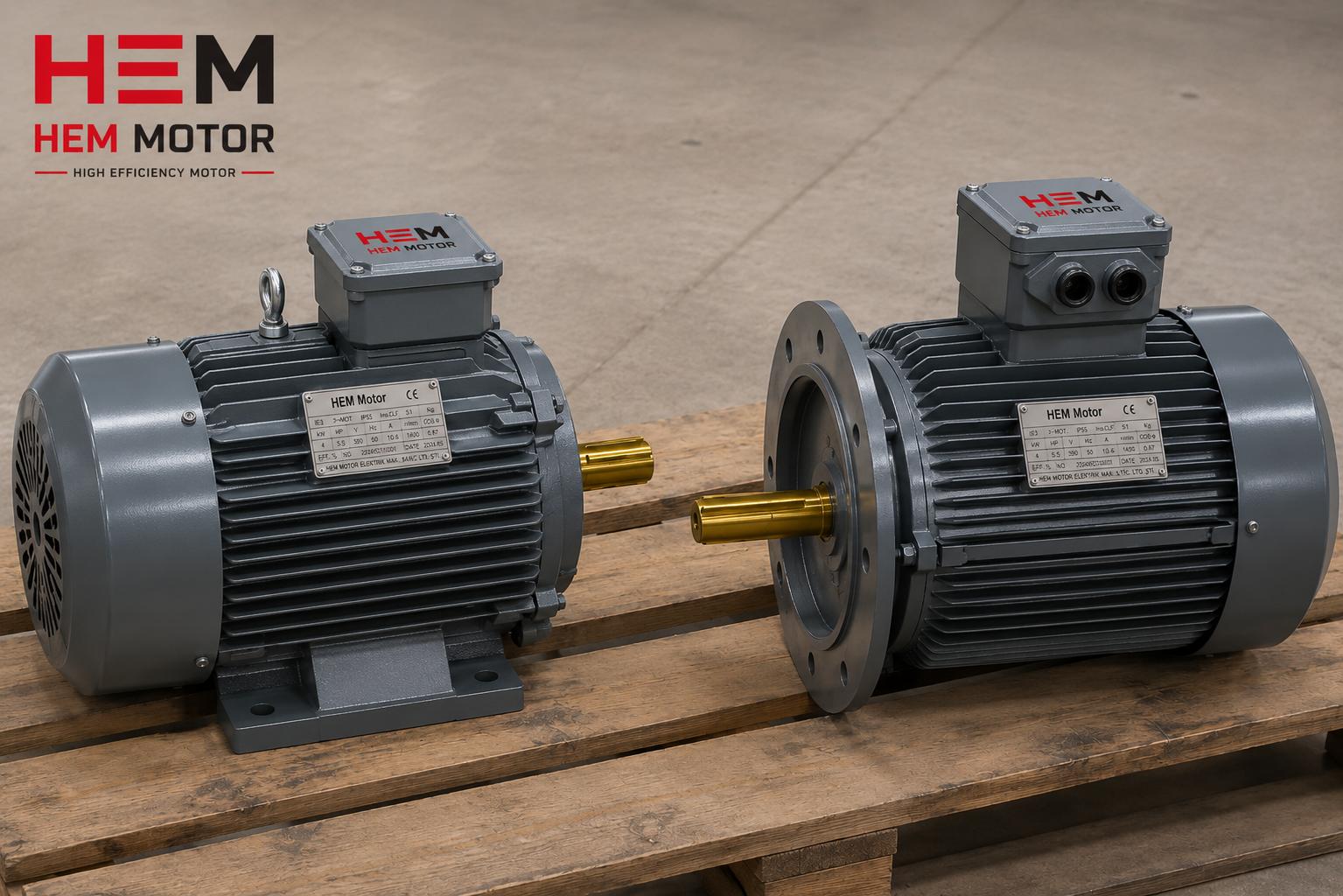

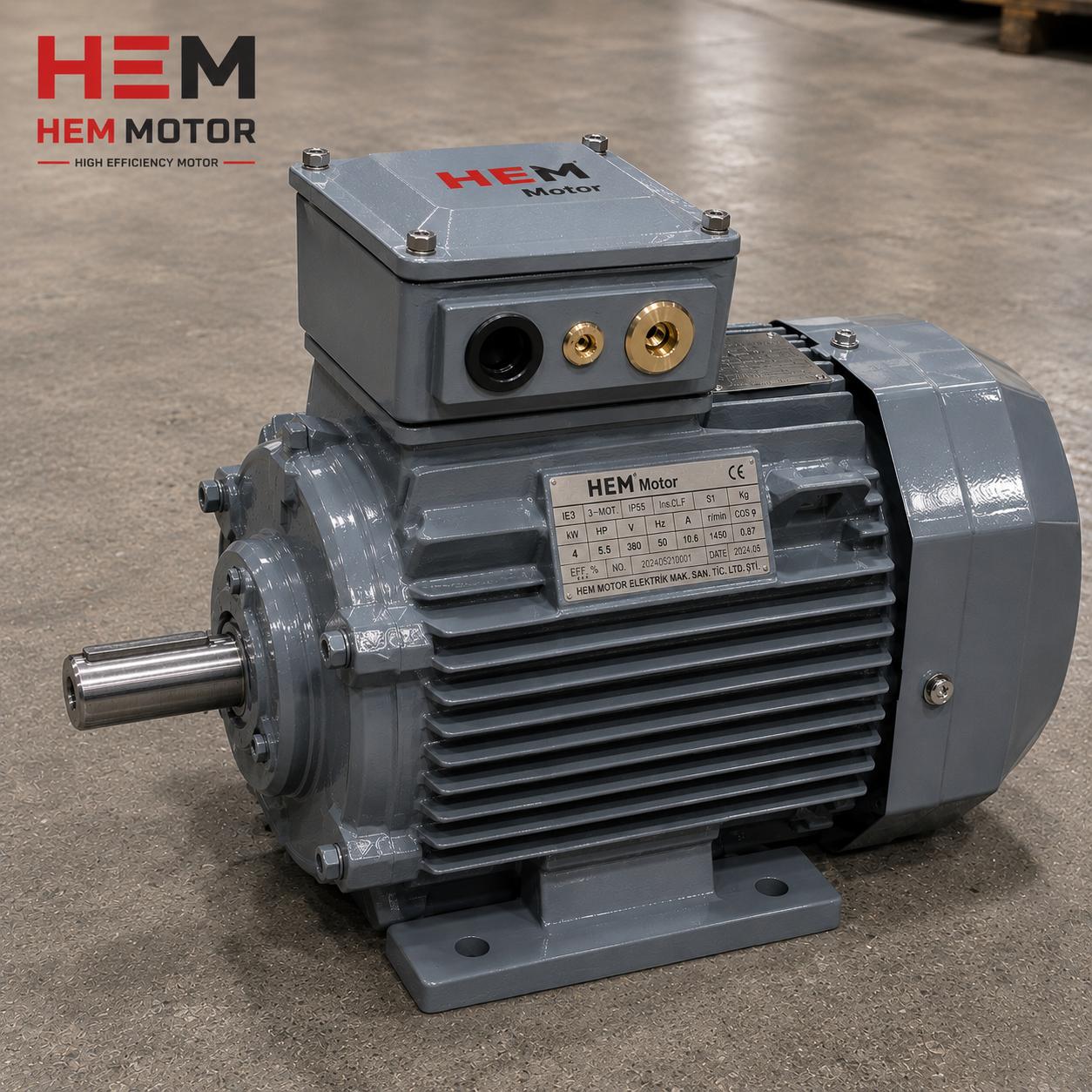
IE5 ultra premium efficient synchronous reluctance motors, while offering the highest efficiency class, are often run in harsh dusty, wet or washdown environments. In these environments one of the most critical factors determining the motor's life and reliability is the IP protection class. A standard motor is usually produced in IP55 class; however in sectors such as food, chemistry, water treatment, cement and mining, IP55 protection falls short. This is where the upgrade from IP55 to IP66 comes in: IP66 provides both dust-tight protection (first digit 6) and protection against strong water jets (second digit 6). In this article we cover what IP66 protection means in IE5 synchronous reluctance motors, what the upgrade from IP55 to IP66 changes, seal and gland sealing, the sealing requirement in drive operation, and in which applications IP66 is the right choice.
No matter how high a motor's efficiency class is, it cannot deliver its expected life if it does not have protection suited to its operating environment. Investing in a motor of the highest efficiency class such as IE5 and then placing it in a dusty or wet environment with an inadequate protection class quickly puts the investment at risk. Dust wears the seals and reaches the bearings; water degrades the winding insulation and causes corrosion. IP66 blocks both of these threats at the highest practical level, ensuring the motor's efficiency advantage is preserved for years. Therefore the IP protection class is a decision as decisive as performance and efficiency in IE5 motor selection, and it must be carefully determined according to environmental conditions at the ordering stage.
What Is the IP Protection Class and What Do the Two Digits Mean?
The IP (Ingress Protection) code defines a device's protection against solid object and water ingress with two digits. The first digit indicates protection against dust and solid objects, the second against water. The difference between IP55 and IP66 is a step up on both fronts:
| Feature | IP55 | IP66 |
|---|---|---|
| Dust protection (1st digit) | 5 - Dust protected (limited ingress) | 6 - Fully dust-tight |
| Water protection (2nd digit) | 5 - Low pressure water jet | 6 - Strong water jet (high pressure) |
| Typical environment | General industry, lightly dusty | Dusty + washdown, wet |
| Seal/gland | Standard seal | Double seal / reinforced gland |
| Terminal box | Standard gasket | Reinforced gasket + suitable gland |
In IP55 a limited amount of dust may enter but does not impair function; in IP66 dust is kept out completely. On the water side IP55 withstands a low-pressure water jet, while IP66 withstands a strong water jet from any direction. This difference is decisive especially in plants that are regularly washed or operate under heavy dust. You can find the general logic of IP protection class selection in detail in our article on IP protection class selection.
What Does Upgrading from IP55 to IP66 Change?
Upgrading to IP66 changes not just the motor's label but its physical sealing design. This upgrade requires simultaneous improvement in several components:
- Shaft seal: Double seal or V-ring reinforced sealing instead of a single seal; prevents dust and water ingress at the point where the shaft rotates.
- Frame gaskets: Reinforced o-ring or gasket between side covers and terminal box cover.
- Terminal box: High-IP cable glands and sealed entry.
- Paint and surface: Corrosion-resistant cataphoresis or multi-layer paint prevents rust in wet environments.
- Drain management: Membrane drainage for condensation discharges water without lowering IP.
The magnet-free structure of the synchronous reluctance rotor makes the IP66 upgrade easier thermally; however heat dissipation becomes more critical in a fully sealed frame. Therefore the motor's thermal behavior must also be considered when performing the IP66 upgrade. To explore the topic further, our article on IE5 synchronous reluctance thermal behavior and cooling is useful. For a similar upgrade example on the IE3 side, our article on the IE3 IP65/IP66 protection upgrade can also be reviewed.
Seal and Gland Sealing
The most critical point of IP66 protection is where the shaft exits the frame; because here sealing must be achieved between a rotating part and the stationary frame. The seal and gland type used at this point determines whether the protection is truly at IP66 level.
- Radial shaft seal: Standard sealing; may be insufficient for high IP on its own.
- Double seal (tandem): Two seals in series; layered protection against dust and water.
- V-ring + seal: The rotating V-ring flings off dust, the seal behind it holds moisture.
- Labyrinth seal: Non-contact, long-life; preferred under heavy dust and washdown.
In washdown environments, labyrinth or double seal combinations both provide high IP and reduce the seal's friction loss, preserving IE5 efficiency. Seal selection should be made according to the motor's operating temperature and speed range; this is especially important in IE5 motors running at variable speed with a drive.
Sealing in Drive Operation
IE5 synchronous reluctance motors always run with a drive (VFD); this brings additional considerations for IP66 protection. At variable speed the motor may run for a long time at low speed; in this case its own fan cannot provide sufficient cooling and heating may increase in the fully sealed frame. In addition, frequent start-stop regimes raise the risk of condensation inside the frame. In an IP66 frame this condensation is managed with a membrane drain; otherwise the fully sealed frame can trap the moisture accumulating inside.
In drive operation the sealing of the terminal box and cable entries also becomes critical; high-IP glands and suitable cable selection are essential. For drive parameterization and commissioning, see our article on IE5 drive parameterization, and for cooling at continuous torque at low speed, external fan options should be evaluated.
In Which Applications Is IP66 the Right Choice?
IP66 is not required in every application; choosing an unnecessarily high IP both complicates cooling and makes the motor heavier than necessary. For the right choice, the dust and water load of the environment should be evaluated:
- Food and beverage plants: Regular pressure washing; IP66 (or even IP69K) required.
- Cement, mining, aggregate: Heavy dust; IP66 for full dust-tightness.
- Water and wastewater treatment: High humidity and splash; IP66 ideal.
- Chemistry and fertilizer: Corrosive dust and liquid; IP66 + corrosion protection.
- Open field and port: Rain, wind, dust; IP66 a safe choice.
In contrast, in clean, dry indoor applications IP55 is usually sufficient and provides better cooling. Where very high-pressure hygienic washing is required, IP69K should be evaluated instead of IP66; our article on IP69K washdown and high-pressure cleaning provides guidance on this. For correct frame-power and drive matching, our article on the IE5 frame-power table is also useful at the ordering stage.
Why Does Synchronous Reluctance Technology Match Well with IP66?
IP66 protection can be applied to any motor technology, but some structural features of synchronous reluctance motors match this high protection class especially well. This compatibility makes IE5 motors stand out in harsh environments from both design and operational perspectives.
- Magnet-free rotor: Since there is no permanent magnet in the rotor, there is no risk of magnet demagnetization at high temperature; even if heat rises slightly in the fully sealed frame, the rotor is not affected.
- Low rotor loss: Almost no loss in the rotor means less heat generated inside the frame; this is an advantage in hard-to-cool sealed frames like IP66.
- Robust and simple rotor structure: The rotor, consisting only of a lamination stack, offers long life and low fault risk in dusty-wet environments.
- Drive control: Since it always runs with a drive, external fan cooling can easily be added at low speed and the thermal limit of the sealed frame can be managed.
When these features come together, an IP66 protected IE5 synchronous reluctance motor can offer both the highest efficiency class and harsh-environment durability at the same time. The low heat generation in the rotor compared to its asynchronous counterpart partially eases the heat dissipation problem, which is the biggest concern in a fully sealed frame. For this reason the IE5 + IP66 combination is increasingly preferred in sectors demanding both high efficiency and high protection, such as food, chemistry and mining.
Maintenance and Long Life
An IP66 protected motor maintains its sealing for years with correct maintenance. However seals and gaskets wear over time; periodic inspection and replacement when needed are essential to maintain the protection class. In washdown environments, regular cleaning is important because dirt and deposit buildup on the frame surface can impede cooling. The magnet-free and robust rotor structure of the synchronous reluctance motor reduces the maintenance burden; our article on IE5 synchronous reluctance maintenance and fault management offers comprehensive information on this.
The Cost of the Wrong IP Choice and Common Mistakes
Mistakes made in protection class selection often go unnoticed until the motor fails, and when noticed the cost is high. The following typical mistakes are the most frequent and preventable problems encountered in the field:
- Choosing insufficient protection: Placing an IP55 motor in a dusty or wet environment causes the seals to wear quickly and the winding to fail; this seemingly economical choice returns as early failure and downtime cost.
- Choosing unnecessarily high protection: Placing an IP66 motor in a dry, clean indoor space brings unnecessary cost and runs the motor hotter by impeding cooling due to the fully sealed frame.
- Looking only at the label: A motor carrying an IP66 label but with inadequate seals, gaskets and glands does not actually provide that protection; the integrity of the components is essential.
- Forgetting drain management: If there is no membrane drainage for condensation in a fully sealed frame, the moisture accumulating inside degrades the motor from within.
- Neglecting the terminal box: Even if the frame is IP66, a wrong gland or loose gasket allows water to enter at the connection points.
The common point of these mistakes is reducing IP66 protection to a single part. In reality protection is a whole in which the frame, seal, gasket, gland and drain management work together. The right approach is to evaluate the environment's dust and water load, the motor's operating regime and maintenance conditions together and to order the motor with the correct configuration from the start. This way both unnecessary cost is avoided and the motor operates safely in a harsh environment.
Frequently Asked Questions
What is the difference between IP66 and IP67/IP69K?
IP66 protects against strong water jets but is not designed for immersion in water (IP67) or very high-pressure/hot water washing (IP69K). IP67 withstands temporary submersion of the motor, while IP69K withstands high-pressure steam hygienic washing in the food sector. If your application involves pressure washing IP66 is suitable; if it involves immersion or steam high pressure, higher classes should be evaluated.
Does the IP66 upgrade reduce the motor's efficiency?
When designed correctly, the IP66 upgrade does not measurably reduce efficiency. However additional seals can introduce a small friction loss and the fully sealed frame can make heat dissipation harder. Therefore in an IP66 upgrade the seal type and, when needed, external cooling should be planned together; this way the IE5 efficiency advantage is preserved.
Can I convert my existing IP55 motor to IP66?
Converting an IP55 motor to IP66 reliably in field conditions is not practical; because the sealing design involves the frame, seal, gasket and terminal box together. The healthiest way is to order an IP66 motor suited to your environmental conditions from the start with the right options. This way the protection is at factory quality and guaranteed.
Reliable IE5 in Harsh Environments with the Right IP Class
The ultra premium efficiency of IE5 synchronous reluctance motors only matters if the motor can survive in a harsh environment. IP66 protection extends the motor's life in dusty and wet plants with full dust-tightness, resistance to strong water jets, reinforced seals and a sealed terminal box. When the right seal, the right drain management and drive-compatible sealing are handled together, the IE5 motor both preserves its high efficiency and operates reliably. As HEM Motor we supply IP66 protected IE5 synchronous reluctance motors suited to your environmental conditions from stock with fast delivery; contact us for the most suitable protection class and configuration for your application to request a quote.