English
 Türkçe

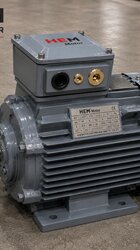

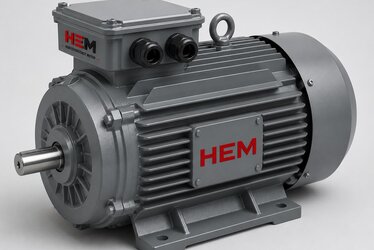
IE5 is the "ultra-premium" efficiency class of the IEC 60034-30-1 standard, and today the most common way to reach this class is synchronous reluctance (SynRM) motor technology. With its magnet-free rotor, high part-load efficiency and cool operation, synchronous reluctance motors are increasingly preferred in continuously running pump, fan, compressor and process drives. However, procuring these motors correctly and quickly requires thinking a little differently from classic induction motors: a synchronous reluctance motor always runs together with a drive (VFD); therefore the stock decision covers not just the motor but the motor+drive package. In this article we explain the stock range of IE5 synchronous reluctance motors, which kW and frame range can be supplied quickly from stock, the most demanded powers, the speed range and how to place the right order, all from the HEM Motor supply perspective.
The appeal of the synchronous reluctance motor comes from its synchronous operation without using magnets. Because there is no permanent magnet in the rotor, dependence on rare earth elements and price-fluctuation risk disappear; the rotor runs cooler, produces fewer losses and the motor is long-lived. In return, the motor cannot start directly from the grid; it must be driven by a compatible drive. This technical fact directly affects the stock and supply logic.
Why a Motor + Drive Package?
The rotor of a synchronous reluctance motor is not a cage like in induction motors; it has a special slotted (flux barrier) structure that channels the magnetic flux. This structure makes the motor require a drive's precise flux/position control for starting and synchronous operation. That is why the question of why a synchronous reluctance motor cannot run without a drive lies at the core of the package logic. The motor and drive should be treated as a whole, parameterised together for the best efficiency and correct control. Our article on package selection and cost explains why the motor and drive should not be considered separately.
The practical result is this: IE5 synchronous reluctance stock is planned not as bare motor frames but as packages matched with the right drive and ready for commissioning. This is a great convenience for the buyer; the responsibility for compatibility, parameterisation and commissioning largely stays with the supplier.
Stock Range: Which kW and Frame Range?
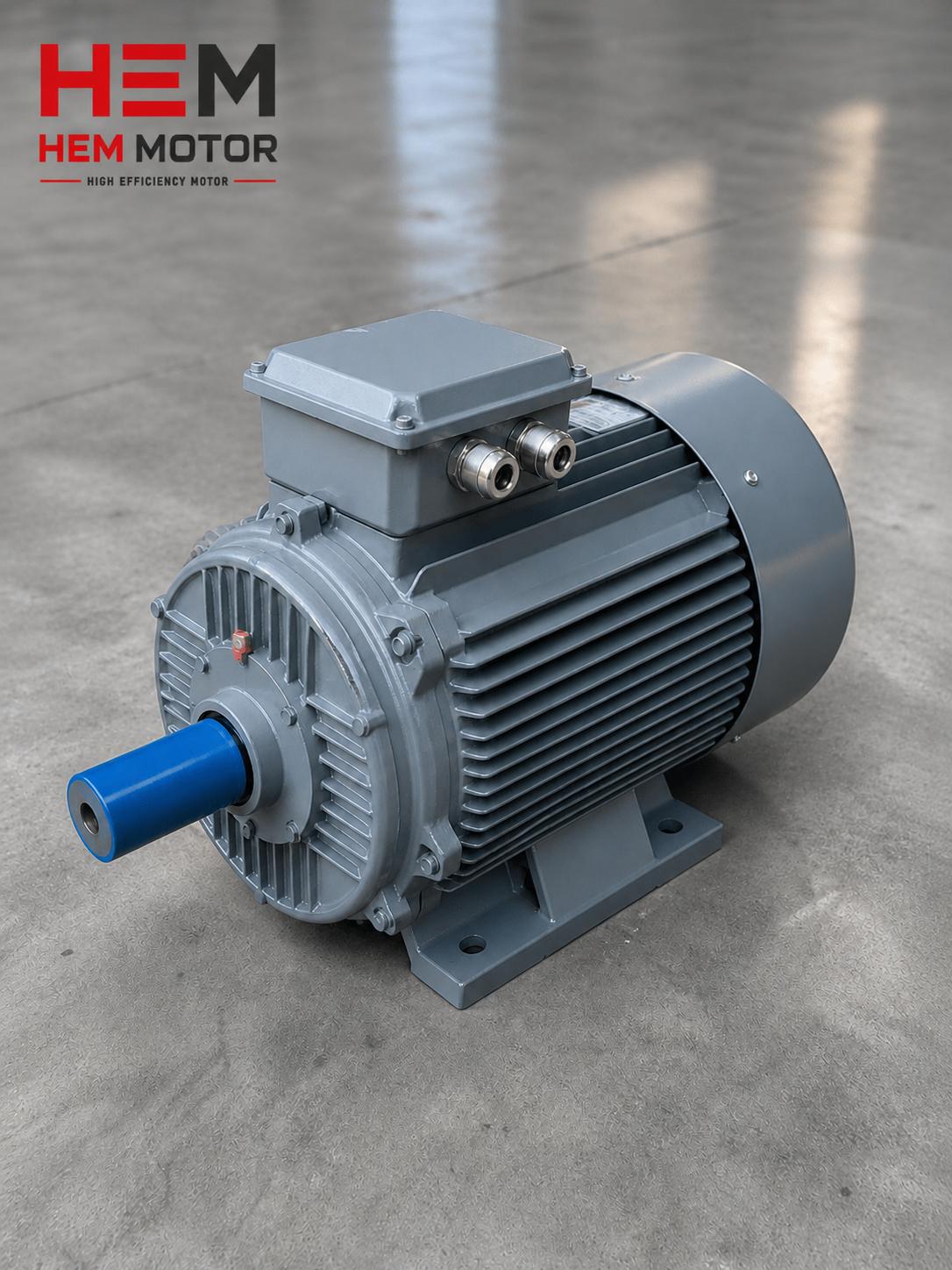
Synchronous reluctance motors can be supplied quickly from stock in the most demanded medium and large power band. The table below summarises the typical IE5 synchronous reluctance stock range by power, frame and speed range. The values are typical magnitudes; the final configuration is clarified according to the application.
| Power Band | Typical Frame | Speed Range | Typical Application | Supply |
|---|---|---|---|---|
| 5.5 - 11 kW | 132 - 160 | 0 - 1500/3000 rpm | Pump, fan, small process | Fast / priority stock |
| 15 - 30 kW | 160 - 200 | 0 - 1500/3000 rpm | Fan, compressor, conveyor | Fast / priority stock |
| 37 - 75 kW | 200 - 250 | 0 - 1500 rpm | Large pump, process line | Stock / short lead |
| 90 - 160 kW | 250 - 315 | 0 - 1500 rpm | Large fan, main drive | Project-based / planned |
| 200 kW and above | 315 - 355 | 0 - 1500 rpm | Heavy process, high power | Project-based |
As can be seen, the fastest supply is in the 5.5-75 kW medium-power band; this band is the most demanded and held in stock with the widest configuration. Larger powers are usually planned on a project basis; given the size of the investment and its return, this is reasonable. To evaluate the investment decision at high power, our article on investment and payback above 132 kW provides guidance.
Speed Range and Wide Speed Control
One of the synchronous reluctance motor's biggest practical advantages is the wide and efficient speed-control range it offers together with the drive. The motor can be controlled smoothly from 0 speed to rated speed; high efficiency and good torque are maintained even at low speed. This is ideal for variable-flow pumps and fans: when the drive lowers speed, the motor keeps its efficiency and energy consumption drops with flow. We covered in detail why the synchronous reluctance motor is superior at part load in our article on the efficiency curve and part load.
Cool Operation, Quietness and Long Life
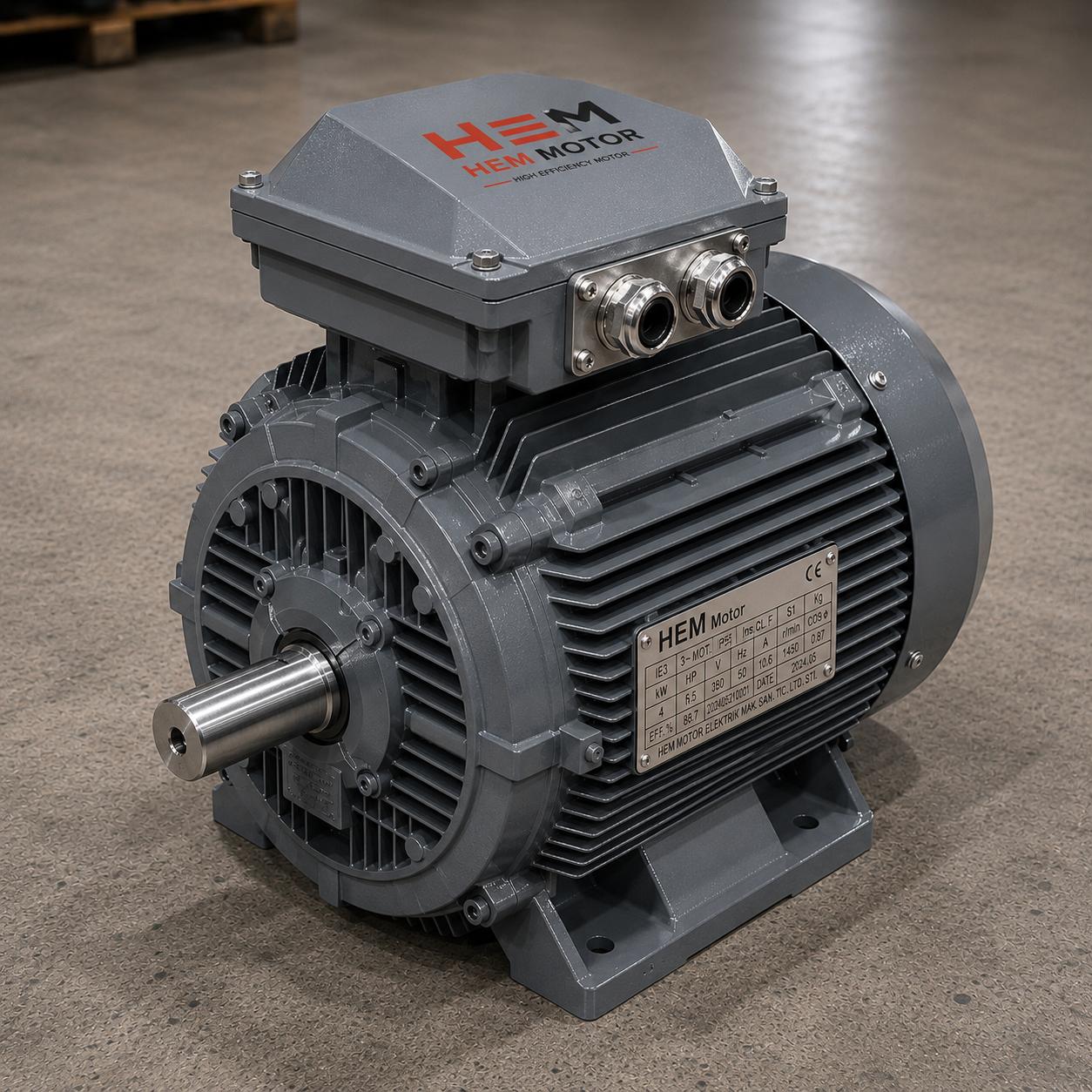
The magnet-free and cage-free rotor of the synchronous reluctance motor markedly reduces rotor losses compared with classic induction motors. In an induction motor the rotor works by creating slip with the magnetic field, and this slip generates heat in the rotor; in a synchronous reluctance motor the rotor turns synchronously, with no slip loss. The result is a cooler-running rotor and therefore lower bearing temperature, longer grease life and less thermal aging. This raises the motor's MTBF (mean time between failures) and total life. We covered uptime with a magnet-free rotor in our article on operating life and MTBF.
Another practical advantage is quietness. Thanks to drive control and a balanced rotor structure, synchronous reluctance motors often run quieter than standard induction motors of the same power; this is a valuable property in HVAC, hospitals, offices and environments where noise regulation matters. We examined the noise level and decibel advantage in our article on noise and sound level (dB). All these qualities make IE5 synchronous reluctance not only efficient but also a reliable and comfortable solution.
The Most Demanded Powers
Field demand concentrates at certain powers. On the IE5 synchronous reluctance side, the most sought-after powers are usually:
- 7.5 - 11 kW: Medium-scale pumps and fans; HVAC and process; the lower end of the fastest supply band.
- 15 - 22 kW: Compressors, large fans, conveyors; the most common range in continuously running facilities.
- 30 - 45 kW: Large pump stations, process drives; the band where saving is felt most.
- 55 - 75 kW: Main process drives; short payback with high operating hours.
Because the motor+drive package is offered as a ready configuration at these powers, ordering and delivery accelerate. We calculated whether IE5's extra efficiency over IE4 justifies the investment in our article IE5 vs IE4.
Synchronous Reluctance, Induction and PM: Same Efficiency, Different Path
The IE4 and IE5 efficiency classes can be reached with different motor technologies. A classic asynchronous (induction) motor can rise to IE4 with optimised design; but in the IE5 ultra-premium class, synchronous technologies pull ahead. Synchronous reluctance, with its magnet-free rotor, is the most common solution reaching IE5. A permanent magnet (PM) motor also reaches IE5 and can even deliver the same power in a smaller frame; but it depends on rare-earth magnets and carries price risk. Understanding the difference between these two technologies in the same efficiency class is important for the right choice; our article on asynchronous vs synchronous reluctance makes this comparison. If you are looking for an alternative that can start directly from the grid without a drive, you can also consider line-start permanent magnet (LSPM) motors; our article on LSPM and direct-on-line starting explains this option.
Which technology is right depends on the application's speed-control need, operating profile and supply priorities. For a variable-flow drive that runs with a drive and spends long hours at part load, synchronous reluctance is usually the most balanced choice in terms of both efficiency and supply predictability. For an application that must run at fixed speed without a drive, LSPM or an efficient induction motor may be more suitable. We covered in which application moving to IE5 makes sense in our article on the IE5 transition guide.
Commissioning and Lead Time
In an IE5 synchronous reluctance solution supplied as a motor+drive package, the lead time depends not only on the motor but also on the drive and the matching/parameterisation work. Because packages are held in stock with ready configurations at the most sought-after powers, delivery is fast; requests requiring a special speed, special mounting or special drive option may need a short preparation time. Therefore sharing all the application's requirements up front at the order stage is the key to both the right package and the shortest delivery. Correct parameterisation at commissioning (including autotune) ensures the motor delivers the expected efficiency; if this step is skipped, the IE5 advantage cannot be fully realised.
The Right Order: What to Watch For?
To supply the right package when ordering an IE5 synchronous reluctance motor, the following information should be clarified:
- Power and speed range: Rated power and required speed range; variable or fixed flow?
- Frame and mounting type: IEC frame size, B3/B5/B35 mounting, shaft diameter; critical for mechanical fit.
- Drive compatibility: A drive supporting the synchronous reluctance mode, matched with the motor; including parameterisation.
- Environmental conditions: Temperature, IP protection, dusty/humid environment, encoder need if any.
- Lead time: Priority stock at the most sought-after powers; project planning at high powers.
Drive parameterisation and commissioning determine the package's performance. On this subject, our articles on drive parameterisation and commissioning and drive and installation compatibility offer a checklist.
The Supply Advantage of Synchronous Reluctance
The magnet-free rotor is advantageous not only technically but also in terms of supply. Permanent magnet (PM) motors depend on rare earth elements, whose price and supply fluctuate. Since a synchronous reluctance motor has no such dependence, supply is more predictable and cost is more stable. We covered the supply and cost advantage of the magnet-free rotor in our article on magnet-free rotor supply advantage. If you are curious about the difference from a PM motor, our article on synchronous reluctance vs PM motor offers a comparison.
Frequently Asked Questions
Can I buy an IE5 synchronous reluctance motor without a drive?
In practice, no. A synchronous reluctance motor needs a compatible drive for starting and synchronous operation; it cannot start directly from the grid. Therefore the motor is supplied as a package matched with the right drive. This approach eliminates the compatibility and commissioning risk and makes things easier for the buyer.
Which powers are supplied fastest from stock?
Generally the 5.5-75 kW medium-power band is the fastest-supplied range; this band is the most sought-after and held in stock with the widest configuration. Large powers of 90 kW and above are mostly planned on a project basis. If you share your power, speed and mounting information, we clarify the most accurate lead time.
Does a synchronous reluctance motor require maintenance?
Thanks to its magnet-free and cage-free rotor, synchronous reluctance motors require low maintenance; because the rotor runs cool, fatigue and aging are reduced. Basic maintenance is limited to bearing and drive checks. For long life and maintenance management, our article on maintenance and fault management provides guidance.
At HEM Motor we offer IE5 synchronous reluctance motors as motor+drive packages from wide stock with fast delivery at the most sought-after powers. To assess together your application's power, speed and mounting need and supply the right package in the shortest time, request a quote; we are at your side with manufacturer stock advantage, correct drive matching and fast supply.