English
 Türkçe

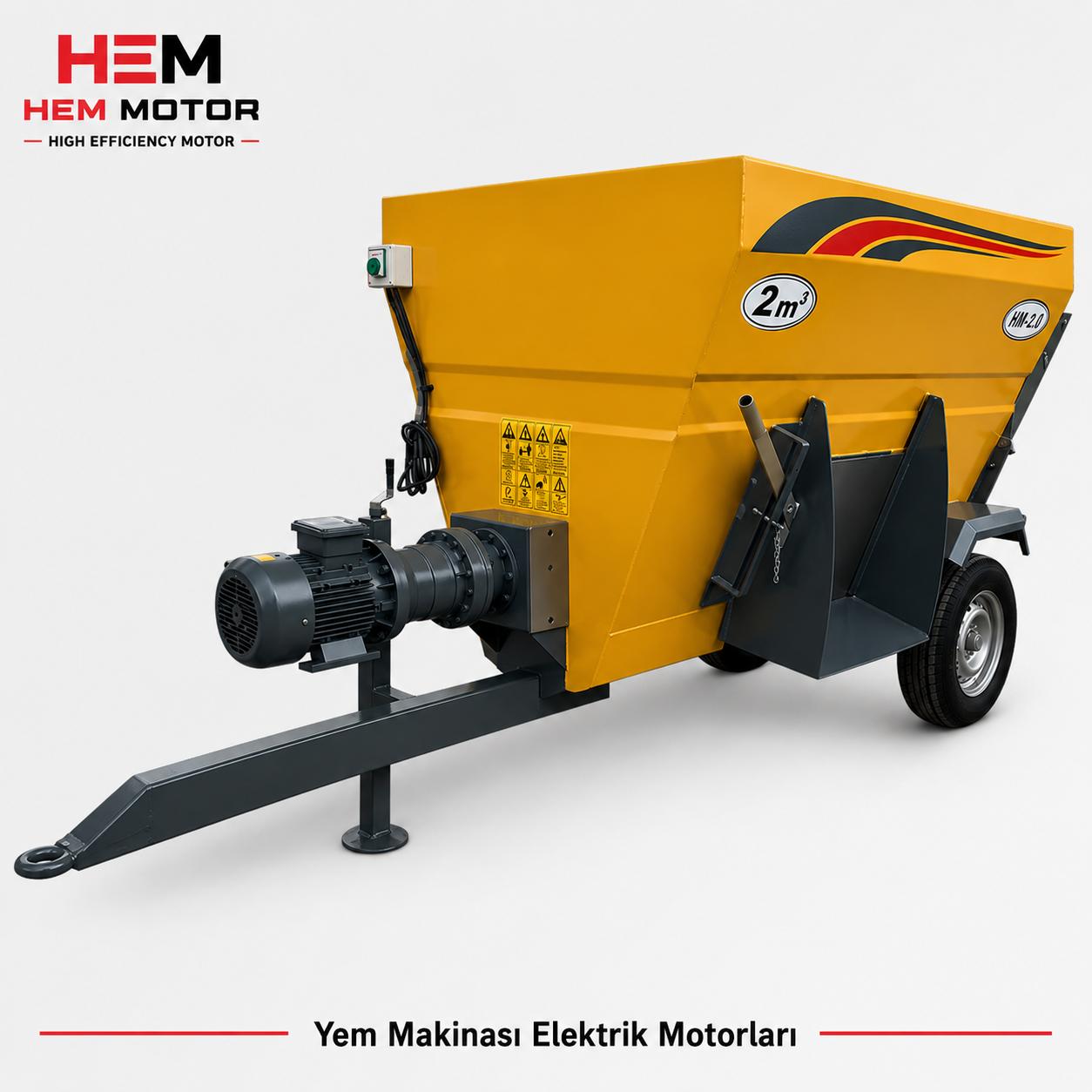

Selecting an electric motor for explosive atmospheres requires a far more rigorous engineering decision than an ordinary motor selection, both in terms of safety and regulation. In sectors such as petrochemicals, paint and varnish, chemicals, flour and sugar factories, fuel facilities, and wood and grain processing, the environment may contain flammable gas, vapour or combustible dust. A motor to be used in these environments must comply with the ATEX directive and be explosion-proof (Ex) certified. In recent years, IE5 synchronous reluctance (SynRM) motors, which represent the highest class in energy efficiency, have stood out by offering high efficiency together with a drive. However, the use of IE5 SynRM motors in explosive atmospheres requires additional care because of drive-fed operation: surface temperature, temperature class, protection type and certificate compatibility must be evaluated together. In this article we cover in detail explosive-atmosphere zones (Zone), protection types (Ex d, Ex e, Ex nA), temperature classes (T1–T6), surface temperature management in drive-fed operation, certification and the correct selection.
Explosive Atmosphere Zones: Zone 1/2 and Zone 21/22
In the ATEX classification, explosive atmospheres are divided into zones according to the frequency and duration of formation of the explosive atmosphere. Separate zone numbers are used for gas/vapour and dust:
| Zone | Medium | Frequency of Explosive Atmosphere | Equipment Category |
|---|---|---|---|
| Zone 0 | Gas/vapour | Continuous or long-term | Category 1G |
| Zone 1 | Gas/vapour | Occasionally in normal operation | Category 2G |
| Zone 2 | Gas/vapour | Rarely and for short periods | Category 3G |
| Zone 20 | Dust | Continuous or long-term | Category 1D |
| Zone 21 | Dust | Occasionally in normal operation | Category 2D |
| Zone 22 | Dust | Rarely and for short periods | Category 3D |
In practice, electric motors are usually selected for Zone 1, Zone 2 (gas) and Zone 21, Zone 22 (dust) environments. The use of rotating machines is avoided as much as possible in the most hazardous zones such as Zone 0 and Zone 20. The first step in correct motor selection is to correctly determine the zone in which the motor will operate and whether the hazardous substance in the environment is a gas or a dust. This determination is defined in the plant's explosion protection document (zone map).
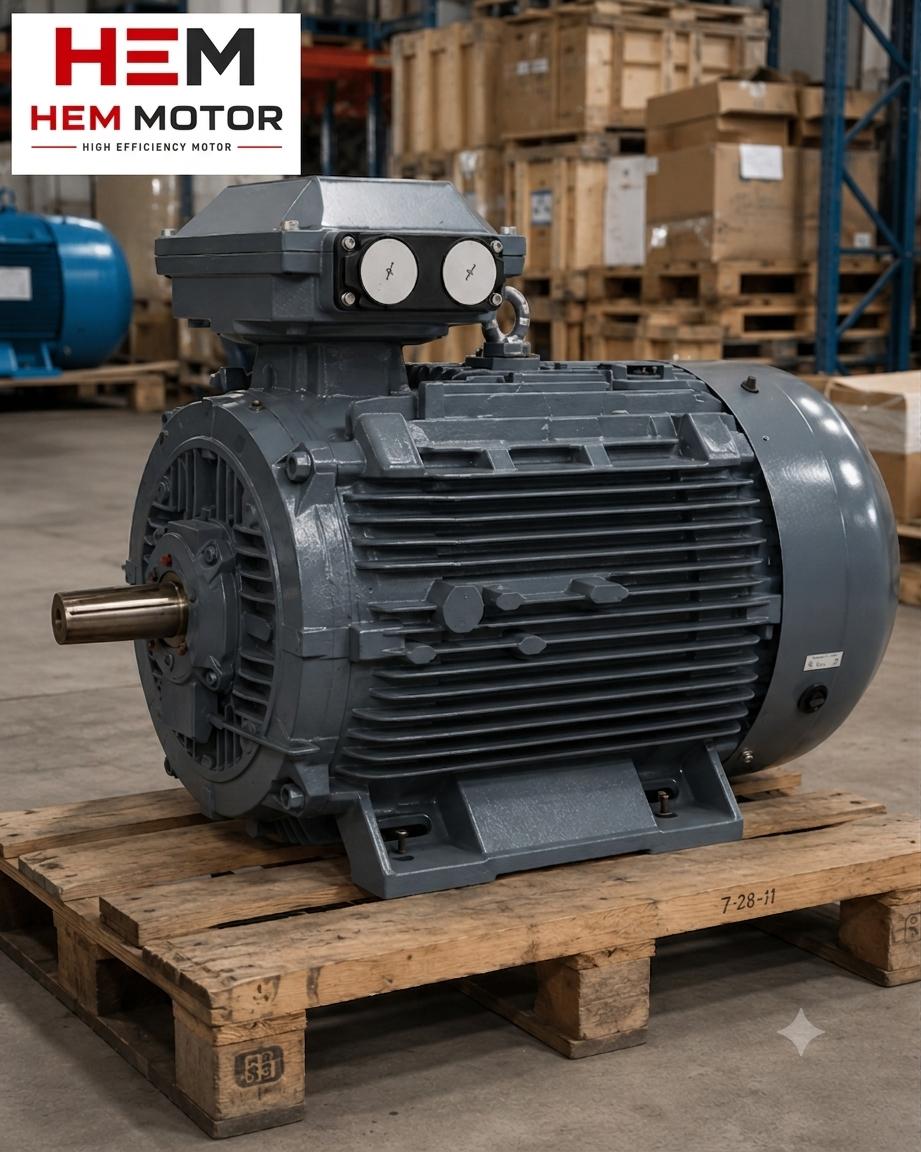
Protection Types: Ex d, Ex e, Ex nA and Ex t
Explosion protection is achieved by different methods. Each protection type is suitable for a specific zone and works on a different principle:
- Ex d (flameproof enclosure): The motor housing is designed to withstand a possible internal explosion; an internal explosion is contained without propagating outside. It is a common solution for Zone 1.
- Ex e (increased safety): Spark and excessive temperature formation are prevented by design; there are no arcing or sparking parts. Used for Zone 1 and Zone 2.
- Ex nA (non-sparking): A design that does not create sparks or dangerous temperatures in normal operation. Suitable only for Zone 2.
- Ex t (protection by enclosure): For dust environments (Zone 21/22), protection that limits dust ingress and surface temperature with an enclosure.
In IE5 SynRM motors, since operation with a drive is mandatory, the effect of the drive must also be taken into account when selecting the protection type. Generally, Ex d or Ex de is used for Zone 1 gas environments, Ex e/Ex nA for Zone 2, and Ex t combinations for dust environments. The protection type is clearly stated on the motor's nameplate and certificate.
Temperature Class: T1–T6
In an explosive atmosphere, the surface temperature of the motor must remain below the ignition temperature of the gas or dust in the environment. Therefore motors are labelled with a temperature class. The temperature class indicates the maximum surface temperature the motor can reach:
| Temperature Class | Max. Surface Temperature | Typical Application |
|---|---|---|
| T1 | 450 °C | Gases with high ignition temperature |
| T2 | 300 °C | General chemistry, solvents |
| T3 | 200 °C | Fuel, gasoline vapour |
| T4 | 135 °C | Sensitive gases, ether etc. |
| T5 | 100 °C | Very low ignition temperature |
| T6 | 85 °C | Most sensitive environments |
A low temperature class (T4, T5, T6) is a more demanding requirement; the motor must keep its surface temperature very low. In dust environments, instead of a temperature class, the maximum surface temperature (for example T 120 °C) is stated directly, and this value must be below the smouldering/ignition temperature of the dust. The correct temperature class is determined according to the ignition temperature of the hazardous substance in the environment.
Surface Temperature in Drive-Fed Operation
The distinguishing feature of IE5 synchronous reluctance motors is that their operation with a drive (frequency inverter) is mandatory. SynRM motors cannot be started direct-on-line from the grid; they must be controlled with a suitable drive. This raises a critical issue in explosive atmospheres: the surface temperature of the motor in drive-fed operation may differ from operation at fixed frequency. At low speeds, the motor's own cooling fan blows less air, so cooling weakens; at the same time, the harmonics produced by the drive can create additional losses and heat. Therefore the temperature class of the ATEX motor must be verified for drive-fed operating conditions.
Points to watch when selecting a drive-fed IE5 SynRM motor for an explosive atmosphere:
- The motor and drive must be a combination tested and certified together; the temperature class is valid for this combination.
- If continuous operation at low speed is intended, an external forced cooling fan (separately supplied) may be required.
- PTC thermistors placed in the winding and, if necessary, bearing temperature sensors are used for thermal protection; these sensors are monitored by the drive or a protection relay.
- A dV/dt filter or sine filter at the drive output positively affects both the winding insulation and the surface temperature.
- Shaft grounding and bearing current measures must not be neglected in a drive-fed explosion-proof motor.
Certification and Reading the Nameplate
The certificate of an ATEX/Ex motor documents for which zone, protection type, gas/dust group and temperature class the motor is approved. A typical marking on the motor nameplate looks like this: for example II 2G Ex db IIB T4 Gb (gas, Zone 1) or II 2D Ex tb IIIC T120°C Db (dust, Zone 21). Each part of this marking has a meaning:
- II: Equipment group (above-ground industry).
- 2G / 2D: Category and medium (G gas, D dust).
- Ex db / Ex tb: Protection type.
- IIB / IIIC: Gas or dust group.
- T4 / T120°C: Temperature class or maximum surface temperature.
For the correct selection, the requirement in the plant's zone map must exactly match the motor's nameplate marking. The certificate (EU Type Examination Certificate) and the declaration of conformity must be delivered with the motor. A missing or incompatible certificate creates both a safety risk and legal liability.
Summary Road Map for the Correct Selection
Steps to follow when selecting an IE5 SynRM explosion-proof motor for an explosive atmosphere:
- Classify the environment: gas or dust, which zone (1/2 or 21/22)?
- Determine the gas/dust group and ignition temperature of the hazardous substance; identify the required temperature class.
- Select the protection type suitable for the zone (Ex d, Ex e, Ex nA, Ex t).
- Verify that the ATEX certificate of the IE5 SynRM motor-drive combination is valid for drive-fed operation.
- Clarify low-speed, cooling, thermal protection and shaft grounding requirements.
- Confirm that the certificate and nameplate marking match the zone requirement.
Advantages of the IE5 SynRM Motor in Explosive Atmospheres
For many years, the traditional solution in explosive atmospheres has been explosion-proof asynchronous motors. The entry of IE5 synchronous reluctance technology into this field brings significant advantages in terms of both energy efficiency and thermal behaviour. SynRM motors have no cage or conductor in the rotor; therefore there are almost no losses in the rotor and the rotor temperature stays low. This feature is very valuable in an explosive atmosphere, because it becomes easier to limit the motor surface temperature and to achieve low temperature classes (T4 and below). Low rotor loss means a lower surface temperature at the same power, which means a safer explosive-atmosphere motor.
In terms of efficiency, the IE5 class reduces losses by roughly 40% compared with IE3. Since most processes in explosive atmospheres run continuously (around the clock), this efficiency gain turns into significant energy savings over the years. Moreover, low losses mean the motor heats up less and therefore the insulation and bearing life are extended. Since the failure of a motor in an explosive atmosphere is critical for both safety and production, a longer and more reliable life is an additional gain. The absence of permanent magnets in the SynRM rotor also provides an advantage in terms of supply security and the absence of the risk of magnet weakening with temperature.
That said, the use of an IE5 SynRM motor in an explosive atmosphere must always be evaluated together with the drive. The drive must also be selected appropriately, the ATEX approval of the motor-drive combination must be coherent, and the parameters must be set correctly during commissioning. Therefore the explosion-proof IE5 solution must be treated as a system, not a single component.
Explosive-Atmosphere Measures in Commissioning and Maintenance
The safety of an explosion-proof motor in an explosive atmosphere is ensured not only by correct product selection but also by correct installation, commissioning and maintenance. In Ex d (flameproof) motors, the flame path on the enclosure joint surfaces must be preserved; these surfaces must not be scratched and must be tightened properly. Cable glands (Ex-approved) must be of the correct type and properly installed; the wrong gland invalidates the entire protection concept. Grounding connections must be made securely and potential equalization must not be neglected.
- Maintenance authorization: Explosion-proof motor maintenance must be performed by personnel trained in explosive-atmosphere equipment.
- Original parts: Only original parts in conformity with the certificate must be used in repair; otherwise the certificate becomes invalid.
- Surface cleaning: In dust environments, dust accumulation on the motor surface must be cleaned regularly; accumulated dust acts like insulation and raises the surface temperature.
- Periodic inspection: Explosive-atmosphere equipment must be inspected periodically according to the relevant standards and recorded.
- Rewinding: Rewinding of an explosion-proof motor must be done in certified workshops and in conformity with the original data.
These measures ensure that the motor maintains the level of protection stated in its certificate throughout its life. No shortcuts are acceptable in an explosive atmosphere; safety is always the priority.
Frequently Asked Questions
Can an IE5 SynRM motor be used in an explosive atmosphere without a drive?
No. Synchronous reluctance motors cannot be started direct-on-line from the grid; they must run with a drive. In an explosive atmosphere, the ATEX conformity of the motor-drive combination must be verified together; otherwise the temperature class cannot be guaranteed.
Which protection type is required for a dust environment (Zone 21/22)?
Ex t (protection by enclosure) is typically used for dust environments, and the maximum surface temperature must be below the smouldering/ignition temperature of the dust. The temperature value is stated on the nameplate, for example as T120°C.
Why is surface temperature especially important in drive-fed operation?
Because at low speed the motor's own fan cannot provide sufficient cooling and the drive harmonics produce additional heat. Therefore the temperature class of the ATEX motor must be verified for drive-fed operating conditions; if necessary, an external fan and thermal sensors must be used.
Related Articles
- Exproof/ATEX motor: when required and supply
- Exproof vs standard asynchronous motor
- IE5 synchronous reluctance motor-drive package cost
- IE5 motor-drive installation compatibility and commissioning
- IE5 SynRM motor thermal behaviour, cooling and drive
Request a Quote for Manufacturer Stock and Fast Delivery
To source the IE5 synchronous reluctance explosion-proof motor you will use in an explosive atmosphere, with the right zone, protection type and temperature class, with manufacturer assurance and fast delivery, get in touch with us. Share your plant's zone map, gas/dust group, temperature class requirement and drive requirements; let the HEM Motor expert team prepare a motor solution with verified ATEX conformity, tested with the drive, for you. The correctly certified motor secures both your safety and your legal compliance.