English
 Türkçe


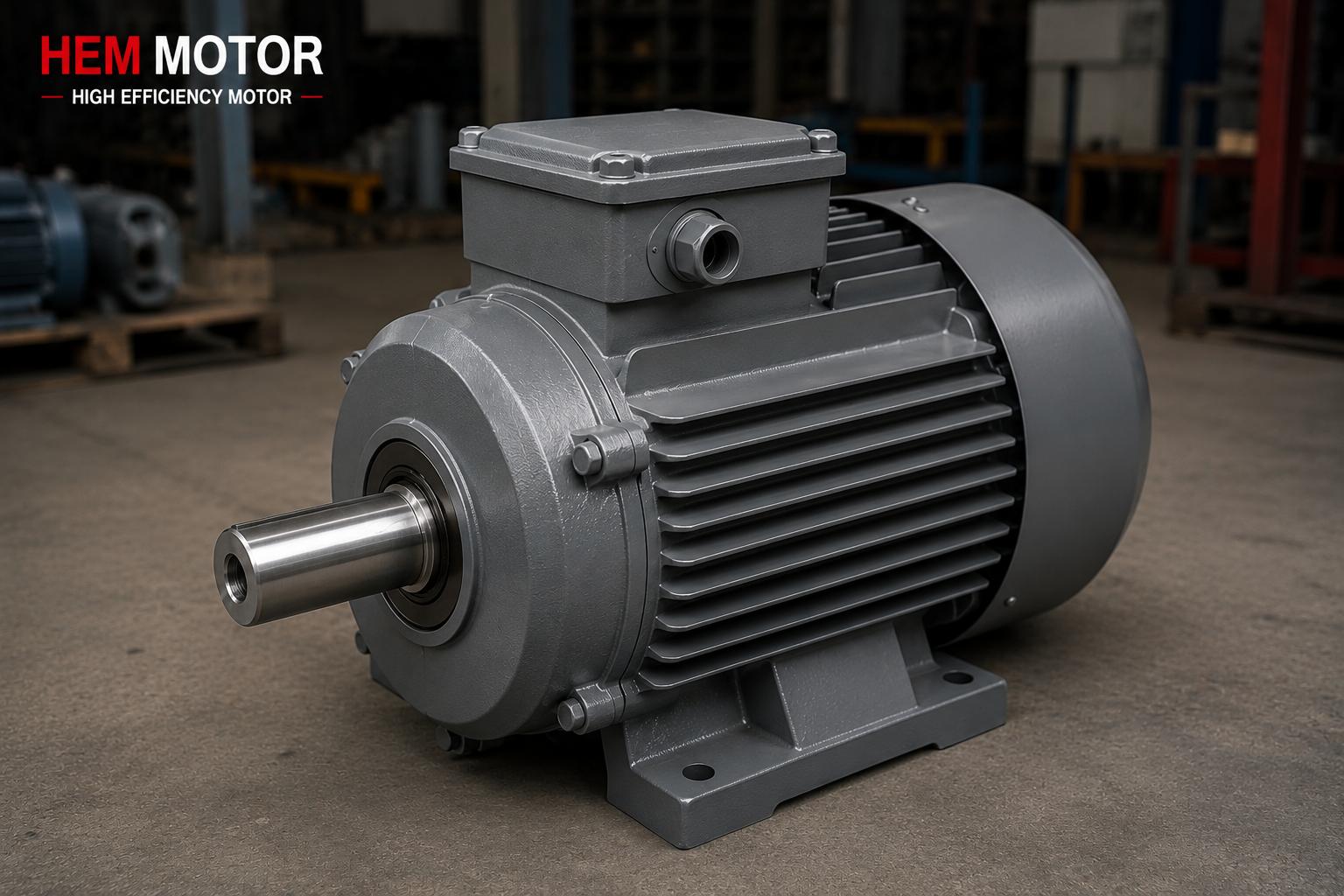

Selecting an electric motor in solar and renewable-energy facilities requires different logic than in classic grid-fed plants. In a facility fed by solar panels, wind or hybrid systems, energy generation fluctuates through the day; this makes it critical for the motor to run efficiently under a variable and sometimes limited supply. Here the high efficiency of IE4 Super Premium motors ensures that a larger share of the generated renewable energy turns into real work. As HEM Motor, with our identity as both manufacturer and supplier, this article covers from a buying angle the advantages of using IE4 motors in solar and renewable facilities, their compatibility with variable supply via a drive (VFD) and self-consumption optimization. The goal is to clarify the right IE4 electric motor choice that lets you get the highest return from your renewable investment.
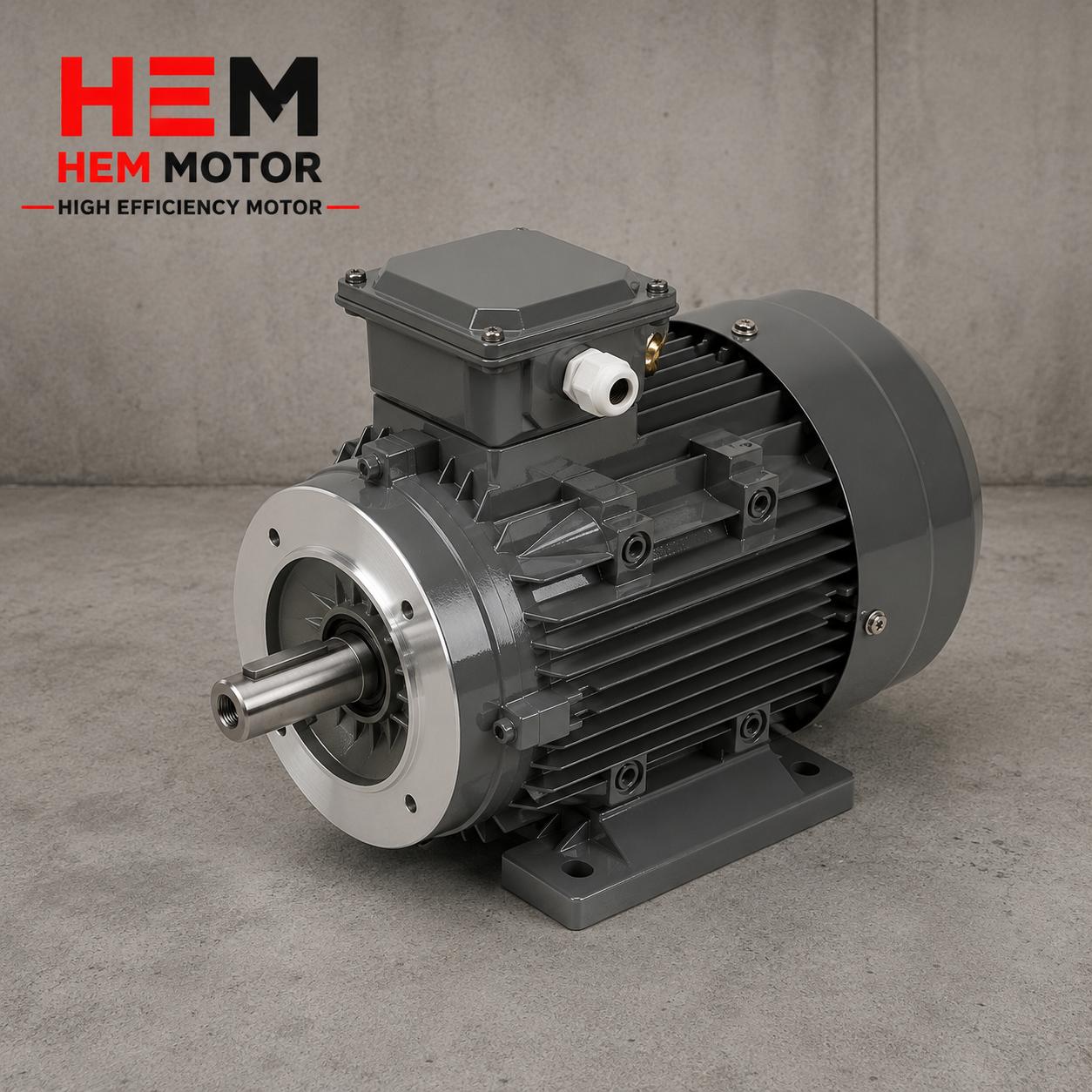
Why an IE4 Motor in a Renewable Facility? The Multiplier Effect of Efficiency
In a facility generating renewable energy, every kWh is a direct return on your investment. While an efficiency loss in grid energy only raises the bill, an efficiency loss in your own generated energy means wasting the valuable energy you produced. This is where the high efficiency of an IE4 motor creates a multiplier effect: the more efficient the motor, the larger the share of your solar or wind energy that actually drives the pump, fan or conveyor.
In practice this means: with the energy generated from the same solar panel, an IE4 motor does more work than an IE2 or IE3 motor; or you can do the same work with less panel capacity. This both raises the self-consumption ratio and shortens the payback period of the renewable investment. To see the effect of high-efficiency motors on energy and carbon footprint, our article on lowering carbon footprint with high-efficiency motors aligns directly with your renewable facility goals.
Compatibility with Variable and Fluctuating Supply via VFD
By the nature of solar and wind energy, generation is not constant; cloud cover, time of day or wind speed make generation fluctuate. Under this fluctuating supply, running the motor directly at constant speed is inefficient in most applications. The solution is to run the motor with a variable frequency drive (VFD). The VFD adjusts the motor speed, and thus the power it draws, to the instantaneous need and available energy, using energy most efficiently and smoothing fluctuations.
Advantages of the VFD with IE4 motor combination in renewable facilities:
- Speed set to generation: When solar generation is high the motor runs at full speed, and at partial speed when it drops, using energy optimally.
- Soft start: The VFD limits the motor start current and does not strain the limited-capacity renewable source.
- Large saving in pumps and fans: On pumps and fans with variable-torque characteristics, a speed drop yields a much larger drop in power, optimizing self-consumption.
For VFD selection and motor compatibility, our article on a variable frequency drive (VFD) with an induction motor is a basic guide. To see in detail the saving that the high-efficiency motor and VFD pairing provides in pumps and fans, we recommend our article on high-efficiency motor + VFD: energy saving in pumps and fans.
Self-Consumption Optimization: Using Generated Energy On Site
In renewable facilities the most profitable scenario is to consume the energy you generate on site rather than selling it to the grid at a low price; this is called self-consumption. The IE4 motor and VFD combination is among the most effective tools to raise the self-consumption ratio. Because high efficiency lets a larger share of generated energy turn into useful work, while the VFD matches the motor load to current generation and prevents energy waste.
The role of the IE4 motor in self-consumption optimization:
- Lower losses: Since iron, copper and friction losses are reduced in an IE4 motor, a larger share of generated energy turns into shaft power.
- Flexible load matching: On variable-torque loads like pumps and fans, as generation rises the motor load is increased, using surplus energy on site.
- Faster payback: High self-consumption accelerates the amortization of the renewable investment.
To see technically where losses are reduced in an IE4 motor, our article on efficiency losses in an IE4 motor: iron, copper and friction is a good resource. For correct power calculation in pump and fan applications, our article on motor power calculation: required kW in pump, fan and conveyor helps you size your motor correctly to your generation.
Motor Selection in Off-Grid, Hybrid and Grid-Connected Systems
Renewable facilities can be built in different structures, and each points to different priorities in motor selection:
- Grid-connected (on-grid) systems: The grid steps in when generation falls short. Here the high efficiency of the IE4 motor both raises self-consumption and reduces energy drawn from the grid.
- Off-grid systems: Energy comes only from the renewable source and storage. Since every kWh is critical here, IE4 efficiency and load management via VFD are vital.
- Hybrid systems: Solar, wind, storage and, when needed, a generator work together. In these systems the motor start current and soft start via VFD are especially important.
To evaluate start-current problems and solutions under generator-assisted or limited-capacity supply, our article on motor selection on generator-run sites also guides off-grid and hybrid setups. For the effect of the constant-torque vs variable-torque question on motor selection in variable-speed applications, see our article on motor selection in variable-speed applications.
Which Applications Gain Most from IE4 in a Renewable Facility?
The applications that gain most from moving to IE4 in renewable facilities are those that run many hours with variable load: irrigation and transfer pumps, ventilation and process fans, compressors and conveyors. These applications get the highest benefit from the IE4 + VFD combination because of both their high running hours and characteristics suited to speed control via VFD. To determine which application requires IE4 in pumps, fans and compressors, our article on the IE4 threshold in pump, fan and compressor offers a clear decision framework.
Investment Decision: How Does IE4 Accelerate Payback?
The initial cost of an IE4 motor is higher than a standard motor; but in a renewable facility this difference pays back quickly by using your own generated energy more efficiently and reducing the energy drawn from the grid. In a high-running-hour application, the efficiency advantage of IE4 positively affects both the energy cost and the amortization of the renewable system. For the real consumption calculation and payback period of replacing an old motor with IE4, our article on replacing your old motor with IE4: real consumption and payback offers calculation logic adaptable to renewable facilities. The IE4 motor robust construction with cast iron body, Class F insulation and IP55 protection also ensures long life in applications like outdoor solar-assisted pump stations.
Solar Pumping: The Most Common IE4 Application in a Renewable Facility
The application where IE4 motors are most used in renewable facilities is, without doubt, solar pumping. In irrigation, water transfer, deep-well and booster applications, solar-powered pumps provide great savings in both agricultural and industrial facilities. In these applications the pump running through the day, in the hours when the sun is strong, naturally aligns generation with consumption. The IE4 motor and VFD pair, as solar generation rises, runs the pump at a higher speed and uses available energy most efficiently.
Practical benefits of an IE4 motor in solar pumping:
- More flow with fewer panels: Thanks to high efficiency, more water is pumped from the same panel capacity.
- Grid independence: On off-grid solar pumps, IE4 efficiency makes it easier for the system to be self-sufficient during the day.
- Open-field durability: The cast iron body and IP55 protection ensure long life in field and greenhouse conditions.
For correct motor supply in irrigation and agricultural pump applications, our article on irrigation and agricultural pump motors offers complementary information for your solar-assisted irrigation projects. For the right motor choice with flow, head and speed calculation in deep-well applications, see our article on deep-well pump motor selection.
Correct Sizing: Choosing the Motor by Generation Profile
Sizing the motor correctly in a renewable facility is a more delicate task than in a constant-grid plant, because the supply fluctuates. An oversized motor loses efficiency at low load ratio when generation drops; an undersized motor cannot use surplus energy when generation is high. Correct sizing requires the motor to match the generation profile and the application load characteristic.
Items to watch in sizing:
- Load type: Variable-torque loads like pumps and fans are the applications that gain most from speed control via VFD.
- Running hours: On applications running many hours, the IE4 efficiency advantage pays back faster.
- Generation-consumption overlap: Shifting consumption as much as possible to high-generation hours raises self-consumption.
To see what load is most efficient to run a motor at and the subtleties of correct sizing, our article on at what load should a motor run? efficiency and correct sizing is a good guide. A correctly sized IE4 motor both provides the highest saving in your renewable facility and runs long and trouble-free, securing the real return of your investment.
Frequently Asked Questions
Why should I prefer an IE4 motor in a solar-fed facility?
Because in your own generated energy every kWh is valuable. The high efficiency of an IE4 motor ensures that a larger share of your solar energy turns into real work, which raises the self-consumption ratio and accelerates the payback of your renewable investment. A low-efficiency motor wastes part of your valuable generated energy as heat.
How do I run the motor efficiently under fluctuating solar generation?
The most effective method is to run the motor with a variable frequency drive (VFD). The VFD adjusts the motor speed to instantaneous generation and need, using energy optimally and limiting the start current. Especially on variable-torque loads like pumps and fans, a speed drop via VFD yields a very large saving in power.
Does the IE4 + VFD combination also work in off-grid systems?
Yes, and it is even more critical in off-grid systems. In a system without grid support, every kWh is limited and valuable; IE4 efficiency and load management via VFD let you use stored and generated energy most efficiently, allowing the system to be built smaller and more economically.
Get a Quote
To supply the right IE4 motor for your solar and renewable-energy facility, together with a suitable VFD and tuned to self-consumption optimization, consult HEM Motor experts. Based on your application, power and speed need and system structure (on-grid, off-grid, hybrid), let us determine the most suitable IE4 motor together. Call us now at +90 (532) 345 49 86 or send your quote request via our contact page. Browse our IE4 electric motor and efficient electric motors range, and the other guides in our IE4 Electric Motors category.