English
 Türkçe

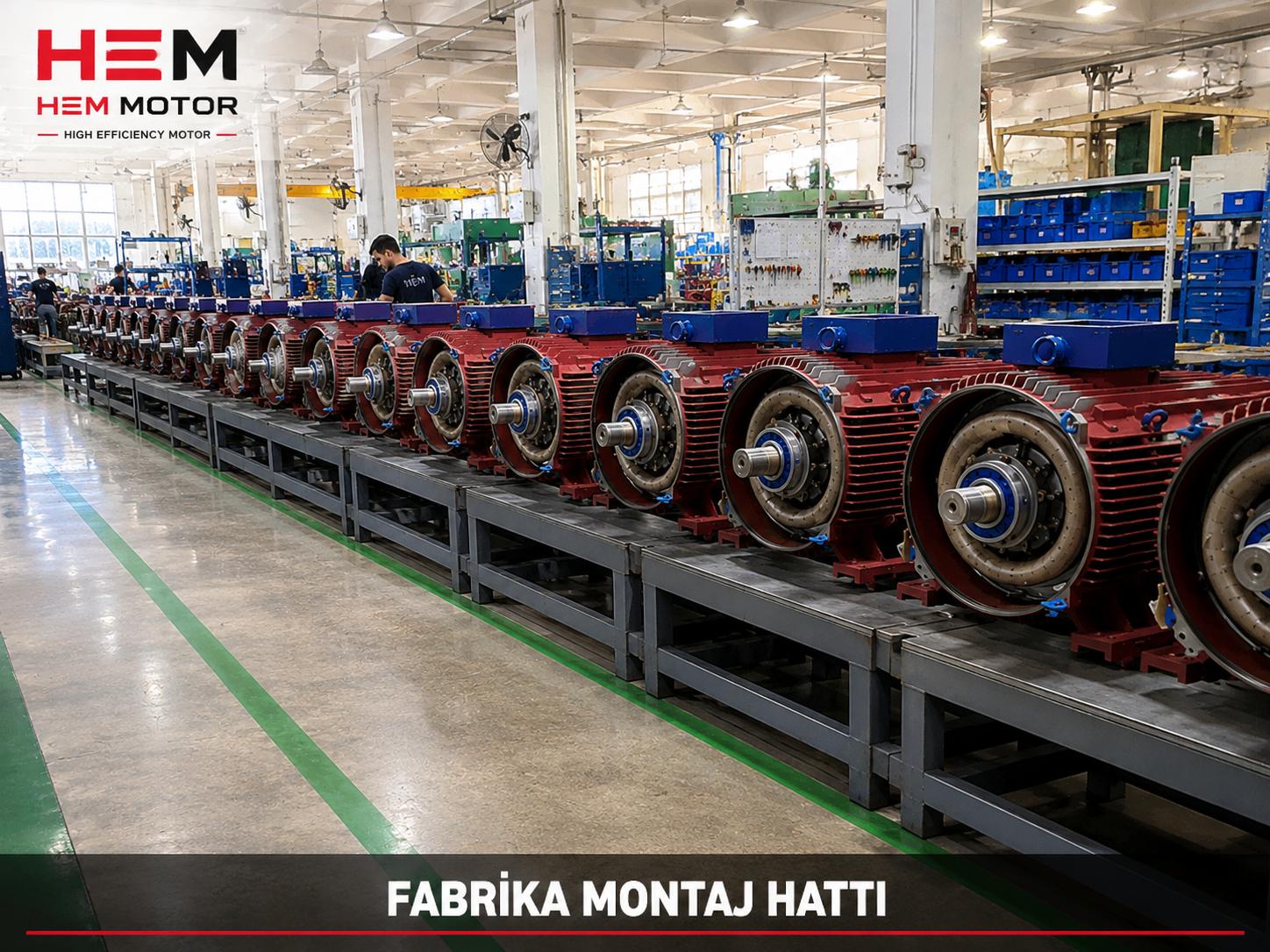

When you buy a high-efficiency IE3 motor, how it reaches you matters just as much as the quality of the motor itself. A motor that leaves the factory in perfect condition can be ruined by poor packaging, careless transport or improper storage long before it is ever commissioned. Vibration-induced damage in the bearing races, moisture absorption in the windings, corrosion on the shaft end, or impact on the terminal box can all appear before the motor has run for a single minute. This leads to warranty disputes between the manufacturer and the buyer, and it disrupts your project schedule. In this article, from a manufacturer's point of view, we walk step by step through the rotor lock, moisture and corrosion protection, the correct packaging types, warehouse stock damage, and most importantly the way to accept goods damage-free. Our goal is to keep the motor protected from factory to site throughout your stock and supply process, and to ensure it is correctly inspected at the moment of delivery.
Why Transport and Packaging Are So Critical for IE3 Motors
An IE3 motor is a precision product manufactured in the premium efficiency class according to IEC 60034-30-1, machined to tight tolerances. Bearing clearances, air gap, winding insulation and shaft balance are controlled to the micron level. This precision is what defines the motor's efficiency and lifetime, but the same precision makes the motor sensitive to handling and storage errors. The value of a new motor lies not only in its nameplate rating but in arriving on site undamaged.
In the supply chain, a motor is handled many times: from the factory store to the truck, from the truck to the port, from the ship to the warehouse, and from there to the site. Every handling point is a risk point. Road vibration, humidity at sea, forklift impacts and long waiting periods accumulate into faults that are only noticed later. For this reason, the manufacturer packs the motor according to the route it will travel and the storage time it will face.
Hidden Damage Before Commissioning
Most transport damage is not visible at a glance. A drop in winding insulation resistance, micro-pitting in the bearing races, or rust on the shaft end are delayed problems that reveal themselves when the motor is first started. That is why the delivery and damage-free acceptance process must begin long before the motor's first rotation. For a correct acceptance inspection, always apply the steps in our incoming acceptance inspection guide.
The Rotor Lock (Transport Clamp): The Importance of Securing the Shaft
A rotor lock is a transport clamp fitted to secure the shaft during transit on larger frames or motors with roller bearings. As the name suggests, it prevents the rotor and shaft from moving freely in the axial or radial direction. But why is this needed?
What Is False Brinelling?
When a motor is not running, the bearing balls or rollers rest on a single point on the bearing race. Continuous vibration during road or sea transport causes those stationary rolling elements to make tiny oscillations at that contact point. Because there is no oil film, metal rubs on metal and small depressions form on the race surface, spaced at equal distances matching the rolling element pitch. This is called false brinelling. When the motor is later started, these depressions show up as noise, vibration and premature bearing failure.
The rotor lock prevents this oscillation by securing the shaft. It is generally used on large-frame motors and applications with roller bearings. Small-frame motors with ball bearings often do not need it, because the preload of the ball bearings holds the shaft sufficiently.
Always Remove It Before Running
The most critical rule is this: the rotor lock must always be removed before running the motor. If voltage is applied while the transport clamp is still fitted, the shaft cannot turn, excessive current is drawn, and both the winding and the lock element suffer serious damage. On large-frame motors, this element is found at the shaft end or on the drive-end shield and is usually marked with a red warning label. Our guide on export wooden crate (ISPM-15) and rotor-lock packing also covers how the rotor lock should be positioned inside the crate for sea freight.
Moisture and Corrosion Protection: The Invisible Enemy
Moisture is the greatest enemy of the motor winding and metal surfaces. Especially during sea transport and long storage, condensation forms inside the container along with temperature swings. This condensation penetrates the winding insulation, lowering the insulation resistance, and causes corrosion on the shaft end and machined surfaces. Moisture and corrosion protection is therefore an inseparable part of packaging design.
In-Package Protection Measures
- VCI paper: Volatile Corrosion Inhibitor paper creates a protective atmosphere inside the package and shields metal surfaces from rust.
- Silica gel / desiccant bags: Absorb moisture inside the package to prevent condensation; especially effective together with a barrier foil.
- Shaft-end protection: The machined shaft end is coated with anti-rust grease or a protective coating and shielded with a plastic cap.
- Barrier foil / shrink wrap: For sea freight, the motor is sealed in moisture-proof foil packing.
- Anti-condensation heater (space heater): A resistor placed inside the motor for long storage or humid environments keeps the winding above ambient temperature to prevent condensation.
- Terminal box sealing: The terminal box is closed against moisture with gaskets and blanking plugs.
A standard IE3 motor is generally manufactured with IP55 protection and Class F insulation; however, storage and transport protection is a separate matter from this enclosure rating. When moisture absorption in the winding lowers the insulation resistance, a megger measurement should be taken before commissioning, and the motor should be dried out in a controlled way if necessary.
Packaging Types: Choosing the Right Packing
The correct packaging is chosen according to the motor's frame size, weight and shipping route. Wrong packaging can cause both transport damage and customs problems.
Carton, Pallet and Wooden Crate
- Carton box: For small-frame motors, used together with edge protectors and cushioning material.
- Pallet bolting: Medium and large-frame motors are bolted to the pallet through their feet and secured with strapping.
- Wooden crate: Used for export and sensitive shipments; export crates must be made of heat-treated wood compliant with the ISPM-15 standard.
- Lifting elements: Eyebolts and lifting lugs allow safe handling by forklift or crane.
The packaging must always carry orientation markings (this side up) and fragile / keep-dry labels. For the details of export packaging, you can review our export wooden crate (ISPM-15) and rotor-lock packing guide.
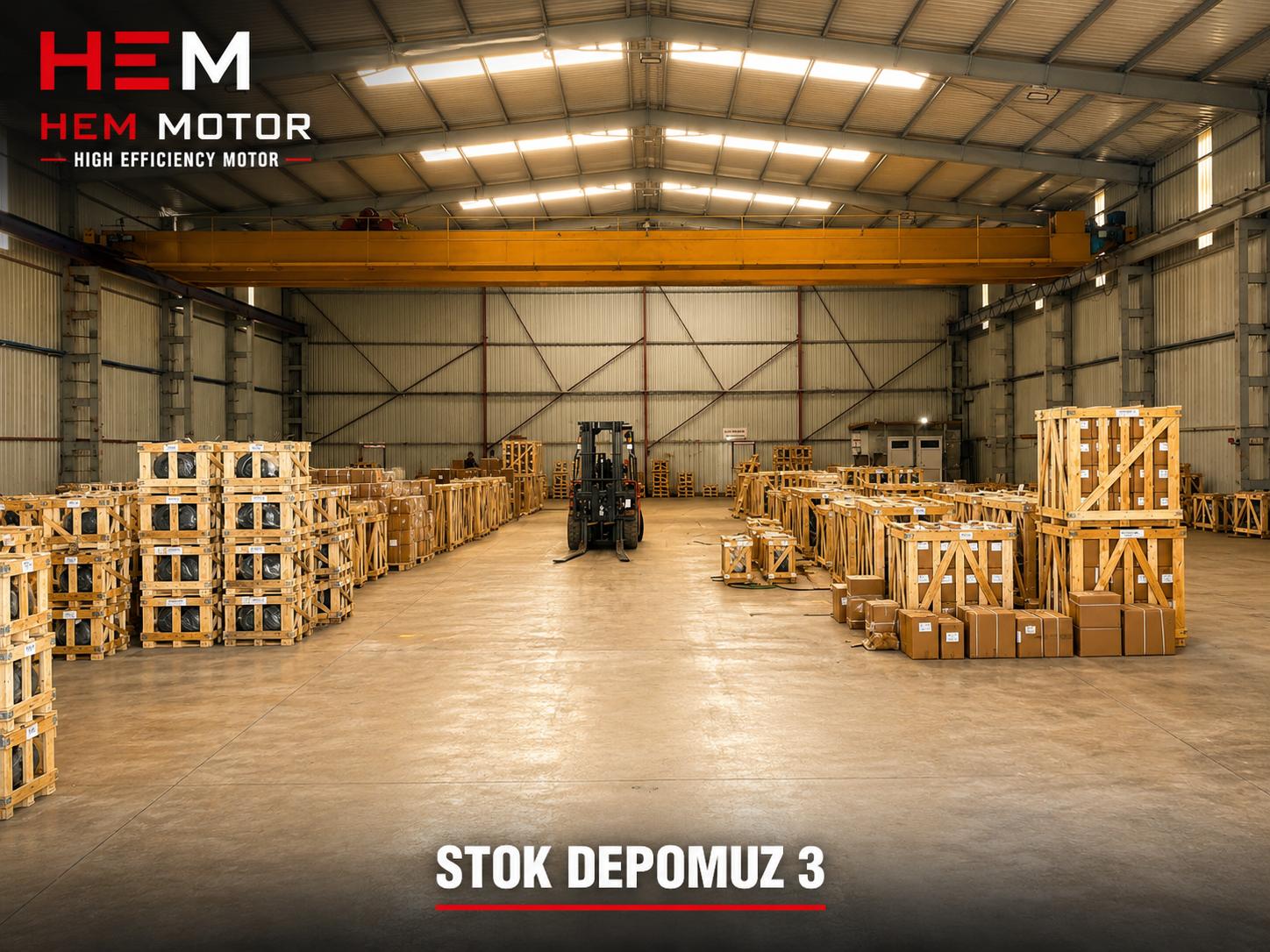
Stock Damage in the Warehouse: Protecting a Waiting Motor
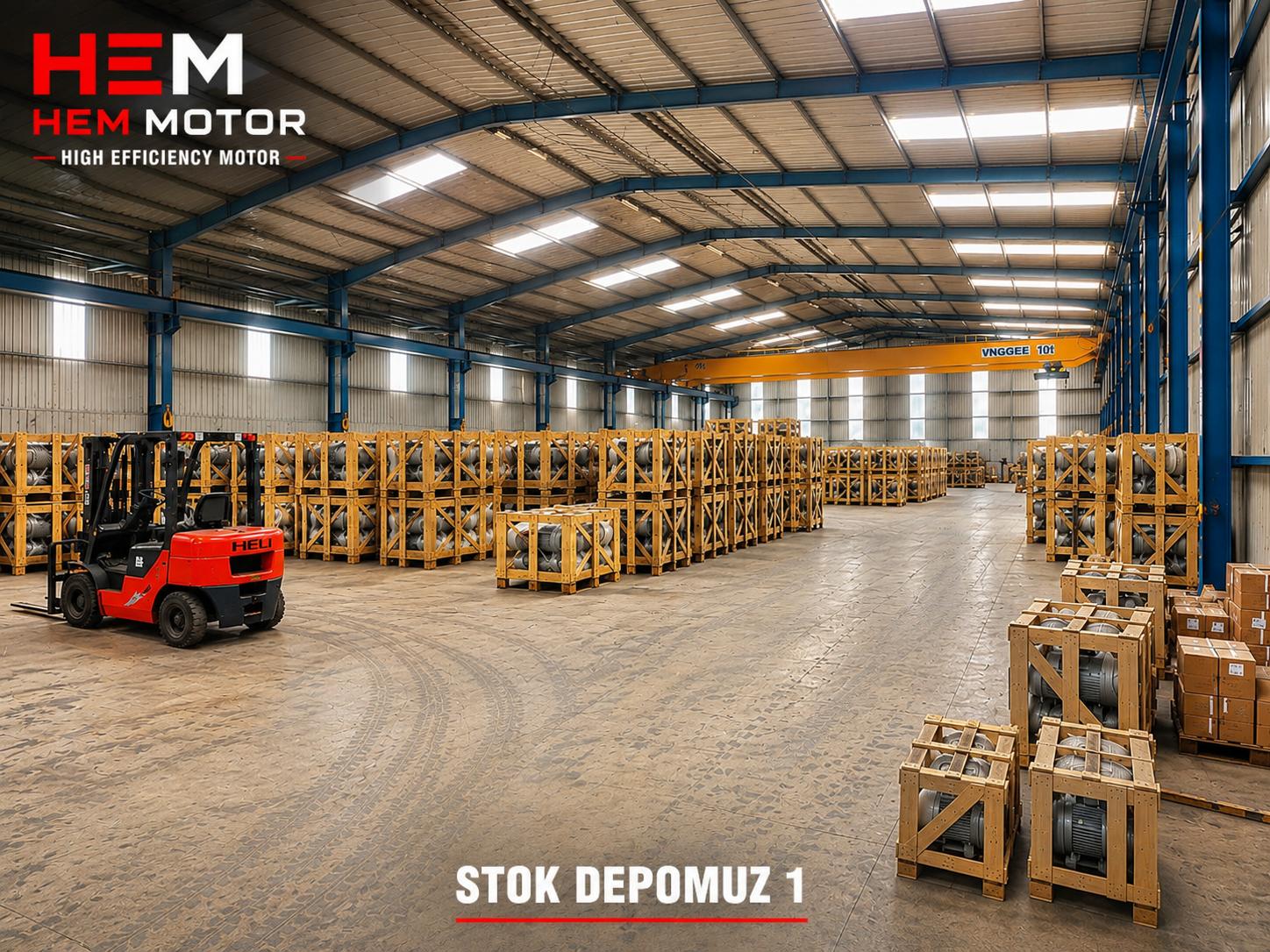
The job is not done once the motor reaches the site undamaged. An IE3 motor that waits a long time in stock can be damaged under poor storage conditions. Storage rules are critical for suppliers and investors who manage stock.
Storage Rules
- Place motors on pallets, not on the bare floor; protect them from ground moisture and condensation.
- Respect stacking limits; stacking heavy motors on top of each other can crush the packaging.
- Avoid temperature fluctuations and condensation cycles; energize the anti-condensation heater where possible.
- For motors stored a long time, rotate the shaft by hand periodically (to prevent false brinelling), but first remove the rotor lock if fitted.
- Re-grease the bearings according to the manufacturer's lubrication intervals.
- Keep the terminal box closed; keep the packaging until installation.
For in-depth knowledge on long-term storage and moisture management, our motor storage and long-term moisture-bearing care article is a comprehensive resource. For motors that will operate in dusty and wet environments, consider the IP65/IP66 protection for dusty and wet environments options.
Damage-Free Acceptance: A Checklist at the Moment of Delivery
The inspection you carry out when receiving the goods prevents warranty disputes in the weeks that follow. Damage-free acceptance is a professional process that protects both the buyer and the manufacturer.
Delivery-Moment Checklist
- Inspect the packaging externally on arrival; look for crushing, wetness, holes or impact marks.
- Photograph any visible damage and note it on the waybill; prepare a carrier damage report.
- Check the fan cowl, terminal box and shaft end for impact marks.
- Turn the shaft by hand; make sure there is no binding, friction or abnormal noise.
- Measure the winding insulation resistance with a megger; if it is low, dry the motor out.
- Verify that the nameplate data (power, speed, voltage, IP55, Class F) matches your order.
- On large-frame motors, confirm the rotor lock is fitted and remove it before running.
- Confirm that the accessory options you ordered (anti-condensation heater, PTC, extra protection) are present.
You can find detailed methods for these checks in our incoming acceptance inspection article.
Manufacturer Assurance: Damage-Free Supply with HEM
The biggest advantage of buying a motor from the manufacturer is that the packaging is done correctly at the factory according to the shipping route. HEM packs the motor knowing the difference between a domestic pallet shipment and an export sea crate. Where required, it fits a rotor lock, applies moisture and corrosion protection, and delivers the motor with traceable nameplate data.
What Should You Ask for When Ordering?
- State your shipping route (domestic / export / sea freight) from the start.
- For export, request an ISPM-15 compliant wooden crate and barrier-foil packing.
- If you plan long storage, ask for an anti-condensation heater and extra moisture protection.
- When requesting a quotation, state the packaging requirement clearly in writing; ask about stock availability and the quick-replacement assurance.
When planning your stock, our IE3 electric motor stock guide article will guide you in choosing the right power and speed. For current electric motor prices and stock availability, you can request a quotation with manufacturer assurance. As a manufacturer, we do not just produce the motor; we also guarantee that it reaches the site undamaged and stays protected until it is commissioned.
Frequently Asked Questions
What is a rotor lock (transport clamp), and must I remove it before running the motor?
A rotor lock is a transport clamp that secures the shaft during transit to prevent false brinelling damage in the bearing races. It is used on large-frame motors and motors with roller bearings. It must always be removed before running the motor; if voltage is applied while it is still fitted, the shaft cannot turn and excessive current causes serious damage. It is usually marked with a red warning label.
What should be checked before commissioning an IE3 motor that has waited a long time in storage?
First measure the winding insulation resistance with a megger; if it is low due to moisture, dry the motor out in a controlled way. Turn the shaft by hand to check for binding and noise, and re-grease the bearings to the manufacturer's interval if needed. Check the terminal box and nameplate data. If an anti-condensation heater is fitted, confirm it has been energized.
How do I request packaging for sea-freight export?
For sea freight, request a heat-treated wooden crate compliant with the ISPM-15 standard, sealed barrier-foil packaging, and moisture and corrosion protection with VCI paper and silica gel. On large frames, ask for a rotor lock, anti-rust protection on the shaft end, and correct orientation/labelling. State these requirements in writing at the quotation stage.