English
 Türkçe

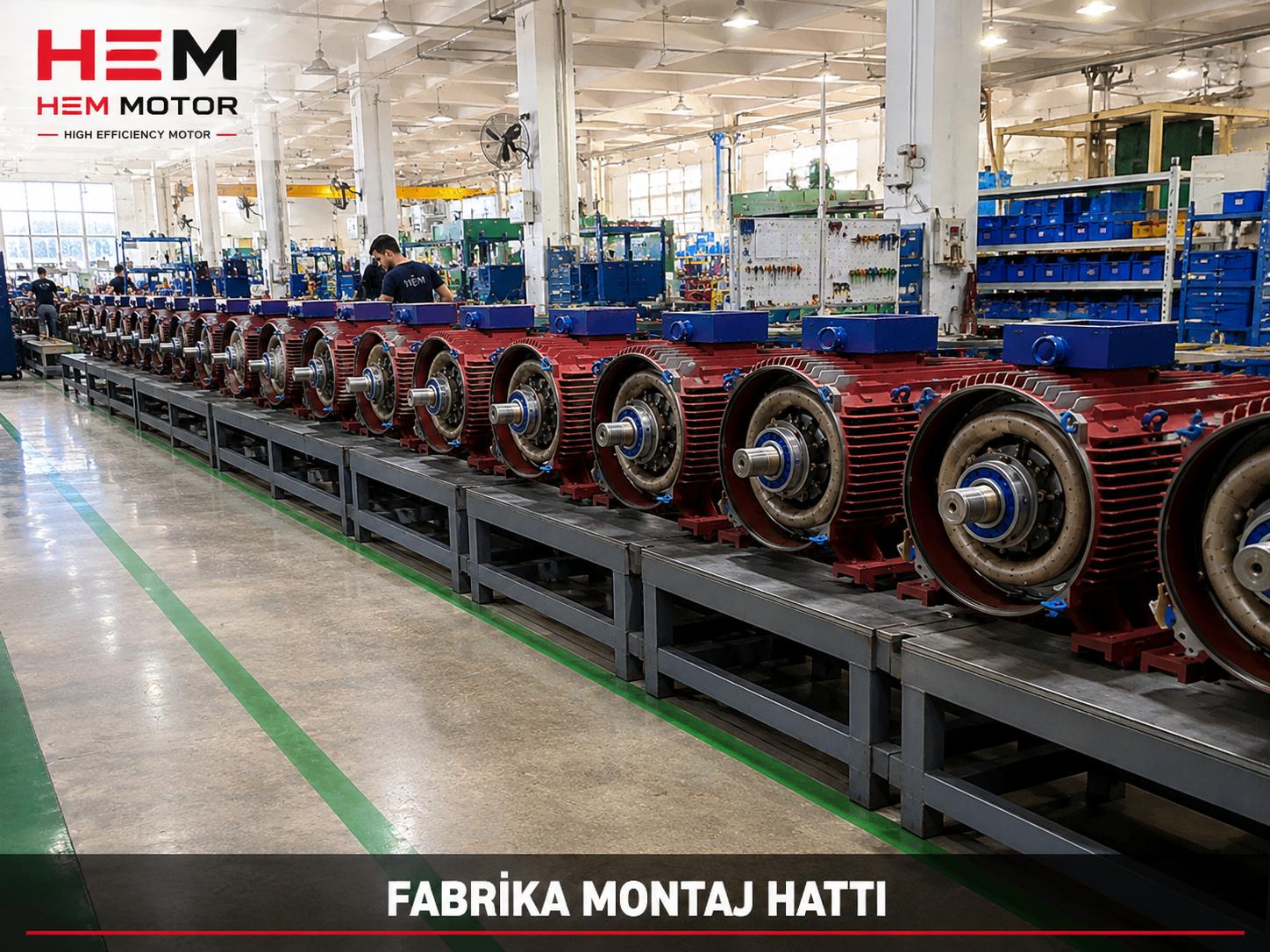

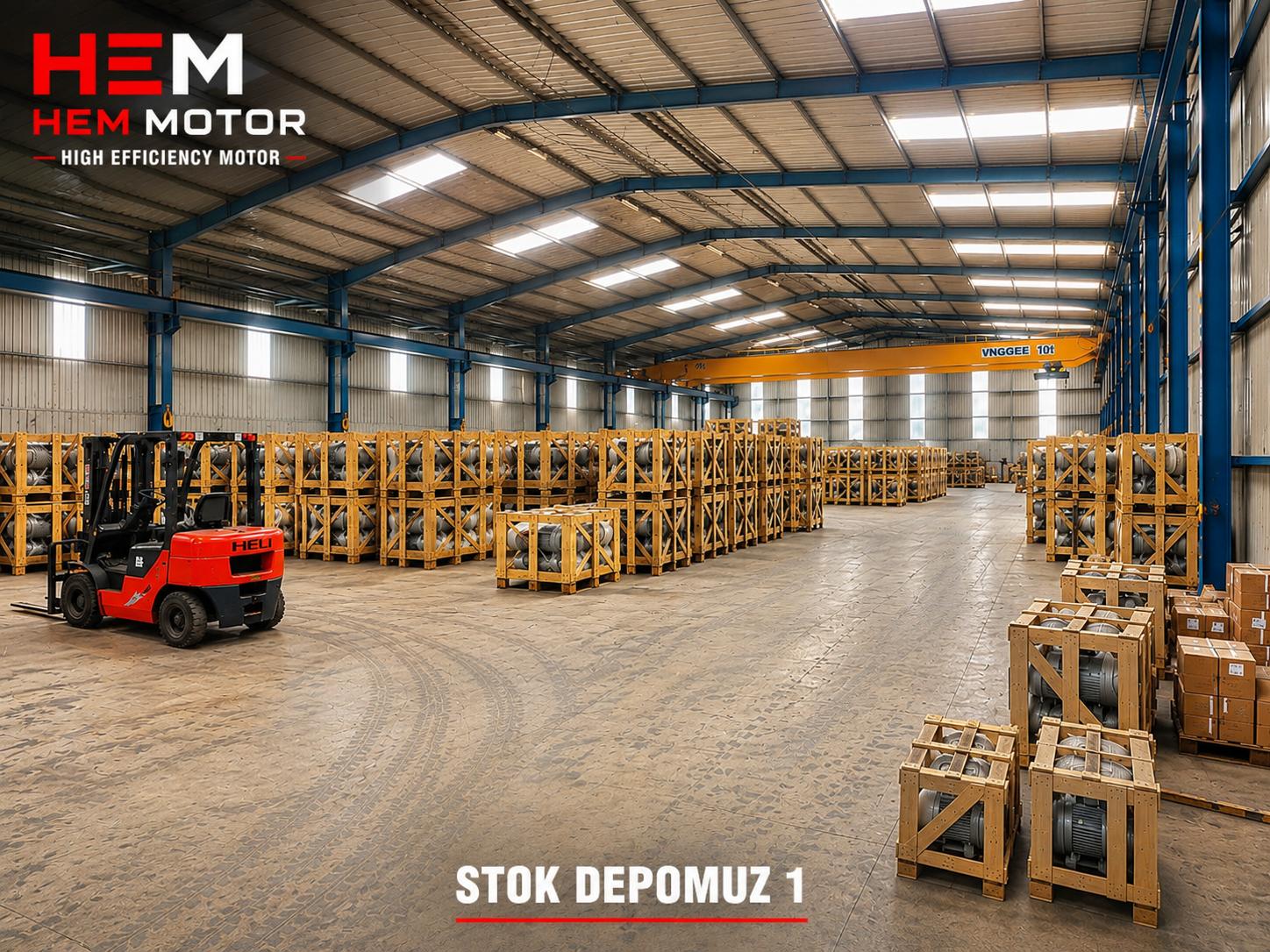
From the moment an electric motor leaves the factory until it is energised for the first time at a facility overseas, it is exposed to dozens of mechanical and climatic stresses. Temperature swings inside the container, salty sea air, days of waiting at ports, forklift jolts and the constant vibration of an ocean crossing can render a poorly packed motor unusable, through bearing, winding or housing damage, before it even reaches its destination. That is why export packaging is not a line-item cost but a critical engineering step that protects both the product warranty and customer satisfaction. At HEM Motor we pack every motor we manufacture and ship according to its destination climate, transport mode and the buyer's customs requirements, documenting every detail in the shipment file: from the ISPM-15 compliant heat-treated wooden crate to the rotor lock, and from VCI paper to silica gel desiccant.
ISPM-15 and the Heat-Treated (HT) Wooden Crate Requirement
The use of wood packaging material (WPM) in international sea and air transport is governed by ISPM-15 (International Standards for Phytosanitary Measures No. 15), published by the FAO. Its purpose is to prevent the cross-border movement of pests and larvae travelling inside timber. Almost every major export market accepts only ISPM-15 marked packaging at customs; unmarked or non-compliant crates are detained, forced into fumigation or returned. This creates a serious risk in terms of both time and cost, and can delay the delivery schedule by days.
For ISPM-15 compliance, timber must be treated by one of two methods: heat treatment (HT) or methyl bromide fumigation (MB). Because MB is banned in many countries on environmental grounds, heat treatment is the standard practice today. In heat treatment, the wood is kilned until its core temperature reaches at least 56°C for a minimum of 30 minutes. Treated wood then receives the standard IPPC mark (the wheat-ear logo), showing the country code, the producer/treater registration number and the treatment type (HT). On all crates and pallets we ship, we make sure this mark is legible and permanent, because the inspector at the destination customs looks at it first.
- HT (Heat Treatment): core temperature at least 56°C for at least 30 minutes; leaves no chemical residue and is safe for the motor.
- IPPC mark: country code, registration number and treatment code (HT); must appear legibly on at least two opposite faces of the crate.
- Plywood / OSB exemption: manufactured wood products that have passed through gluing and heat-pressing processes are generally outside ISPM-15 scope, but solid blocks and skids are within scope.
Crate design is not only about compliance but also economy. Open-crate types are lighter and more cost-effective, but a closed-box crate is preferred on routes carrying a high risk of moisture and dust. As the motor's weight rises, the skid cross-section in the crate base, the corner reinforcements and the number of bolted connections all increase. In very heavy motors the base is dimensioned by engineering calculation to carry both the motor weight and the stacking load. The crate's internal volume is planned so that it does not strike protrusions such as the lifting eyebolts and terminal box; where necessary these protrusions are further protected with dunnage. Choosing the crate type according to the destination market and transit time reduces both the risk of damage and unnecessary freight cost.
The Stresses Sea Freight Imposes on a Motor
Although container shipping is cheap and widespread, it is a harsh environment for a motor. During an ocean crossing the motor is exposed to low-frequency vibration from the ship's motion, large day-night temperature differences and water that condenses inside the container (so-called container rain). Salty air, in turn, quickly initiates corrosion on unprotected metal surfaces. Sound export packaging targets all three threats at once: mechanical fixing, corrosion protection and moisture management.
Vibration and Mechanical Shock
The entire hull of a ship is a source of low-frequency vibration that is transmitted through the crate-pallet-motor chain. An unsecured motor performs micro-movements inside its crate under its own inertia, and these movements can cause permanent damage, especially to the bearings. Bolting the motor to the pallet, placing anti-slip blocks under the housing and filling void spaces inside the crate with dunnage are the basic measures. In large motors, keeping the centre of gravity low and centred over the crate base both reduces the risk of tipping and balances the load on the crate below it during stacking. The sudden forklift lifts and drops at port transhipments are also a source of shock; that is why securing the motor firmly to the pallet matters as much as designing the pallet base for fork entry.
Bearing Brinelling Risk and the Rotor Lock
The most insidious effect of transport vibration is known as false brinelling. While the motor is not turning, the bearing balls are constantly hammered by tiny vibrations against the same contact points on the outer race; once the oil film is pushed out of these spots, metal-to-metal contact begins and small indentations form on the race surface. The result is noisy, short-lived bearings even though the motor has never run at the destination. The most effective way to prevent this, particularly in large-frame motors with cylindrical roller bearings, is to use a rotor lock (shaft lock). The rotor lock secures the rotor from the shaft end or coupling, preventing it from rotating and the balls from vibrating under transit loads. We always attach a warning to the crate: 'Rotor is locked during transport, remove before operation'. Our guide on long-term storage moisture and bearing protection complements this mechanism in depth and applies equally to motors waiting in the warehouse.
Moisture and Corrosion Protection: VCI, Silica Gel and a Sealed Barrier
Condensation inside the container is the number-one enemy of export motors. When a ship moves from a cold sea to a warm tropical port, moisture in the air condenses as droplets on steel surfaces that cool at night. This water lowers winding insulation resistance, rusts bearings and starts corrosion on machined shaft and flange surfaces. Rather than relying on a single measure, a multi-layered moisture strategy is essential.
- VCI paper/film: packaging containing Volatile Corrosion Inhibitor compounds forms a protective molecular layer on metal surfaces within an enclosed volume. We wrap exposed metal surfaces such as the shaft, flange and coupling in VCI paper.
- Silica gel (desiccant): a calculated number of desiccant units, based on motor weight and volume, is placed inside a sealed barrier bag. A humidity indicator card lets the internal relative humidity be monitored.
- Barrier/aluminium foil bag: for long sea voyages or high-humidity routes, the motor is vacuum-sealed inside an aluminium barrier bag to create a sealed micro-climate.
- Shrink / stretch wrap: stretch film around the pallet and crate provides the first barrier against dust and splashing water.
Before shipment we measure each motor's winding insulation resistance with a megger and record the value in the shipment file. This is a reference value that simplifies the buyer's incoming acceptance inspection with megger and rotation-direction checks on arrival.
Calculating the desiccant quantity correctly is the key to moisture management. The standard approach uses a defined number of desiccant units based on the internal surface area of the sealed barrier bag and the expected duration of the voyage. Too little silica gel saturates the bag early and protection ends midway through the journey; too much only adds cost without benefit. On tropical or equator-crossing routes the desiccant quantity is increased significantly. The barrier bag must always be filled in a dry environment before it is closed; otherwise the humid air trapped inside becomes a source of condensation instead of protection. The humidity indicator card is read by eye before the bag is opened on arrival, and its colour transitions give immediate information about the moisture performance of the shipment. If the card has passed the critical threshold, the motor's insulation resistance must be remeasured before commissioning.
Preventing Condensation with an Anti-Condensation Heater (Space Heater)
The active component of moisture management in high-power motors is the anti-condensation heater (space heater). This small resistance element keeps the air inside the housing above the dew point when the motor is stopped, preventing condensation. In the export process this feature has two benefits: first, the heater can be connected to the mains while the motor sits in the arrival warehouse, keeping internal moisture under control without energising the motor; second, it can be used to raise the insulation resistance to a safe level before commissioning. We clearly state the heater supply voltage on the motor nameplate and in the shipment file, because the wrong voltage damages both the heater and the winding. Our detailed article on the anti-condensation space heater and moisture protection offers a practical guide for the commissioning team.
Lifting Eyebolt, Handling and In-Container Lashing
Transporting a motor without damage begins before it ever enters a crate. Lifting from the correct points is critical for both operator safety and product integrity. Every motor has a standards-compliant lifting eyebolt, and these eyebolts are designed to carry only the motor's own weight; the crate or any additional load must never be lifted from the eyebolt. The lifting angle directly affects the load capacity of the eyebolt. In our motor lifting eyebolt and handling safety guide you can find a detailed explanation of how the lifting angle reduces load capacity.
- Lashing/tensioning: inside the container, crates are secured with lashing straps, wooden skids and blocks to prevent sliding and tipping.
- Weight distribution: heavy crates are placed close to the container floor and centre of gravity; stacking is done only if crate load capacity allows.
- Stacking orientation marks: 'This way up', 'Keep dry' and 'Fragile' pictograms appear on the crate as standard symbols.
- Forklift entries: the pallet and crate base are designed with openings suitable for fork entry; four-way entry is preferred for heavy motors.
Labelling, Marking and Export Documentation
Complete documentation minimises customs dwell time and surprise costs. Every crate we ship is clearly marked and delivered with a digital and printed shipment file.
- Markings: consignee, order number, crate no/total crates, gross and net weight, dimensions.
- Packing list: contents of each crate, motor serial numbers and nameplate data.
- Tests and certificates: routine test report, insulation resistance measurement, and where required a CE/declaration of conformity and certificate of origin.
- ISPM-15 statement: the mark proving the wood packaging has been heat-treated, plus supporting documents where required.
Internationally recognised pictograms should be used in marking; using standard symbols instead of text in every language ensures that handling staff in the destination country behave correctly. Clearly showing gross and net weight on the crate is vital for the crane and forklift operator to select the right equipment. A printed copy of the documents is attached to the crate in a waterproof envelope and a digital copy is sent to the buyer, so the inspection team knows what to expect before the crate is opened. Complete and consistent documentation not only shortens customs dwell time but also strengthens the chain of evidence in the event of a damage claim.
Regarding product family and technical selection, durable cast iron body electric motors offer a clear advantage over sheet-steel housings against the mechanical stresses of export routes. When evaluating total cost and delivery terms, we suggest starting from our up-to-date electric motor prices page.
Incoming Acceptance and Stock Entry on Arrival
The final link in the export chain is the inspection at the arrival facility. When the container is opened, the first steps are to read the humidity indicator card, photograph any external crate damage and check the integrity of the VCI and silica gel packaging. The rotor lock is then removed, the shaft is turned by hand to confirm free rotation, and the insulation resistance is measured again. For buyers who want to systematise this process, our step-by-step packaging and stock-entry inspection checklist provides a directly applicable template. These checks catch any transit damage early, before commissioning, and create a clear acceptance record for both manufacturer and buyer.
Project-Based Supply, Lead Time and Manufacturer Assurance
In export projects, lead time and supply continuity matter as much as packaging. Being a manufacturer lets us customise the motor at the production stage according to the buyer's customs country, frequency (50/60 Hz) and voltage standard, and plan the right packaging from the outset. In projects involving many motors, crate design, container stowage planning and the documentation package are all prepared in one place. Our 60 Hz certified motor supply program, configured for exporter facilities, brings together both technical compliance and shipment preparation under one roof. Sharing the transport mode, destination port and target climate with us at the quotation stage allows us to offer you the most suitable packaging solution and a realistic lead time.
Frequently Asked Questions
Is the ISPM-15 mark mandatory on an export crate?
Yes. For international shipments using solid wood packaging, ISPM-15 compliance and a legible IPPC/HT mark are mandatory in almost all markets. Unmarked timber may be detained at customs, forced into fumigation or returned, which means extra time and cost.
When should I remove the rotor lock?
The rotor lock exists only to protect the bearings against false brinelling during transport. It must be removed before commissioning the motor; otherwise the rotor stays fixed and serious damage occurs when power is applied. The warning label on the crate and shaft reminds you of this step.
What is the most effective protection against sea-freight moisture?
A single measure is not enough; a layered approach is required: VCI paper on machined surfaces, a calculated amount of silica gel inside a sealed bag, a humidity indicator card, and where possible energising the anti-condensation heater in the arrival warehouse should all be applied together.