English
 Türkçe

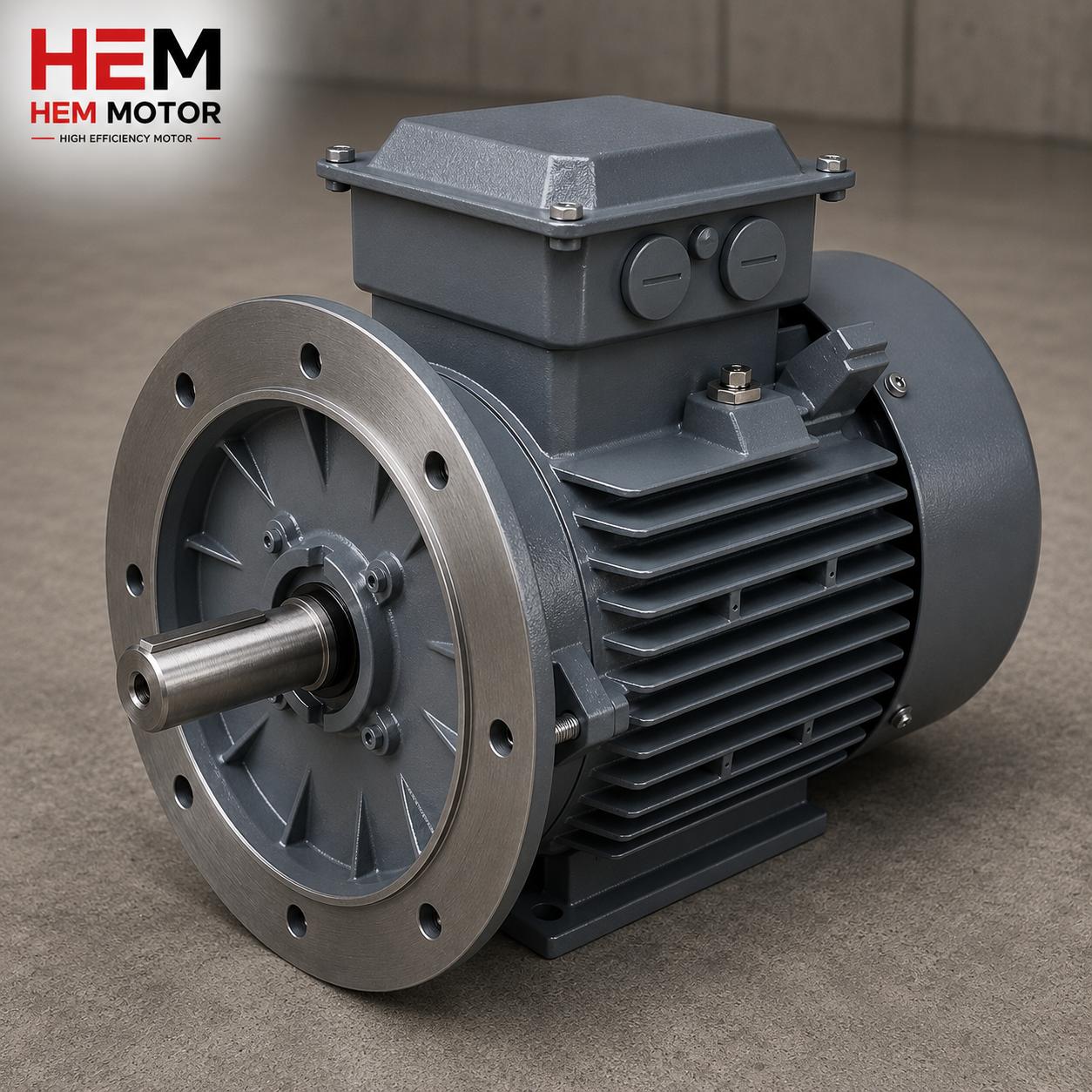

Before moving to serial production, a machine builder or OEM wants to be certain that the motor it will use arrives at the same quality, the same dimensions and the same performance in every batch. This is exactly why the sample approval and First Article Inspection (FAI) process exists. In IE3 motor supply in particular, both verifying the efficiency class and confirming that the mechanical mounting dimensions fit the machine precisely are critical. In this article we walk step by step through how an IE3 motor is approved before serial supply, which documents should be requested, how dimensional and electrical checks are carried out, and how continuity is secured in OEM processes. Our aim is to give purchasing and quality teams a practical road map for correctly accepting or rejecting the first article.
Why Are Sample Approval and First Article Inspection Needed?
In a serial-production facility, a wrong batch of motors can halt not just a single machine but the entire assembly line. A motor whose shaft diameter is off by a millimetre, whose flange hole pattern does not match, or which reads IE3 on the label yet delivers low efficiency, means recalls, rework and delivery delays. First article inspection aims to detect these risks from a single sample before serial production begins. The sample that is approved once and retained as a reference is usually called the 'golden sample'; all subsequent batches are compared against it.
The FAI process is an adaptation, to electric motor supply, of the method known in automotive and aerospace as PPAP (Production Part Approval Process). The goal is the same: verifying, by measurement on the physical product, the characteristics the manufacturer declares. This approach catches non-conformities at the sample stage rather than the moment the motor is mounted on the machine.
- Seeing risks from a single sample before serial production
- Comparing the nameplate declaration with actual measured results
- Retaining the approved sample (golden sample) as a reference
- Securing batch-to-batch consistency in a traceable way
Steps of the FAI Process
A well-structured sample approval process consists of clear, sequential steps. Each step is documented and the accept/reject decision is recorded in writing.
1. Technical Specification and Order Definition
The process begins with the purchasing team defining the motor completely: power (kW), pole count/speed, efficiency class (IE3), voltage and frequency, mounting type (B3/B5/B14/B35), IEC frame size, protection class (IP55), insulation class (F), duty type and shaft diameter. Conveying this information correctly prevents mismatches later. For guidance on which information to share at the quotation stage, our guide on the information to provide when requesting an electric motor quote can be used as a checklist.
2. Sample Receipt and Nameplate Verification
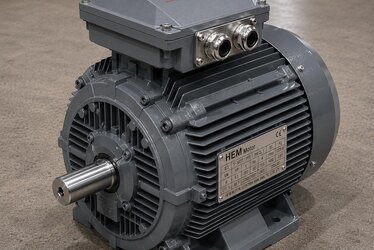
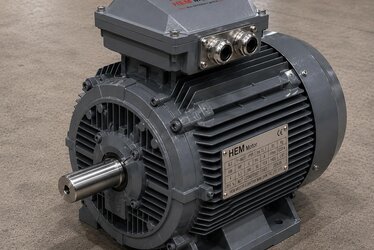
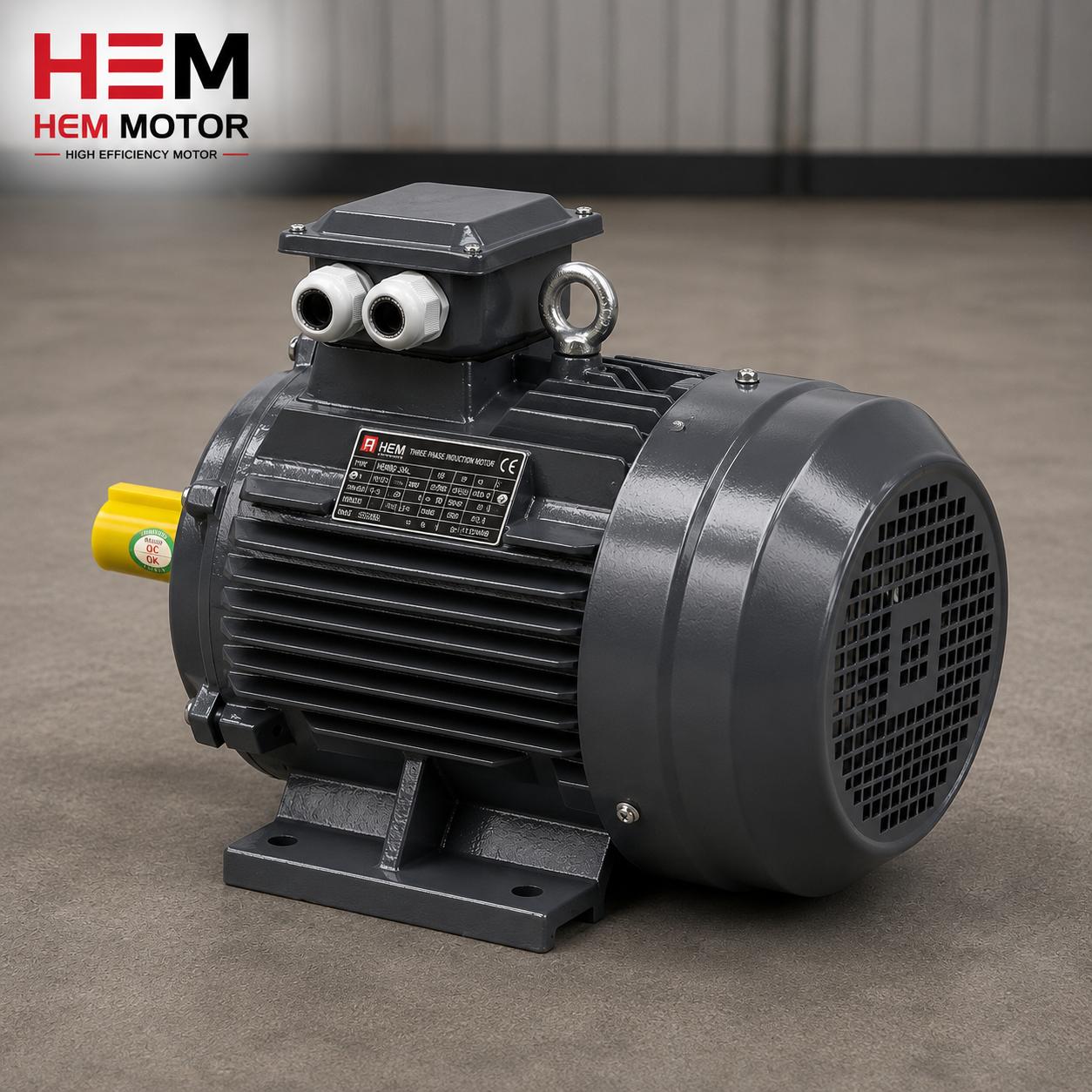
The first check on the sample received from the manufacturer is made via the nameplate. The power, voltage, current, speed, cosφ, efficiency class, protection and insulation class shown on the label are compared line by line with the order specification. The conformity of the nameplate to the machine is the first line of defence against receiving the wrong motor; on this topic, our article on direct matching from nameplate data before ordering offers detailed checkpoints.
3. Dimensional Inspection (IEC Frame, Shaft, Flange)
Mechanical fit is the most tangible part of the FAI process. Here the motor's IEC frame size (within the 56-355L range), shaft diameter and length, keyway dimensions, foot hole pattern (for B3) or flange hole diameter and pilot (spigot) diameter (for B5/B14) are measured with calipers and gauges. Thanks to standard IEC dimensions, a motor with the correct frame size seats smoothly into the existing reducer, coupling or belt-pulley system. For the effect of mounting type selection on the machine interface, our article on choosing B5 versus B14 motor mounting type is complementary.
- Shaft diameter and length, keyway width and depth
- B3 foot hole centre distances and frame height
- B5/B14 flange outer diameter, hole pattern and pilot (centring) diameter
- Terminal box position and cable entry direction
4. Electrical and Efficiency (IE3) Verification
It is not enough for a motor to read IE3 on its label; this class must be backed by documentation. A routine test report contains values such as insulation resistance, high-voltage (hi-pot) test, no-load current and starting current, and winding resistance. The efficiency class itself is verified with type test data or accredited test results. From 1 July 2021, IE3 efficiency class is legally mandatory for direct-on-line (DOL) three-phase motors in the 0.75-1000 kW range; therefore documenting the IE3 declaration is required both technically and for regulatory compliance. You can find which power requires which class from which date in our article on the IE3 and IE4 efficiency mandate.
Documents to Request and Traceability
A solid first article inspection file includes not only the physical check but also documentary evidence. Requesting the following documents from a manufacturer before serial supply is standard practice:
- Routine test report (for each motor) and, where needed, a type test report
- Efficiency class (IE3) declaration and supporting test data
- Material and frame information (cast iron/aluminium), 100% copper winding declaration
- Dimensioned manufacturing drawing and measurement report (FAI form)
- Declaration of conformity and warranty scope
- Traceability record with serial/batch number
Traceability is the key to batch-to-batch consistency. When the serial number and production batch of each motor are recorded, motors from the same batch can be quickly screened if an issue arises in the field. This also clarifies warranty processes. To learn exactly what the warranty covers, you can review our article on what an electric motor warranty covers.
Securing Continuity in OEM and Serial Supply
For OEM machine builders, the biggest risk is that batches arriving after the approved sample diverge from it. The way to prevent this is to reference the approved sample's characteristics in the supply agreement made with the manufacturer and to compare every batch against that reference. Working with a manufacturer's assurance means stock continuity, the same frame and the same connection dimensions preserved for years, and an uninterrupted feed to the serial production line. For the details of this approach, our article on motor supply agreements for OEM machine builders is a useful guide.
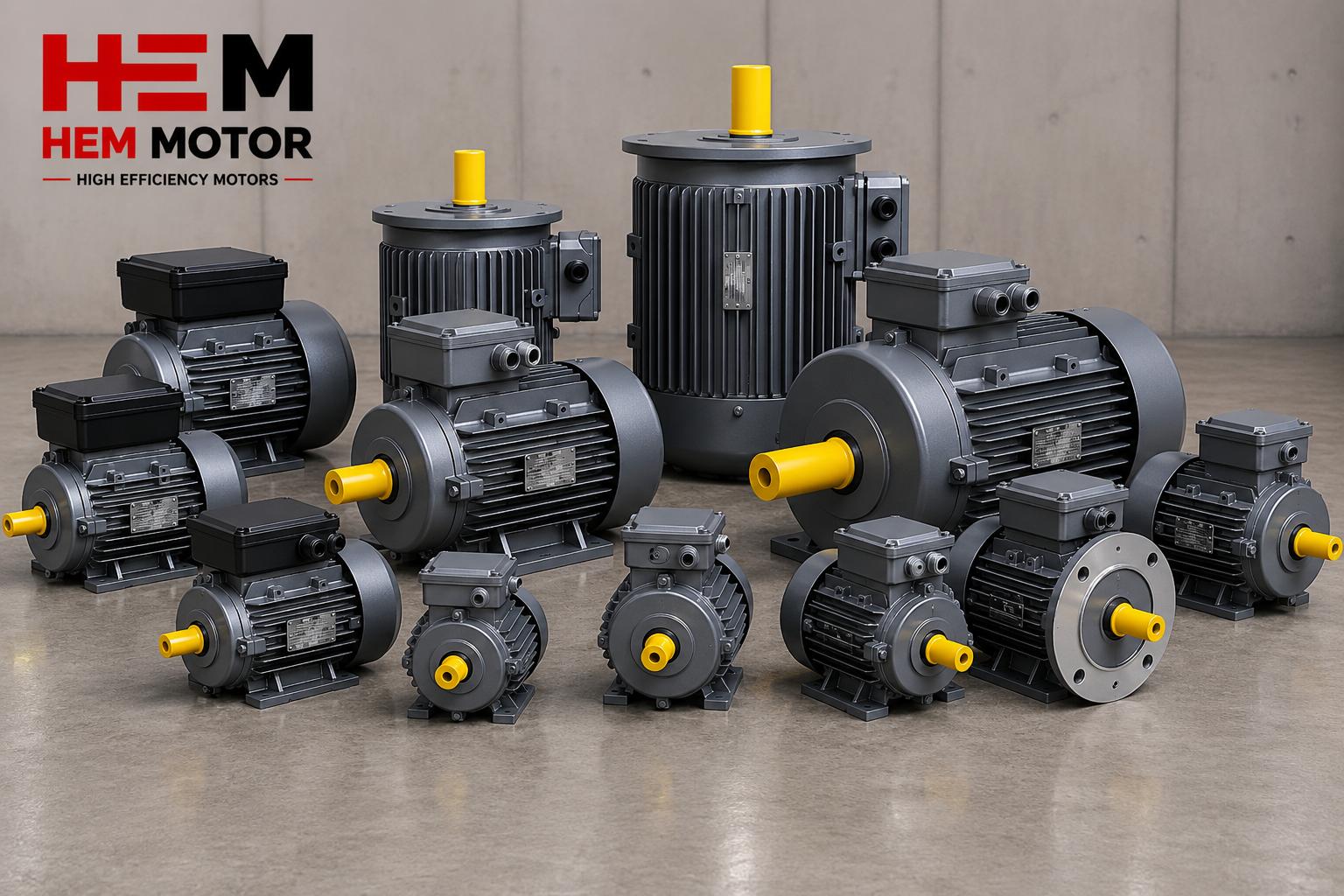
Thanks to a wide power range (0.25-355 kW), IE3 and IE4 efficiency classes, IP55 protection, Class F insulation, 100% copper winding and standard IEC frame dimensions, the characteristics of an approved sample can be repeated identically across all subsequent orders. We covered the stock logic of the most preferred IE3 power and speed combinations in our IE3 electric motor stock guide. For current electric motor prices and lead time on motors with completed sample approval and documented dimensions and efficiency, you can contact us directly.
Common Pitfalls and How to Avoid Them
Even a well-intentioned first article inspection can fail if a few practical points are overlooked. The most frequent pitfall is approving a sample based on the nameplate and visual appearance alone, without actually measuring the shaft, keyway and flange pilot. A second common mistake is treating the efficiency class as a formality and not requesting the supporting test data behind the IE3 declaration. A third is failing to retain the approved golden sample and its measurement record, so that there is no reliable reference when a later batch is questioned. Each of these gaps tends to surface at the worst possible moment, namely when the motor is already on the assembly line and the production schedule is at stake.
To avoid these traps, the inspection should be standardised with a written FAI form that lists every dimension and document to be checked, with measured values recorded against tolerances. The form should be signed off by both purchasing and quality. The golden sample should be physically labelled, stored in a controlled location and referenced by its serial number in the supply agreement. When the inspection is run as a repeatable procedure rather than an ad-hoc check, the OEM gains a durable guarantee that what was approved once will keep arriving for the life of the machine programme.
- Always measure shaft, keyway and flange pilot rather than relying on the label
- Request and archive the test data supporting the IE3 declaration
- Physically retain and label the approved golden sample
- Standardise the inspection with a signed FAI form and tolerance table
Criteria for Accepting or Rejecting the First Article
The FAI decision must be clear. If all measured values are within tolerance and the documents are complete, the sample is approved and retained as the golden sample. If a single critical dimension (shaft diameter, flange pilot diameter, efficiency class) is out of tolerance, the sample is rejected and corrective action is requested. For a non-critical cosmetic deviation, conditional approval (deviation permit) may be granted. Keeping these decisions in writing prevents future disputes.
- Full acceptance: all dimensions and documents conform, golden sample retained
- Conditional acceptance: non-critical deviation accepted with written permit
- Rejection: critical dimension or efficiency non-conforming, corrective action requested
Frequently Asked Questions
Are sample approval and first article inspection (FAI) the same thing?
In practice they are closely related. Sample approval is the general assessment of whether the example motor from the manufacturer conforms to the specification. First article inspection (FAI) is the documented, measurement-backed and official version of that assessment which permits serial production. The approved sample is retained as the 'golden sample' and subsequent batches are compared against it. In other words, FAI is the disciplined and traceable version of sample approval.
How do I verify the IE3 efficiency class on the sample?
An IE3 label alone is not sufficient; the class must be supported by a routine test report and type test or accredited test data. Since IE3 has been legally mandatory for DOL three-phase motors in the 0.75-1000 kW range from 1 July 2021, requesting the efficiency class declaration and supporting documents from the manufacturer is required both technically and for compliance. An IE3 declaration not supported by documents should not be accepted.
As an OEM, how do I ensure every batch arrives identical to the first sample?
The combination of traceability and a reference sample provides this assurance. All dimensional and electrical characteristics of the approved sample are recorded, each batch is given a serial/batch number, and incoming batches are compared with the golden sample. A supply agreement made with a manufacturer's assurance commits to preserving the same IEC frame and connection dimensions and to stock continuity. Your serial production line is thus fed with identically specified motors for years.