English
 Türkçe

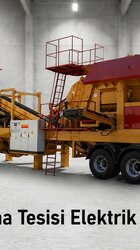

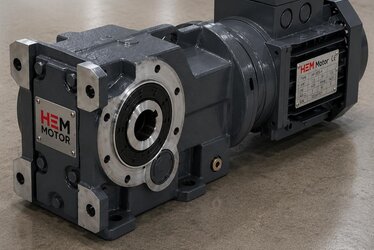
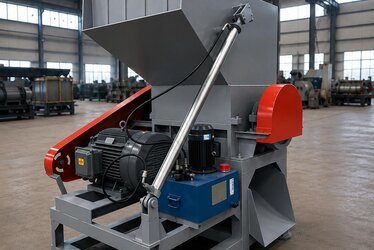
In aggregate and crusher plants, not every belt does the same job. A transport belt simply moves material from point to point, but a belt weigher and a dosing feeder belt take on a very different task: holding a defined flow rate stable to fine accuracy. This difference changes the motor selection completely. While an ordinary belt motor only needs to "keep turning," a weigh belt requires speed stability, stable torque at low speed and precise speed control, because these directly determine weighing accuracy. This article walks step by step through how to select the right electric motor for aggregate belt weigher and dosing feeder drives in a crusher plant: geared low-speed drive, speed control with a variable frequency drive (VFD), IP protection in dusty environments and continuous duty (S1) requirements. The goal is to build a stable, long-life drive that ensures the aggregate fed into a concrete batching plant or crushing-screening line is dosed in the correct proportion. As HEM Motor, we supply IE3 and IE4 motors from 0.55 kW to 355 kW, with cast iron bodies and worm or K-series bevel-helical gearboxes, so we can build the low-speed, high-stability combination that weighing and dosing applications demand from a single source.
What Is a Belt Weigher and a Dosing Feeder?
A belt weigher measures the instantaneous weight of material passing over the belt with a load cell and, by multiplying it with belt speed, calculates the flow rate (tons per hour). A dosing feeder uses this measurement as feedback: it continuously adjusts belt speed to maintain the target flow. In short, the belt weigher answers "how much is flowing," while the dosing feeder makes sure "exactly the right amount flows." In a concrete batching plant, blending aggregate, cement and additives to the recipe; in a crushing-screening plant, feeding the crusher at a constant rate, both depend on these systems. The drive motor is the heart of this loop: when the speed command changes, the motor must respond instantly and stably, and must not lose torque even at low speed.
Difference From a Transport Belt: Weighing and Dosing
On a general transport belt the aim is to move material; small speed fluctuations cause no problem. On a belt weigher, however, every speed fluctuation turns directly into a measurement error, because the flow calculation is based on "instantaneous weight x belt speed." For this reason a belt weigher motor must be considered separately from an ordinary conveyor drive. While the logic of conveyor belt motor replacement and swap applies to the plant's other belts, the priority on a weigh belt is stability and repeatability.
Distinction From Vibrating and Apron Feeders
On the crusher feed side there are several feeder types, each requiring different drive logic. A vibrating feeder advances material by shaking it with a vibration motor; this is coarse feeding, not weighing. Crusher feeder and bunker vibration motor selection is an entirely different subject. An apron (chain-pan) feeder carries heavy, impact-laden material with high torque; for this an apron chain feeder drive motor focuses on high starting torque. The belt weigher and dosing feeder differ from both: the aim is not force but controlled, measurable flow. Therefore the leading criterion in motor selection is not only torque capacity but also speed stability and the ability to produce continuous torque at low speed.
Stable Low Speed for Precise Flow
The accuracy of the weigh belt depends on the belt turning steadily at a constant, low speed. The way to achieve this is the right gearbox ratio combined with the right drive.
Low Output Speed With a Geared Drive
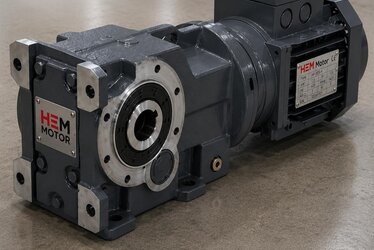
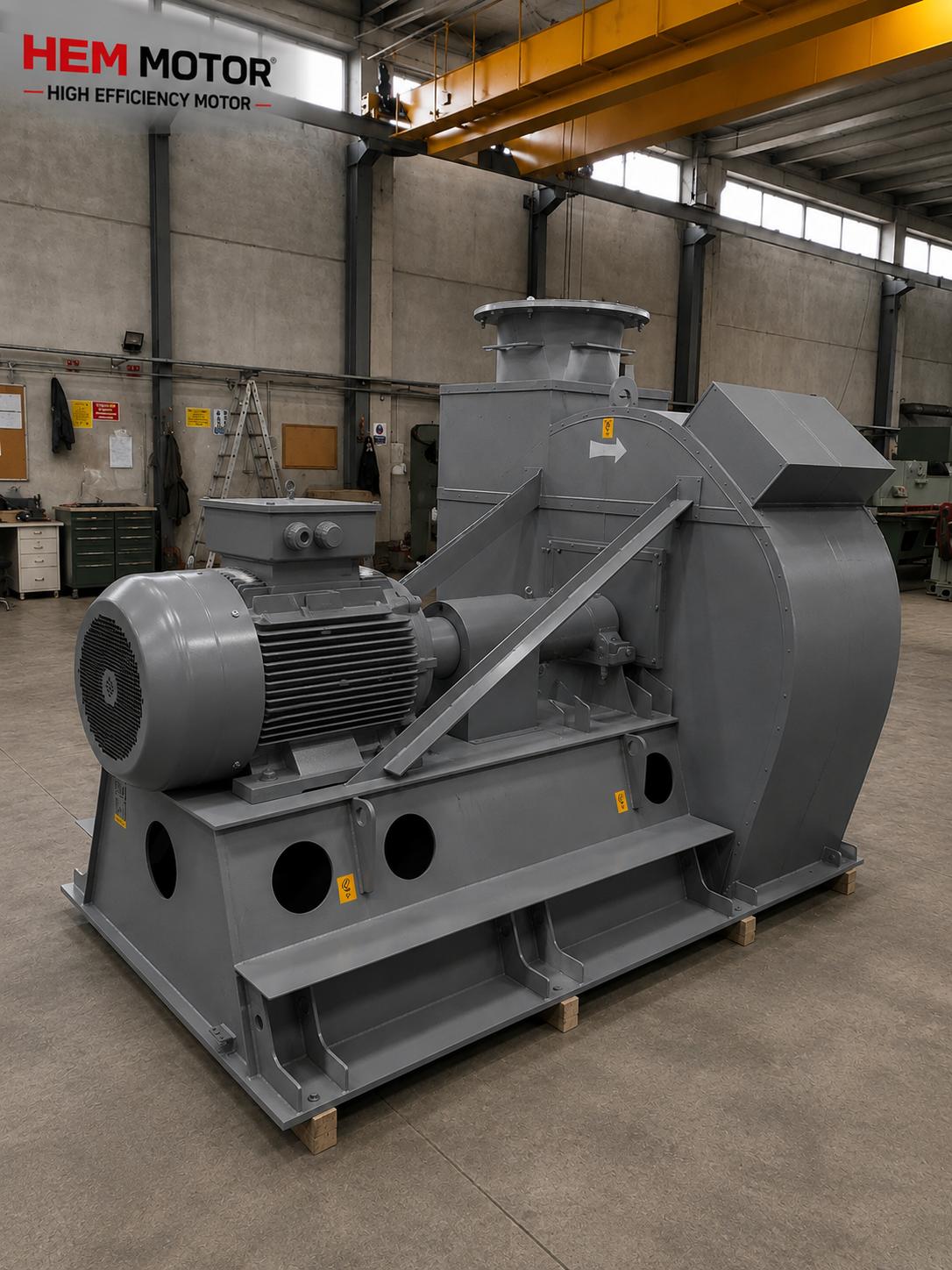
A belt weigher belt usually runs at a low surface speed of a few meters per minute. It is not possible to get this speed directly from an electric motor, because a standard asynchronous motor turns at around 1500 rpm (4 poles) or 1000 rpm (6 poles). A gearbox bridges this large gap. A worm gearbox is often preferred in belt weigher and dosing feeder applications because it provides high reduction ratios in a single stage and is compact; a K-series bevel-helical gearbox stands out on lines requiring higher efficiency and larger torque. To choose the right ratio you must know the target output speed (the rpm of the belt drive drum) and then the motor input speed. We covered the gearbox selection logic in detail in our reducer selection guide by ratio, output torque and output speed. In some applications requiring low-speed direct drive, a high-pole motor can also be an option; our low-speed high-pole motors for gearless direct drive article compares this alternative.
Precise Speed Control With a VFD
The lifeblood of a dosing feeder is the variable frequency drive (VFD). The drive adjusts the motor frequency, and therefore its speed, within seconds according to the flow command from the control system, keeping the target tons-per-hour value constant. The critical point here is that the motor must retain its torque at low frequency (low speed); otherwise, when the feed is loaded, the belt slows down and the dosing drifts. We discussed when a VFD with an asynchronous motor is needed and how to select it in a separate article. In applications requiring continuous full torque at low speed, the motor's own fan may not provide enough cooling; in that case an external forced cooling fan comes into play and keeps the motor in a safe thermal regime even at low speed.
Motor Behavior That Determines Weighing Accuracy
Weighing accuracy is the job not only of the load cell but also of the drive. The lower the backlash, vibration and speed fluctuation in the motor-gearbox group, the more repeatable the measured flow becomes. A low-vibration motor with a balanced rotor, a rigid cast iron body and a suitable coupling provide a "clean" speed signal to the weighing system. An oversized motor running at partial load both lowers efficiency and makes speed stability harder at low load; this is why running the motor at the right load ratio and correct sizing carries special importance in weighing applications.
Dusty Environment and IP65 Protection
An aggregate and crusher site is one of the harshest environments for an electric motor: fine stone dust, moisture, temperature swings and vibration occur together. The weigh belt motor often works right where dust is heaviest, just below the material flow.
Why IP55 Is Not Enough and IP65 Is Needed
Standard industrial motors come with IP55 protection, which is sufficient for most applications. However, on aggregate sites with very fine, continuous dust, the risk of dust reaching the bearings and windings over time increases. IP65 provides full sealing against dust (dust-tight) and noticeably extends motor life in such environments. Our article on crusher motor dust sealing and IP65/IP66 protection details which protection class is needed on which site. For the general logic of protection class selection, our electric motor IP protection class selection (IP55, IP65, IP66) guide is also a helpful reference.
Cast Iron Body and Dust-Moisture Resistance
On a dusty, humid site the body material is also decisive. A cast iron body suits these environments in terms of both mechanical impact resistance and heat dissipation. We examined insulation class and body choice in hot, dusty environments in our motor insulation class and cast iron body in hot, dusty environments article. In humid outdoor environments, a condensation drain hole and a suitable oil seal also prevent water from accumulating inside the body.
Continuous Duty (S1) and Durability
Concrete batching plants and crushing-screening plants often run continuously across shifts. The belt weigher and dosing feeder also turn nonstop during this time. For this reason the motor must be designed for continuous duty (S1), not intermittent duty.
Why S1 Duty Type Is Essential
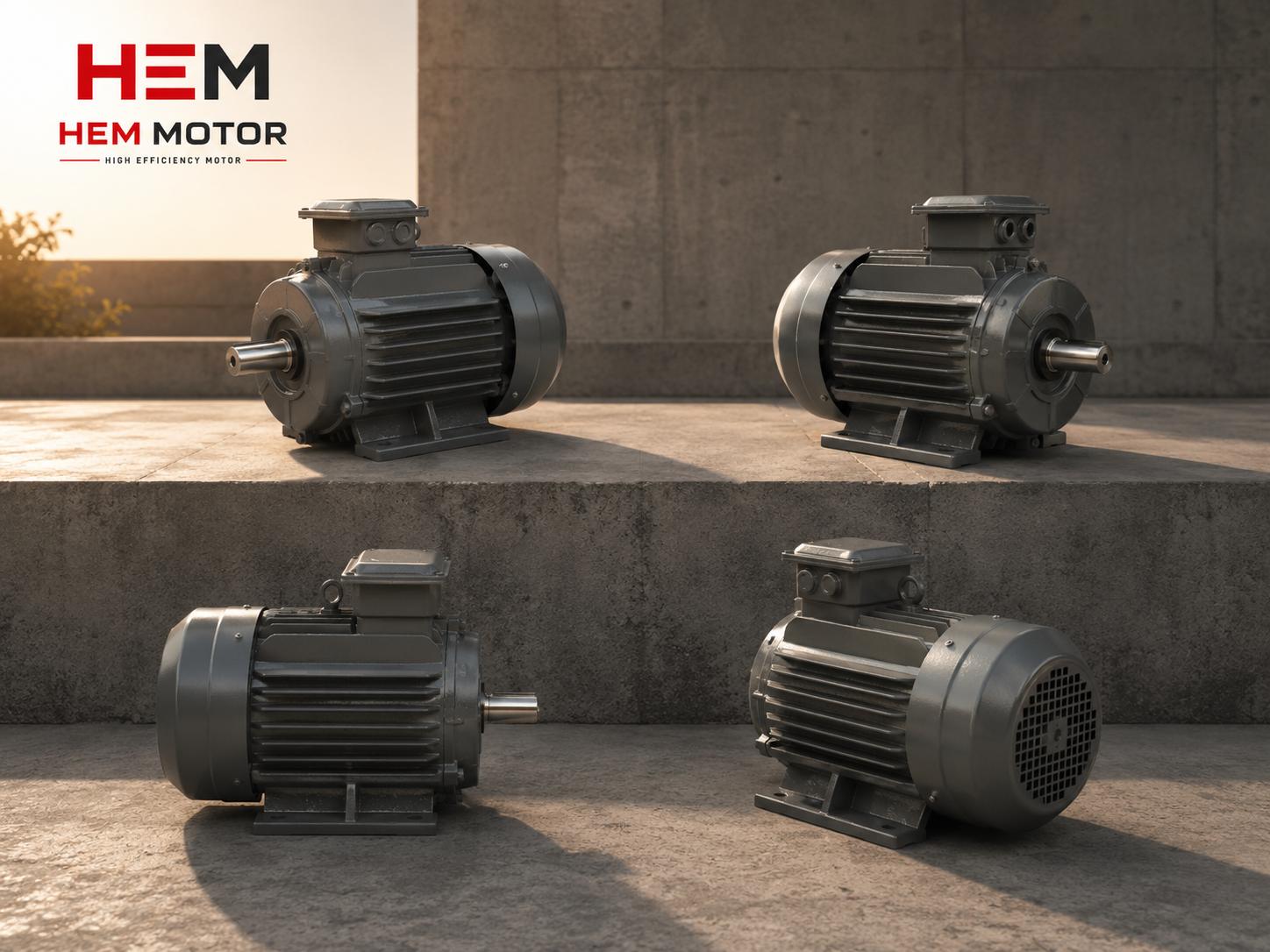
The duty type defines how long and under what load regime a motor can run. S1 means continuous operation: the motor can run at rated load until thermal equilibrium and beyond, continuously. Using an intermittent-duty motor (such as S3/S4) on a continuous weigh belt means overheating and early failure. We covered the difference between duty types in our electric motor duty type (S1-S6) selection article. Because the IE3 and IE4 motors in the HEM Motor range are designed for continuous (S1) operation, they are used safely on weighing and dosing lines.
Bearing Life, Vibration and Maintenance
On a continuously running, vibrating site, the bearing is the motor's most critical part. A quality, reinforced bearing structure determines life under dust and impact. Our article on bearing life in crusher and mill motors: shock, dust and lubrication explains bearing selection and greasing intervals on such sites. Regular greasing and vibration monitoring both extend motor life and preserve weighing accuracy, because rising vibration is an early sign of both mechanical wear and measurement noise.
Checklist for the Right Motor Selection
When selecting an aggregate belt weigher and dosing feeder drive motor in a crusher plant, evaluate the following steps in order:
- Clarify the target flow rate (tons/hour) and the required output speed (rpm) of the belt drive drum.
- Select the gearbox type and ratio according to the output speed (worm or K-series bevel-helical).
- Plan a VFD for precise dosing; make sure torque is retained at low speed.
- Add an external forced cooling fan if there is continuous full load at low speed.
- Prefer IP65 protection and a cast iron body for the dusty site.
- Choose S1 duty type and F/H insulation class for continuous operation.
- Ensure a quality bearing and correct coupling/shaft match for low vibration and a balanced rotor.
- Verify shaft diameter, key, flange and mounting type against the existing gearbox and belt.
Frequently Asked Questions
Is a belt weigher motor the same as a normal conveyor motor?
No. On a normal conveyor belt the aim is to move material and small speed fluctuations are not a problem. On a belt weigher, because flow is calculated as "instantaneous weight x belt speed," every speed fluctuation turns into a measurement error. That is why precise speed control with a VFD, stable torque at low speed and low vibration are key on a weigh belt motor.
Why is a variable frequency drive (VFD) always required on a dosing feeder?
Because a dosing feeder must continuously adjust belt speed to maintain the target flow. A fixed-speed motor cannot do this. The VFD changes motor speed within seconds according to the command from the control system, keeping the tons-per-hour value constant. The motor must retain torque at low frequency and, if necessary, be supported by forced cooling.
Is an IP55 motor enough on a dusty aggregate site?
For most general applications IP55 is sufficient, but on aggregate sites with very fine, continuous stone dust the risk of dust reaching the bearings and windings over time increases. In such environments IP65 protection, which provides full sealing against dust, together with a durable cast iron body, noticeably extends motor life and reduces downtime.
Get a Quote
If you would like to select the right drive motor for the aggregate belt weigher and dosing feeder in your crusher or concrete batching plant, share your target flow rate, belt output speed and site conditions (dust, moisture, operating hours) with us. Our expert team will propose a complete solution including gearbox ratio, VFD compatibility and IP protection. You can call us at +90 (532) 345 49 86 or send your request via our contact page. You can review our product range on our products page and explore guides for similar applications in our crusher and stone crushing motors category and the content on our home page (HEM Motor).