English
 Türkçe

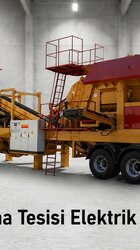
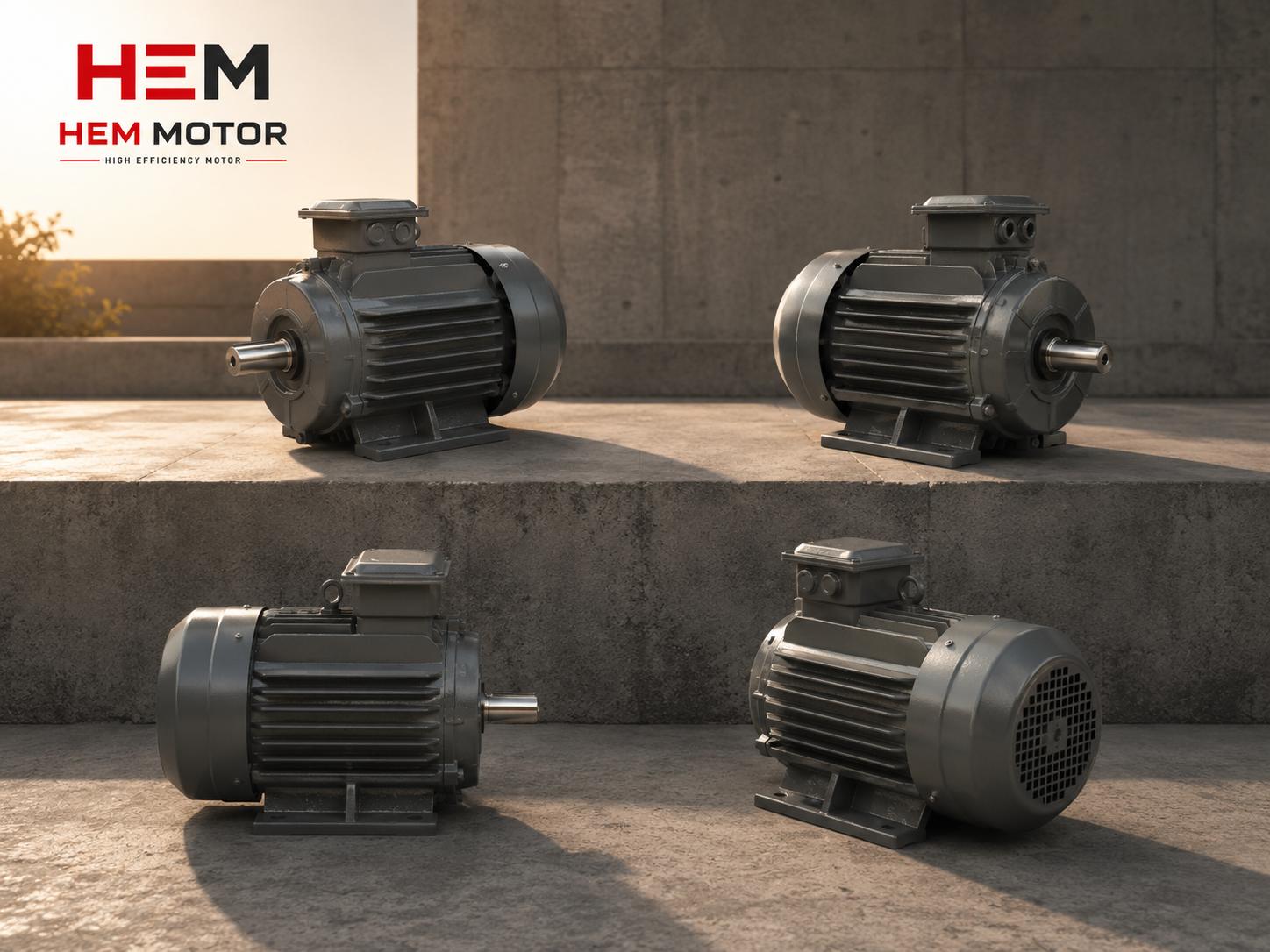

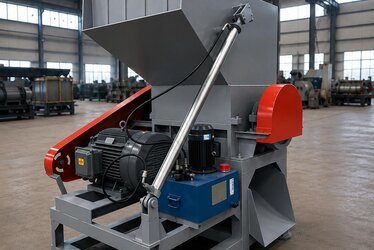
Concrete recycling and crushing construction and demolition (C&D) waste back into aggregate is a business that is spreading quickly, both for cost and for sustainability. But the electric motors that drive the crushers at the heart of these plants work under far harsher conditions than a classic industrial motor: the rebar inside concrete creates sudden impact loads, the environment is full of dust, the torque demand at start-up is very high, and downtime translates directly into lost profit. This article is written for investors operating mobile or fixed concrete/construction-waste crushing plants, site managers and machine builders. Our aim is to clarify, from a commercial viewpoint, which motor you should supply from stock, with which protection and starting package, and at what kW and speed.
Why the Motor Is Stressed in a Concrete Crushing Plant
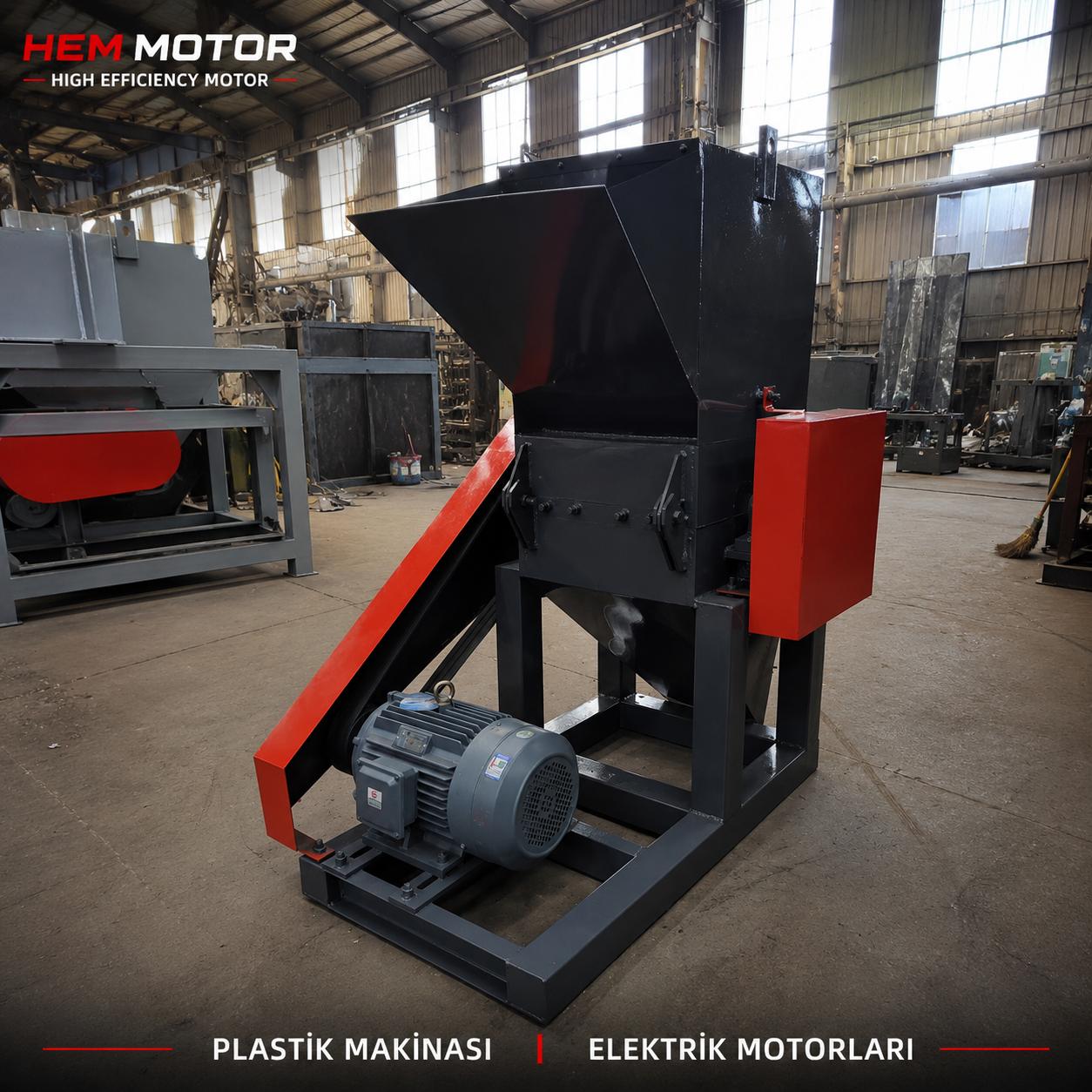
Concrete and construction waste is a non-homogeneous material. One moment a low-resistance piece enters, the next second rebar steel or a large block reaches the crusher. This impact load demands high starting and pull-up torque from the motor; at the same time dust threatens the motor cooling and bearing life. That is why a crushing plant motor should not be defined only by kW like an ordinary IE3 electric motor, but together with its torque class, protection degree and starting method. Our article on electric motor selection for crusher and stone crushing plants, which covers the basic motor selection logic, is the natural complement to this one.
Impact Load and High Starting Torque
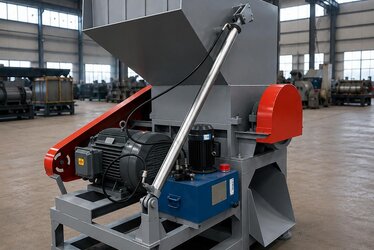
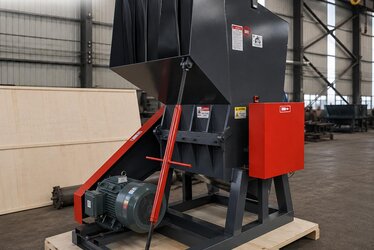
Jaw and impact crushers are common in concrete recycling. A jaw crusher relies on flywheel inertia, while an impact crusher needs high speed and constant rotor energy. In both cases the motor must have a high starting torque and a torque reserve to withstand sudden load spikes. Our article on motor selection under impact load: flywheel, inertia and crusher drive gets to the core of this calculation. We addressed kW selection by crusher type in our article on crusher motor kW selection: jaw, impact and cone crusher.
Dust: IP65 and IP66 Protection
The concrete and rubble crushing environment is one of the dustiest sites in the industry. Fine cement and aggregate dust clogs the cooling fins of a standard IP55 motor, wears the bearing seal and seeps into the terminal box. Therefore IP65 (dust-tight) protection, or IP66 at demanding points, should be requested for crushing plant motors. Our site-specific article on dust sealing and IP65/IP66 protection on crusher motors can be used directly when writing a specification. We examined the effect of dust accumulation on cooling in our article on cooling fins and dirt accumulation on cast iron motors.
Starting Method: Direct, Star-Delta and Soft Starter
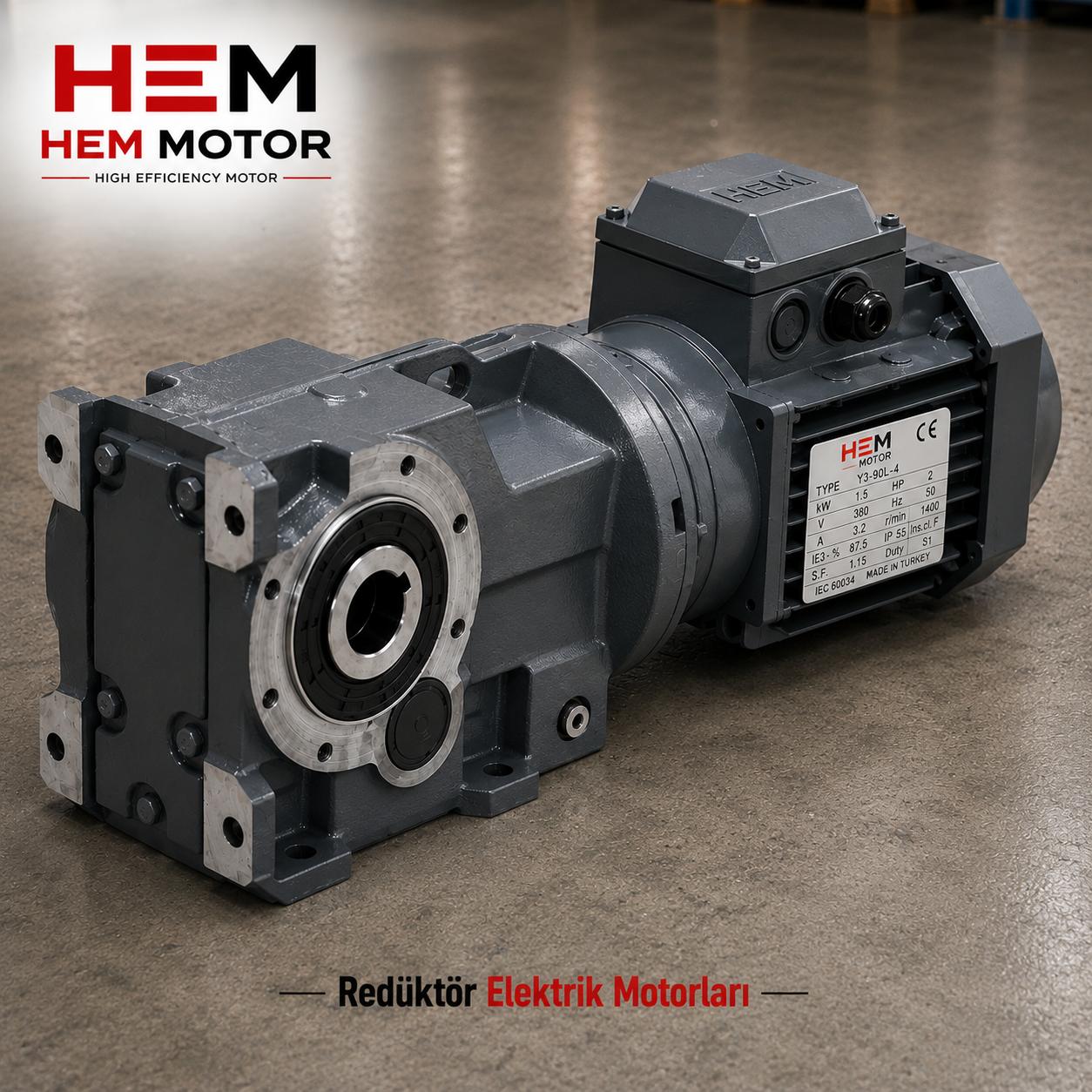
Because crusher motors drive high-inertia loads, starting current is an important issue. While direct-on-line starting is enough at low powers, star-delta or a soft starter is preferred at medium-to-high powers. A soft starter reduces mechanical shocks and belt-pulley wear, while star-delta is a low-cost and common solution. Our crusher-specific article on crusher motor starting: soft starter, star-delta and direct-on-line simplifies the investment decision. On generator-fed mobile plants, starting current is a separate constraint; we detailed this in our article on motor selection on generator-powered sites.
Mobile or Fixed Plant?
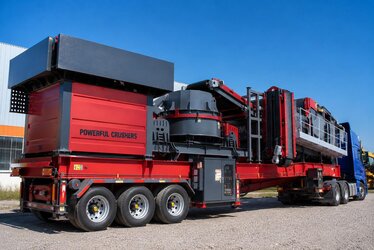
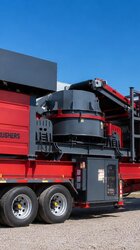
Mobile crushers are compact plants moved from site to site and are usually fed by a generator or limited grid. Fixed plants run continuously at high capacity. On a mobile plant, vibration, transport shock and compact layout come to the fore; on a fixed plant, continuous full load and cooling. Our article on electric motor supply in mobile and portable crushing plants is a guide for portable systems.
Continuous Full Load and Overheating
Concrete recycling lines mostly run continuously (S1) and the motor is loaded near full load for long hours. This makes cooling and thermal protection decisions critical. Our article on motor cooling and overheating in crusher plants is important for operations that want to extend motor life.
Motors Other Than the Main Crusher
A crushing-screening plant is not just the main crusher. Feeders, vibrating screens, magnetic separators and belt conveyors each require their own motor. The correct supply of these auxiliary drives is as important to plant continuity as the main crusher. Our article on motors other than the main crusher in a crushing-screening plant draws up this auxiliary motor list. We examined the vibration motors in feeders and bunkers in our article on crusher feeder and bunker vibration motor selection. In our full crusher and stone crushing motors category you can find a separate guide for every part of the plant.
Stock and Replacement That Reduce Downtime Cost
On a crushing site, a single motor failure stops not just that machine but the whole line, putting the daily production target at risk. So at critical powers it is wise to keep a spare motor and to choose a standard-frame motor that can be replaced one-to-one. Our article on motor failure and downtime cost in crusher plants commercially justifies the stock strategy.
Capacity, Speed and Crusher Drive
In a concrete recycling plant, the motor power depends on the crusher capacity (tonnes/hour) and the crushing ratio. Crushing the same material finer or increasing capacity requires more power. Jaw crushers produce high torque at relatively low speed, while impact crushers run at high speed and rely on rotor energy. This difference also determines the motor pole selection: in jaw drives 4 pole or a geared low speed is mostly preferred, while in impact crushers a high-speed drive comes up. We detailed kW and speed selection by crusher type, and how to size the main crusher motor, in our article on crusher motor kW selection: jaw, impact and cone crusher.
In concrete recycling, the correct sizing of the other drives on the line, as much as the main crusher power, determines production continuity. The feeder vibration motor, the screening unit and the belt conveyors each require their own kW and speed; keeping these auxiliary motors as spares prevents the line from stopping entirely on a single motor failure. Our article on the critical spare motor list, which addresses which powers should be kept in stock for facilities, helps you build a stock strategy for the crushing plant.
Rebar, Flywheel and Mechanical Transmission
The most distinct difference separating concrete recycling from quarry crushing is the rebar inside the material. The reinforcing steel entering the crusher creates a sudden, large spike in resistance, which means an instantaneous overload on the motor and shock on the transmission components. In jaw crushers, flywheel inertia softens this shock: the flywheel transfers the kinetic energy stored by the motor to the crusher at the moment of impact, preventing the motor from suddenly stalling. For this reason, in a concrete crushing application the motor torque reserve and the correct sizing of the belt-pulley transmission must be addressed independently of the kW value. Separating the rebar with a magnetic separator also affects the motor load; as the separated metal leaves the line, the load profile changes. Our article on bearing life on crusher and mill motors, which examines bearing life in terms of shock, dust and lubrication, details the effect of this impact transmission on the motor.
In the mechanical transmission, belt-pulley is mostly preferred over a coupling, because the belt protects the motor and crusher with a certain slip at the moment of overload. However, in this case the motor shaft diameter, key dimension and pulley compatibility must be chosen correctly; a wrong pulley diameter spoils both the speed and the motor loading. Our article on shaft diameter, key and coupling on cast iron motors, which addresses correct ordering, is a guide for mechanical matching.
Open Field, Moisture and Corrosion
Construction waste crushing plants mostly operate in the open field, and moreover under conditions where concrete dust combines with moisture. When cement dust contacts moisture it forms a permanent crust; this crust clogs the cooling fins, causes the motor to overheat and creates a ground for corrosion on metal surfaces. Therefore, as much as dust protection (IP65/66), the body paint and corrosion category must also be chosen according to the site conditions. Our article on motor protection in stone quarry and mine sites, which addresses protection against dust, moisture and impact, is directly applicable to open-field crushing plants. Periodic cleaning and fin maintenance is one of the lowest-cost measures that extend motor life in the open field.
Correct Supply and Quote
To supply the motor correctly in a concrete recycling and construction-waste crushing plant, three pieces of information are decisive: crusher type and power (kW), required speed/pole, and the desired protection (IP65/66) with starting method. If you share whether you are mobile or fixed, the feed type (grid/generator) and the existing motor nameplate data, we can allocate a high-starting-torque, dust-protected motor from stock and offer a fast quote. You can review all our crushing motor content for heavy duty, and reach high-efficiency electric motors and IE4 electric motors via the HEM Motor home page.
Frequently Asked Questions
Which IP protection class is needed for a concrete crushing motor?
Because of intense cement and aggregate dust, at least IP65 (dust-tight) is recommended in these plants; IP66 is requested at points with pressurised washing or the most demanding dust conditions. IP55 is insufficient for this application except in enclosed, relatively clean locations. Determining the right class according to the motor location directly extends bearing and winding life.
Is direct-on-line starting enough for a crusher motor?
At low powers and limited inertia, direct-on-line starting can be sufficient; however, at medium-to-high powers the high starting current stresses the grid and the mechanical transmission. In these cases star-delta or a soft starter is preferred. A soft starter also reduces belt-pulley and coupling wear, lowering maintenance cost; the final choice should be made according to power, inertia and feed type.
Can I run the motor reliably with a generator on my mobile plant?
Yes, but the generator must be sized to handle the motor starting current. The high current drawn at start-up can cause voltage dip on small generators and prevent the motor from starting. Using a soft starter eases this load. For the correct generator-motor match, the healthiest approach is to request a quote by sharing the power, starting method and load profile.
Get a Quote
We supply high-starting-torque, dust-protected, heavy-duty electric motors for your concrete recycling and construction-waste crushing plants, from stock and with fast delivery. Share your crusher type, power and site conditions and let us offer a price with the most suitable motor and starting package. Reach us now via our contact page or request a quote on +90 (532) 345 49 86.