English
 Türkçe

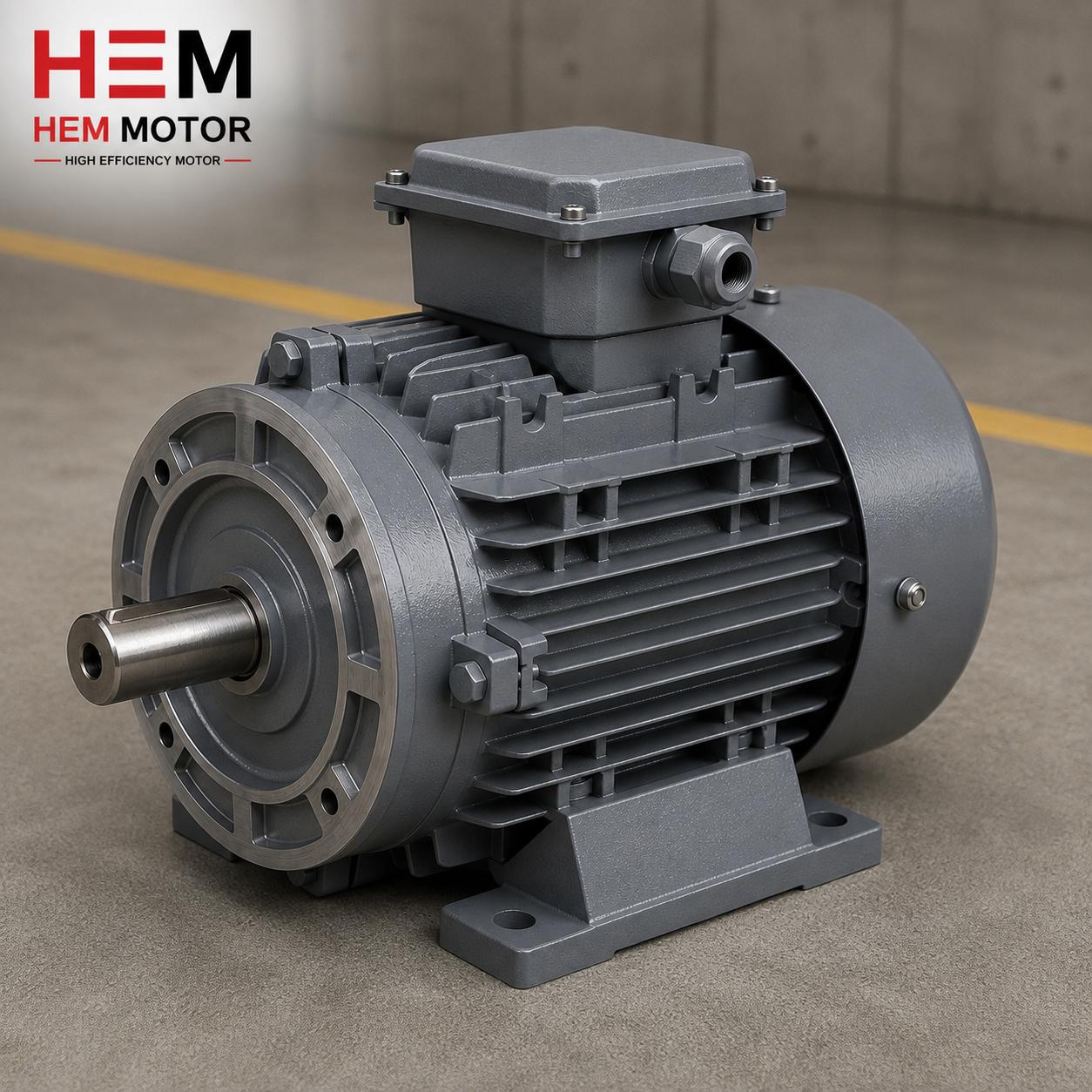

An asynchronous motor may be selected at the right power, the right speed and the right mounting type; yet the drive train may still experience unexplained vibration, coupling failure, shaft fatigue or key damage. Behind most of these problems lies a phenomenon rarely discussed in catalogs: torsional resonance. The rotating system formed by the motor, coupling, gearbox and driven machine has its own torsional natural frequency. If, during operation, this natural frequency coincides with an excitation such as starting current, grid harmonics or load impacts, the system enters resonance and torque oscillations reach dangerous levels.
At HEM Motor, when we sell a motor for a machine we consider not only electrical compatibility but also the mechanical dynamics of the drive train. In this article we explain what torsional resonance is, the factors that determine the natural frequency such as coupling stiffness and inertia, and how this risk is reduced through correct motor-coupling selection. For suitable power and speed options and current electric motor prices, you can look at our product pages.
What Is Torsional Resonance?
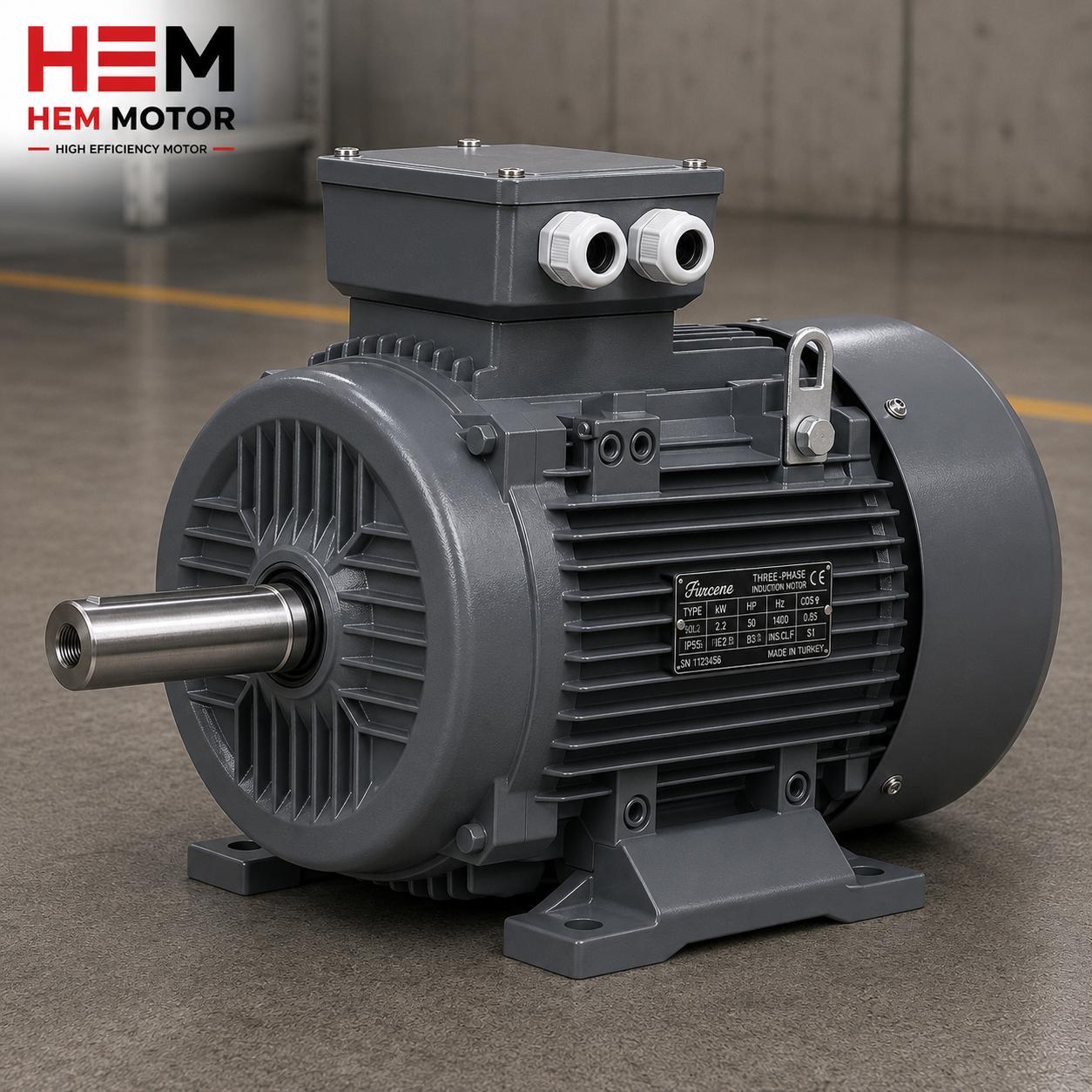
Every rotating mechanical system behaves like a spring-mass system. The inertias of the motor rotor, coupling and driven machine act as the "mass," while the flexibility of the shafts and couplings between them acts as the "spring." This spring-mass system tends to oscillate freely in torsion at a certain frequency; this is called the torsional natural frequency.
The problem arises when the frequency of a force exciting the system approaches this natural frequency. At resonance, even a small excitation turns into large torque oscillations. These oscillations create fatigue loads on shafts, keys and couplings and lead to failure over time.
Sources of Excitation
- Starting transient: In direct-on-line (DOL) starting, an asynchronous motor produces a torque that oscillates at twice the grid frequency during startup. If this transient torque coincides with the natural frequency, severe vibration occurs at start.
- Load impacts: Loads that produce periodic impacts, such as reciprocating compressors, crank-connecting-rod mechanisms or crushers, can excite the natural frequency.
- VFD harmonics: In systems running with a frequency drive, the torque harmonics produced by the drive can trigger resonance at certain speeds.
Our article on VFD and harmonic-induced extra heating and bearing current in asynchronous motors, which covers drive-induced stresses more broadly, complements the points to watch in drive systems.
Factors That Determine the Natural Frequency
The torsional natural frequency of the drive train depends on two main quantities: the moments of inertia (J) of the rotating masses and the torsional stiffness (k) of the elements connecting them. Simply put, a stiff connection raises the natural frequency, while a soft connection lowers it.
Coupling Stiffness
The coupling is the most easily adjustable torsional spring of the drive train. A rigid coupling stiffens the system and raises the natural frequency, while a flexible (elastomeric) coupling softens it and lowers the natural frequency. By choosing the right coupling, it is possible to shift the natural frequency to a region away from the excitation frequencies. We explain coupling type selection in detail in our article flexible or rigid coupling? coupling selection and shaft alignment in the motor-machine connection.
Moment of Inertia and Shaft Structure
Adding a flywheel, pulley or a heavy gearbox changes the system's inertia and shifts the natural frequency. Shaft diameter and length also affect torsional stiffness. For this reason, every element in the drive train must be included in the dynamic calculation. You can examine the effect of inertia on starting in our article on starting time and inertia (J) in asynchronous motors.
The Right Selection to Avoid Resonance
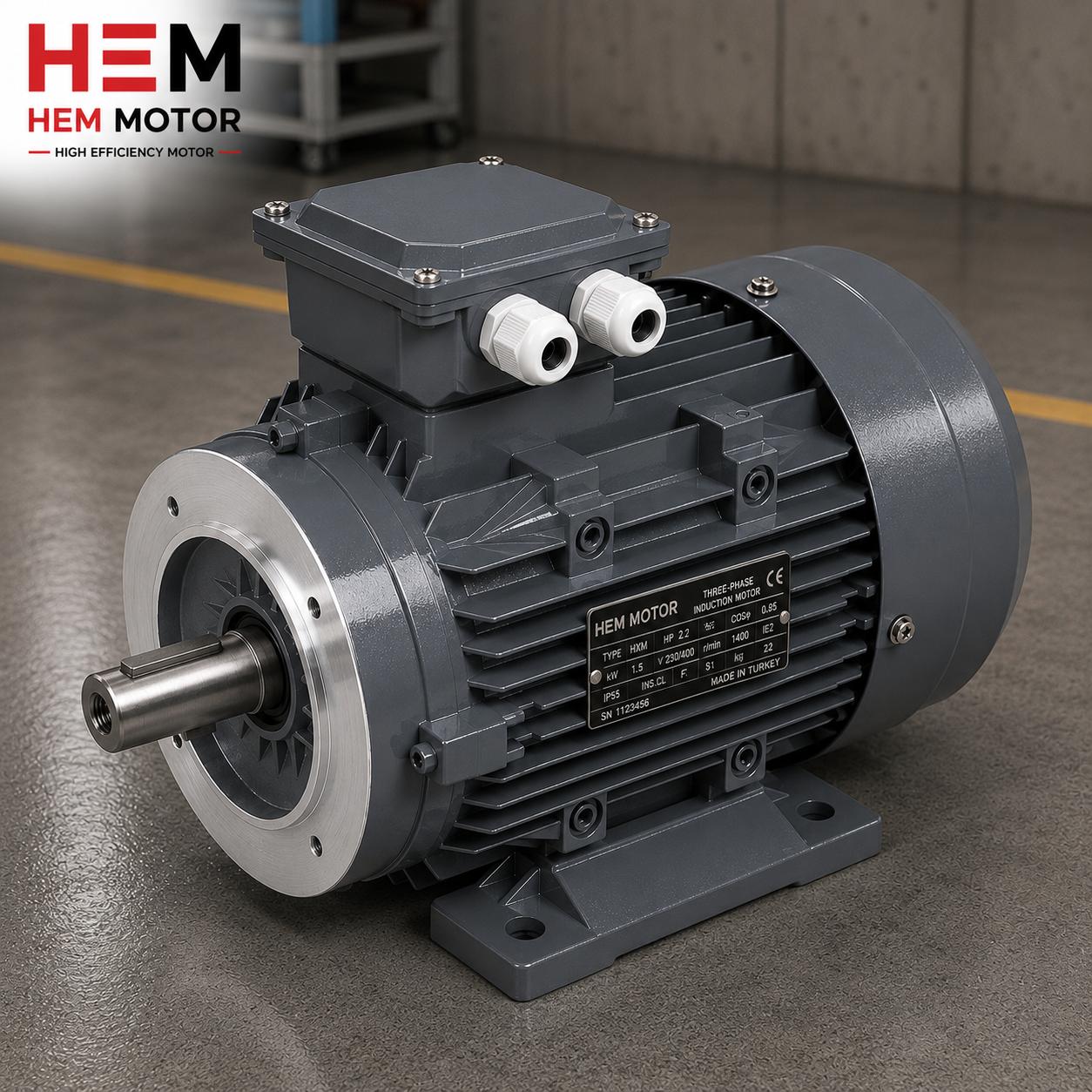
Torsional resonance is a phenomenon that can be predicted and prevented at the design stage. With correct motor, coupling and drive-train selection it is possible to greatly reduce the risk.
- Separate the natural frequency from the excitation: The calculated torsional natural frequency should be kept away from the operating speed and starting excitation frequencies with a reasonable safety margin.
- Choose the coupling deliberately: For impact loads such as reciprocating compressors, couplings with known torsional flexibility and damping that absorb torque oscillation are preferred.
- Review the starting method: If the transient torque of a DOL start excites resonance, the start can be softened with a soft starter to make the transition harmless.
- Skip critical speeds on the VFD: In drive systems, the speed band coinciding with resonance is defined as a "skip frequency" to prevent continuous operation in that region.
- Measure vibration: Taking vibration measurements during commissioning catches resonance symptoms early. We address vibration acceptance values in our article on vibration and balance in electric motors: ISO 10816/20816.
The Right Information in Supply Means the Right Drive Train
When the type of driven machine, the load profile (continuous or impact), the coupling type and any VFD use are shared with us during motor supply, we recommend the motor not only by power-speed but in a way that suits the dynamics of the drive train. To review our asynchronous motor range, see our IE3 efficient electric motors page, and for those building a drive with a gearbox, our worm gear reducers page.
How to Recognize Resonance Symptoms
Torsional resonance often progresses insidiously, because the vibration and damage appear despite the motor being electrically healthy. In the field, the following symptoms may point to a torsional problem:
- Vibration that sharpens at a specific speed: If vibration and noise suddenly increase when the system reaches a certain speed and decrease as it moves away from that speed, this is a classic sign of resonance.
- Recurring coupling and key damage: If, despite correct alignment, coupling elements, keys or shaft connections constantly fatigue and break, torsional oscillation should be suspected.
- Severe shaking at start: If the system shakes beyond normal during a DOL start, it may be that the starting torque excites the natural frequency.
- Unexplained shaft fatigue: If a shaft that should be long-lived according to the static load calculation fatigues early, dynamic torque oscillation may be involved.
These symptoms can be confused with simple imbalance or misalignment. For this reason, correct diagnosis requires vibration measurement and evaluating the drive-train components (inertia, coupling, shaft) together. We address general vibration diagnosis in our article on noise and vibration in electric motors.
The Special Case of Reciprocating and Impact Loads
The applications with the highest risk of torsional resonance are loads that produce periodic torque impacts. Reciprocating compressors, reciprocating pumps, crank-connecting-rod mechanisms and some crushers fall into this class. These machines produce a regular torque fluctuation at each revolution; the frequency of this fluctuation must not coincide with the natural frequency of the motor and the drive train.
In the drive-train design of such loads, the following measures come to the fore:
- Use of a flywheel: A flywheel added to an impact load both smooths the torque fluctuation and changes the system's inertia and therefore its natural frequency.
- Damping coupling: Elastomeric couplings with a high damping coefficient reduce the amplitude of torque oscillation, lessening the damage from resonance.
- Correct motor inertia: Since the motor rotor's inertia is also part of the drive-train dynamics, motor selection should be done together with the load profile.
You can examine the general logic of motor selection for impact loads in our article on motor selection for impact loads: flywheel, inertia and crusher drive. Our article on asynchronous motor torque classes (Design N/H) and starting torque explains the right torque class for the load.
Torsional Dynamics in Geared Drive Trains
In drive trains where the motor drives the load through a gearbox, the torsional dynamics become more complex. This is because the gearbox adds both extra inertia and flexibility and backlash between the gear stages. Gear backlash produces small impacts when the torque changes direction; these impacts can be a source that excites the drive train's natural frequency.
The points to watch in geared drive trains are:
- Gearbox inertia: The gearbox's rotating masses contribute to the total inertia of the drive train and therefore to its natural frequency.
- Gear backlash: In bidirectional or impact loads, gear backlash creates a mechanical impact when the torque changes direction; this can shorten coupling and gear life.
- Reduction ratio: In high-ratio gearboxes, the inertia on the motor side and on the output side is reflected differently in the drive train; this affects the dynamic calculation.
- Multi-stage trains: In trains with more than one gearbox or stage, each stage forms a separate spring-mass connection; the system may have more than one natural frequency.
We collected the logic of gearbox selection in terms of torque and ratio in our article reducer selection guide, and gearbox-motor mechanical matching in our article which electric motor fits a worm and NMRV gearbox?
The Role of Shaft Alignment and Installation
Although torsional resonance is a design/dynamic phenomenon, poor installation magnifies the problem. Misalignment creates additional dynamic loads and vibration, further stressing an already critical drive train. For this reason, alignment in the motor-machine connection must be performed meticulously with a laser or dial-gauge method.
- Axial, angular and parallel misalignments must be kept within the manufacturer's tolerances.
- Preload and clearance values must be set correctly during coupling installation.
- The foundation and base must be rigid; a loose foundation magnifies vibration.
You can find the details of alignment and coupling installation in our article flexible or rigid coupling? coupling selection and shaft alignment in the motor-machine connection.
Frequently Asked Questions
Does torsional resonance occur in every motor?
Every rotating system has a torsional natural frequency, but the problem only turns into resonance when this frequency coincides with an excitation (starting torque, load impact or VFD harmonic). Many systems running with a continuous, smooth load show no significant problem; the risk mainly increases with impact loads and drive systems.
How does coupling selection affect torsional resonance?
The coupling acts as the torsional spring of the drive train. A rigid coupling stiffens the system and raises the natural frequency, while a flexible (elastomeric) coupling softens it, lowers it, and damps torque oscillation. With the right coupling, the natural frequency can be shifted to a region away from the excitation frequencies.
There is vibration in my drive train; should I change the motor?
The source of the vibration must be identified first. Misalignment, imbalance and loose connections are common causes; resolving them may solve the problem. If the vibration sharpens at a specific speed, torsional resonance is likely and the solution is usually a coupling/starting change. Correct diagnosis requires evaluating the load profile and drive-train components together.