English
 Türkçe

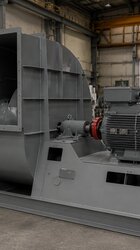
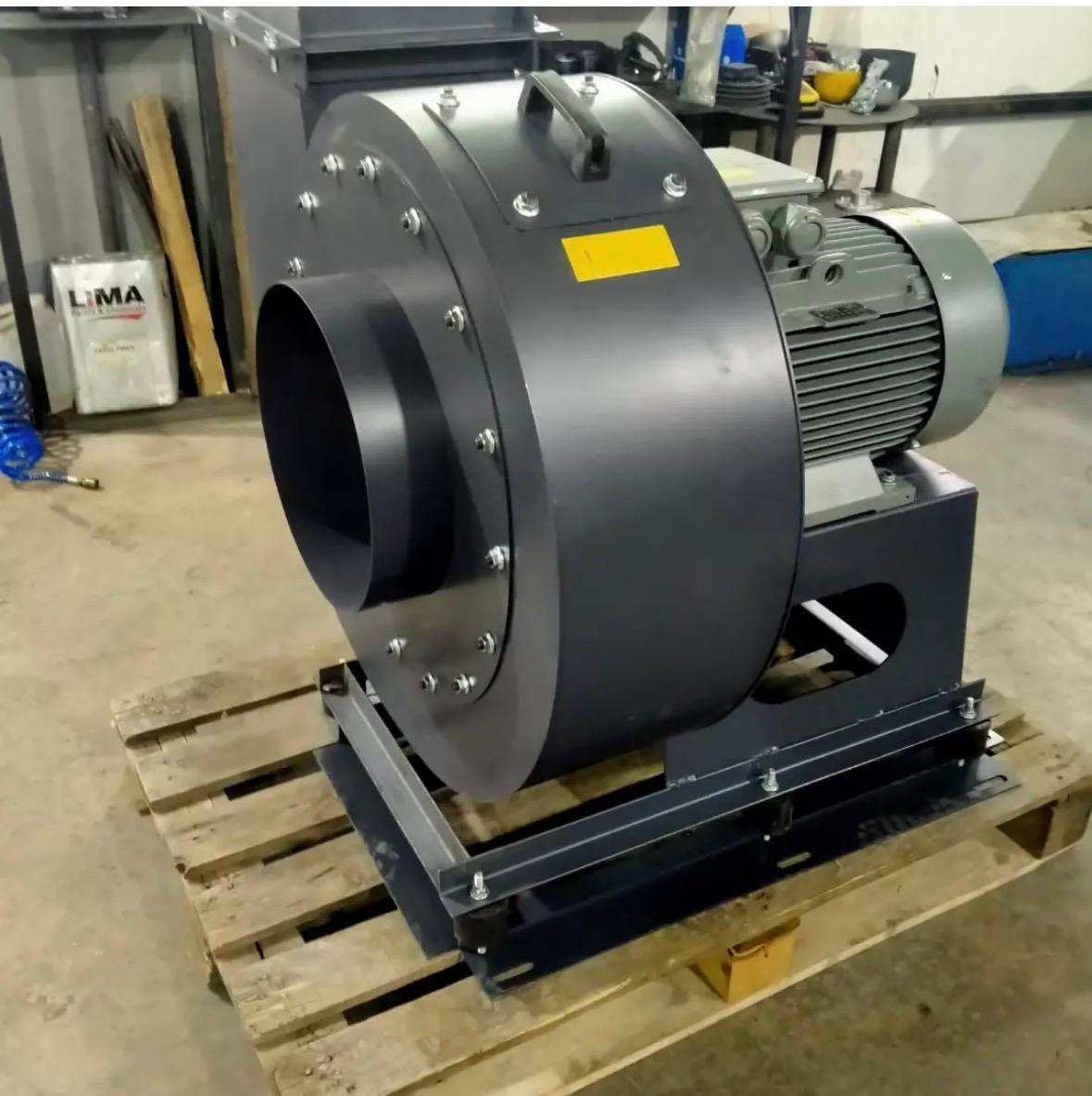

When a circulation pump stops in a boiler room, the heating stops with it; that is why your priority in selecting an in-line or circulation pump motor is not technical perfection but supplying the right motor in the shortest possible time. This guide explains, from a commercial buyer's point of view, the logic of wet rotor versus dry rotor motors used in building heating, HVAC and process systems, the nameplate values needed for a like-for-like replacement, and what you should send us for fast supply from stock. The aim is not to give a technical lecture but to help you order the correct motor so a failed pump in the field is back in service with minimal downtime. As HEM Motor, we supply pump motors from stock in IE3 and IE4 efficiency classes, in a 0.55 kW-355 kW power range, with B3/B5/B14/B35 mounting options.
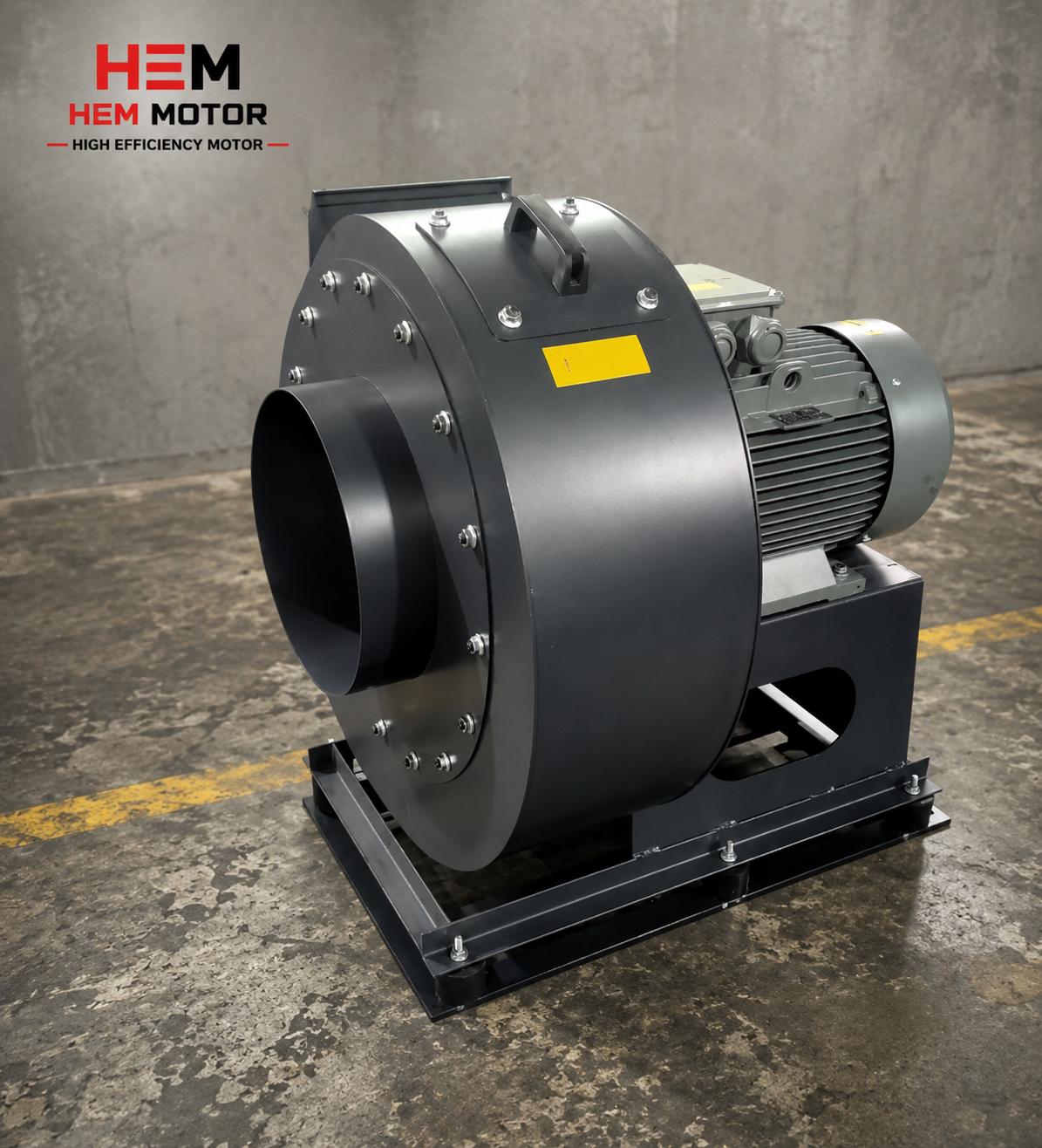
Wet Rotor and Dry Rotor: Which Pump Works With Which Motor Logic?
Circulation and in-line pumps come in two basic constructions, and these two types require completely different supply logic. To request the right motor, you first need to know which pump type you are dealing with.
Wet Rotor (Glandless/Silent) Pumps
In wet rotor circulation pumps, the motor rotor spins inside the pumped fluid; the liquid both lubricates the bearings and cools the winding. These pumps have no separate standard electric motor; the motor and pump are integrated in one body, and because there is no cooling fan they run almost silently. They are most common in homes, individual combi systems and small building heating lines. When such a pump fails, the complete pump-motor unit is usually replaced; it is not replaced with a separate IEC-frame motor. So if you have a wet rotor pump, the solution is an equivalent pump unit, not a standalone motor.
Dry Rotor Pumps
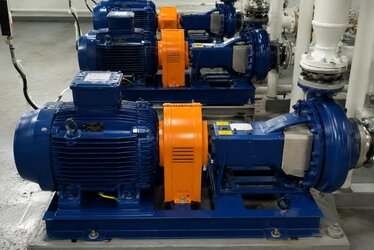
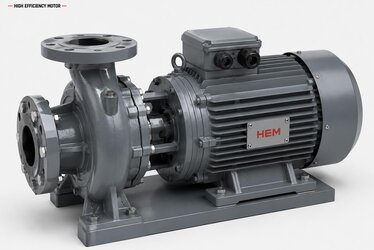
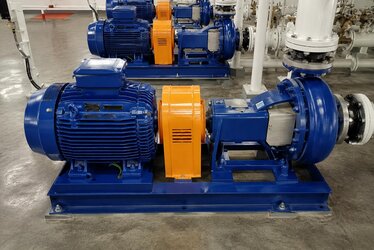
In dry rotor in-line and close-coupled centrifugal pumps, the motor does not contact the pumped fluid. There is a coupling or a direct flange connection between the motor and the pump, and the motor is a standard IEC-frame asynchronous electric motor. This is exactly where the pump motors we supply come into play: when the motor on a dry rotor pump fails, you replace only the motor, not the pump body. Medium and large flow building heating lines, HVAC systems, cooling and process loops mostly use dry rotor in-line pumps. As the flow-head requirement increases on dry rotor motors, the power and speed choice becomes critical; we detailed this in our article on centrifugal pump motor selection: flow, head and power matching.
Like-for-Like Replacement: Values to Read From the Nameplate
If you are replacing the motor on a dry rotor in-line pump, the goal is a like-for-like swap; that is, the new motor must fit the existing pump without any mechanical modification. For this, it is enough to send us the following values from the existing motor's nameplate:
- Power (kW): The power the pump draws. Replacement with the same kW value is essential.
- Speed (rpm) and pole count: 2-pole ~2900 rpm, 4-pole ~1450 rpm, 6-pole ~960 rpm. On in-line pumps, the wrong speed directly disrupts flow and head.
- Frame size and mounting type: Most in-line pumps use B5 (large flange) or B14 (small flange) motors. The flange diameter and bolt pattern must match exactly.
- Shaft diameter and key: Critical for compatibility with the coupling or pump shaft.
- IP rating and insulation class: Our standard production is IP55 and Class F insulation, which is sufficient for boiler rooms and damp environments.
For nameplate reading and preventing the wrong motor from arriving, our article on booster pump motor replacement: selecting the right motor from the nameplate provides step-by-step guidance. As a general rule, matching exactly to the nameplate data to avoid the wrong motor delivery saves both time and cost.
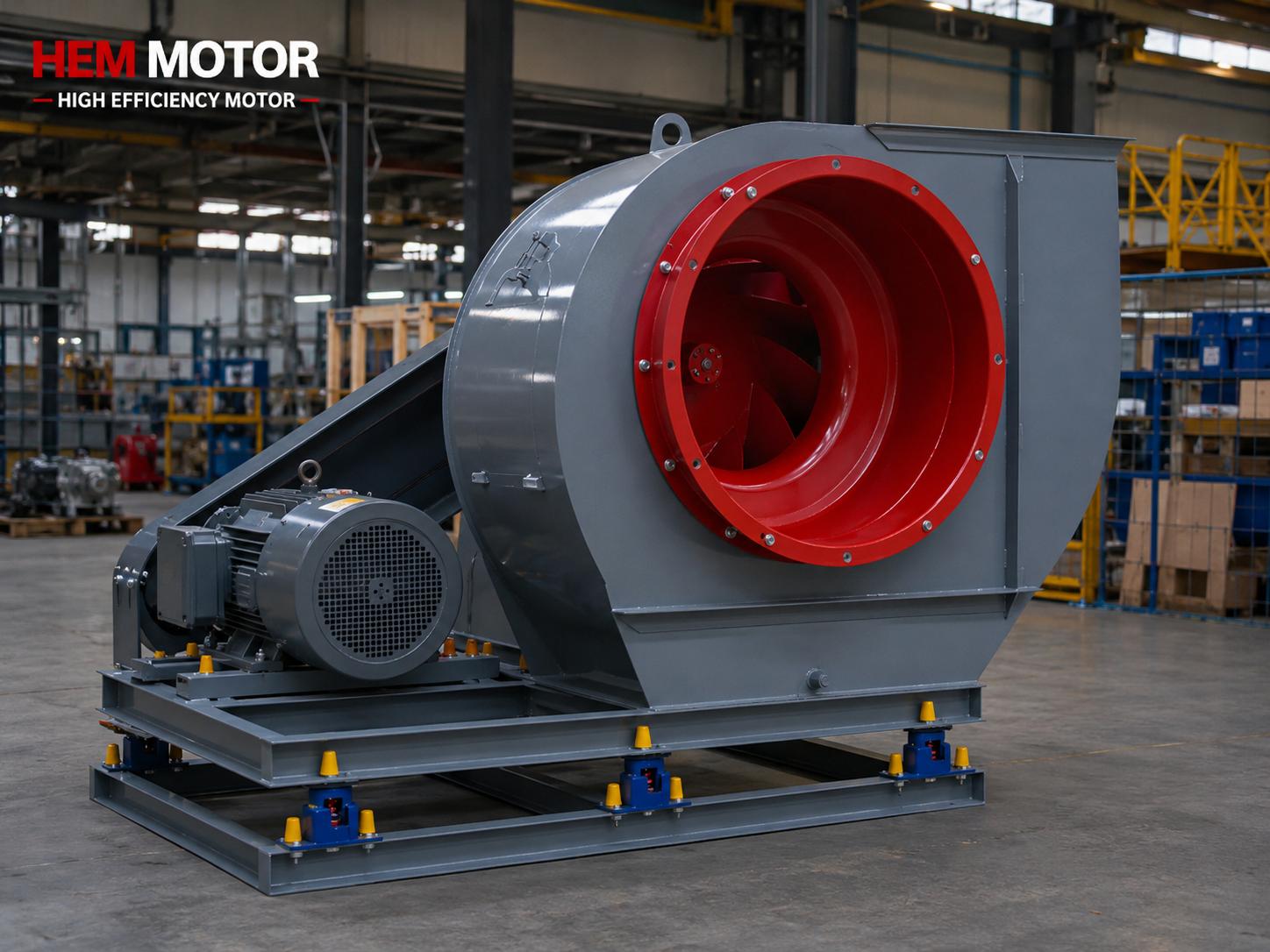
Flow, Head and Speed: How Do They Affect Motor Selection?
On in-line pumps, the motor's job is to turn the pump impeller at a specific speed. The flow (m3/h) and head (m) the pump delivers are directly related to the impeller diameter and the rotational speed. When replacing the motor, keeping the speed is essential:
- 4-pole (1450 rpm): The most balanced, quietest and most common choice for building heating and general HVAC circulation lines.
- 2-pole (2900 rpm): Used in more compact lines requiring high head; noise and vibration are higher.
- 6-pole (960 rpm): Preferred for quiet operation in large flow, low pressure circulation lines.
If you want to see the effect of speed selection on pump performance and the power-speed combinations in detail, our article on required kW for pumps, fans and conveyors makes the job easier.
Boiler Room and HVAC: What to Watch When Supplying
In boiler room and HVAC systems, circulation pump motors usually operate in continuous (S1) duty in a hot and humid environment. Keep the following in mind for your supply decision:
- IP55 protection is standard and sufficient against boiler room humidity and dust accumulation.
- Class F insulation preserves winding life in hot environments.
- Cast iron or aluminium body: At medium-large powers a cast iron body provides mechanical strength and heat dissipation; at small powers an aluminium body is compact and light.
- Continuous-duty bearings and 100% copper winding: They directly determine the life of a pump running 24/7.
Our dedicated article on boiler room and circulation pump motors: building heating supply is a complementary resource for building-scale projects. If you work on the cooling side, our article on cooling tower and chiller fan motors sheds light on outdoor IP protection selection. You can review our pump motor product family on the high-efficiency electric motors page and, on the mounting side, the electric motor mounting types page, and see the full range via the HEM Motor homepage. For all pump, fan and blower motors, visit our pump, fan and blower motors category.
Frequently Asked Questions
My wet rotor circulation pump motor failed; can I buy just the motor?
No. In wet rotor circulation pumps the motor and pump are an integrated single unit; they cannot be replaced with a separate IEC-frame motor. In that case an equivalent pump unit is required. By contrast, in dry rotor in-line or close-coupled pumps the motor is an independent standard electric motor and can be replaced like-for-like. If you send us a nameplate photo of your pump, we will point you in the right direction.
How do I decide which motor to choose for my in-line pump?
For dry rotor pumps, the kW, speed (pole count), frame size, mounting type (B5/B14/B35), shaft diameter and IP rating on the existing motor's nameplate are sufficient. With these values we supply the exact equivalent motor from stock. If the nameplate is unreadable, we can also identify the correct motor from the pump's make-model and flow-head data.
Which speed is quietest for a circulation pump motor?
For building heating and general HVAC lines, 4-pole (1450 rpm) motors are the most balanced and quiet choice. 2-pole (2900 rpm) motors provide higher head but with more noise and vibration. On very high flow, low pressure lines a 6-pole (960 rpm) motor runs more quietly. Keeping your existing system's speed is essential for the flow-head balance.
Get a Quote
Do you need a like-for-like replacement motor for your in-line or circulation pump? Send us a nameplate photo of the existing motor or the pump's flow-head values, and we will quickly quote the motor in the right power, speed and mounting type along with stock availability. Call now: +90 (532) 345 49 86 or reach us via our contact page. We offer project-based pricing for bulk supply in boiler room and HVAC projects.