English
 Türkçe


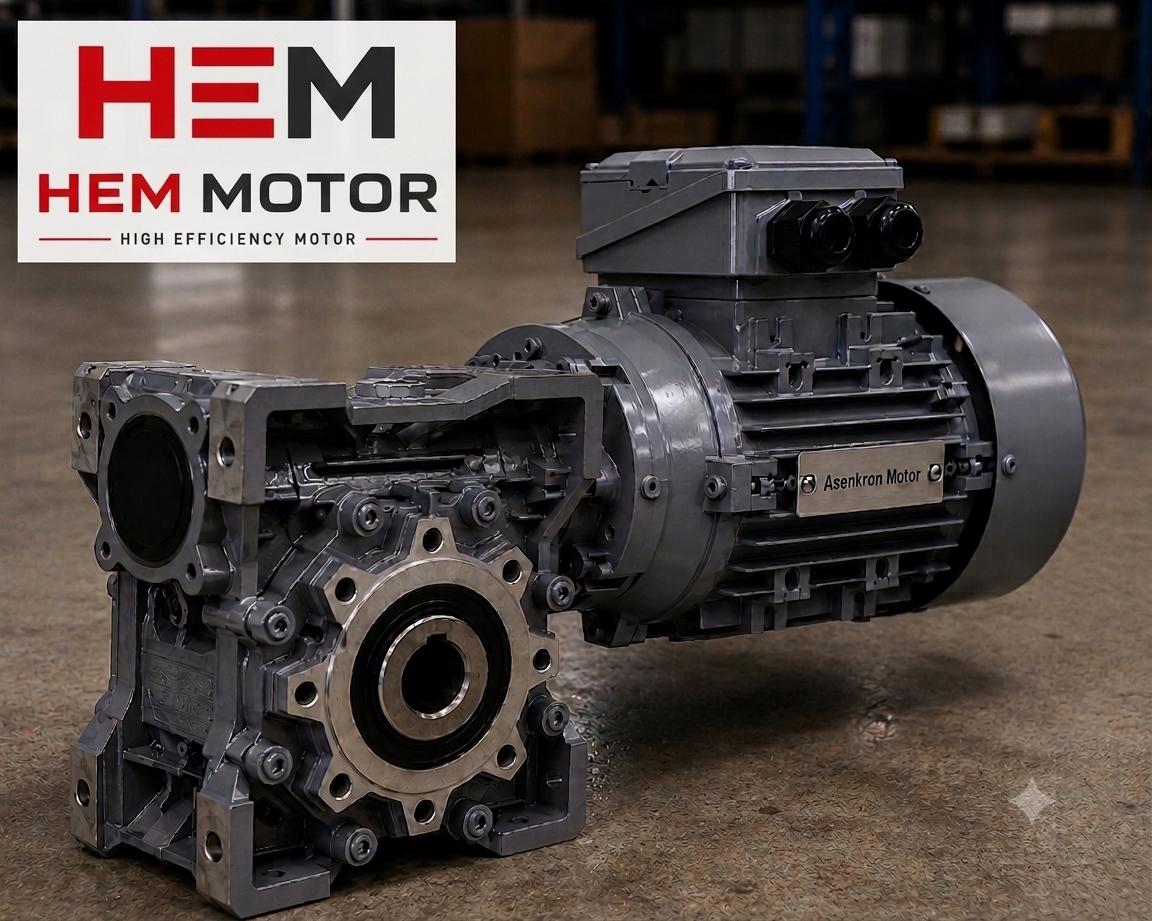

Mount the same reducer horizontally, vertically or inverted under a ceiling; the housing is the same, but the behaviour of the oil inside it changes completely. The reducer mounting position directly determines the oil level, the venting and which gear and bearing receive oil. In the wrong position, some parts cannot reach enough oil and the reducer causes trouble before long. In this guide we explain what the M1-M6 mounting positions mean, why the oil level and breather plug change with position, and why you must always state the position on your order.
At HEM Motor, while supplying the reducers we have manufactured since 1979 and compatible electric motors from our stock in Turkey, we know how critical the mounting position is in the field. A reducer delivered in the correct position runs trouble-free for many years, while a reducer bought without the position being stated can fail early due to incorrect lubrication.

What Do the M1-M6 Mounting Positions Mean?
Reducer mounting positions are standard codes that define which way the housing will sit in space, and they are usually numbered from M1 to M6. M1 typically describes a horizontal, foot-mounted assembly; the other positions express different orientations such as the housing being laid on its side, standing vertically, or the output shaft facing up or down. In every position, the oil inside the reducer collects in the lower part of the housing due to gravity; but the "lower part" corresponds to a different place depending on the position.
For this reason, the mounting position is not a simple preference but a fundamental parameter that determines the reducer's internal operating conditions. While the same reducer is correctly lubricated in the M1 position, when moved to a vertical position without any change, some gears and bearings can end up outside the oil bath. For this reason, when selecting a reducer you need to determine the mounting position as early as the power and ratio. For solutions suited to different positions, our bevel helical gear reducers and worm gear housings offer a wide range.
The Position Determines the Lubrication
Most industrial reducers are lubricated by an oil bath, that is by partially immersing the gears in oil. As the gears turn, they carry the oil upward and distribute it to all the contact surfaces inside the housing. For this system to work, the oil level must be at the correct point; the level changes with the mounting position. The amount of oil that is correct in a horizontal position can be insufficient or excessive in a vertical position. For this reason, every position has its own correct oil level and fill quantity.
The wrong position creates a two-way problem: parts left with a low oil level run dry, while areas that take excessive oil risk foaming and leaking. Both situations lead to heating, wear and early failure. For this reason, the reducer must be ordered and filled according to the position in which it will actually be mounted in the field, not according to its current position. To clarify whether you should prefer a ready drive group or separate components, our article on a geared motor or a separate motor plus reducer helps.
Position of the Oil Level and Breather Plugs
A reducer housing usually has three functional plugs: oil fill, oil level (check) and oil drain. In addition, there is a breather plug that balances the pressure inside the housing. Which of these plugs should be where depends directly on the mounting position. The oil level plug must be at the point that corresponds to the correct oil height in that position; the breather plug, on the other hand, must always remain at the very top, above the oil level.
When the position changes, the positions of these plugs change too. The breather plug that is at the very top in a horizontal position may no longer be at the highest point when the reducer is mounted vertically; in this case the breather remains submerged in oil and cannot do its breathing job and also leaks oil. Likewise, if the level plug stays at the wrong point, it becomes impossible to check the correct oil level. For this reason, a plug arrangement suited to the position is a precondition for the reducer's healthy operation.
The Lubrication Problem in the Wrong Position
The most common result of the wrong mounting position is a lubrication problem that appears gradually. The reducer may look fine when first installed; but gears and bearings that receive no oil heat up, wear and start making noise over time. Although this often looks like a manufacturing defect, the root cause is the mismatch between the mounting position and the oil arrangement. Especially in vertically mounted reducers, lubricating the lower or upper bearing may require extra measures.
The way to prevent these problems is to select the reducer according to the real mounting position, fill it with the correct oil type and quantity, and place the plugs to suit the position. The frame and flange compatibility of the motor to be fitted to the reducer must be verified at the same time; we covered this matching with IEC frame and flange dimensions in our article on matching a motor to a worm gear reducer.
The Right Oil Type and Maintenance
The oil type is as important as the mounting position. Reducer oil is chosen according to the gear type, operating temperature and load; because friction is high in worm gear reducers, oils of a special viscosity are usually preferred. Oil of the wrong viscosity forms an insufficient film even in the correct position and accelerates wear. The first fill and periodic oil change intervals must be carried out in line with the values the manufacturer gives according to the position and application.
In different types of bevel helical reducers such as the K-series, the mounting and lubrication requirements can vary; you need to keep these differences in mind when choosing the series most suited to your application. We compared the jobs in which bevel helical reducers stand out in our article on K-series bevel helical or worm gear. When the right series, the right position and the right oil come together, the reducer runs trouble-free for many years.
Stating the Position Correctly on the Order
The way to place a sound reducer order is to state the mounting position clearly from the very start. Not only the power and ratio; whether the housing will sit horizontally or vertically, which way the output shaft will face and how the foot or flange connection will be must be stated. This information ensures the reducer is prepared with the correct oil quantity, the correct plug arrangement and a suitable oil type. An order placed without stating the position is prepared according to the default arrangement, and when it is mounted differently in the field, lubrication problems become inevitable.
While clarifying the position information, the frame size, flange type and shaft dimensions of the motor to be fitted to the reducer must be verified at the same time, because this compatibility affects both the mechanical connection and the assembly arrangement. When selecting a suitable motor for the reducer, our range covers a wide span from light applications such as aluminium body worm gear reducers to solutions requiring heavier duty. For bevel helical needs, K-series helical reducers also offer different position and power options.
The Differences Between Horizontal and Vertical Mounting
Horizontal mounting is the most common position in which reducers run, and usually the most trouble-free; the oil bath naturally reaches the lower gears and the breather stays at the very top. Vertical mounting requires more care: when the output shaft faces up or down, the upper bearing can end up outside the oil bath and become dependent on splash lubrication. In this case, the oil quantity the manufacturer gives for the vertical position and, if needed, additional lubrication measures must be applied.
In positions laid on their side, the oil level and plug positions change in a similar way. For this reason, using the same reducer in different orientations is not a simple flipping operation but means readjusting the lubrication arrangement. Clarifying what the mounting position will actually be in the field and stating it on the order ensures these adjustments are made correctly at the factory, and you experience no surprises at commissioning.
First Fill and Periodic Oil Change
After the reducer is delivered in the correct position and with the correct oil type, the first fill and periodic oil change must also be planned. While some reducers come lubricated for life (filled with synthetic oil), others require periodic oil changes. The first oil change made after the first operating hours is important for cleaning out the metal particles formed during the production and running-in period. The subsequent change intervals are determined according to the operating temperature and load.
Periodically checking the oil level from the level plug allows leaks or reduction to be caught early. Keeping the breather plug unclogged is also necessary for balancing the pressure inside the housing. These simple maintenance steps, combined with the correct mounting position, noticeably extend the reducer's life. When you share your application with us while building the maintenance plan, we determine together the oil type and change interval suited to the position and load.
Mounting Position and Compatibility with the Motor and Drive
The mounting position affects not only the reducer's internal lubrication but also its compatibility with the motor connected to it and the driven machine. The motor fitted to a vertically mounted reducer must also suit the same position, because the motor's own bearing lubrication and cooling are affected by the mounting direction. For this reason, when determining the reducer position, you need to make sure the motor is also of a frame and mounting type that will run healthily in that position.
The direction of the output shaft also determines the connection to the driven machine; when the shaft faces up, down or sideways, the coupling, chain or belt connection is arranged differently. For this reason, the position decision must be made by considering the whole system. To correctly set up the frame and flange compatibility between the motor and the reducer, our guide on IEC frame and flange matching is a practical reference. When the right position, the right motor and the right connection come together, the drive group runs efficiently as a whole.
Position in Outdoor and Harsh Environments
In reducers working outdoors or in dusty, humid environments, the mounting position becomes important not only for lubrication but also for sealing. Keeping the breather plug above the oil level and closed to dust ingress both protects the oil and prevents dirt from entering the housing. The oil seals working under a load suited to the position is critical for preventing leaks. In these conditions, the right position ensures both the lubrication of the reducer and its protection against external factors together.
In harsh environments the maintenance intervals can also shorten; dust and humidity can cause the oil to become contaminated faster. For this reason, in outdoor applications you need to check the oil more often and, if necessary, add protective measures. When you share the ambient conditions of the application with us, we plan together both the right position and the oil and sealing solution suited to these conditions. For more technical content you can review our guide and technical information category.
Planning Position, Oil Type and Maintenance Together
The long life of a reducer depends on three elements being set up correctly together: the mounting position, the oil type and the maintenance plan. When these three are considered separately, they can conflict with one another; for example, a reducer mounted in the correct position but filled with oil of the wrong viscosity still causes trouble. For this reason, these three elements must be treated as a whole at the selection and order stage. The position determines the oil arrangement, the oil type determines friction and temperature, and the maintenance determines continuity.
The easiest way to set up this holistic approach is to share all the details of your application from the start: the position in which the reducer will be mounted, the operating temperature, the load profile and the ambient conditions. With this information we can deliver the reducer in the correct position, with a suitable oil type and a clear maintenance plan. This way you experience no lubrication surprise at commissioning and get years of performance from your reducer.
The point to remember is that changing the mounting position afterwards is not a simple flipping operation; every position requires its own oil level, plug arrangement and sometimes an additional lubrication measure. For this reason, clarifying the position decision according to the field from the start guarantees both a correct order and a trouble-free commissioning.
Frequently Asked Questions
Is it essential to state the mounting position on the order?
Yes, especially for non-horizontal (vertical or side) mountings it is essential. Because the mounting position determines the oil level, the fill quantity and the position of the plugs. A reducer sent without the position being stated is prepared according to the default (usually horizontal) arrangement; when you mount it vertically, some parts receive no oil. Stating the position from the start ensures the reducer is delivered with the correct oil arrangement and plug position.
Can I turn the same reducer to a different position?
Most reducers can be used in different positions, but this requires an oil level adjustment and plug arrangement suited to the position; some positions may also require an additional lubrication measure. Turning and mounting the reducer without changing the position can lead to incorrect lubrication and early failure. If you plan a position change, clarifying the arrangement suited to the new position with us is the safest route.
How do I know a reducer is mounted in the wrong position?
Typical signs are heating, increasing noise, oil leakage and vibration that comes over time. The breather plug staying below the oil level also points to a leaking and breathing problem. When these signs are seen, the oil level and plug positions must be checked according to the position. When caught early, the problem can usually be resolved with the correct oil arrangement before major damage occurs.
Get a Quote
If you want your reducer to be correctly lubricated from the first day to the last, let us clarify the mounting position and lubrication arrangement together on the order. Tell us the position in which you will mount the reducer, the power and the ratio; let us recommend a reducer suited to your application from our stock with the correct plug arrangement and oil type. For a fast and accurate price you can call us on +90 (532) 345 49 86 or reach us through our contact us page.