English
 Türkçe

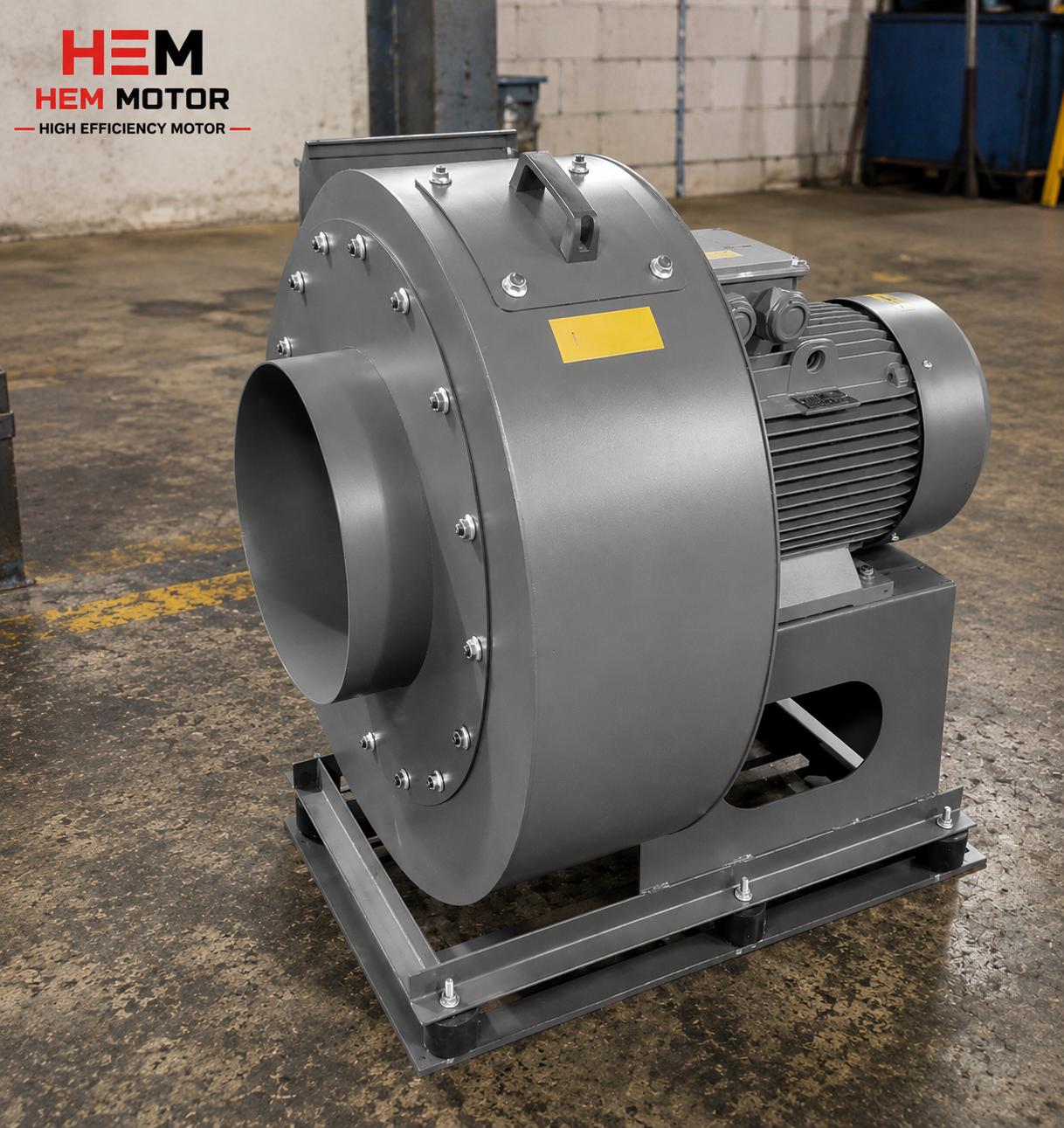

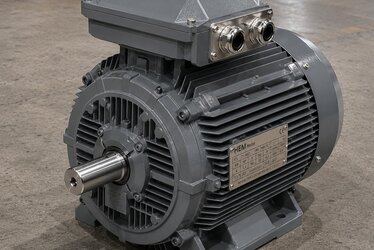
22 kW and 45 kW are among the most in-demand power ratings in industry. The vast majority of pump, fan, compressor, conveyor and general drive applications fall exactly into this power band. For this reason 22 and 45 kW IE4 (Super Premium) motors sit at the center of the purchasing decision, both in terms of stock availability and correct speed-pole selection. Choosing the wrong pole count or wrong frame size affects not only efficiency but also mounting compatibility, coupling-pulley matching and lead time. In this article we cover the 2, 4 and 6 pole speed options for 22 and 45 kW IE4 motors, their typical frame sizes, what the IE4 efficiency advantage means at these ratings, and how to buy correctly from stock, in engineering terms and with a sound supply perspective. The goal is to help you make an error-free, fast purchase decision in these two most-sought powers.
Why 22 and 45 kW? Why Are These Powers So Sought After?
22 and 45 kW are two cornerstones of the medium power class. 22 kW is very widely used in mid-size pumps, air handling unit fans, screw compressors and conveyor drives. 45 kW appears in larger pump and fan groups, heavy conveyors, crusher pre-stages and process lines. The main reason these powers are so much in demand is that typical machine sizes and flow rates in industry land squarely in this range. Manufacturers and suppliers therefore hold the most stock at these ratings; however stock availability depends not only on the power value but also on pole count and mounting type.
The IE4 efficiency class is especially meaningful at these powers. Motors in the 22-45 kW band typically run long hours, often continuously (S1). As running hours increase, the impact of the efficiency difference on annual energy grows. The few-point efficiency gain an IE4 motor offers over IE3 produces a noticeable energy difference over the year in a continuously running 45 kW motor. As a result, IE4 selection in this power range is increasingly becoming standard, both for regulatory compliance and operating economics.
Pole, Speed and Frame Matching
A motor's synchronous speed is set by pole count and supply frequency. At 50 Hz, 2 poles correspond to ~3000, 4 poles to ~1500 and 6 poles to ~1000 rpm synchronous speed; the actual (rated) speed is slightly below this due to slip. Pole choice affects not only speed but also frame size and torque at the same power. A low-speed (6 pole) motor, producing higher torque at the same power, generally comes in a larger frame. The table below summarizes the typical pole-speed-frame matching for 22 and 45 kW; frame values are typical IEC ranges and may differ slightly by manufacturer.
| Power | Poles | Synchronous Speed (50 Hz) | Typical Frame | Typical Application |
|---|---|---|---|---|
| 22 kW | 2 pole | ~3000 rpm | 180 M | High-speed pump, compressor |
| 22 kW | 4 pole | ~1500 rpm | 180 L | Fan, conveyor, general drive |
| 22 kW | 6 pole | ~1000 rpm | 200 L | Low-speed high torque |
| 45 kW | 2 pole | ~3000 rpm | 225 M | Large pump, compressor |
| 45 kW | 4 pole | ~1500 rpm | 225 M | Large fan, heavy conveyor |
| 45 kW | 6 pole | ~1000 rpm | 250 M | Process, high torque |
This table lets you see the three most critical pieces of information before ordering at a glance: at which speed, in which frame and for which application. If you are replacing an existing motor, the pole count and frame code on the nameplate must match exactly; otherwise foot holes, shaft diameter and coupling compatibility may be compromised.
What Does the IE4 Efficiency Advantage Deliver at These Powers?
IE4 (Super Premium) sits above IE3 (Premium) in the IEC 60034-30-1 efficiency classification. In the 22-45 kW band, IE4 motor full-load efficiency typically reaches 94-95 percent levels, a few-point improvement over IE3. This seemingly small difference turns into a noticeable reduction in annual energy consumption in large, continuously running motors. The practical meaning of the efficiency gain is as follows:
- Lower losses: For the same mechanical output the power drawn from the grid falls; this directly reflects in electricity consumption.
- Less heating: Lower loss means less heat, an advantage for winding life and thermal margin.
- Better part-load behavior: IE4 motors generally hold their efficiency well at part load too, important in variable-load applications.
- Regulatory compliance: Under rising efficiency mandates, IE4 is increasingly becoming the standard expectation across many powers and applications.
At these powers IE4 selection shifts the balance between initial investment and long-term energy savings in the operator's favor; especially in facilities with high annual running hours, the efficiency difference shows itself quickly.
Power, Torque and Speed Relationship: The Logic Behind Pole Choice
The basic difference between pole options at the same power is speed; but its real importance is how it reflects in torque. Since power is proportional to torque multiplied by speed, as speed falls the torque needed to produce the same power rises. A 22 kW 6 pole motor therefore produces much higher torque than a 2 pole motor at the same power, which calls for a larger frame, a thicker shaft and a stronger bearing arrangement. The driven machine's torque-speed characteristic is what determines the correct pole choice.
For example, in applications like centrifugal pumps and fans the load rises rapidly with speed (proportional to the square); 2 or 4 pole is generally preferred there. In applications requiring constant or high starting torque such as conveyors, mixers and extruders, a low-speed 6 pole motor often reduces the need for an intermediate gearbox. Correct pole choice ensures correct sizing not only of the motor but of the whole drive train (coupling, pulley, gearbox). A wrong choice can mean an unnecessary speed conversion device or an inefficient operating point.
For this reason, even at frequently bought powers like 22 and 45 kW, pole selection should be treated not as a standard choice but as an application-specific engineering decision. Getting the speed right optimizes both the initial investment and operating efficiency.
Mechanical Compatibility: Frame, Foot, Shaft and Mounting
When replacing a motor or fitting it into a new line, mechanical compatibility is as important as efficiency. Per IEC standards, a given frame size (e.g. 180, 225, 250) comes with specific foot hole spacings, shaft diameter and shaft end dimensions. Typical matches such as 180 L for 22 kW 4 pole and 225 M for 45 kW 4 pole ease compatibility in replacement orders. But because a different pole choice can lead to a different frame at the same power, foot spacing and shaft diameter may change. In that case coupling, pulley and base connections need to be reassessed.
Mounting type is also a critical parameter. Foot-mounted (B3) motors are the most common in general drive applications; flange (B5) and foot-flange (B35) motors are used in pump and special machine connections. Shaft orientation, shaft diameter, key size and shaft end length must be clarified upfront so the coupling or pulley seats correctly. If this mechanical information is given correctly at the time of ordering, lead time is shortened and the risk of mismatch during installation is eliminated.
Operation with a Drive (VFD) and Insulation Requirements
22 and 45 kW motors are often run together with a frequency converter (VFD/drive); especially in pump and fan applications, variable-speed operation delivers significant energy savings. Under drive operation the motor winding insulation is exposed to fast-rising voltage pulses (du/dt) and voltage spikes. For motors that will run continuously on a drive, inverter duty (drive-rated) winding insulation and, where needed, options such as shaft grounding and insulated bearings should be considered. If these options are stated at the time of ordering, the motor runs reliably with a long life. Drive compatibility, especially at large powers, is a topic that should be clarified upfront for lead time and correct supply.
Stock and Supply: The Key to Fast Procurement
Even at the most-sought powers, being able to procure the right motor quickly depends on several variables. The main factors affecting stock availability are:
- Pole count: 4 pole, being the most common, is generally found fastest; 2 and 6 pole vary with demand.
- Mounting type: Foot-mounted (B3), flange (B5/B14) or foot-flange (B35) variations affect stock status.
- Options: PTC/PT100 thermal protection, encoder, brake, special shaft or high IP protection can extend lead time.
- Voltage/frequency: 400V/50Hz is standard stock, while different voltage/frequency combinations may require special supply.
For a correct and fast purchase, having power, pole, frame, mounting type and options clear at the moment of ordering shortens lead time. Clarifying this information upfront in project planning prevents last-minute surprises and delays.
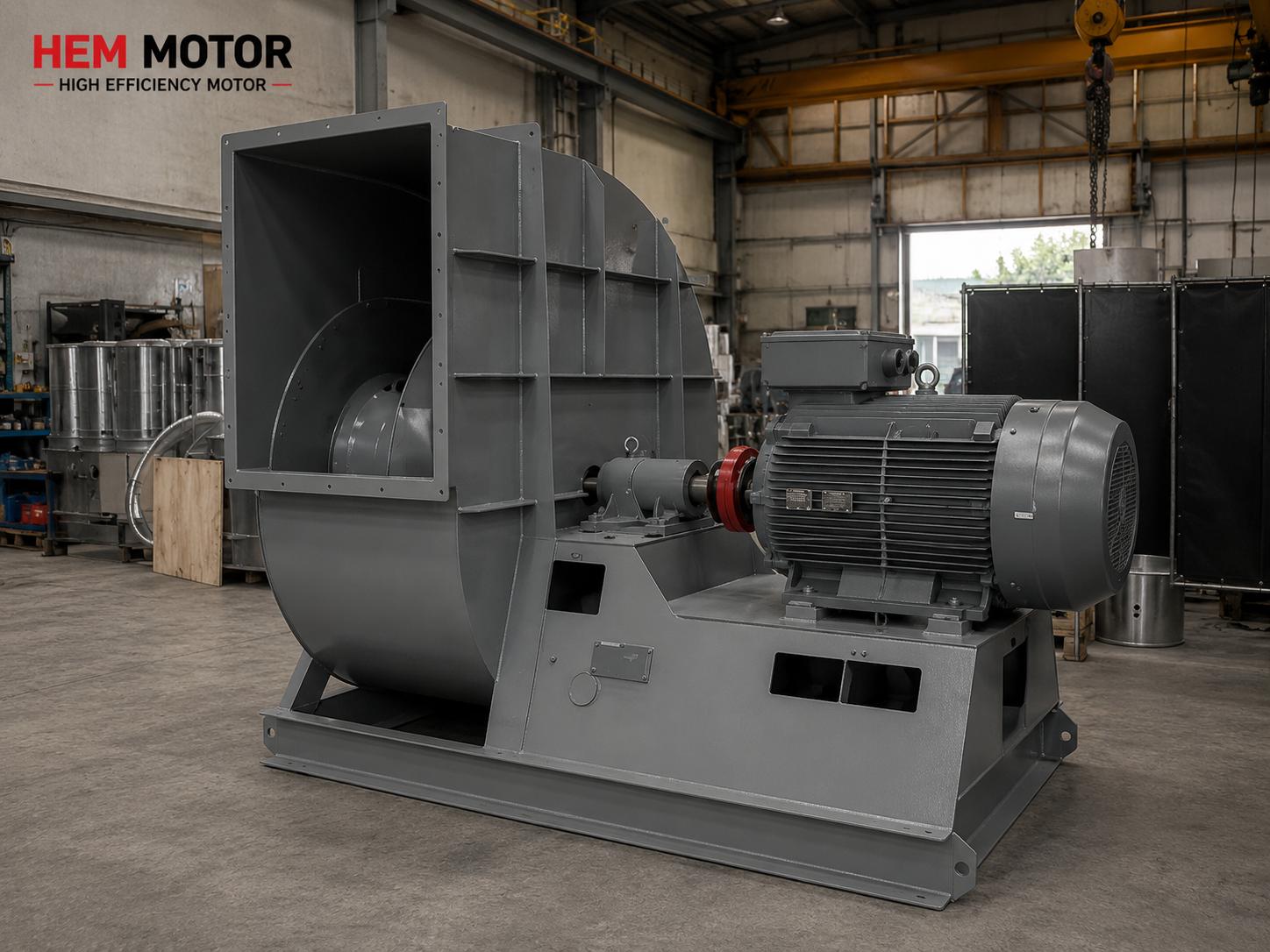
Step-by-Step Checklist for the Right Purchase
- Determine the real power and speed the application requires; oversizing reduces part-load efficiency.
- Choose pole count by application: 2 pole for high-speed pump/compressor, 4 pole for general drive, 6 pole for high torque.
- If replacing an existing motor, match the nameplate frame code, shaft diameter and mounting type.
- Clarify the mounting type (B3/B5/B35) and shaft orientation.
- State required protection and options (thermal, IP class, brake, etc.) upfront.
- If it will run on a drive (VFD), assess the need for inverter duty winding and suitable insulation.
The Most Common Purchasing Mistakes at These Powers
Even at frequently bought powers like 22 and 45 kW, wrong choices can cause delivery delays, mounting problems and efficiency loss. The most common mistakes are:
- Looking only at power and skipping speed: The same 22 kW means different speed and a different frame at different pole counts; if the speed is not clarified, the wrong motor may arrive.
- Oversizing: Stepping up a power level to be safe reduces part-load efficiency and creates unnecessary cost; IE4 motors run at their most efficient point when correctly sized.
- Stating mounting type late: The B3, B5 and B35 difference directly affects stock and lead time; this information should be given at the time of ordering.
- Ignoring drive compatibility: If inverter duty insulation and shaft grounding are not assessed in a motor that will run on a VFD, bearing current and insulation problems can arise over time.
- Not matching nameplate data in replacement: If the old motor's frame code, shaft diameter and mounting type are not transferred correctly, mechanical mismatch occurs.
Most of these mistakes are easily prevented by defining the requirement completely upfront. An order placed with the right information secures both the fastest delivery and the highest operating efficiency.
Frequently Asked Questions
For 22 kW should I get 2 pole or 4 pole?
This depends entirely on the application. For pumps and compressors needing high speed, 2 pole (~3000 rpm) is typical; for fan, conveyor and general drive applications, 4 pole (~1500 rpm) is the usual choice. Choosing the wrong speed directly affects the coupling-pulley ratio and system performance, so the driven machine's speed requirement should be decisive.
Does a 45 kW IE4 motor really pay off over IE3?
Yes, especially in long-running applications. At a large power like 45 kW, a few-point efficiency difference turns into a noticeable reduction in annual energy consumption under continuous operation. The higher the running hours, the more pronounced the IE4 advantage becomes.
Are these powers quickly available from stock?
Since 22 and 45 kW are among the most-sought powers, they can usually be supplied quickly, especially in 4 pole and standard mounting types. Special options, different voltage/frequency or less-demanded pole choices can affect lead time, so it is important to define the requirement clearly upfront.
Buy the Right Motor with Fast Delivery from Stock
For your 22 and 45 kW IE4 motor needs, share your power, pole, frame, mounting type and option details with us. As HEM Motor, with manufacturer stock advantage and fast delivery, let us supply the most suitable motor for your application in the shortest time. You can review our articles on 30 and 37 kW IE4 stock and supply, 15 and 18.5 kW efficiency and load curve, IE4 supply and lead time, mechanical compatibility in transition and 2-4-6 pole selection, then request a quote.