English
 Türkçe


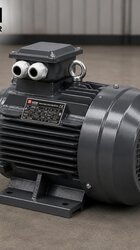
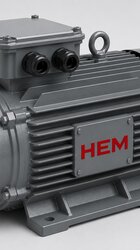

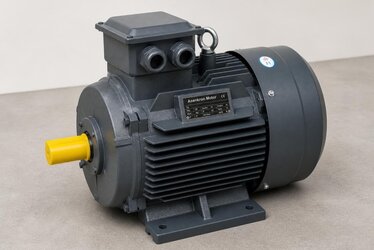
There is more than one way to reach the IE4 (super premium) efficiency class defined by IEC 60034-30-1. One of them is the Line-Start permanent magnet motor, which can run directly from the grid without needing a drive (VFD); in the literature it is called LSPM (Line Start Permanent Magnet). This motor combines the starting capability of an induction motor with the high efficiency of a synchronous permanent magnet motor in a single rotor. The result is a motor that runs on direct-on-line (DOL) starting from the grid without a drive, yet delivers IE4 efficiency. In this article we cover in detail how the LSPM motor works, its hybrid rotor structure, how it pulls into synchronism, its starting-current behaviour, which applications suit it, and how it differs from the classic IE4 induction motor. The aim is to clarify the right decision for plants that want to raise their efficiency class without investing in a drive.
How Does an LSPM (Line-Start PM) Motor Work?
A classic induction motor produces torque through the slip between the rotating magnetic field and the rotor; this slip inevitably creates loss in the rotor and limits efficiency. A permanent magnet synchronous motor, thanks to magnets embedded in its rotor, runs at exactly synchronous speed with almost no slip-related rotor loss, which makes it very efficient. However, a pure permanent magnet synchronous motor cannot start directly from the grid, because a stationary rotor cannot lock onto a field suddenly rotating at full speed and needs controlled acceleration via a drive.
The LSPM motor unites these two worlds. Its rotor contains both an induction cage (squirrel cage) and embedded permanent magnets. When grid voltage is applied, it behaves at first just like an induction motor: the cage produces starting torque and accelerates the rotor to a speed close to synchronous. When the speed approaches synchronous closely enough, the field of the embedded magnets locks the rotor onto the rotating field; this event is called pull-in (synchronisation). After synchronisation the motor runs at exactly synchronous speed, without slip and with high efficiency. The cage no longer produces torque and only acts as a damper during transient load changes.
- Starting phase: The squirrel cage produces induction torque and the rotor accelerates.
- Synchronisation (pull-in): The magnet field locks the rotor onto the rotating field.
- Continuous running: Full synchronous speed, no slip, IE4 efficiency.
- No drive needed: Direct-on-line (DOL) starting is sufficient.
Hybrid Rotor Structure: Induction + Synchronous
The heart of the LSPM motor is its dual-function rotor. Into the rotor laminations both an aluminium/copper squirrel cage is cast and permanent magnets (usually rare-earth) are embedded in a suitable geometry. Designing these two structures together is a critical engineering balance:
- If the cage dominates: Starting torque is good but synchronisation weakens and the magnets' efficiency contribution drops.
- If the magnets dominate: Efficiency and synchronous torque are high but starting is harder with extra starting current; under heavy load it may fail to pull into synchronism.
So the LSPM motor's rated load, moment of inertia and starting load must be carefully matched. If the maximum load inertia (GD² or J) and starting-load limits defined by the maker are exceeded, the motor cannot synchronise and runs in induction mode with high slip and overheating, which is undesirable. You can find the differences between synchronous and magnet technologies in our synchronous reluctance vs permanent magnet PM motor article, and the comparison of IE4 induction with synchronous technology in our IE4 asynchronous or synchronous reluctance article.
Starting Current and Synchronisation Behaviour
The LSPM motor's starting current, like an induction motor's, is several times the rated current (typically around 6-8 times, varying with design). So in DOL starting the grid and protection devices must be sized to handle this inrush. Starting current is closely linked to the motor's cage design and load inertia; high inertia lengthens the synchronisation time and increases heating during start.
During pull-in, the interaction between the magnet field and the rotating field can create a small torque oscillation; in a well-designed LSPM motor this oscillation is quickly damped and the rotor settles into stable synchronous speed. The main factors that hinder synchronisation are:
- The load moment of inertia (J) exceeding the maker's limit.
- High counter-torque during start (for example a loaded conveyor, a full compressor).
- Low grid voltage; the magnet torque being insufficient.
- Very frequent start-stop; heat build-up at each start.
| Property | Starting phase (induction mode) | Continuous running (synchronous mode) |
|---|---|---|
| Torque source | Squirrel cage | Permanent magnet |
| Speed | Sub-synchronous (with slip) | Full synchronous (no slip) |
| Current | High (starting current) | Rated current, low |
| Efficiency | Transient, low | High (IE4) |
| Power factor | Variable | Usually high |
Advantages of the LSPM Motor
The biggest attraction of the LSPM motor is that it delivers IE4 efficiency without a drive. In fixed-speed, continuously running applications this is a major advantage:
- No drive cost: No VFD, EMC filter, shielded cable or panel expansion needed.
- High efficiency: Synchronous, slip-free running almost eliminates rotor loss.
- High power factor: Magnet excitation reduces reactive power demand.
- Quiet and cool running: Low rotor loss means less heat and noise.
- Compact: Higher efficiency is possible in a smaller frame at the same rating.
Limits and Cautions of the LSPM Motor
Like every technology, the LSPM motor has limits. The most important is that it is not directly suited to applications needing speed control: because it runs on the grid it turns at fixed speed, and changing the speed still requires a drive (which may then need special parametering). Other points to watch:
- Inertia limit: High inertia (large fan, flywheel) makes synchronisation harder.
- Frequent start-stop: Each start produces heat in induction mode; very frequent jogging is unsuitable.
- Voltage drop: On a weak grid, synchronisation is at risk.
- Parallel start of multiple motors: Several LSPM motors starting at once can pull down the grid voltage.
- Magnet temperature: Overheating can adversely affect the magnets; thermal protection is important.
So the LSPM motor gives the best result on fixed-speed, moderate-inertia, infrequently starting pump, fan and similar loads. For torque selection by load in DOL starting see our starting torque and correct selection in DOL article; for thermal protection see our PTC/PT100 thermal protection wiring guide.
IE4 LSPM versus IE4 Induction
The same IE4 efficiency class can be reached by two different routes: LSPM (line-start PM) or an optimised induction design. The table below compares the two approaches.
| Criterion | IE4 LSPM (Line-Start PM) | IE4 Induction |
|---|---|---|
| Drive requirement | None (DOL) | None (DOL) |
| Speed | Full synchronous (no slip) | Sub-synchronous (with slip) |
| Rotor loss | Very low | Induction slip loss present |
| Power factor | Usually high | Medium |
| High-inertia load | Limited (synchronisation risk) | More flexible |
| Frequent start-stop | Limited | More suitable |
| Up-front cost | Higher due to magnets | More economical |
In short: on fixed-speed, continuous and low-inertia loads, LSPM offers the highest efficiency and power factor without a drive. On high-inertia, frequent start-stop or variable loads, IE4 induction can be the safer choice. To weigh the IE4 transition by power and running hours see our stay with IE3 or move to IE4 article; for the IE4 threshold in pump/fan/compressor see our IE4 threshold article.
Which Applications Is It Suitable For?
The ideal use of the LSPM motor is fixed-speed, continuously running loads with a moderate moment of inertia:
- Centrifugal pumps (fixed speed, continuous running).
- Fans and exhausters (if the load inertia is within the maker's limit).
- Compressors (fixed-speed types).
- Conveyors (low-medium inertia, continuous running).
- HVAC fixed-speed fan and pump sets.
In these applications the LSPM motor lowers the electricity bill and the reactive power charge without a drive investment. If speed control, a wide speed range, soft starting or braking is needed, an IE4 induction or an IE5 synchronous reluctance motor running on a drive is more appropriate. For drive-based solutions see our VFD with asynchronous motor article.
Frequently Asked Questions
Does an LSPM motor really deliver IE4 efficiency without a drive?
Yes. This is exactly the main appeal of the LSPM motor: it is started direct-on-line (DOL), needs no drive, and after pulling into synchronism it delivers IE4 efficiency thanks to slip-free synchronous running. But this advantage only appears if the load inertia and starting load are within the maker's limits; otherwise the motor cannot pull into synchronism.
Can I change the speed of an LSPM motor?
It runs at fixed speed directly on the grid; to change speed you need a drive that varies the frequency. But not every drive can control every LSPM motor in synchronous mode; special drive parametering may then be needed. The main use case of the LSPM motor is fixed speed; if wide speed control is required, a drive-based synchronous reluctance or induction solution is more suitable.
Why does an LSPM motor fail to synchronise on some loads?
Synchronisation depends on the magnet torque being able to lock the rotor onto the rotating field. If the load inertia is very high or the counter-torque during start is too great, the rotor cannot approach synchronous closely enough and the motor keeps running in induction mode with high slip. This causes overheating and efficiency loss. The solution is to select a motor within the maker's inertia and load limits.
Practical Tips for the Right Choice
- Consider LSPM first on fixed-speed, continuous, moderate-inertia loads.
- Compare the load moment of inertia (J) with the maker's limit.
- Size cable, fuse and contactor for the DOL starting current.
- If the grid voltage is weak, assess the synchronisation risk.
- Protect the magnets with thermal protection (PTC/PT100).
- If speed control is needed, move to a drive-based solution.
How Efficiency and Power Factor Reach the Bill
The economic logic of the LSPM motor rests on two items: energy consumption and reactive power. Thanks to synchronous, slip-free running it does the same mechanical work with less electricity; in a continuously running plant this difference turns into a notable saving over the year. The second item is power factor: a classic induction motor draws magnetising (reactive) current from the grid, and a low power factor creates a reactive power charge and the need for compensation. In an LSPM motor the excitation is provided by the permanent magnets, so the power factor is usually high; this reduces the reactive power penalty and the compensation burden.
The size of the saving depends on the motor's power, annual running hours and load profile. A pump or fan running thousands of hours a year turns even a small efficiency difference into a large gain; for a load running only a few hundred hours the difference stays limited. So the payback period of an LSPM investment must be assessed together with the running hours and the power class. We covered how efficiency changes under load in our efficiency-load curve and part load article, and verifying the nameplate efficiency by field measurement in our reading nameplate efficiency and IE code article. Reducing the reactive load caused by a low power factor is an unseen but important advantage of LSPM.
Magnet Type, Temperature and Demagnetisation Risk
The efficiency of the LSPM motor depends largely on the permanent magnets in the rotor, so protecting the magnets is critical for the motor's life. Permanent magnets can partly lose their magnetism at high temperature; this is called demagnetisation. Above a certain temperature limit an irreversible loss of magnetism can occur, permanently lowering the motor's efficiency. For this reason limiting the winding and magnet temperature, choosing the right insulation class and using thermal protection are very important in an LSPM motor.
To reduce temperature-driven risk, the following measures are taken: not continuously overloading the motor above its rated power, applying derating if the ambient is hot, avoiding frequent start-stop, and monitoring the winding temperature with PTC/PT100. You can study the effect of insulation and thermal class on the thermal margin in our insulation and thermal class (F/H) and temperature rise article. Good thermal management protects both the magnets and the bearings and keeps the LSPM motor running long.
Commissioning and Protection Checklist
When commissioning an LSPM motor in the field, a few extra points need attention compared with an induction motor. The checklist below summarises the basic steps for a smooth commissioning:
- Inertia check: Is the load's moment of inertia within the maker's limit?
- Voltage level: Is the grid voltage at the rated value? Low voltage hinders synchronisation.
- Protection sizing: Are the fuse, contactor and overload suited to the DOL starting current?
- Rotation direction: Is the phase sequence correct? Swap two phases to reverse direction.
- Thermal protection: Is PTC/PT100 connected and active?
- Synchronisation check: After starting, does the motor settle at full synchronous speed and does the current fall to the rated value?
For rotation-direction and phase-sequence checking at commissioning see our rotation direction and phase sequence article; for incoming and acceptance inspection see our incoming and acceptance inspection guide. A correctly commissioned LSPM motor repays its investment many times over by running drive-free and at high efficiency for years.
At HEM Motor we offer Line-Start permanent magnet and IE4 induction motor options for plants seeking IE4 efficiency without a drive, with fast delivery from stock. To clarify with engineering support whether LSPM or IE4 induction is right for your load's speed, inertia and duty type, and to request a quote, get in touch with us. Let us plan together the way to raise your efficiency class without investing in a drive.