English
 Türkçe

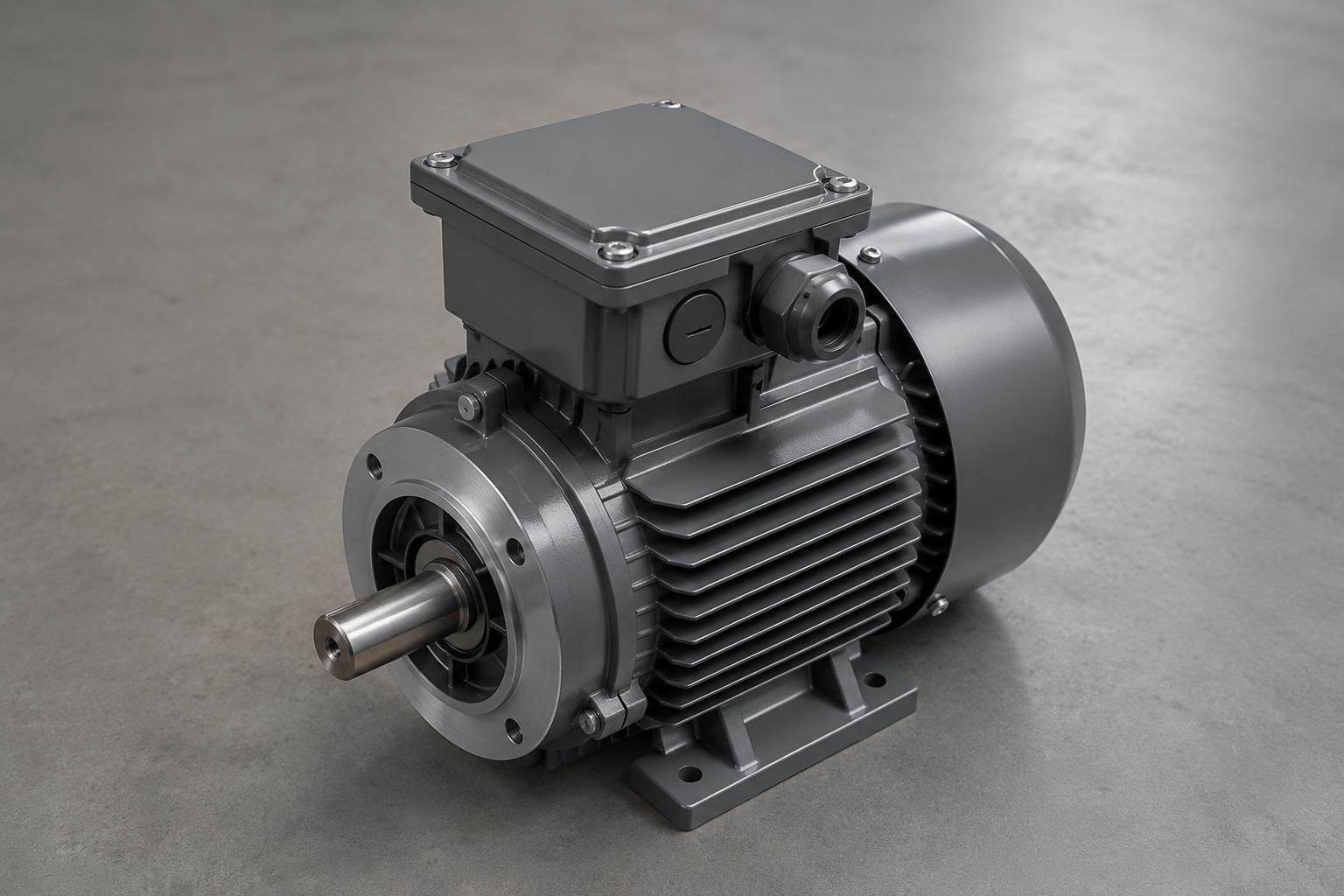

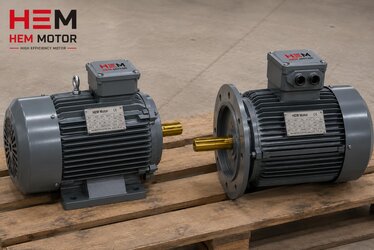
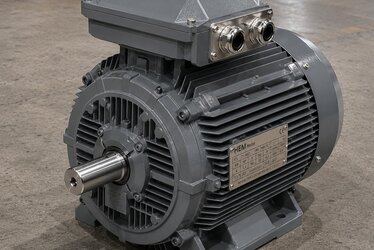
Small-power electric motors are the most widely used and most frequently purchased motor class in industry. Small powers such as 0.75 kW and 1.1 kW appear in pumps, fans, conveyors, geared drives, kitchen and food equipment, packaging machines and countless small drive applications. In this power range, the IE4 (Super Premium) efficiency class has increasingly become the preferred choice in recent years, both for energy savings and due to regulation. However, the behaviour of IE4 at small power is different from large powers: in small motors the efficiency curve is steeper, efficiency can drop quickly at part load, and the correct frame-pole-speed selection directly affects energy savings. In this article we cover in detail the efficiency curve of 0.75 kW and 1.1 kW IE4 motors, part-load efficiency, 2/4/6-pole speed values, typical frame sizes (around 80 and 90), stock availability, the IE4 threshold and mandate at small power, and the correct purchase.
Why Is the IE4 Efficiency Curve Different at Small Power?
Efficiency is the ratio of a motor's mechanical output power to its electrical input power. As the motor gets smaller, the fixed losses (iron loss, friction, ventilation) grow relative to the total power; therefore the maximum efficiency a small motor can reach is lower than that of large motors. For example, while a 200 kW IE4 motor exceeds 96% efficiency, the rated efficiency of a 0.75 kW IE4 motor is typically in the 80–83% range. This is a natural physical limit; it is wrong to expect the efficiency of a large motor from a small one. What matters is the considerable efficiency gain obtained by choosing IE4 instead of IE3 in the same power class.
At small power the efficiency curve is steeper: as the motor drops below rated load, the efficiency falls faster than in large motors. Therefore correct sizing is critically important in small IE4 motors. A motor that is selected too large (for example running at half load) will not deliver the expected field efficiency even if it is in the IE4 class. The table below shows the typical rated efficiency (4-pole) and part-load efficiencies of 0.75 and 1.1 kW IE4 motors.
| Power | Poles | 100% Load Eff. | 75% Load | 50% Load | 25% Load |
|---|---|---|---|---|---|
| 0.75 kW | 4-pole | ≈ 82.5% | ≈ 82.0% | ≈ 80.0% | ≈ 72.0% |
| 1.1 kW | 4-pole | ≈ 84.1% | ≈ 83.8% | ≈ 81.5% | ≈ 74.0% |
| 0.75 kW | 2-pole | ≈ 80.7% | ≈ 80.2% | ≈ 77.5% | ≈ 68.0% |
| 1.1 kW | 2-pole | ≈ 82.7% | ≈ 82.3% | ≈ 79.5% | ≈ 70.0% |
As the table shows, efficiency remains reasonable down to 50% load, but a significant drop occurs at 25% load. Therefore selecting a small IE4 motor according to the real load point provides more savings than the IE class alone.
Part-Load Efficiency and Correct Sizing
In the field, most motors run below their rated power. Designers usually select the motor one step larger by leaving a safety margin; this leads to the motor running continuously at part load. In small IE4 motors this creates a two-way effect:
- Light part load (75%): Efficiency is usually very close to rated efficiency; in some motors the peak efficiency is actually around 75% load. Operating in this region is ideal.
- Medium part load (50%): Efficiency drops by a few points but is still acceptable.
- Heavy part load (25% and below): Efficiency falls quickly and the power factor worsens; at this point the motor is oversized.
The correct approach is to select the motor so that the real operating point falls in the 75–100% range. If the application has a variable load (for example a load varying between 30% and 90% over time), running the motor according to the load with a drive (frequency inverter) preserves efficiency. Even at small power, a correctly selected IE4 motor + a drive when needed significantly reduces the lifetime energy cost.
2/4/6-Pole Speed Values and Frame Size
In small-power motor selection, the number of poles is determined by the speed requirement of the application. As the number of poles increases, the speed decreases but the torque increases at the same power. 0.75 and 1.1 kW motors are typically found in IEC 80 and 90 frame sizes. The table below shows the pole-speed-frame match at these powers.
| Power | Poles | Synchronous Speed | Approx. Load Speed | Typical Frame |
|---|---|---|---|---|
| 0.75 kW | 2 | 3000 rpm | ≈ 2850 rpm | 80 |
| 0.75 kW | 4 | 1500 rpm | ≈ 1410 rpm | 80 |
| 0.75 kW | 6 | 1000 rpm | ≈ 910 rpm | 90S |
| 1.1 kW | 2 | 3000 rpm | ≈ 2860 rpm | 80 |
| 1.1 kW | 4 | 1500 rpm | ≈ 1420 rpm | 90S |
| 1.1 kW | 6 | 1000 rpm | ≈ 920 rpm | 90L |
The frame size determines the motor's mechanical dimensions (foot hole spacing, shaft diameter, shaft height). Frames 80 and 90 are standard for small power, and compatibility of mounting dimensions is critical in equivalent replacements. The point to watch in speed selection is that the torque changes when taking the same power at a different speed: a 6-pole (1000 rpm) motor produces three times more torque than a 2-pole (3000 rpm) motor; in pumps and fans the speed choice directly affects flow and pressure.
The IE4 Threshold and Mandate at Small Power
Efficiency regulation sets a minimum efficiency level according to motor power class. In regulations aligned with the European ecosystem, the minimum efficiency level for three-phase motors of 0.75 kW and above has been raised to IE3 over time and to IE4 in certain power ranges. 0.75 kW is the lower threshold power covered by the regulation; from this power on, efficiency class requirements come into effect. Therefore 0.75 and 1.1 kW motors are right in the middle of the regulation, and the correct efficiency class choice is important both for legal compliance and energy savings.
Situations where choosing IE4 makes sense at small power are:
- Long operating hours: For motors running 8 hours a day or more, thousands of hours a year, the extra efficiency of IE4 pays back quickly.
- High-count installation: If a plant has dozens of small motors, the small saving on each adds up to a large figure overall.
- High energy price: As energy cost rises, the payback period of IE4 shortens.
- Regulatory compliance and future-proofing: Choosing IE4 protects the investment against future regulatory changes.
Stock and the Correct Purchase
Small powers such as 0.75 and 1.1 kW are the most in-demand motors and are usually available quickly from stock. For the correct purchase, the following points should be observed:
- Clarify the power, pole (speed) and frame size according to the application.
- In equivalent replacement, verify the mounting dimensions of the existing motor (frame, shaft diameter, shaft length, foot hole).
- Specify the mounting type (B3 foot, B5/B14 flange).
- If it will run with a drive, request inverter-compatible winding and a thermistor option if needed.
- Specify the protection class (IP55 standard) and insulation class (F/H) requirement.
Since stock availability is high at small power, a request that clearly states the correct specifications results in fast delivery.
Calculating Energy Savings Correctly at Small Power
A common mistake when evaluating the return of IE4 in small-power motors is to underestimate the annual saving of a single motor and postpone the investment. Yet small motors are usually installed in large quantities and run for long hours throughout the year. For example, if a plant has 50 units of 1.1 kW motors and each runs 12 hours a day, the few percentage points of efficiency gain provided by moving from IE3 to IE4 on each motor turns into a considerable annual energy and cost saving overall. What matters here is to think of the saving at plant scale, not per single motor. In the payback analysis, the annual running hours of the motor, the average load point, the unit price of energy and the efficiency difference between IE4 and IE3 must be evaluated together.
Another important point is that the efficiency gain must be calculated not at rated load but at the load point where the motor actually runs. If the motor runs continuously at 50% load, it is correct to make the payback calculation with the 50% load efficiency value. Therefore knowing the load profile of the application before purchase is the basis for determining both the correct motor size and a realistic saving expectation. A mis-sized IE4 motor at small power cannot deliver the saving its class promises in the field, and the investment pays back later than expected.
Beyond energy savings, IE4 motors generally run at a lower winding temperature; this extends insulation life and positively affects bearing life. So choosing IE4 at small power improves not only the electricity bill but also the maintenance and replacement frequency of the motor. From a total cost of ownership perspective, IE4 at small power is almost always a sensible investment in high-count, long-running applications.
Common Selection Mistakes in Small-Power Motors
The mistakes most frequently encountered in the field when selecting a small-power IE4 motor directly affect the correct purchase. Knowing these mistakes prevents both energy loss and mechanical incompatibility:
- Selecting an oversized motor: Buying a one-step-larger motor "to be safe" lowers part-load efficiency and worsens the power factor. The correct power must be selected according to the real load point.
- Wrong pole/speed selection: A wrong speed choice in a pump or fan causes flow and pressure targets to be missed and wastes energy.
- Buying an equivalent without verifying frame and mounting dimensions: Shaft diameter and foot dimensions are critical in frames 80 and 90; incompatibility creates mounting problems.
- Not specifying the mounting type: B3 foot and B5/B14 flange motors are different; the wrong type causes delivery and mounting delays.
- Ignoring drive compatibility: Inverter-compatible winding and thermal protection are important in small motors that will run with a frequency inverter.
To avoid these mistakes, the best approach is to clarify all the technical requirements of the application before ordering and to get expert support. A correctly selected motor at small power neither causes problems at initial installation nor fails to maintain the expected efficiency over the years.
Frequently Asked Questions
Why is a 0.75 kW IE4 motor's efficiency lower than that of large motors?
Because as the motor gets smaller, fixed losses grow relative to the total power. This is a physical limit. Even so, choosing IE4 instead of IE3 at the same power provides a considerable efficiency gain and energy savings in small motors too.
Which number of poles should I choose at small power?
According to the speed requirement of the application. 2 or 4 poles are common in pumps and fans; 6 poles are preferred in conveyors and mixers that require higher torque and lower speed. At the same power, lower speed means higher torque.
Is IE4 still advantageous on a motor running at part load?
The IE4 advantage is preserved in the 50–75% load range. However, efficiency drops quickly at 25% load and below; in this case the motor is oversized and a one-step-smaller IE4 motor would be more efficient. Using a drive at variable load preserves efficiency.
Related Articles
- IE4 part/low-load efficiency and correct sizing
- IE4 2-pole 3000 rpm pump-fan power selection
- IE4 premium motor supply, stock and lead time
- IE3 0.75 and 1.1 kW motor small-power stock
- IE4 motor efficiency losses: iron, copper, friction
Request a Quote for Manufacturer Stock and Fast Delivery
To source your 0.75 kW and 1.1 kW IE4 motors with the right pole, speed and frame size, from manufacturer stock and with fast delivery, get in touch with us. Share the real load point, speed requirement and mounting type of your application; let the HEM Motor expert team prepare a quote with the most efficient and most suitable small-power IE4 solution for you. A correctly selected small-power motor provides large total energy savings in high-count installations.