English
 Türkçe

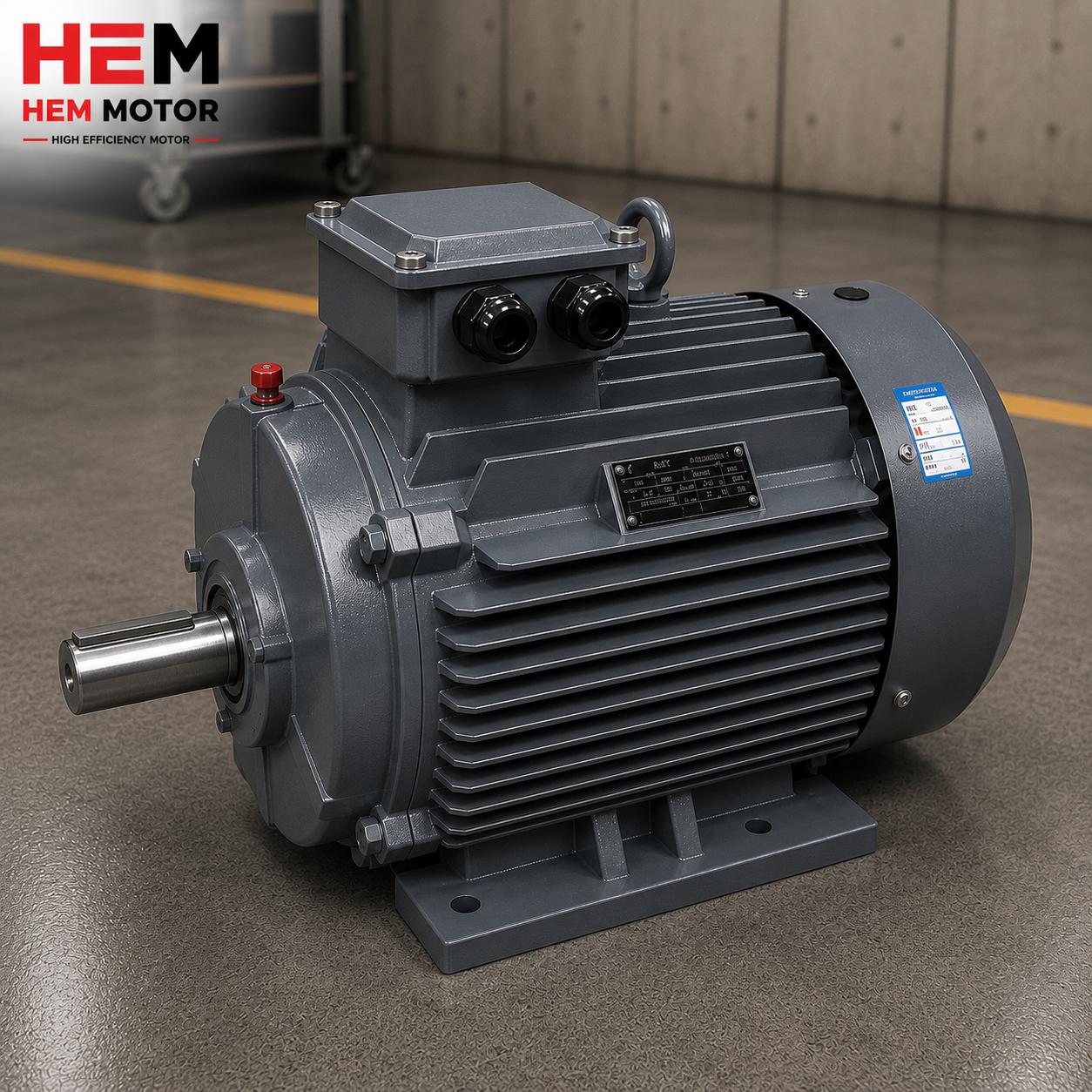

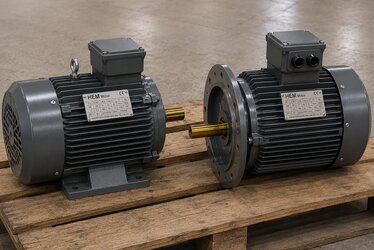
In drives that demand more power and torque than a single motor can deliver, having two motors drive the same load together is a common solution. Long belt conveyors, large-diameter mills, ship and heavy crane drives, giant fans and large mixers are often run with a tandem (two-motor) drive. The most critical issue here is that the two motors share the load fairly. If one motor is loaded more than the other, it overheats and fails prematurely, while the other runs underloaded and inefficiently. As an electric motor manufacturer and supplier, the most frequent request we receive in high-power projects is: "Supply two motors together, matched to share the load equally." This guide covers how power sharing is achieved in a tandem drive, why speed (slip) matching matters, and what to watch when purchasing the right pair of motors.
When planning a two-motor drive, current electric motor prices matter, but so does supplying the two motors as a matched pair; because two random motors, even if rated the same kW on paper, may not share the load equally in the field.
Why Choose a Tandem Drive?
The only reason to drive with two motors is not simply "more power." In practice there are several advantages:
- Exceeding the single-motor limit: At very high power, a single motor frame reaches enormous dimensions; two medium frames can be more practical for manufacturing, transport and installation.
- Redundancy and continuity: In some systems, even if one motor fails the other can keep the process running at reduced capacity, lowering downtime cost.
- Drive balance: Driving a long conveyor or a large drum from two points balances mechanical stresses and torsion.
- Fit with existing infrastructure: If the panel, cabling and starting infrastructure for one very large motor are inadequate, two smaller motors may integrate more easily into the existing plant.
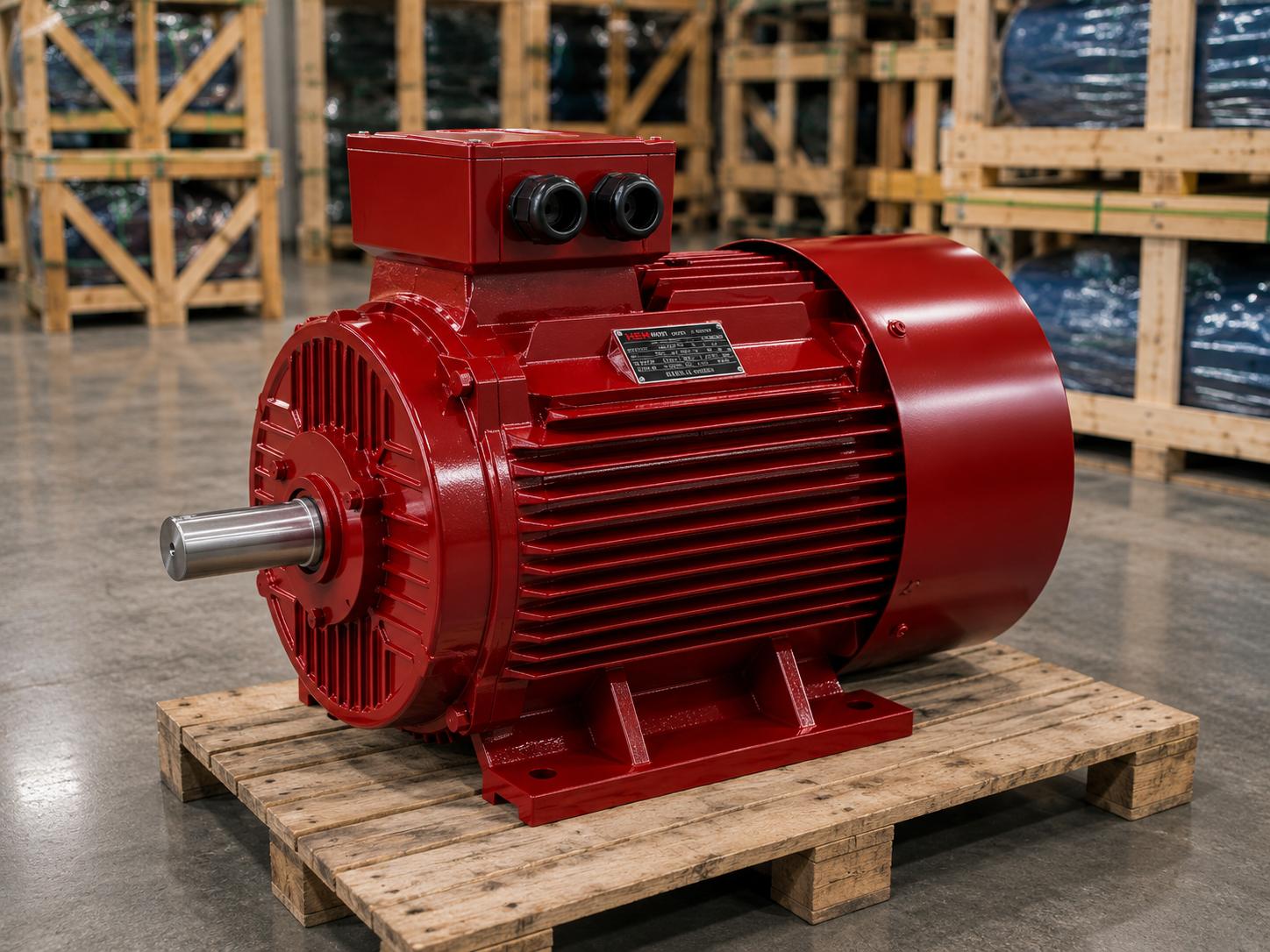
The Basis of Power Sharing: Slip Characteristics
In asynchronous motors, speed drops slightly as load increases; this difference is called slip. When you connect two motors to a common shaft or a common load, both must rotate at the same speed. Load sharing is determined precisely here:
Stiff or Soft Slip?
A motor with higher slip (a "softer" characteristic) lowers its speed a little more as load rises, passing part of the load to the other motor; this creates a self-balancing effect. Two motors with very low slip (a very "stiff" characteristic) can cause one to be loaded far more than the other even at tiny speed differences. That is why, in tandem applications, the slip characteristics of the two motors should be close to each other, ideally from the same production batch. Our article on slip and actual speed in asynchronous motors explains the speed-slip relationship in detail.
The Matched Pair Logic
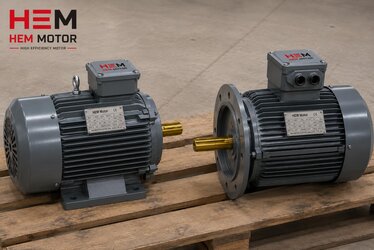
In practice, the safest method is to source the two motors from a single supply, of the same power, the same poles, the same efficiency class and, if possible, the same production batch. This makes the motors' torque-speed curves very close and shares the load almost equally.
Speed (Pole) and Torque Matching
For two motors to drive a load together, they must have the same synchronous speed, that is, the same number of poles. It is not possible to connect a 4-pole (around 1500 rpm) motor and a 2-pole (around 3000 rpm) motor to the same load. Points to watch:
- Same poles/speed: Both motors must have the same number of poles.
- Same rated power: Since the load is usually split in half, the two motors are selected with the same kW value.
- Starting torque match: For shock or high-inertia loads, the motors' torque class (Design N/H) and starting torque must also match.
You can review motor selection for shock and high-inertia loads in our motor selection for impact loads, flywheel and inertia article, and torque classes in our asynchronous motor torque classes (Design N/H) article.
Starting: Bringing Two Motors Up Together
Two large motors starting at the same time create a high starting current on the grid. So the starting strategy must be planned up front in tandem drives:
- Sequential start: Bringing the motors online with short intervals rather than simultaneously reduces starting current and the sudden grid load.
- Star-delta or soft starter: Soft starting for each motor limits both starting current and mechanical shock.
- Frequency drive (VFD): Where precise load sharing and common speed control are needed, master-slave configurations (or a single drive feeding two motors) are preferred.
When choosing between starting methods, our star-delta vs soft starter comparison makes the decision easier.
Mechanical Compatibility and Installation
For two motors to drive the same load, not only electrical but also mechanical compatibility is required. Motors connected to a common gearbox input, a common pulley line or two separate gearboxes must have:
- Shaft diameter, key dimension and shaft length compatible with the coupling/pulley,
- Frame size (IEC frame) and foot/flange dimensions that fit the base,
- Rotation directions correctly set for the application.
For shaft and key compatibility, our motor shaft diameter and key dimensions article holds the key to correct ordering. Rotation direction and phase sequence are covered in our motor rotation direction and phase sequence article.
Redundancy Strategy: The Insurance Value of Two Motors
One of the least mentioned yet most valuable advantages of a tandem drive is redundancy. In a single-motor system, when the motor fails the whole process stops; in a two-motor system, if designed correctly, even if one motor fails the other can continue the process at reduced capacity or at least provide a controlled stop. This redundancy carries critical value especially in these cases:
- Continuous production lines: In facilities where the hourly cost of downtime is high, being able to continue at partial capacity is a major advantage.
- Hard-to-reach facilities: In places such as mine sites and remote yards where a spare motor cannot be delivered quickly, the second motor is a safety buffer.
- Critical drives: If stopping a conveyor or mill halts the entire downstream line, redundancy protects the whole plant.
To support this redundancy logic, keeping one spare of the same model alongside the two motors is also a smart strategy; thus an exactly identical motor is swapped in during a failure. We covered critical spare motor planning in our critical spare motor list and stock planning article, and plant-wide motor fleet management in our motor fleet management in three-shift facilities article. Buying the two motors and the spare from the same supply, with the same specification, simplifies both compatibility and spare-parts management.
Supply Planning in a High-Power Project
Supplying two large motors together is not just a product, it is project management. Lead time, transport, lifting equipment and commissioning must be planned together. For pole selection, lead time and shipping planning in high-power motors, our high-power motor supply above 90 kW article offers a comprehensive roadmap.
Information to share before quoting: each motor's rated power (kW), poles/speed, voltage, mounting type, frame size, shaft diameter, required efficiency class (IE3/IE4), starting method and application details. The right product group for these motors is industrial general-purpose motors and high-efficiency electric motors with cast iron bodies, IP55 protection, class F insulation and 100% copper windings. As a manufacturer and supplier, providing the two motors as a matched pair prevents load-sharing problems in the field.
Common Shaft or Separate Gearboxes? Drive Architecture
How the two motors share the load varies by drive architecture. In practice there are three common structures, each requiring a different motor selection discipline:
Two Motors Directly Coupled to a Common Shaft
When two motors are connected to the same shaft (for example, to the two ends of a drum), both rotate at exactly the same speed. Here load sharing depends entirely on slip characteristics and mechanical alignment. Even the slightest misalignment puts extra load on one motor; so alignment and the use of a matched pair are critical.
Driving a Common Load With Separate Gearboxes
The two drive drums of a long belt conveyor can each be driven by a separate motor-gearbox group. In this case the gearboxes' ratios and efficiencies must also match; otherwise one group is loaded more than the other. We compared whether a geared motor or a separate motor + gearbox is preferable in our geared motor vs separate motor + reducer article.
Common Pulley-Belt Line
In applications where two motors drive a common pulley line, belt tension and pulley diameters affect load sharing. You can review motor speed and speed adjustment with pulley-belt in our motor speed and pulley-belt speed adjustment article.
Efficiency Class and the Effect of Load Sharing on Energy
In two-motor systems, efficiency is a more delicate matter than with a single motor. If the load is not shared equally, both motors operate outside their optimum efficiency point: the overloaded motor loses efficiency and life, while the underloaded one runs inefficiently at a low load ratio. Therefore:
- Same efficiency class: Both motors must be in the same efficiency class (IE3 or IE4); if one is IE3 and the other a different class, the torque-speed curves do not match.
- Correct load ratio: Distributing the total load evenly between the two motors keeps each running in its efficient load band.
- Continuous-duty capability: In high-power drives the motors usually run for long periods; 100% copper windings and class F insulation matter for life and efficiency.
We covered the right load to run a motor at, from an efficiency standpoint, in our motor load ratio and correct sizing article.
Commissioning and Field Check
When commissioning a tandem drive, load sharing must be verified in the field. The current drawn by each motor is measured and compared; if the currents are close, the load is being shared evenly. If there is a clear difference, alignment, belt tension or slip mismatch is investigated. For the general steps to follow in commissioning, our motor commissioning and first-start checklist is a practical reference. Setting the rotation direction correctly on each of the two high-power motors is also essential; a wrong direction can cause the two motors to work against each other on the common load.
Frequently Asked Questions
Can I use motors of the same kW from two different brands in tandem?
While technically possible, it is not recommended. Different brands can have different slip characteristics, torque-speed curves and tolerances, which disrupts field load sharing and overloads one motor. The safest route is to buy both motors from the same supply, in the same power, poles and efficiency class, ideally as a matched pair from the same production batch.
Why does one motor heat up more than the other?
The most common cause is uneven load sharing: mismatched slip characteristics, shaft/coupling misalignment or mechanical stress can make one motor carry the larger share of the load. The solution is to use a matched pair of motors, check alignment, and if necessary control load sharing with a frequency drive. If heating persists, motor selection and power margin should be reassessed.
Is it better to buy one large motor instead of two?
It depends on the application. A single motor means simpler control and fewer connection points. Two motors provide redundancy, easier transport/installation and drive balance. When a single motor frame reaches its practical limit at very high power, two medium-power motors are often a more feasible solution. The decision should consider your plant's control infrastructure, redundancy needs and installation conditions; our sales team can evaluate both options.