English
 Türkçe

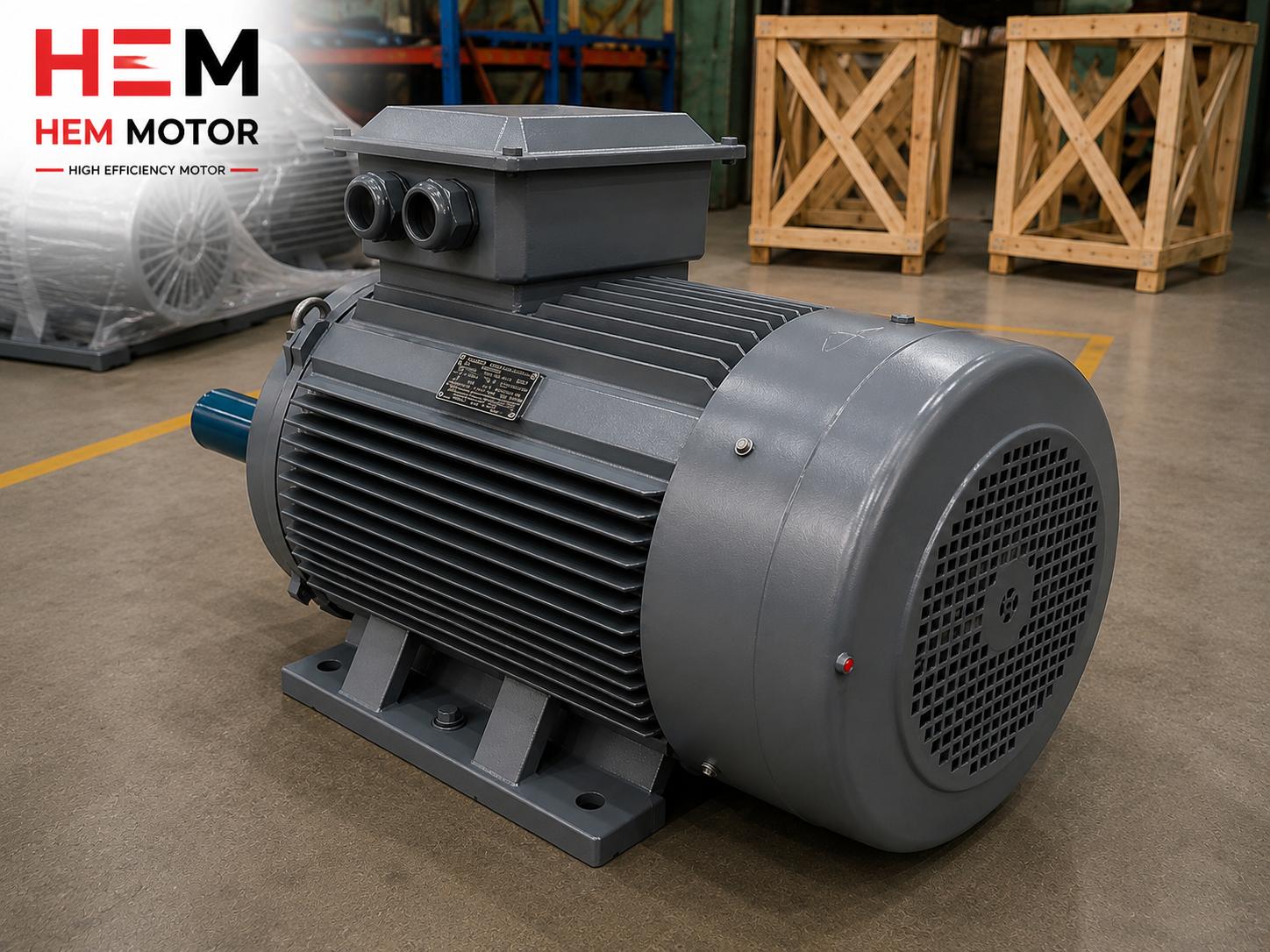

37 kW and 45 kW are two key values in the most sought-after medium-to-large power band in Turkish industry. Pump stations, large fans and blowers, conveyor drives, compressors, crushing-screening plants and general process machinery cluster around these ratings. Precisely because of this heavy demand, correct selection and fast supply of 37 and 45 kW motors directly affect a facility's commissioning schedule. In this guide we address 37 and 45 kW electric motor selection in terms of 2, 4 and 6 poles, speed, frame size and stock availability, and explain what to watch for when buying and sourcing the correct power.
At HEM Motor we supply motors in this power band from stock in IE3 and IE4 efficiency classes, with cast-iron frames and 100% copper windings, in various pole and mounting options. First, let us look at why these two ratings are so critical and at the parameters of correct selection.
Why Are 37 and 45 kW a Critical Power Band?
These two values cover a broad application area where small motors are not enough but large-power projects of 90 kW and above are not required either. Many medium-sized facilities select their main drive motor in this band. The step from 37 kW to 45 kW is often driven by a small capacity increase or a safety-margin requirement; it is therefore important to understand the difference between the two ratings correctly. A motor chosen too low is constantly stressed and its life is shortened; a motor chosen too high is both more expensive and loses efficiency and power factor at low load.
When deciding in this power band, not only the kW value but also the speed (number of poles), frame size and mounting type must be determined together. The wrong pole count or wrong frame means on-site incompatibility and delay.
2, 4 and 6 Poles: Speed Selection
In an asynchronous motor, speed is set by the number of poles. 37 and 45 kW motors are offered at three basic speeds, each aimed at a different application:
- 2-pole (about 3000 rpm): High speed; centrifugal pumps, high-pressure fans, some compressor applications. High speed produces lower torque at the same power.
- 4-pole (about 1500 rpm): The most common and most stocked choice; conveyor, general process, fan, reducer drive. The torque-speed balance is ideal.
- 6-pole (about 1000 rpm): High torque, low speed; crushers, heavy-starting machines, large-diameter fans. Provides higher torque than 4-pole at the same power.
Our guide on asynchronous motor 2, 4, 6 pole selection, which addresses the logic of pole selection by application, shows with examples which speed suits which job. An important point: a motor of the same kW rating generally sits on a larger frame size and is heavier as the pole count rises (speed falls).
Frame Size and Mounting Type
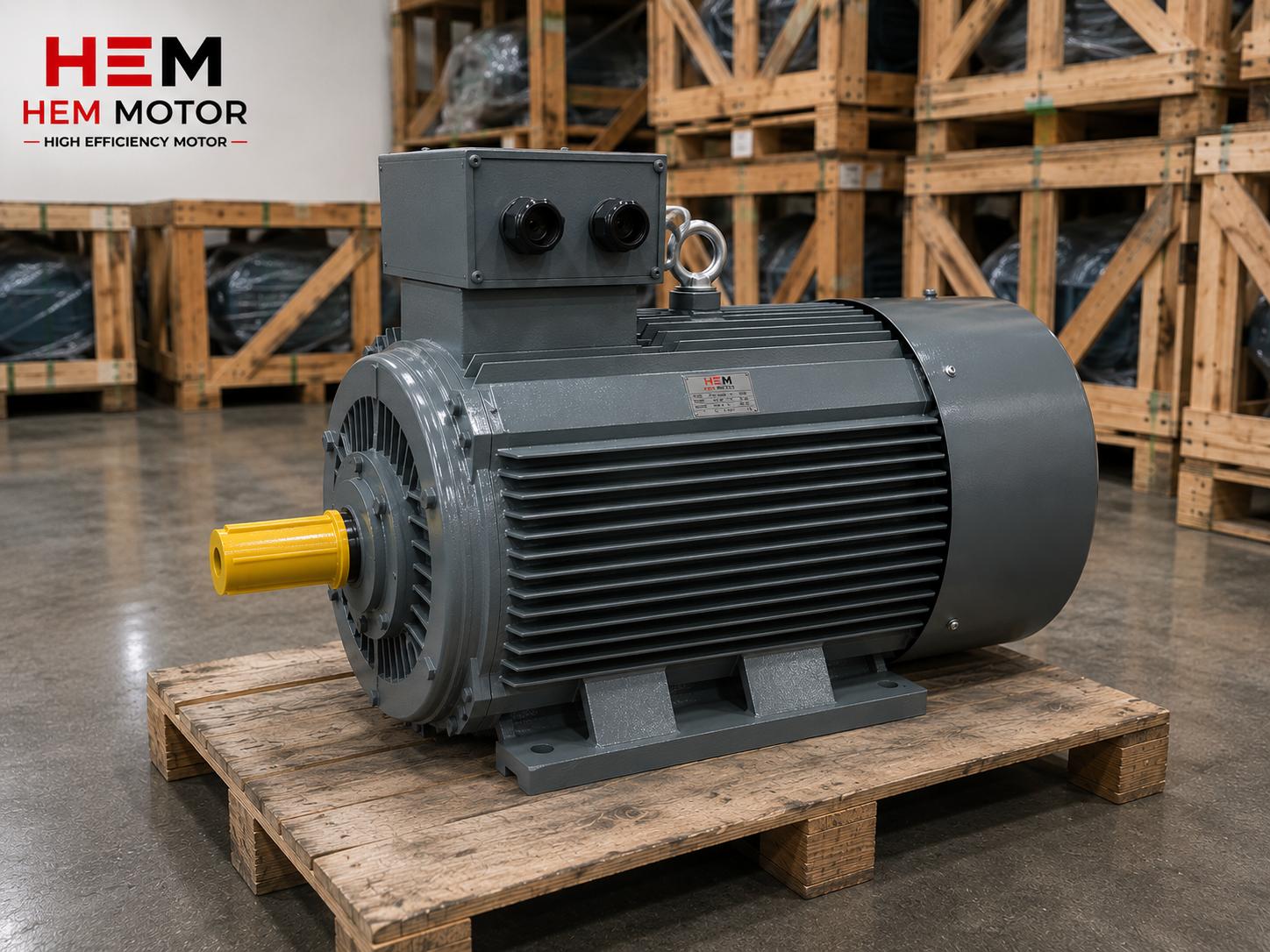
37 and 45 kW motors are typically produced in the 200-225 frame sizes; the frame size can vary with the pole count. The correct frame size determines whether the motor's shaft height, shaft diameter and hole spacing fit the existing machine. When replacing a motor, knowing the frame size and mounting type of the existing motor is essential for an exactly compatible replacement.
- B3 (foot-mounted): Motors bolted to a floor or base in coupled and belt-pulley drives.
- B5 (large flange): Motors connected directly to a pump or reducer by flange.
- B35 (foot + flange): The most flexible mounting type, connected both to the chassis by feet and to the machine by flange.
To check the suitability of the mounting type for your machine you can review our electric motor mounting types page. In this power band the shaft diameter and key dimensions are also critical; they must be confirmed before ordering.
Efficiency Class: IE3 and IE4
37 and 45 kW fall squarely within the power range where the IE3 class is mandatory for direct-on-line three-phase motors. On a continuously running drive, the energy cost at these ratings is very high; moving to the IE4 efficiency class therefore pays back the initial price difference in a short time. On regulations and the payback calculation, our article on IE3 vs IE4 electric motor investment guides you with amortization examples.
Stock Availability and Supply Planning
Because 37 and 45 kW motors are high-demand ratings, stock management is the most important factor determining lead time. The 4-pole (1500 rpm) versions in particular are the most frequently stocked configurations; lead time may vary for 2- and 6-pole versions and special mounting types. We recommend the following steps in supply planning:
- Define your need clearly in terms of kW, poles, mounting type, shaft diameter and efficiency class.
- Plan a spare motor for critical drives from the outset; a failure at this rating can halt production.
- For large-power projects, clarify the lead time, transport and commissioning schedule in advance.
For projects just above this power band, our guide on supply of high-power motors above 90 kW, and for critical spare-stock planning our article on the critical spare-motor list for facilities, are complementary resources. For all high-efficiency motor options and current electric motor prices you can contact us.
Shaft Diameter, Key and Connection Details
When adapting 37 and 45 kW motors to a machine, kW and mounting type alone are not enough; the shaft diameter and key dimensions must also match exactly. In this power band the shaft diameters vary with the frame size, and the coupling, belt-pulley or reducer connection is designed to this dimension. A wrong shaft diameter requires a connection adapter on site or renders the motor unusable. When replacing a motor, the existing motor's shaft diameter, keyway dimension and shaft length must always be confirmed.
- Shaft diameter: The coupling and pulley sit on this dimension; a mismatch directly creates a mounting problem.
- Keyway: The key transmitting torque to the shaft must be the correct size; otherwise play and wear occur in torque transmission.
- Shaft length: Critical especially for double-shaft-end or encoder-ready requests.
These details should be clarified before ordering, especially to avoid time loss in emergency replacement situations.
Starting Method and Inrush Current
37 and 45 kW motors are ratings that require attention in terms of inrush current. With direct-on-line (DOL) starting these motors briefly draw several times their rated current; this can cause a voltage dip in the grid and problems especially in generator-fed facilities. For this reason, star-delta or soft-starter starting is often preferred at these ratings. In applications using a frequency drive, starting is controlled and smooth.
The choice of starting method is determined by the motor's power and the application's starting characteristic. We addressed the inrush-current problem and its solutions on generator-fed sites in our article on motor selection on generator-fed sites. Correct selection of the starting method protects both motor life and the safety of the facility's electrical infrastructure.
Cast-Iron Frame and Heavy-Duty Resistance
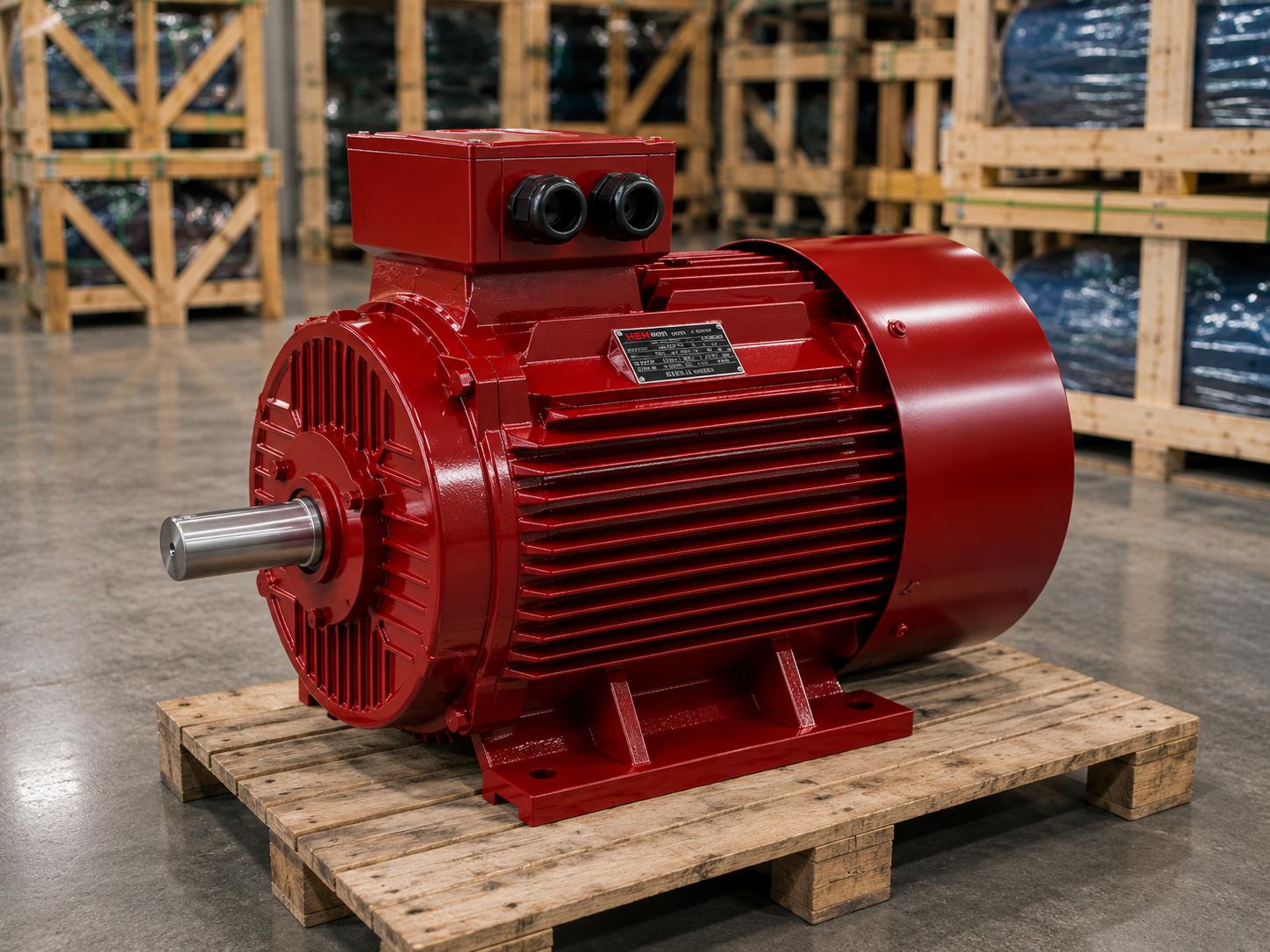
Most applications using 37 and 45 kW motors are under heavy-duty conditions: vibration, dust, continuous load and occasional impact. Under these conditions a cast-iron frame offers far higher mechanical strength and heat-dissipation capacity than aluminium. Cast-iron framed motors damp vibration better and run with long service life. The choice of frame material should be made according to the environment in which the motor will operate.
We compared the difference between cast-iron and aluminium frames and which is preferred under which conditions in detail in our article on cast iron vs aluminium frame motor selection. In this power band, the cast-iron frame is the standard choice for heavy-duty applications.
Correct Power, Fast Delivery with HEM Motor
At high-demand ratings such as 37 and 45 kW, the biggest advantage is being able to deliver the correct configuration quickly. At HEM Motor we hold stock in this band in IE3 and IE4 classes with various pole and mounting options; we evaluate your project's speed, frame and mounting requirements together and recommend an exactly compatible motor. Our standards of cast-iron frame and 100% copper windings ensure long service life under heavy-duty conditions. In three-shift facilities, motor fleet management and the replacement schedule are also part of the supply plan; our article on motor fleet management in three-shift facilities provides guidance on this.
Imported or from Domestic Stock? The Lead-Time Decision
A decision that often arises at high-demand ratings such as 37 and 45 kW is whether to source the motor as an import or from domestic stock. With imported motors the lead time can stretch out due to customs, transport and scheduling; delivery from stock, by contrast, is a decisive advantage especially in emergency replacement and unplanned downtime situations. When a production line's main drive motor fails, waiting weeks for the motor can halt the entire facility. For this reason, in this power band stock availability is often a more important decision criterion than price.
We addressed the comparison of lead time, warranty and service in our article on imported motor vs from domestic stock. You can find ways to reduce cost in wholesale purchasing in our guide on reducing cost in wholesale electric motor purchasing. In this power band, the right supply strategy protects both cost and production continuity.
The Long-Term Cost of the Efficiency Class
37 and 45 kW motors consume a great deal of energy on continuously running drives. The annual energy cost of a motor at this rating soon exceeds its purchase price. For this reason the choice of efficiency class is the most important long-term decision in this band. IE3 is the mandatory minimum class; however, moving to IE4 quickly pays back the initial price difference on a continuously running drive. A high-efficiency motor also heats up less, which extends winding and bearing life.
When evaluating the total cost of ownership, the purchase price, energy consumption, maintenance and expected life must be considered together. Replacing an old, low-efficiency motor at this rating with an IE4 equivalent often amortizes itself within a few years and then provides a net saving. For this reason, in 37 and 45 kW motor selection, efficiency is not merely regulatory compliance but a direct operating-economics decision.
Frequently Asked Questions
Is it safer to buy 45 kW instead of 37 kW?
Stepping up one power rating for safety margin may seem sensible, but a motor chosen too high runs at low load; this means a drop in power factor and efficiency and an unnecessary initial investment. The correct approach is to calculate the machine's actual shaft power and leave a suitable service-factor margin. If your load constantly stresses 37 kW, 45 kW may be the right choice; but if the load is clearly below 37 kW, stepping up is not economical. If you send us your requirement, we will determine the correct power together.
Do 4-pole and 6-pole motors of the same 45 kW rating sit on the same frame?
No. At the same kW rating, as the pole count rises (speed falls) the motor generally sits on a larger frame and is heavier, because producing the same power at lower speed requires higher torque and a larger magnetic cross-section. A 6-pole motor may therefore require a larger frame, a different shaft diameter and different mounting dimensions than its 4-pole equivalent. When adapting a motor to a machine, the pole count, frame and shaft dimensions must be confirmed together.
Are 37 and 45 kW motors usually in stock, and what is the lead time?
Because these ratings are in the most sought-after band, the 4-pole (1500 rpm) versions and standard mounting types in particular are frequently stocked and delivered quickly. Lead time may vary for requests such as 2- or 6-pole, special mounting type, special shaft diameter or higher protection class. Sending us your exact configuration lets us share the current stock status and lead time immediately; for critical drives we recommend planning a spare motor from the outset.