English
 Türkçe

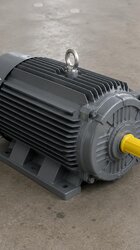
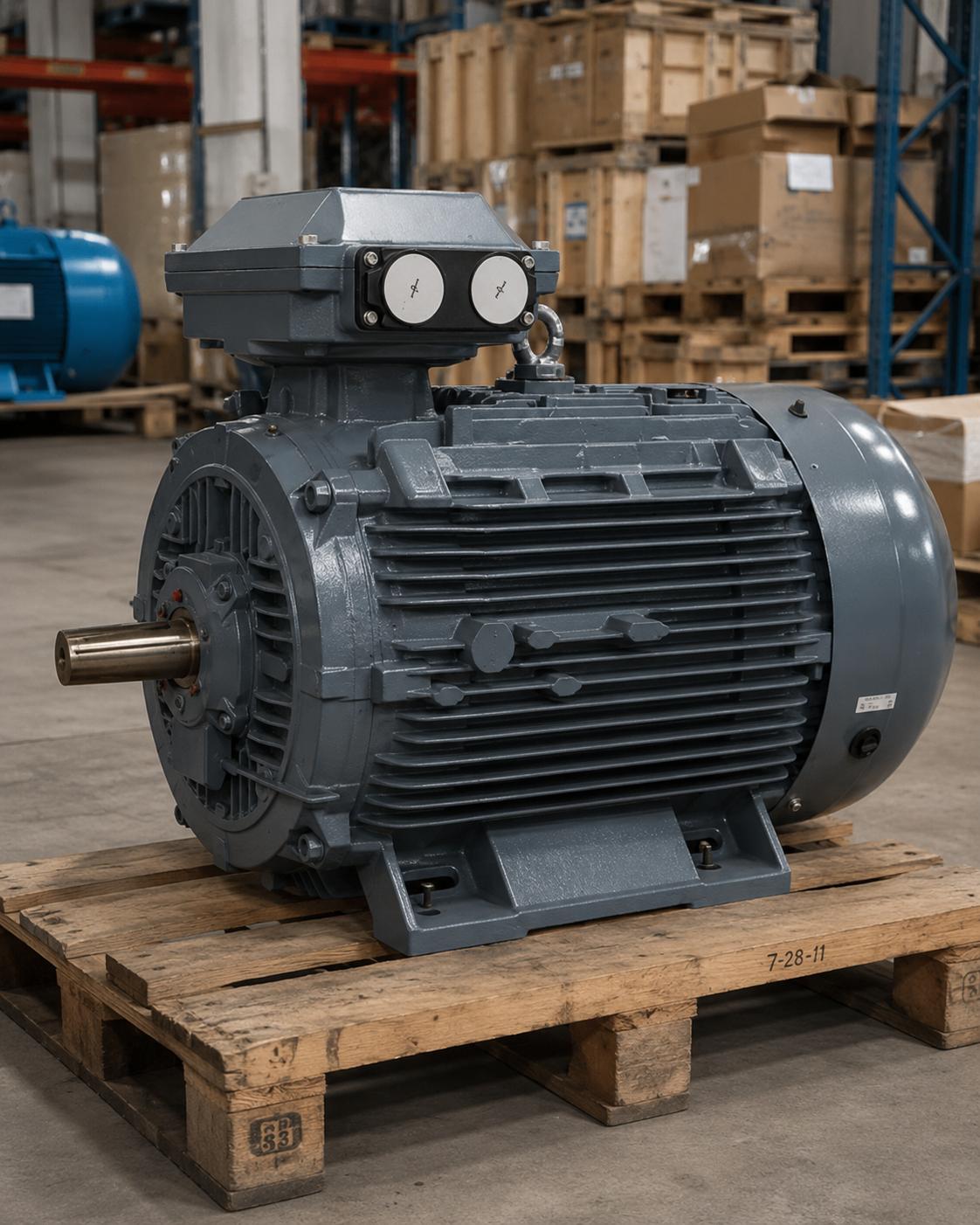

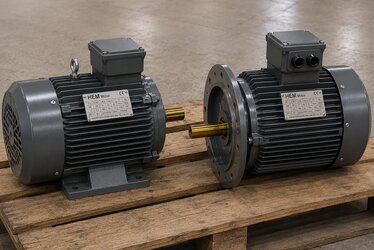
On construction sites where there is no grid electricity, or where it has not yet been connected, all equipment is often fed from a single generator. From the concrete batching plant to cranes, from water pumps to compressors, every motor is connected to the same source. At this point, the frustrating problem many site managers face is this: the moment a large motor starts, the lights dim, another device stops, or the generator locks up entirely. The blame usually falls on a "faulty motor" or "insufficient generator"; yet the real cause is the nature of a three-phase asynchronous motor's starting current and the fact that the motor and generator were selected without being considered together. In this guide we cover the physics of the starting-current problem, why a motor that causes no issue on the grid collapses the system on a generator, and field-proven practical starting solutions.
Our aim is to enable the technical team building the site electrical infrastructure to match the right electric motor and generator from the outset, so the system does not collapse during a critical pour or lift.
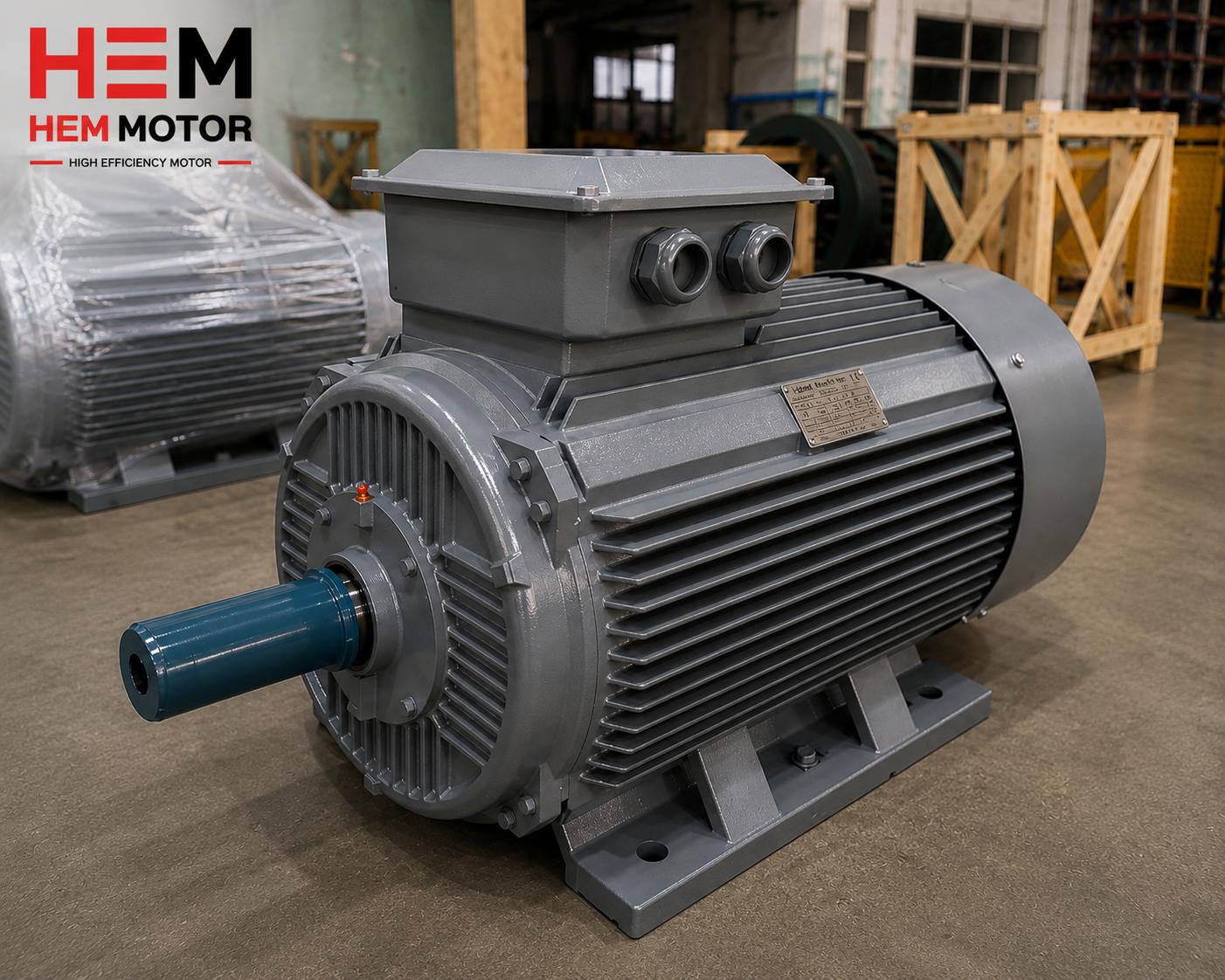
Why Is the Starting Current So High?
When a three-phase asynchronous motor is energized from standstill, its rotor is not yet turning, so it presents extremely low impedance, a state close to a short circuit. For this reason, the motor draws about 3 to 7 times its rated current at start. For example, while a 30 kW motor's rated current is around 55-60 A, its starting current with direct-on-line (DOL) starting can easily exceed 300 A. Even if this surge lasts only a second or two, the source must be able to meet that instantaneous demand.
On the grid this surge usually goes unnoticed, because the distribution grid's short-circuit power is enormous compared with a single motor's starting surge and "absorbs" it. But a generator is a limited source: both the current it can produce and the ability of its (diesel) engine to maintain speed under sudden load are limited.
- Rated current: The normal current the motor draws during continuous operation.
- Starting current: A short surge reaching 3-7 times the rated current at the moment of starting.
- Starting torque: With a loaded start (for example a full conveyor or pump) the current surge can last even longer.
What Happens at the Generator? Frequency Drop and Voltage Collapse
A generator consists of two basic parts: the diesel engine that produces mechanical power and the alternator that produces electricity. When a large electric motor starts, the sudden current demand causes one or both of two problems.
Frequency Drop (Speed Loss)
The sudden load acts like a brake on the diesel engine. If the diesel engine's governor cannot respond to this load immediately, the speed drops and, correspondingly, the frequency falls below 50 Hz. This sudden drop in frequency can disable sensitive electronic devices, drives and control panels.
Voltage Collapse
The high current demand strains the alternator's excitation system; if the voltage regulator (AVR) cannot respond fast enough, the voltage collapses momentarily. Dimming lights, dropping contactors and stopping motors are the visible symptoms of this voltage collapse. In other words, one motor's start affects all other equipment connected to the system.
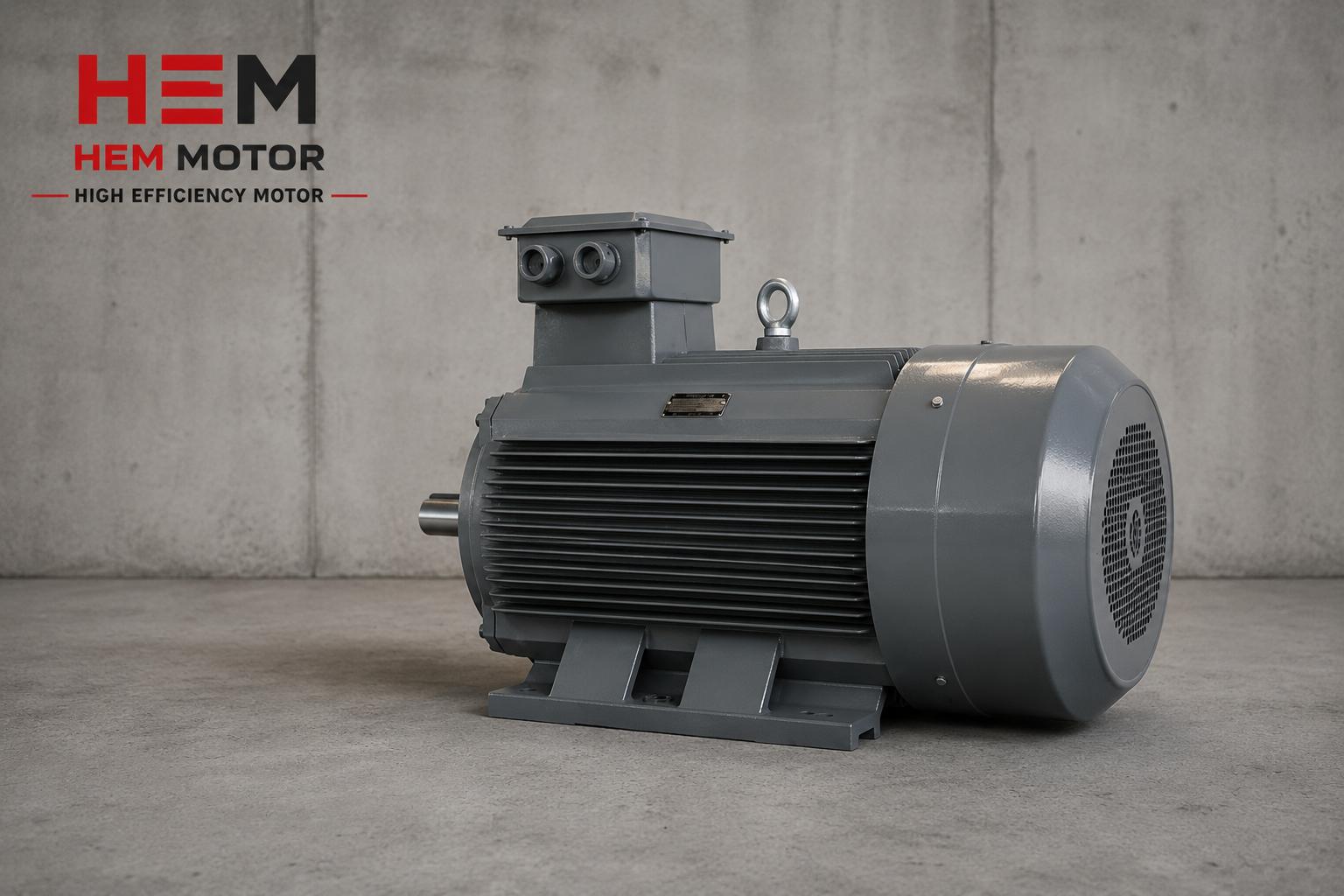
Correct Sizing: Generator Power Is Selected According to the Motor
The most common mistake on site is selecting the generator by looking only at the total rated power (kW) of the motors. What is decisive, however, is whether the generator can handle the starting surge of the largest motor while carrying its other loads. As a general rule, the generator power should be selected to be several times the power of the largest direct-started motor, because the apparent power (kVA) drawn during starting far exceeds the rated value.
- Total continuous load: The sum of rated powers of all motors running simultaneously.
- Starting surge of the largest motor: The kVA demand of the system's largest motor at the moment of starting.
- Loading sequence: Energizing motors in sequence rather than simultaneously spreads out the surge.
For this reason the motor and generator must be considered together. The same motor starts smoothly on a correctly sized generator while collapsing the system on a small one.
Starting Solutions for the Field
There are several practical ways to reduce the starting surge. Which one to choose depends on the motor power, the load type and the budget.
Star-Delta Starting
This is the most classic and economical method. The motor is first started in star connection at reduced voltage, then switched to delta once the speed has risen. It reduces the starting current to about one-third. However, since it also reduces the starting torque, it may not always be suitable for applications requiring a loaded start (for example a full crusher).
Soft Starter
It accelerates the motor smoothly by electronically ramping up the voltage. It significantly reduces the starting surge and mechanical shocks. It is ideal for loads such as pumps, fans and conveyors and substantially eases the sudden load on the generator.
Frequency Converter (VFD / Inverter)
This is the most flexible solution. By starting the motor from zero frequency, it keeps the starting current almost at the rated current level. It also provides speed control and energy savings. Although it offers the lowest starting surge for a three-phase electric motor, its initial cost is higher than the other methods and it may require an inverter-compatible motor.
Load Sequencing and Operating Discipline
Alongside hardware solutions, a simple operating discipline also makes a big difference: energizing motors in sequence rather than simultaneously. Starting the largest motor while the generator is still lightly loaded, then adding the others gradually, reduces the chance of the surge collapsing the system. Automatic sequencing panels can do this automatically with timing relays.
In terms of stock and supply, planning the motor powers, starting methods and generator capacity together when building the site infrastructure prevents outages and delays from the outset. For up-to-date electric motor prices and stock availability, the healthiest approach is to clarify your technical specifications and request a quote. For a wider product range you may also evaluate the soft-starter motor and inverter-compatible motor options.
The Role of the Diesel Engine and Alternator: Two Overlooked Limits
Thinking about the starting problem only from the electric motor side is incomplete; both components of the generator play a decisive role in handling the surge. The diesel engine's governor type determines how fast it responds to a sudden load. Old mechanical governors respond more slowly than electronic ones and cause greater speed loss under sudden load. Generators with modern electronic governors recover the frequency dip during motor starting much faster.
On the alternator side, the capacity of the AVR (automatic voltage regulator) and the excitation system matters. At start the motor demands reactive power (kVAR); if the alternator's excitation system cannot meet this demand quickly, the voltage collapses. Therefore two generators of the same kW power can show very different starting performance depending on governor and AVR quality. When selecting a generator for the site, you should look not only at the nameplate power but also at the sudden-load acceptance capability.
- Governor type: Electronic governors maintain frequency better under sudden load.
- AVR and excitation: A strong excitation system limits the voltage collapse at start.
- Sudden-load acceptance: The "acceptable load in one step" value on the generator data sheet indicates starting capability.
Cabling and Voltage Drop: The Site's Invisible Problem
On sites, motors often work at points far from the generator and power is carried over long cables. The voltage drop in long, thin-section cables aggravates the starting-current problem further. The already high current at start causes an additional voltage loss in the cable resistance; this lowers the voltage at the motor terminal and weakens the starting torque. As a result the motor either starts very slowly or cannot start at all, drawing excess current and tripping the thermal protection.
For this reason, in the site electrical infrastructure, cable cross-section must be calculated correctly according to motor power and distance. The practical rule is that the voltage drop at start should remain below a certain limit (usually 5%). Where long-distance feeding is required, increasing the cable cross-section is often a more economical solution than increasing the generator. Correct cabling, combined with the right starting method, lets the motor run as reliably on the generator as on the grid.
Information to Send the Supplier
When procuring a motor for the site, clearly conveying the following information to the supplier ensures you get the right solution on the first attempt: motor power (kW), speed and number of poles, load type (loaded/unloaded start), the starting method to be used (DOL / star-delta / soft starter / VFD), generator capacity (kVA), other loads on the same system, protection class (usually IP55) and voltage-frequency values. This clarity guarantees the correct match of both the motor and the starting equipment and prevents surprises on site.
Frequently Asked Questions
My motor ran fine on the grid, why does it collapse the system on a generator?
Because the grid's short-circuit power is very high and absorbs the motor's starting surge unnoticed. A generator, however, is a limited source; the same starting surge drops its frequency or collapses its voltage. The problem is not in the motor but in the motor-generator matching.
How many times the motor power should the generator be?
The exact ratio depends on the starting method. With direct starting, a generator several times the largest motor's power is needed, whereas with a soft starter or VFD this ratio falls significantly. Therefore generator sizing must be done together with the chosen starting method.
Which starting method is best?
There is no single "best." The economical solution is star-delta; a soft starter is ideal for pumps and fans; if speed control and the lowest starting surge are needed, a VFD is the most suitable. The choice is made according to the load type, starting torque requirement and budget.