English
 Türkçe

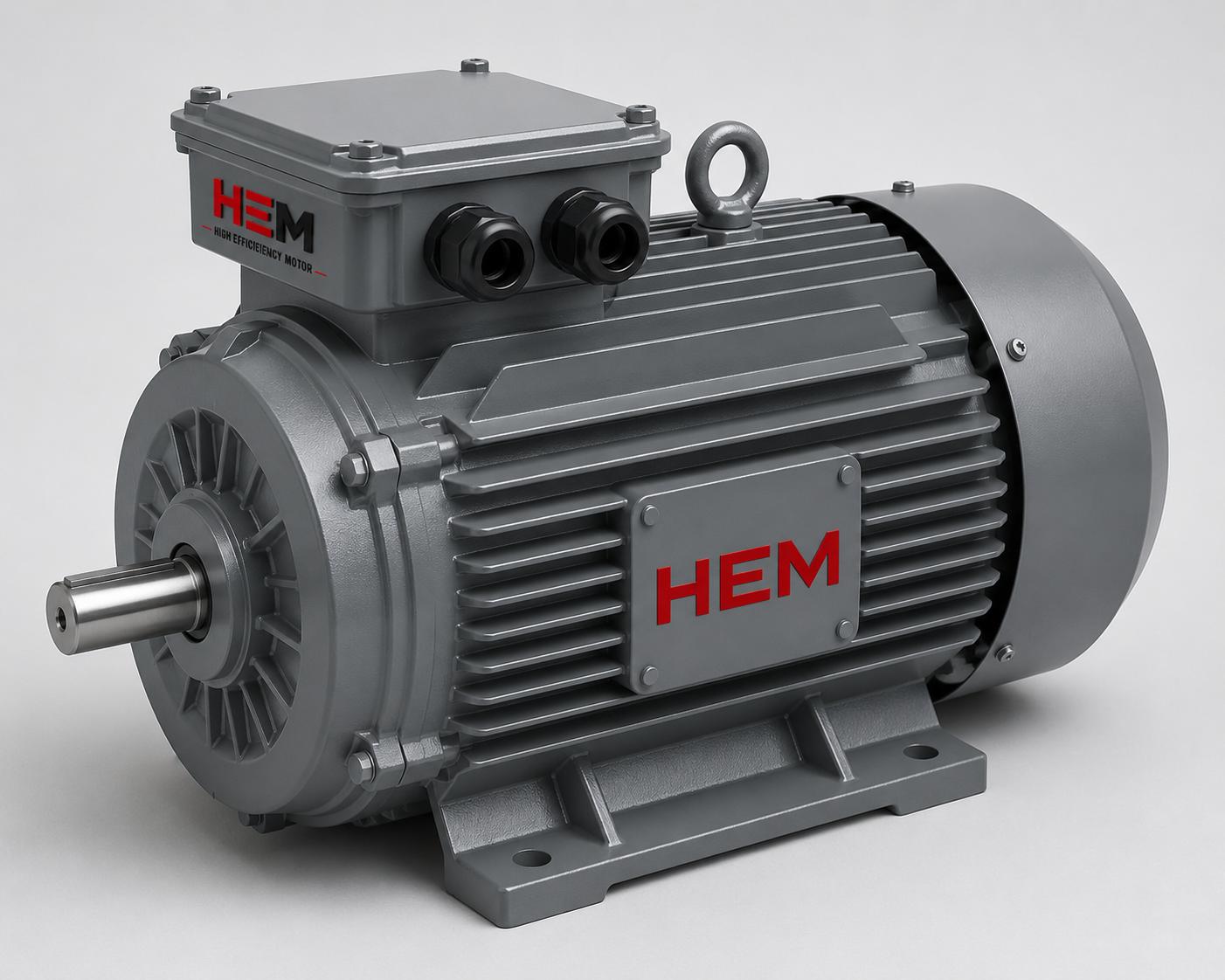

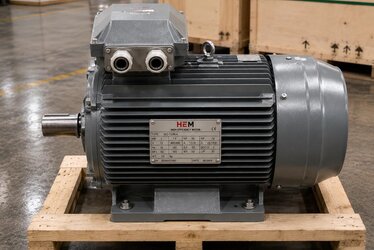
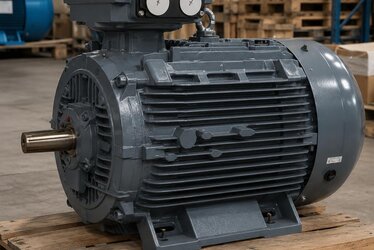
In plants that feed an IE4 super premium efficiency electric motor from a frequency inverter (VFD), there is a common and often misdiagnosed problem: the residual current device (RCD) trips when there is no real fault at all. The operator starts the motor, the drive engages, and the panel's earth leakage protection immediately drops out. The first thought is "the motor is faulty"; yet in most cases the cause is the high-frequency leakage currents that arise in a VFD-fed efficient motor system. In this article we cover where leakage current comes from, RCD compatibility, methods of preventing nuisance tripping, and correct motor-drive-protection procurement.
What Is Leakage Current, and Why Does It Increase in an IE4 + VFD System?
Earth leakage current is the unwanted current that flows from the phase conductors towards earth even during normal operation. Even in a perfectly sound motor and cable system, a small current passes to earth through the capacitive coupling between the conductors and earth. In a motor fed directly from the mains (DOL), this current is usually very small and does not affect the RCD. But the situation changes when a frequency inverter is placed in between.
VFDs use IGBTs that switch at high frequency to feed the motor. This fast switching creates sharp-edged pulses (high dv/dt) in the output voltage. These pulses cause high-frequency leakage currents to flow through the capacitance of the motor cable and motor winding to earth. As a result, the total leakage current in a VFD-fed motor system is noticeably higher than with DOL supply. You can find the fundamentals of drive technology in our article on frequency inverter with asynchronous motor.
Is This a Motor Fault?
Most of the time, no. A new IE4 motor with sound insulation produces high-frequency leakage current together with the drive; this is not an insulation fault but a phenomenon arising from the nature of the system. To distinguish a real insulation fault, the motor's insulation resistance should be measured; we described this test in our article on insulation resistance and megger test. If the insulation is sound, the RCD tripping is most likely caused by high-frequency leakage current, and the solution is not to replace the motor but to correct the protection and filtering strategy.
RCD Types and VFD Compatibility
Residual current devices are classified according to the type of current they can detect, and this classification is the main determinant of nuisance tripping in VFD systems.
- Type AC: Detects only sinusoidal AC leakage current. It behaves unreliably with the DC-component and high-frequency leakage that appears at a VFD output; this type is not suitable for drive circuits.
- Type A: Detects AC and pulsating DC leakage current. It may be sufficient for some single-phase applications but can be inadequate for the smooth DC leakage produced by three-phase drives.
- Type B: Detects AC, pulsating DC and smooth DC leakage current; it is the recommended type for three-phase motor circuits fed by a frequency inverter. Type B is preferred for correct protection in drive systems.
Choosing the wrong RCD type carries two risks at once: either it fails to provide protection in the event of a real fault (a safety risk) or it trips needlessly on high-frequency leakage (a production loss). We covered the general motor protection logic collectively in our article on thermal, relay and fuse selection.
Threshold Current and Delay Setting
The RCD's trip threshold and delay characteristic also play a role in compatibility. A device with a very low threshold can trip even on the system's natural high-frequency leakage. The circuit's leakage current profile and the device's threshold must be selected to match; where necessary, a separate RCD should be allocated to each motor to prevent the total leakage accumulating on a single device. Connecting several drive-fed motors to the same RCD is one of the most common reasons for leakage currents adding up and exceeding the threshold.
Preventing Nuisance Tripping: Practical Solutions
There are several complementary measures to reduce needless RCD tripping on a VFD-fed IE4 motor:
- Correct RCD type: Using a Type B residual current device in a three-phase drive circuit is the first and most important step.
- Shortening cable length: As the motor cable lengthens, capacitive leakage increases. Keeping the distance between drive and motor as short as possible directly reduces leakage current.
- EMC-compliant shielded cable and correct earthing: Using shielded motor cable and earthing the shield 360 degrees (through the gland) at both ends gives the high-frequency current a controlled path.
- Drive output filter: A dv/dt filter or sine filter softens the switching pulses and reduces leakage current; it is especially effective on long cables.
- Load distribution: Distributing drive-fed motors across different RCDs limits the total leakage accumulating on a single device.
- Switching frequency setting: Setting the drive's switching frequency to an appropriate level balances leakage current against motor noise.
Most of these measures are applied on the installation and panel side; on the motor side, sound insulation, correct terminal connection and proper earthing form the foundation. We described the correct motor-side application of earthing in detail in our article on motor earthing and electrical safety.
EMC Earthing and the Importance of the Terminal Side
If high-frequency leakage current cannot find a low-impedance return path, it flows through unwanted routes (for example through the RCD or through the bearing). For this reason EMC earthing is not an "optional improvement" but a basic requirement of a drive system. A clean, proper, low-resistance earth connection in the motor terminal box, and a 360-degree termination of the shielded cable with an EMC gland, direct the leakage current into a controlled channel. You can find the correct cabling and gland selection on the terminal box side in our article on terminal box and cable connection.
Bearing Currents: The Invisible Cost of Leakage Current
Another problem caused by high-frequency leakage current in VFD-fed motors is bearing currents. The drive's switching can cause a voltage to build up on the motor shaft; when this voltage exceeds a certain threshold, it punches through the oil film between the bearing balls and races, creating tiny sparks. Over time these sparks create micro-pits (fluting) on the bearing surface and shorten bearing life. Nuisance tripping of the RCD and bearing currents often share the same root cause, namely high-frequency leakage current. For this reason measures such as EMC earthing and shielded cable protect not only the protection device but also the motor's bearing life. In drive operation, additional solutions such as insulated bearings or a shaft grounding brush are evaluated where needed.
Seen from this angle, when buying an efficient motor that will run with a drive, you should look not only at the efficiency class but also at drive compatibility. Sound insulation, suitable earthing points and a terminal box suitable for EMC-compliant cabling are the foundation of long-life operation of the motor with the drive.
Single Phase or Three Phase? The Difference in Protection
Earth leakage protection also differs according to whether the motor is fed single-phase or three-phase. While the leakage current profile can be simpler in low-power single-phase applications, in three-phase drive systems the leakage current is more complex in both amplitude and frequency content. For this reason the recommendation for a Type B device becomes even more pronounced in three-phase drive circuits. We covered the basic differences between single-phase and three-phase supply, and which is preferred in which application, in our article on single-phase or three-phase motor selection. When the right supply and the right protection are planned together, both safety and uninterrupted operation are ensured.
A point not to be forgotten is that earth leakage protection is a "safety" function. Completely disabling the protection or raising its threshold excessively in order to prevent nuisance tripping endangers life and property safety in the event of a real earth fault. The right approach is not to remove the protection, but to set up a protection that can distinguish the system's natural leakage from real fault current by choosing the right type, shortening the cable and filtering.
Correct Motor and System Procurement
As a HEM Motor manufacturer and seller, we emphasise that the large majority of leakage-related nuisance tripping complaints are solved at the level of the whole system. When selecting an IE4 motor to run with a drive, the motor's drive-compatible insulation, correct earthing points and a terminal box suitable for EMC-compliant cabling all matter. We covered the savings potential of an efficient motor in pump and fan applications on VFD systems in our article on efficient motor and frequency inverter savings.
When you share your motor's power, speed and drive type, we can determine together the right IE4 motor for your application and the recommended protection approach. You can consult our team for current electric motor prices and drive-compatible IE4 model options. A correctly selected motor-drive-protection trio both eliminates nuisance tripping and lets you use the energy gain of IE4 efficiency without interruption.
Frequently Asked Questions
If my RCD keeps tripping, is my motor faulty?
Most of the time, no. High-frequency leakage currents naturally occur in a VFD-fed motor and can trip the RCD even on a sound motor. First have the motor's insulation resistance measured; if the insulation is sound, the problem is not in the motor but on the protection type, cabling or filtering side. The solution is usually not to replace the motor but to use a Type B device, shielded cable and proper earthing.
What type of residual current device should I use in a drive motor circuit?
A Type B residual current device is recommended in motor circuits fed by a three-phase frequency inverter, because Type B can detect AC, pulsating DC and smooth DC leakage current. Type AC and, in most cases, Type A either behave unsafely or trip falsely on the DC-component and high-frequency leakage at the drive output.
Does cable length really affect leakage current?
Yes. As the motor cable lengthens, the capacitance between the conductors and earth increases, which raises the high-frequency leakage current. Keeping the distance between drive and motor short, using shielded EMC cable and, where necessary, adding a dv/dt or sine filter noticeably reduces leakage current.