English
 Türkçe



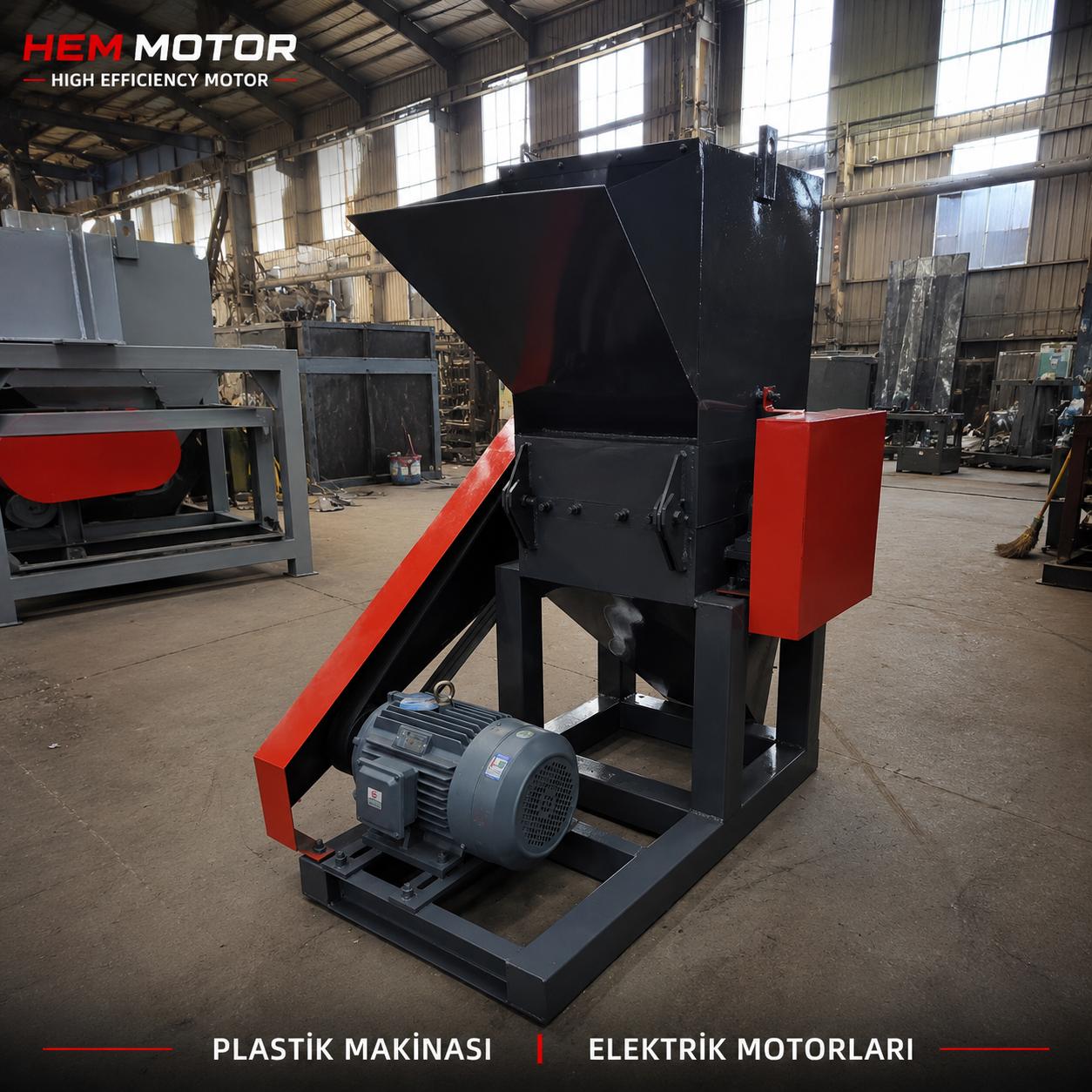

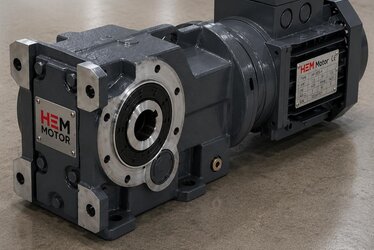
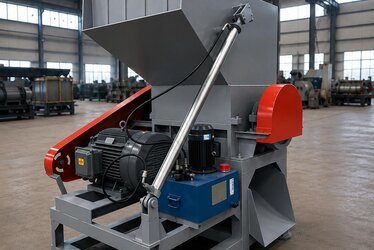
The vertical shaft impactor (VSI) crusher creates one of industry’s toughest drive applications in sand making and aggregate shaping. At the heart of a VSI is a heavy rotor that throws material at high speed, and the motor that turns this rotor must cope simultaneously with very high speed and very high inertia, sudden shock loads and a dense dust environment. The rotor throws stone by centrifugal force at speeds of 50–80 m/s; to reach this speed the motor must accelerate a large inertial mass, then absorb the shock loads caused by sudden material feed throughout operation. A wrongly selected motor either burns at start, trips on sudden load, or fails quickly from dust. In this article we explain the high-speed requirement of the VSI rotor drive motor, the inertia and start difficulty, the role of belt-sheave drive, dust-IP protection and correct power-speed selection with concrete tables.
Why Is Rotor Drive Hard in a VSI Crusher?
In a VSI, crushing happens not by squeezing stone in a jaw but by the stone thrown from the rotor striking an impact wall or other stone. So the rotor must reach very high peripheral speed. The drive difficulty falls under three headings:
- High speed: rotor tip speed is typically 50–80 m/s; this often needs a 2-pole (~3000 rpm) motor or speed step-up via belt-sheave.
- High inertia: a heavy rotor + sheave means a large GD²; run-up takes long and heats the motor.
- Sudden shock load: when material enters the rotor suddenly the torque spikes; the motor must take this shock.
So selecting a VSI drive motor needs far more engineering than choosing a standard pump or fan motor. For impact load and flywheel inertia, our article on impact load, motor, flywheel inertia and crusher is a fundamental reference.
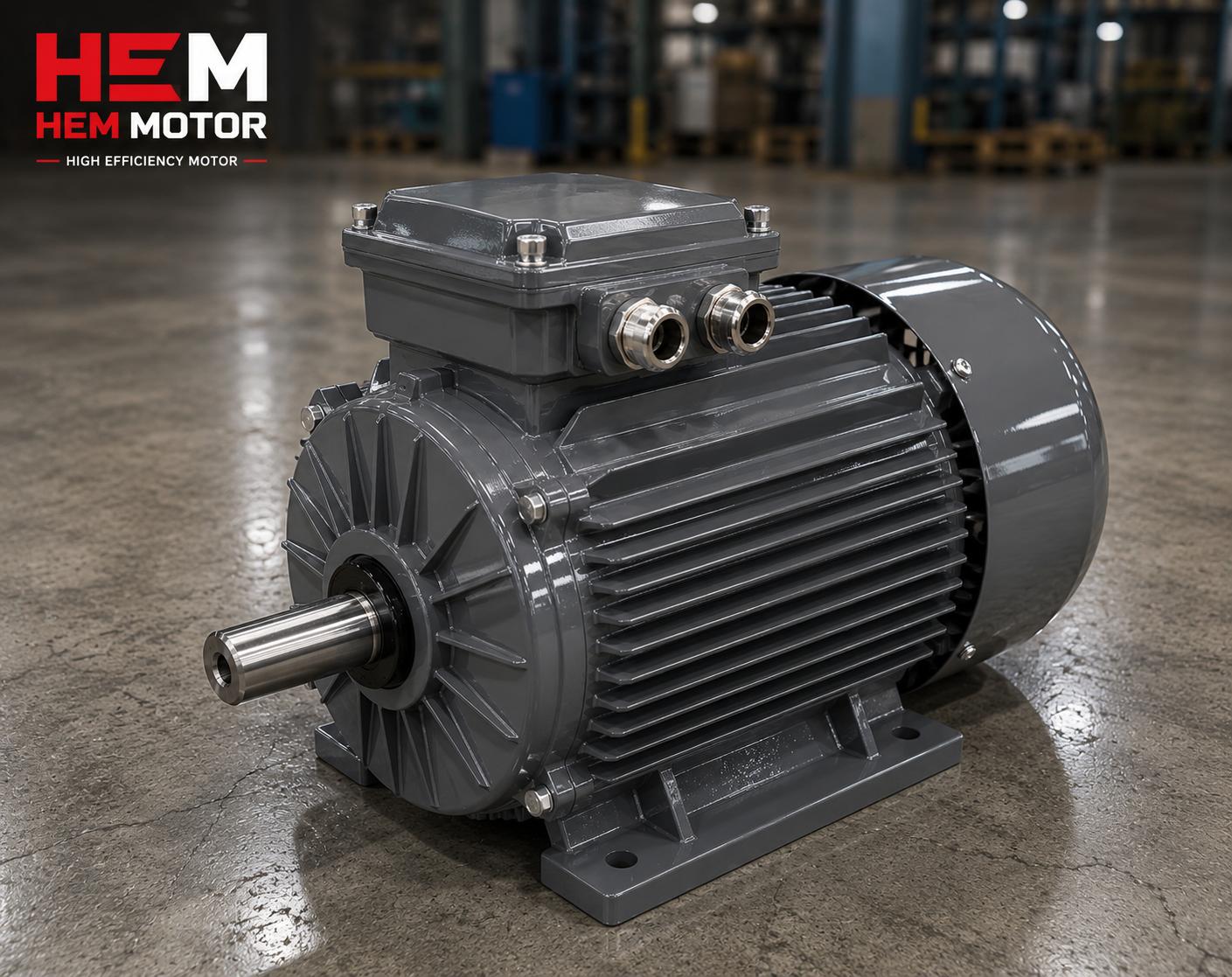
High Speed and Inertia: The Start Scenario
The VSI rotor draws several times the motor’s rated current for a long time until it reaches operating speed. The heavy rotor inertia stretches the run-up far above a standard application. The table below compares typical VSI drive scenarios.
| VSI size | Typical rotor tip speed | Load/rotor inertia ratio | Run-up time | Recommended starting |
|---|---|---|---|---|
| Small VSI | 45 - 55 m/s | 5 - 15 | 5 - 12 s | Soft starter |
| Medium VSI | 55 - 70 m/s | 15 - 30 | 12 - 25 s | Soft starter / VFD |
| Large VSI | 65 - 80 m/s | 30 - 60 | 20 - 40 s | VFD or liquid resistance |
As shown, the larger the inertia the longer the run-up, and direct-on-line (DOL) starting both strains the grid and overheats the motor. At high inertia star-delta is usually inadequate; a soft starter or VFD is preferred. For starting methods in crushers, our article on crusher motor starting: soft starter and star-delta is detailed.
Belt-Sheave Drive and Speed Adjustment
VSI rotors are often driven by belt-sheave (V-belt). There are two reasons: to set the rotor peripheral speed to the desired value and to isolate the motor somewhat from sudden shock loads. By changing the sheave diameter ratio, different rotor speeds can be obtained with the same motor; this is a critical adjustment for sand fineness and aggregate shape. For tension and sheave diameter matching in belt-sheave selection, see our article on crusher V-belt sheave drive motor selection. In belt-sheave drive the load inertia is referred to the motor shaft by the square of the speed ratio; so the inertia seen at the motor shaft is very sensitive to the sheave ratio.
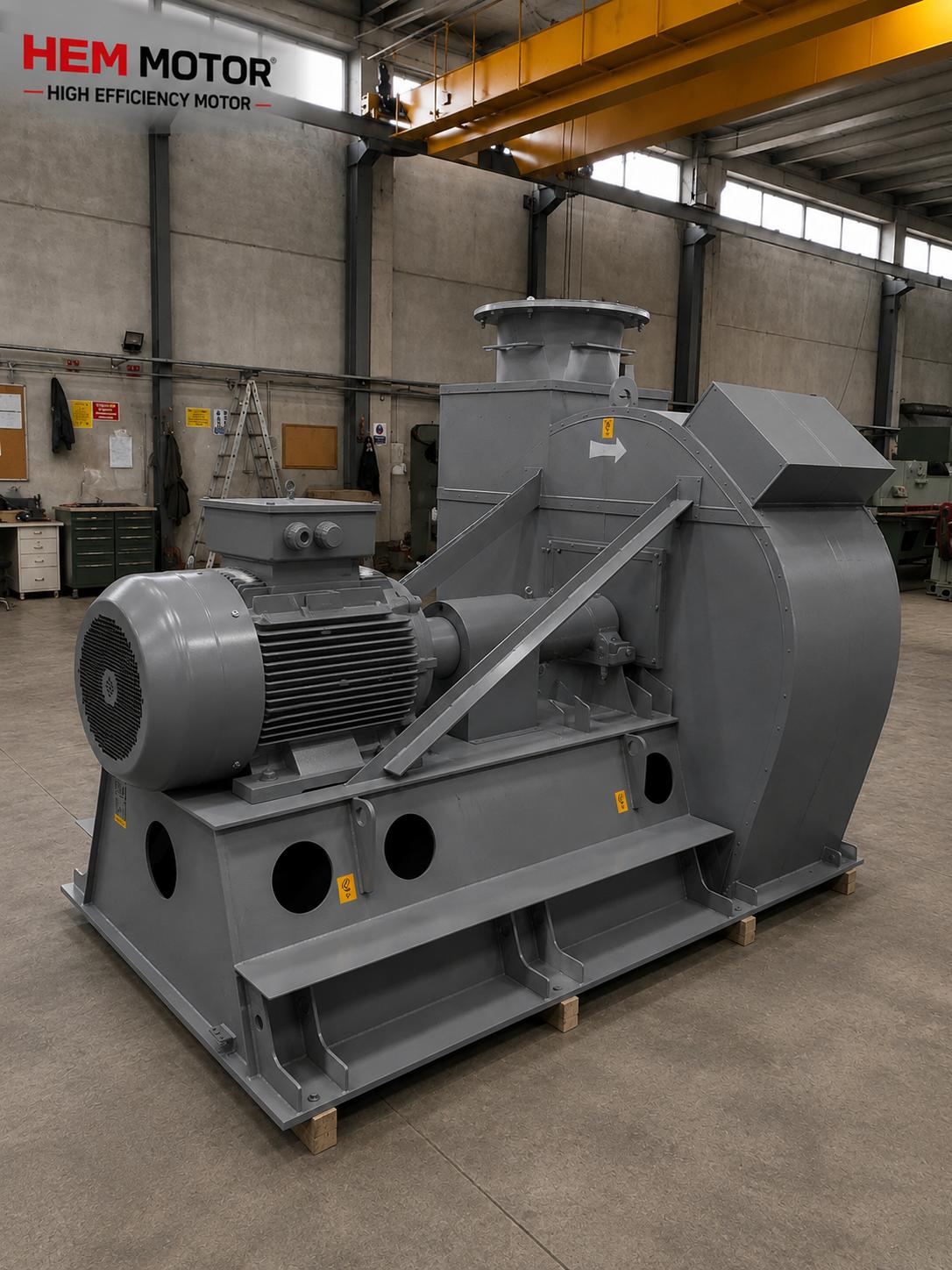
Dust and IP Protection: The VSI’s Silent Killer
The VSI environment is extremely dusty; fine quartz and aggregate dust clogs the motor’s cooling fins, seeps into bearings and abrades the winding. So a high IP protection class (at least IP55, preferably IP65/IP66) and proper bearing sealing are essential on the VSI drive motor. For dust sealing and field protection, our crusher motor dust sealing IP65-66 field and for cooling against overheating our crusher motor cooling and overheating articles are field guides. In a dusty-impact environment a cast-iron frame is preferred for body robustness; our article on cast-iron motor: impact, rigidity, heavy load, vibration explains this choice.
| Protection feature | VSI recommendation | Why |
|---|---|---|
| IP class | IP55 min, IP65/66 preferred | Blocks fine dust ingress |
| Frame | Cast iron | Impact and vibration resistance |
| Insulation class | F/H | Long start and high ambient temperature |
| Bearing sealing | Labyrinth + oil seal | Prevents dust ingress |
| Thermal protection | PTC / PT100 | Protects on sudden load and dust clogging |
Correct Power and Speed Selection
- Determine the rotor tip speed and required capacity (t/h) and get the drive power from the crusher maker.
- Calculate the inertia regime; choose a long-start (long-tE) and if needed one-frame-larger motor.
- Choose the starting method by inertia: soft starter or VFD; DOL is not suitable for large VSI.
- Set the belt-sheave ratio to the rotor speed; account for the inertia reduction.
- Prepare the motor for the dust-impact environment with high IP, cast-iron frame and PTC thermal protection.
In this application where speed, inertia and thermal limit are interlinked, the starts per hour is also limited; if frequent stop-start is needed a VFD solution is the safest. For strategies to reduce starting current, our reducing starting current LRA article is helpful.
The Difference Between VSI and Jaw/Cone Crusher Drive
In the crusher world each crusher type wants a different drive character. The jaw crusher works at high torque and low speed; it stores impact energy with a large flywheel. The cone crusher works at medium speed and high torque. The VSI is completely distinct from the others: it wants high speed, high inertia and continuous high peripheral speed. So a VSI drive motor is usually a 2-pole high-speed motor or an arrangement stepped up in speed by belt-sheave; in a jaw crusher, low speed and flywheel inertia are to the fore.
| Crusher type | Speed character | Torque demand | Role of inertia |
|---|---|---|---|
| Jaw | Low speed | Very high | Flywheel impact storage |
| Cone | Medium speed | High | Medium |
| Impact (HSI) | Medium-high | High | Rotor inertia |
| Vertical shaft (VSI) | Very high speed | Medium-high | Very high rotor inertia |
For kW selection by crusher type, our article on crusher motor kW selection: jaw, impact, cone offers a comprehensive comparison. For applications needing high inertia and a flywheel such as a hammer mill, our hammer mill motor selection reference is helpful.
How Does the Motor Take the Sudden Shock Load?
In a VSI, when material enters the rotor suddenly the torque spikes in an instant; the motor sees this shock as a momentary overload. Belt-sheave drive softens this shock somewhat because the belt’s elasticity absorbs the sudden torque. But the motor itself must also have the mechanical rigidity and thermal reserve to take these repeated shocks. So a cast-iron frame, strong bearings and a high insulation class are preferred in VSI drive. On impact, rigidity and vibration, our cast-iron motor impact rigidity heavy load vibration, and for bearing life our crusher mill motor bearing life shock dust articles are field guides.
- Belt elasticity: partly absorbs the sudden torque.
- Cast-iron frame: withstands repeated shock.
- Reinforced bearing: long life under shock and dust.
- Thermal reserve: prevents burnout on sudden load rise.
The Relationship Between Capacity, Rotor Speed and Power
The VSI drive power depends on the desired capacity (t/h), the rotor tip speed and the hardness of the fed material. As rotor speed rises, both sand fineness and the required drive power increase, because centrifugal force and air entrainment grow fast. So power selection must be made per the capacity-speed curve given by the crusher maker; leaving one power step up as thermal margin is safe. For high-torque drives in mine and ore applications, see our articles on mine ore mill motor high torque supply and for a liquid-resistance starter crusher liquid-resistance starter slip-ring motor.
| Factor | If it rises | Effect on drive power |
|---|---|---|
| Rotor tip speed | Rises | Power rises markedly |
| Capacity (t/h) | Rises | Power rises linearly |
| Material hardness | Rises | Power and wear rise |
| Inertia | Rises | Start gets harder, power same |
Dust Suppression, Cooling and Field Maintenance
One of the most important factors determining the motor’s life in VSI plants is field maintenance. Dense dust clogs the motor’s cooling fins and blocks heat dissipation; so periodic cleaning is essential. Water spray systems are used for dust suppression, but this requires the motor to be prepared for a wet environment too. A high IP class and labyrinth bearing sealing keep both dust and water spray out. For the dust-suppression pump motor, our article on stone quarry dust suppression water spray pump motor selection and for cooling-fin cleaning our cast-iron motor cooling fin dirt cleaning articles are field guides.
| Maintenance item | Interval | Purpose |
|---|---|---|
| Cooling fin cleaning | Weekly | Preserves heat dissipation |
| Bearing greasing | Per maker | Bearing life |
| Belt tension check | Monthly | Drive efficiency, shock |
| Terminal tightness check | Quarterly | Prevents phase loss |
Regular maintenance prevents the high cost an unexpected failure stop of the VSI motor creates; on a crusher line a motor stop halts all production. For failure-downtime cost, our article on crusher motor failure downtime cost covers this topic.
Spare Motor and Fast-Replacement Strategy
On a critical drive like a VSI, there must be a fast-replacement plan in case the motor fails. This means either keeping a spare motor on site or securing a fast-delivery guarantee from a reliable supplier. The spare motor’s frame code, shaft diameter, sheave layout and electrical values should be determined and documented in advance; this way no time is lost at the moment of failure. For motor supply in mobile and fixed crusher plants, our articles on mobile crusher portable in-plant motor supply and for conveyor replacement crushing-screening plant screen feeder motors are helpful.
IP Protection and Insulation Class Selection Detail
On a VSI drive motor the IP protection class is a two-digit code that determines how well the motor is protected against dust and moisture; the first digit expresses solid-object (dust) protection, the second water protection. For the VSI environment at least IP55 is needed; if there is dust-suppression water spray, IP65 or IP66 should be preferred. The insulation class sets the temperature the winding can withstand; because of long start and high ambient temperature, Class F or H is recommended on VSI motors. At high altitude and hot environment, derating the rated power may be needed.
- IP55: the minimum for VSI, general dust protection.
- IP65/IP66: preferred for water spray and fine dust.
- F/H insulation: for long start and hot environment.
- Derating: at high altitude and ambient temperature.
For IP protection class selection, our article on electric motor IP protection class selection, for protection upgrade in dusty-wet environments IP65-IP66 protection upgrade dusty wet environment and for high-altitude derating high altitude derating power reduction are detailed.
Frequently Asked Questions
Why is a VSI rotor motor chosen as 2-pole (high speed)?
The rotor peripheral speed must reach high values such as 50–80 m/s. This speed is obtained either with a high-speed (2-pole, ~3000 rpm) motor or by stepping up a low-speed motor + belt-sheave. Most VSI designs use belt-sheave drive to keep the rotor speed adjustable via the sheave ratio.
Why does high inertia cause so much trouble at start?
A heavy rotor makes the motor draw high current for a long time until it reaches operating speed. In this long run-up the winding heats seriously and the motor’s tE/thermal limit is stressed. So a long-start-rated, if needed one-frame-larger motor with soft starter/VFD starting is essential.
Which IP protection is needed on a VSI motor?
Because the environment is very dusty, at least IP55 and preferably IP65/IP66 is recommended; a labyrinth + oil seal bearing seal and a cast-iron frame also markedly extend the motor’s life against dust and impact.
Supply the VSI Crusher Drive Motor from Stock
High speed, high inertia, sudden shock and dense dust; VSI rotor drive is a manageable engineering problem with a correctly selected motor. Share your rotor speed, capacity and sheave layout; let the HEM Motor team deliver fast, from manufacturer stock, a motor at the correct power-speed, high IP, cast-iron frame and long-start rated, and prepare a tailored quote. Contact us for uninterrupted sand production.