English
 Türkçe

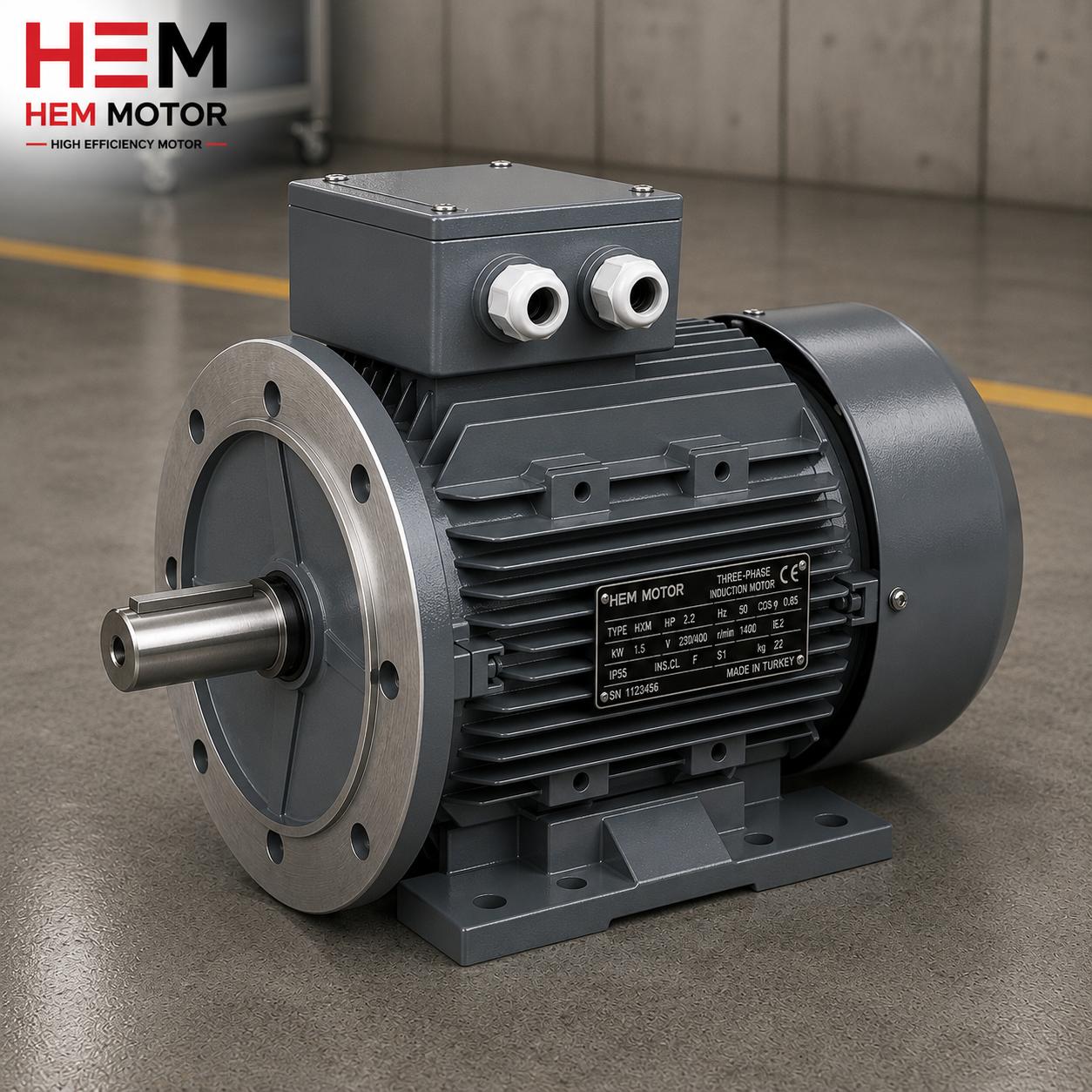

Momentary voltage drops on the power grid are among the most insidious problems faced by industrial facilities. A nearby short circuit, the starting of a large motor, or a sudden load from another consumer connected to the grid can pull the voltage below its nominal value within milliseconds. This event is called a voltage dip (or voltage sag). It usually lasts from a few cycles to a few seconds, but even this brief period can have serious consequences for an asynchronous motor: torque loss, speed drop, excessive current draw, tripping of the protection relay, and even a complete stoppage of the production line. In this article we examine, from a manufacturer and seller perspective, how a voltage dip affects an asynchronous motor, how the motor rides through the event, and which protection and selection strategies increase its resilience.
What Is a Voltage Dip and Why Does It Happen?
A voltage dip is a short-term, significant fall of the grid voltage below its nominal value. It is not a full interruption; the voltage does not drop to zero but may fall, for example, to 70-80% of nominal. Typical causes are:
- Nearby short circuits: A phase-to-ground or phase-to-phase fault on the same line or an adjacent feeder collapses the voltage until protection clears it.
- Large motor starts: The high inrush current of a large motor started direct-on-line (DOL) temporarily lowers the line voltage.
- Grid switching: Transient events when a transformer or capacitor bank is energized or de-energized.
- Lightning and atmospheric events: Lightning-induced faults on overhead lines.
The common feature of these events is that they are short-lived. However, due to its inertia and electromagnetic behavior, the asynchronous motor responds sensitively to this brief event.
How Does an Asynchronous Motor React to a Voltage Dip?
The key to understanding the motor's behavior lies in a single physical relationship: motor torque is proportional to the square of the applied voltage (T ∝ V²). This explains why a voltage dip is so critical. If the voltage falls to 80% of nominal, the maximum torque the motor can produce drops to about 64% (0.8² = 0.64). If the voltage drops to 70%, the torque falls to roughly 49%.
The practical consequences of this torque loss are:
- Speed drop (slowing): As the load torque stays constant while motor torque falls, the motor slows and slip increases.
- Excessive current draw: The slowing motor draws more current trying to maintain its torque, which heats the windings.
- Stall risk: If torque falls below the load torque, the motor can stall completely. This risk is more pronounced with high-inertia loads (fans, crushers).
- Reacceleration difficulty: When voltage returns, many slowed motors trying to accelerate at once can trigger a fresh voltage dip.
While variable-torque loads such as fans and pumps ride through a voltage dip more easily, applications with constant or shock loads such as crushers and compressors are far more sensitive. Our article examining the effect of sustained grid voltage fluctuations on the motor, voltage tolerance and grid fluctuation in IE3 three-phase motors, complements this topic.
Ride-Through: Strategies for Surviving a Voltage Dip
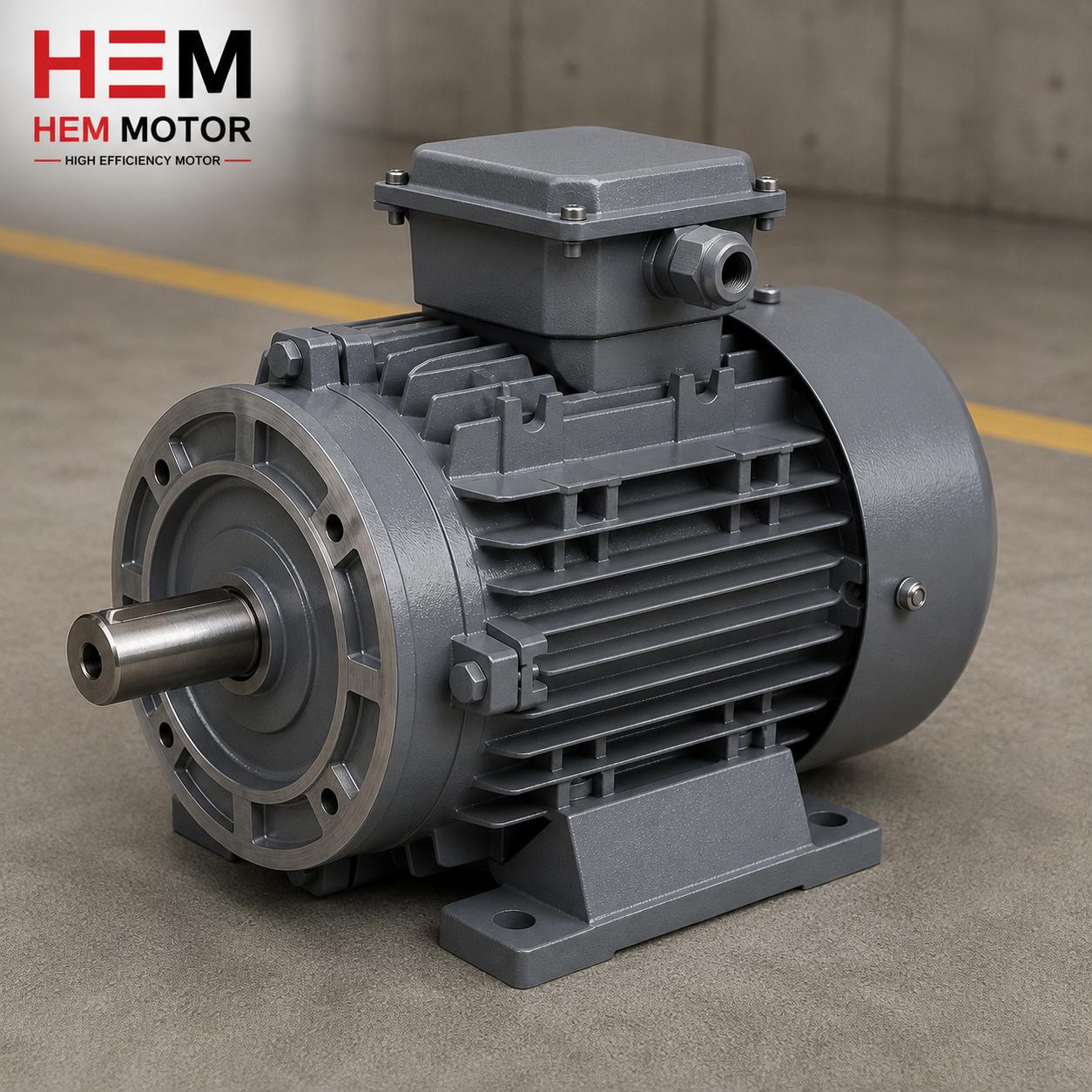
Ride-through is the ability of a motor and its driven process to survive a short voltage dip without stopping. The goal is to prevent production from halting at every minor voltage event while still protecting the motor during a genuine fault. This balance is achieved with the right equipment and settings.
1. Correct Sizing and Service Factor
The motor most resistant to a voltage dip is the one with sufficient torque reserve. The greater the margin between the motor's pull-out (breakdown) torque and its operating point, the lower the voltage it can withstand. Therefore, in facilities that frequently experience voltage dips, it is recommended to select the motor with some spare torque capacity and an appropriate service factor. A motor with quality windings that can still produce adequate torque at reduced voltage lowers the stall risk.
2. Starting Method: Soft Starter and VFD
While direct-on-line (DOL) starting is simple, it can cause problems during reacceleration after a voltage dip. A soft starter reduces the load on the grid by providing a smooth start. The variable frequency drive (VFD) is the most powerful ride-through tool: thanks to the energy stored in its DC-link capacitor, it can ride through short voltage dips without passing them to the motor and performs a controlled reacceleration when voltage returns. For a comparison of starting methods, see our guide on soft starter, star-delta and direct-on-line starting.
3. Undervoltage Protection Setting
An overly sensitive undervoltage relay needlessly stops the motor at every small dip and causes production loss. A setting that is too loose, however, fails to protect the motor during a real fault. The correct strategy is to build balanced protection that allows short dips (time-delayed setting) while opening the circuit during a sustained undervoltage.
Reacceleration and Mass Restart
The greatest danger after a voltage dip is dozens of slowed motors trying to accelerate together. Each motor draws several times its nominal current during start; if all motors try to accelerate at once, the total current collapses the grid again and a vicious cycle forms. To prevent this, a staggered restart is applied: critical motors first, the others energized with sequential delays. This is even more critical in generator-fed or weak-grid facilities; for inrush current management, our article on motor selection and inrush current on generator-powered sites offers applicable solutions.
- Critical processes are prioritized and energized first.
- Motors are restarted with sequential (staggered) delays.
- Smooth reacceleration is provided with a soft starter or VFD on large motors.
- Automation manages the sequential start once voltage returns to normal.
Motor Selection for Facilities with Frequent Voltage Dips
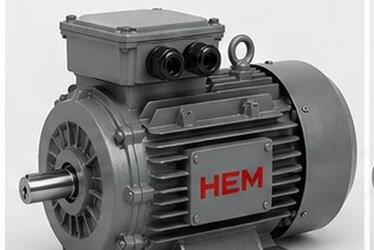
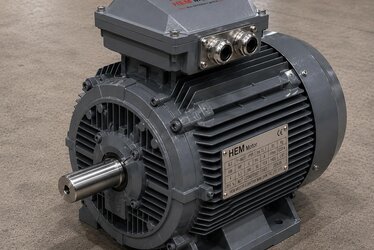
In regions with a weak or fluctuating grid, in organized industrial zones, or in facilities where large motor loads switch on frequently, motor selection must be done differently. Here the priority is motors with wide voltage tolerance and robust thermal endurance. High-efficiency IE3 and IE4 motors, with 100% copper windings and Class F insulation, withstand these demanding conditions better. A cast iron frame provides additional mechanical and thermal assurance, while IP55 protection class guarantees safe operation in dusty and humid environments.
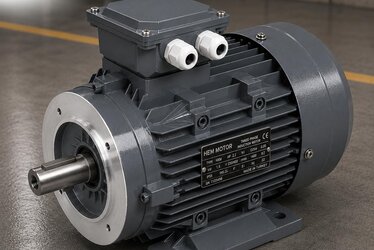
At higher powers, a 690V connection is an alternative for lower current draw and better voltage behavior; our article on 690V asynchronous motor selection and correct connection covers this in detail. In all these options, with a wide power range from 0.25 kW to 355 kW and B3 foot, B5 flange and B35 combined mounting types, you can source the motor fully suited to your application from a single supplier.
Supply and Fast Replacement Assurance
Voltage dips can wear the motor winding and bearings over time; motor failures increase especially in facilities with inadequate protection. In such cases, the fast supply of a directly equivalent motor from stock is vital to keep production running. With manufacturer's assurance, we provide the correct replacement motor quickly based on the nameplate information. For current electric motor prices and stock status, please contact us directly. Keeping a spare motor for critical lines greatly reduces the cost of unplanned downtime.
- Selecting a quality-wound motor with wide voltage tolerance.
- Sizing with an appropriate service factor and sufficient torque reserve.
- Ride-through and controlled reacceleration with a soft starter / VFD.
- Correctly set undervoltage protection.
- Fast replacement assurance from stock for critical motors.
The Role of Load Type in a Voltage Dip
How well a facility withstands a voltage dip depends largely on the character of the loads its motors drive. For this reason, correctly defining the load profile in motor selection is as important as setting the protection. We can examine loads in three main groups:
- Variable (quadratic) torque loads: In applications such as fans, centrifugal pumps and blowers, the load torque falls rapidly with speed. Because the load torque decreases when the motor slows, these loads ride through a voltage dip relatively easily and the stall risk is low.
- Constant torque loads: In applications such as conveyors, hoists, augers and mixers, the load torque is constant regardless of speed. Since the load demand does not decrease when the motor slows, they are more sensitive to a voltage dip.
- Shock and high-inertia loads: Applications such as crushers, mills and presses carry both high inertia and variable load. These loads have the highest stall risk during a voltage dip and are the hardest to reaccelerate.
In constant and shock-load applications, the motor must be selected with a clear torque reserve above its normal operating point. In low-speed, high-torque applications, the choice of pole count also affects behavior; we address the impact of correct pole and speed selection in our guide on 2, 4, 6 pole asynchronous motor selection. If the load inertia is high, increasing the safety margin between the motor's pull-out torque and the load curve is the most effective way to prevent a stall during a voltage dip.
Monitoring, Measurement and Protection Coordination
The first step in managing the effect of voltage dips is to measure and record the events. A power quality analyzer or a modern motor protection relay records the frequency, depth and duration of voltage dips, revealing the facility's real profile. Without this data, protection settings are either too sensitive (unnecessary downtime) or too loose (motor damage).
For effective protection coordination, the following points should be considered:
- Thermal protection: The increased current during a voltage dip heats the winding; a correctly set thermal relay or an in-winding PTC thermistor protects the winding from overtemperature.
- Undervoltage relay time delay: It should be set to tolerate short dips and to open during a sustained undervoltage.
- Phase imbalance and phase loss protection: Dips occurring on a single phase create imbalance that stresses the winding; phase protection should act in this case.
- Coordination: Motor protection and grid protection (fuse, breaker) must work in harmony; unnecessary tripping and non-selective operation should be avoided.
In weak-grid regions, voltage and frequency behavior is even more variable when a generator is brought online; for correct matching of generator capacity to motor power, our guide on how many kVA of generator drives how many kW of motor offers a practical calculation. The right protection and measurement infrastructure both protects the motor and eliminates unnecessary production losses.
Frequently Asked Questions
Why does a voltage dip affect an asynchronous motor so much?
Because the torque produced by an asynchronous motor is proportional to the square of the applied voltage (T ∝ V²). When the voltage drops to 80% of nominal, the maximum torque the motor can produce falls to about 64%. If torque drops below the load torque, the motor slows, draws more current, heats up, and faces a stall risk. For this reason, even a short dip can have serious consequences in applications with constant or shock loads.
Does a variable frequency drive (VFD) help ride through a voltage dip?
Yes. Thanks to the energy stored in its DC-link capacitor, a VFD can ride through short voltage dips without passing them to the motor and performs a controlled reacceleration when voltage returns. The ride-through capacity depends on the drive's model and settings. A soft starter, in turn, reduces the load on the grid by providing a smooth start and controlled reacceleration.
Which motor should I choose for a facility with frequent voltage dips?
Motors with wide voltage tolerance, sufficient torque reserve and robust thermal endurance should be preferred. IE3/IE4 motors with 100% copper windings and Class F insulation withstand these conditions better. Sizing with an appropriate service factor and slight spare torque capacity is recommended, along with correctly set undervoltage protection and, if needed, the use of a soft starter/VFD.