English
 Türkçe


Summary (TL;DR)
- Power is not the only thing that sets an electric motor's price; efficiency class, frame material, protection class and options change the value and the quote.
- As the IE efficiency class rises the initial investment increases but energy cost falls; it is valuable in total cost of ownership.
- Options such as brake, encoder, heater, sensor and special flange/shaft affect both price and lead time.
- Certified motors such as ATEX and marine require special production and documentation; lead time grows.
- To read a quote correctly you must know why each option adds value; HEM Motor offers transparent quotes and catalog support.
Two motors may look "the same power" yet differ significantly in their quotes. The reason is almost always the options, accessories and technical choices. The value of an electric motor is set not only by its kW power but by a whole set of choices ranging from efficiency class to frame material, from protection class to special winding, from accessories such as brake and encoder to certificates. In this article, from the viewpoint of a motor manufacturer and supplier, we cover why a given option affects price and lead time, how each choice adds value to the business, and how to read an incoming quote or catalog correctly. There are no price figures here; the aim is to clarify the logic of "which choice raises or lowers the cost and why it adds value" and to help you request the right quote.
Factors That Set Value, Not Just Price
It is misleading to look only at the total amount when evaluating a motor quote. The real question is: which options does this motor come with and do those options genuinely add value to my application? The headings below are the main factors that affect a motor's price and lead time. Each answers a specific need; an unnecessary option raises cost, while a missing option causes early failure or a mismatch with the application.
IE Efficiency Class
The efficiency class (IE3, IE4 and above) is one of the most decisive value factors of a motor. A higher efficiency class means better copper winding, better rotor design and lower losses; this raises the initial investment somewhat. But in a continuously running motor the energy cost over its life is many times the purchase price. So a high efficiency class often more than pays for itself in total cost of ownership (TCO). By regulation IE3/IE4 is already mandatory in certain power ranges; the correct efficiency class provides both legal compliance and energy saving.
Frame Material: Cast Iron or Aluminium?
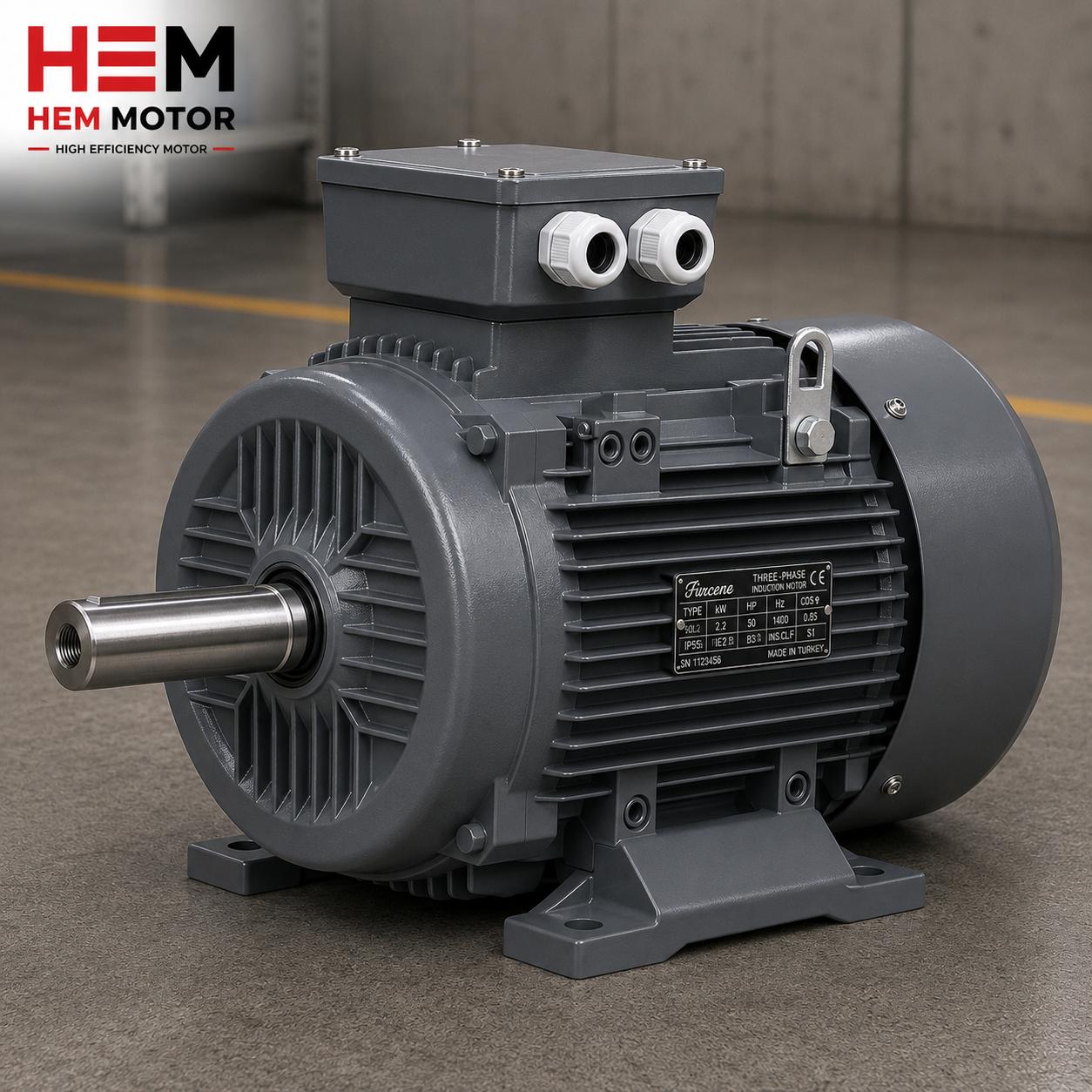
The frame material affects both the price and the fit to the application. A cast iron frame is preferred for high mechanical strength, vibration damping and harsh/heavy-duty environments; it is heavier and affects shipping cost. An aluminium frame is light and offers a compact solution in small-to-medium powers and gear applications. The right material is chosen with the logic "the one suited to the application is more valuable", not "more expensive is always better".
IP Protection Class
Standard motors are usually IP55 protected. In dusty, wet, washdown or hygienic environments higher protection such as IP65, IP66 or even IP69K may be required. Raising the protection class requires special seals, sealing and frame workmanship, so it increases cost; however, a motor with a low protection class in the wrong environment costs far more in early failure and downtime. The right IP class is a value decision made according to the environmental conditions.
Price-Lead-Time Effect of Options and Accessories
Every option added to a standard motor affects both the cost and the lead time. Standard motors supplied from stock ship quickly, while motors with special options may require production/assembly and the lead time grows. The table below qualitatively summarises the effect of the main options on value and lead time (it contains no figures).
| Option / Choice | Effect on Cost | Effect on Lead Time | Value Added |
|---|---|---|---|
| High IE efficiency class (IE4) | Raises | Neutral if in stock | Energy saving, compliance, low TCO |
| Cast iron frame | Raises | Usually stock | Heavy-duty strength, low vibration |
| High IP protection (IP65/66/69K) | Raises | May extend | Life in dusty/wet/hygienic environments |
| Brake option | Raises | May extend | Fast stop, position holding (crane/conveyor) |
| Encoder | Raises | May extend | Precise speed/position feedback |
| Anti-condensation heater | Slightly raises | Usually short | Moisture/condensation protection |
| Temperature sensor (PTC/Pt100) | Slightly raises | Usually short | Winding thermal protection, early warning |
| Special flange/shaft | Raises | May extend | Mechanical fit, ease of replacement |
| Special paint/corrosion class | Raises | May extend | Durability in corrosive environments |
| ATEX / marine certificate | Raises markedly | Extends markedly | Legal compliance in explosive/marine settings |
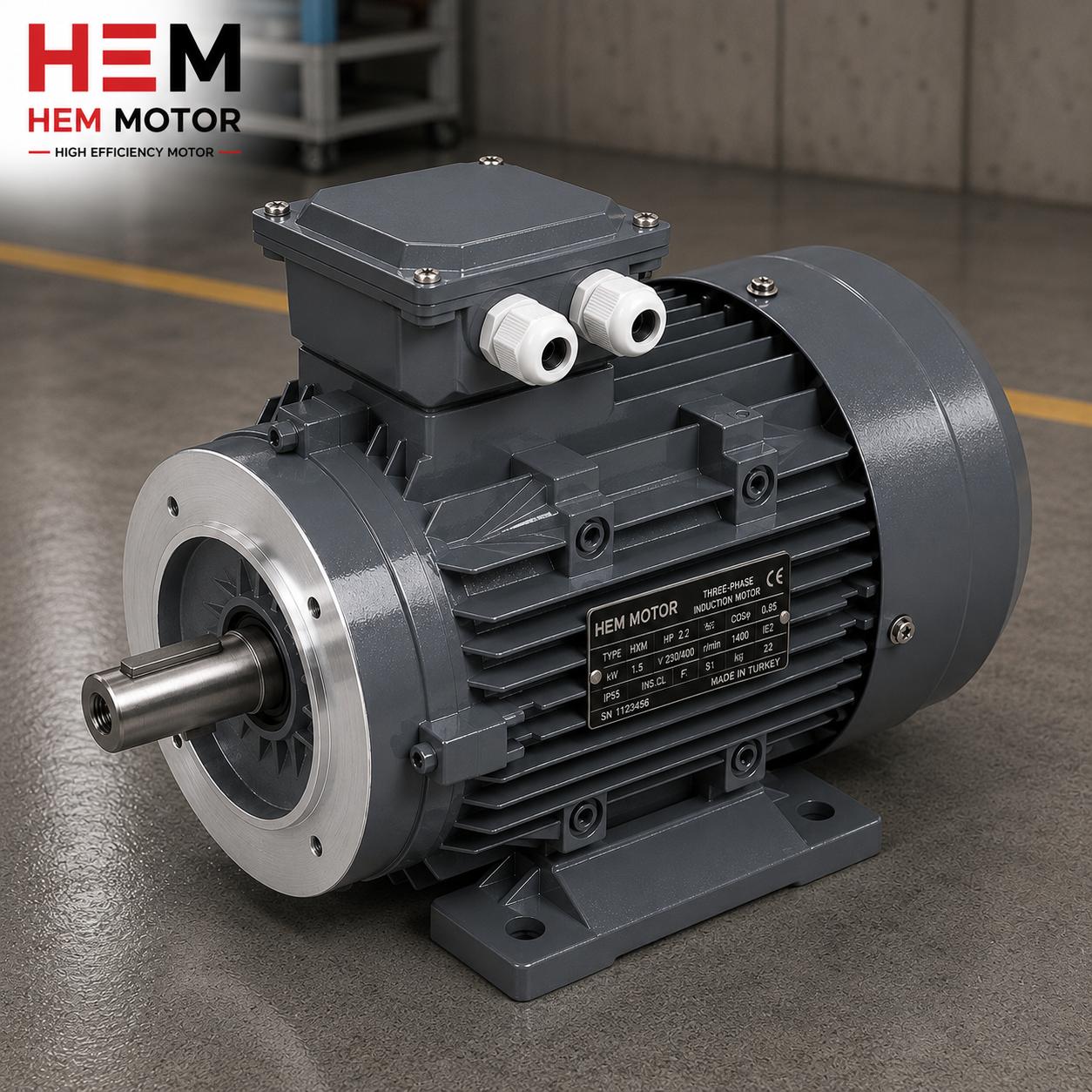
Brake, Encoder, Heater and Sensor Options
These accessories adapt the motor to specific applications; fitted unnecessarily they raise cost in vain, and not fitted when needed they leave the system unable to work.
- Brake: essential in applications that must hold a load or stop quickly such as cranes, lifts and conveyors. Adding an electromagnetic brake requires assembly and testing and affects lead time.
- Encoder: needed in systems requiring closed-loop speed/position control (servo-like applications, precise positioning); it gains value together with the drive.
- Anti-condensation heater (space heater): prevents condensation in the winding in humid environments or in motors that will sit idle for long periods; though a small option, it prevents large failure costs.
- Temperature sensor (PTC/Pt100): monitors winding temperature to prevent burnout from overheating; its value is high in critical processes.
Certificate and Special Winding/Insulation Class
Some applications legally or technically require a special motor. ATEX (explosion-proof) motors are mandatory in explosive environments, and marine/type-approved motors (e.g. DNV) in shipping. Because these motors involve special design, additional testing and a certification process, they raise both cost and lead time markedly; but in these environments there is no alternative, and a "cheap" standard motor is both illegal and dangerous. Likewise, choices such as Class H insulation, tropicalization or reinforced winding for high temperature or harsh environments are value decisions that extend the motor's life and reduce risk.
- Insulation class (F/H): higher temperature endurance gives life in hot environments; affects cost moderately.
- Tropicalization/special winding: for humid, salty, corrosive environments; protects winding life.
- ATEX/marine certificate: a legal requirement; lead time grows due to production and certification.
Quote and Catalog Reading Guide
Correct purchasing comes from reading the quote correctly. A quote or catalog line includes not only the motor's power but also option codes, protection class, efficiency class, mounting type and accessories. When comparing quotes, look not only at the total amount but at the options covered; a quote that looks "cheaper" may in fact not include a protection class or an accessory you need.
- Clarify your requirement list (power, speed, mounting, IP class, required accessories) in advance.
- Check which options are included and which are optional/extra in the quote.
- Evaluate lead time together with the options; a standard structure available from stock is the fastest.
- In applications requiring certificates, ask about the documentation and its duration from the start.
- Put total cost of ownership (energy + maintenance + life) ahead of the initial price.
At HEM Motor we offer the motor that fits your need exactly with a transparent quote, in IE3 and IE4 efficiency classes and a wide range of power and options. We evaluate together which option is truly necessary and which would be an unnecessary cost, and clarify the right configuration.
Mounting Type, Shaft and Flange: The Value of Mechanical Fit
A motor's mechanical interface -mounting type, shaft size and flange structure- may not directly affect the price, but when chosen wrongly it comes back as extra adapters, labour and downtime cost. Standard motors are offered with foot (B3), flange (B5/B14) or combined (B35) mounting types. When buying a replacement motor for an existing machine, matching the old motor's mounting type, shaft diameter and flange bolt circle exactly lets the motor fit in place without extra labour. Special shaft (different diameter, keyway, double-ended shaft) or special flange requests affect both cost and lead time because they require production/machining.
- Standard mounting (B3/B5/B35): supplied from stock, the fastest and most economical solution.
- Multi-mount (universal frame): both foot and flange replacement with a single stock code; adds indirect value by easing spare-part and stock management.
- Special shaft/flange: valuable if needed for mechanical fit; if requested unnecessarily, cost and lead time rise.
For this reason, stating the motor's mounting type and mechanical interface clearly from the start when requesting a quote determines both the right price and the right lead time, and removes the risk of a field mismatch.
Paint, Corrosion Class and Environmental Conditions
The external protection of the motor is a value decision based on the environment it will work in. The standard paint/corrosion class is sufficient for most indoor industrial applications; but in corrosive environments such as the seaside, chemical plants, food washdown lines or open areas, a higher corrosion protection class (for example heavy corrosion categories) is preferred. A higher corrosion class raises cost because it requires extra surface preparation and a special paint layer; in return it extends the motor's life and prevents early corrosion-related failure.
Similarly, environmental conditions such as ambient temperature, altitude and humidity affect motor selection and therefore its value. At high ambient temperature the motor may need power derating or a higher insulation class; at high altitude cooling weakens so special evaluation is required. These factors are technical realities independent of the quote and are information that must be shared from the start to select the right motor.
Total Cost of Ownership Perspective
The most common mistake in the purchasing decision is to look only at the initial price. Yet the real cost of an electric motor consists of three components: the purchase price, the energy it consumes over its life, and the maintenance/downtime cost. In a continuously running motor the energy component usually overshadows the other two. So choices that "raise the initial price" such as a high efficiency class, the right protection and a quality winding often lower the total cost.
- Energy cost: the largest item in a continuously running motor; a high efficiency class provides decisive saving here.
- Maintenance and downtime: the right protection class and sensor options reduce unexpected failure and production stoppage.
- Life: a quality winding, the right insulation and a suitable frame extend the motor's economic life and lower the frequency of reinvestment.
The right option configuration targets the lowest total cost by balancing these three components. When evaluating a quote, the question to ask should not be "which is cheapest?" but "which provides the lowest total cost over the life?".
Frequently Asked Questions
Why can two motors of the same power have different quotes?
Because power is not the only determinant. The efficiency class (IE3/IE4), frame material, protection class (IP), insulation class and accessories such as brake/encoder/sensor change the value and therefore the quote. When comparing two quotes you must check whether they have the same option scope.
A high efficiency class (IE4) motor is more expensive; is it worth buying?
In a continuously running motor the energy cost rises to many times the purchase price over its life. Although the initial investment of an IE4 motor is somewhat higher, thanks to its low energy consumption the total cost of ownership is usually lower. Moreover, at certain powers the regulation already mandates a high efficiency class.
How do options affect lead time?
Standard motors available from stock ship fastest. Special options such as a brake, encoder, special flange/shaft, high IP protection or a certificate (ATEX/marine) may require production, assembly and testing, so they extend lead time. Clarifying the need from the start determines both the right price and the right delivery date.
The Right Option, the Right Value
In an electric motor, value is set not by price alone but by the correct selection of options suited to the application. An unnecessary option is cost; a missing option is failure. With the right efficiency class, protection, material and accessory configuration, HEM Motor offers the motor that fits your need exactly, with manufacturer assurance and a transparent quote. Contact us to request a quote for fast supply from stock and a configuration suited to your need.
Related guides: brake, encoder and forced-cooling fan options, IP protection class selection, winding and insulation class (F/H), when an ATEX explosion-proof motor is required and order and type code decoding.