English
 Türkçe


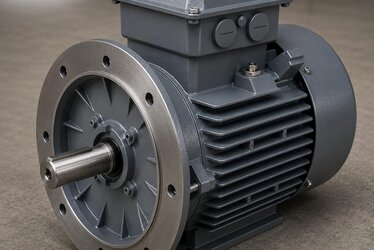
When buying an IE3 motor, the most important yet often overlooked element you encounter is the order code imprinted on the motor frame and on the quotation document. Although this code may look like a complex string of random letters and numbers, it is in fact a structured identification system that summarizes the entire identity of the motor in a single line. From the efficiency class to the frame size, from the number of poles to the mounting type and the optional equipment, every feature has its place in this code according to a specific rule. Knowing how to read the order code correctly is the most practical skill for preventing the purchase of the wrong motor, the trouble of dealing with a frame that does not fit the machine, and delivery delays. In this article we examine step by step how the order and type code is decoded on IE3 motors, what each letter signifies, and how the code should be used for an error-free purchase.
The Difference Between the Order Code and the Nameplate
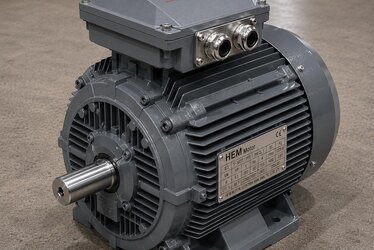
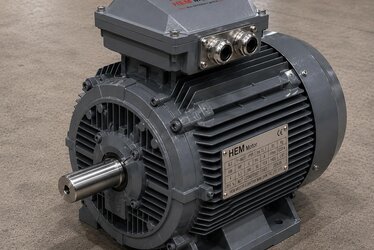
Before understanding the order code, it must be distinguished from the motor nameplate. The order code is the code that describes "what you want" to the manufacturer or supplier. At the quotation stage, the motor is configured through this code; power, speed, frame, mounting, and options are defined in this string. When the motor is manufactured and reaches you, the nameplate on it confirms "what you received." In other words, the order code represents the request, while the nameplate represents the delivery. In a sound purchasing process, these two are expected to match exactly.
This distinction is of great importance in practice. Because in a replacement order, the information at hand is usually the nameplate of the failed motor; reading this nameplate correctly and creating the right order code in return guarantees that the new motor is identical to the old one. If the power, speed, frame, and mounting information on the nameplate is transcribed incorrectly, the motor that arrives may not fit the machine physically or electrically. For this reason, building the bridge between the order code and the nameplate correctly is the foundation of an error-free purchase.
Why Is the Code Gathered into a Single String?
Instead of naming millions of different motor configurations one by one, manufacturers use a structured system that encodes each feature at a specific position. In this way dozens of variables such as frame size, number of poles, and mounting type are combined into a single readable string. A person who has learned to read the code can understand the basic features of the motor just by looking at the string, without seeing the motor physically. This greatly simplifies both preparing quotations and managing stock.
The Basic Components of the Code
An IE3 motor order code generally consists of several main sections. Although the arrangement varies slightly from manufacturer to manufacturer, the information carried is largely the same. When decoding the code, looking for the following components in order breaks down the seemingly complex string into understandable parts:
- Efficiency class: Indicates which efficiency class the motor belongs to, such as IE2, IE3, or IE4. Today, IE3 and above is generally preferred for new investments.
- Frame size: The most critical section, defining the shaft height and the frame length; it determines the physical size of the motor.
- Number of poles: Determines the speed of the motor; 2 poles means high speed, 4 poles medium speed, 6 poles low speed.
- Mounting type: Describes how the motor will be connected to the machine; it can be foot-mounted, flange-mounted, or a combination.
- Voltage and frequency: Indicates the supply voltage and frequency at which the motor will operate.
- Option letters: Specify additional equipment such as a brake, thermal protection, a forced-cooling fan, or a heater.
These six components fully define the character of the motor. A person holding an order code can extract the entire identity of the motor in a few seconds by first reading the efficiency class, then the frame and pole information, and finally the mounting and options.
Reading the Frame Size
The frame size is the section of the order code that requires the most attention. The number here gives the shaft height of the motor in millimeters; that is, it indicates how high the center of the shaft is above the mounting surface. For example, a value of 132 means the shaft center is 132 mm above the base. Since this value directly determines the physical compatibility of the motor with the machine, it must be preserved exactly in a replacement order.
The letter next to the number describes the frame length. The letters S (short), M (medium), and L (long) are generally used. Two motors with the same shaft height may have different powers and different bolt-hole spacings when their frame lengths differ. For this reason it is not enough merely to get the number right; the letter next to it must also be read correctly. A small error in the frame size can cause the motor's foot holes not to match the machine base.
The Pole-Speed Relationship
The number of poles in the order code is the fundamental information that determines the synchronous speed of the motor. As the number of poles increases, the speed decreases. A two-pole motor runs at high speed, while a four-pole motor runs at about half that speed; a six-pole motor runs at an even lower speed. For this reason a motor must be selected not only by its power but also by its number of poles; because two motors of the same power with different pole numbers serve completely different applications.
The speed selection is made according to the requirement of the driven machine. Pump and fan applications that require high speed, and conveyor and general-drive applications that run at medium speed, call for different pole numbers. On the subject of correct power and speed matching, our content on selecting a 55 kW electric motor concretely explains how a single power rating is distributed across different applications according to the number of poles. Misreading the pole information in the order code leads to purchasing a motor of the correct power but the wrong speed, which is an error as serious as the machine not running at all.
Decoding the Mounting Type
The mounting code is a string that describes how the motor will be connected to the machine and that frequently begins with the letter B or V. The most common mounting types are as follows:
- B3: Foot mounting; the motor is bolted to a horizontal surface by the feet on its base. This is the most classic and common mounting type.
- B5: Flange mounting; the motor is connected directly to the machine by the large flange at its front, and it has no feet.
- B14: Small flange mounting; a flange type with threaded connection holes, generally used on smaller motors.
- B35: A combination of both foot and flange mounting; the motor both sits on its feet and is connected by its flange, which provides additional mechanical support.
- V1/V5: Vertical mounting types; used for motors operating vertically with the shaft pointing down or up.
The mounting type is one of the most critical pieces of information determining the physical compatibility of the motor. A motor that arrives with the wrong mounting type cannot be connected to the machine even if it has the correct power and speed. For this reason, in a replacement order, the mounting code must be matched exactly with the old motor.
Option Letters and Additional Equipment
The option letters at the end of the order code define the special equipment added on top of a standard motor. This equipment varies according to the requirement of the application and directly affects the service life, safety, and performance of the motor. The most common options are as follows: a brake that locks the shaft when the motor is stopped, PTC or PT100 sensors that monitor the winding temperature, a forced fan that provides sufficient cooling even at low speed, and a heater—that is, a space heater—that prevents condensation during downtime.
Defining these options correctly in the code is of great importance. For example, a motor that operates with a frequency converter and runs for long periods at low speeds may require a forced fan, since its own fan cannot provide sufficient cooling. Similarly, a motor operating in humid environments may need a heater to prevent condensation in the windings during downtime. Omitting these options can lead to premature failure of the motor. For more information about the internal structure that determines the efficiency and performance of the motor, you can review our content on asynchronous motor rotor bar material.
The Safest Way in a Replacement Order
When replacing a failed motor, the fastest and most error-free method is to give the order code of the old motor exactly. If the nameplate of the motor at hand is legible, using the code on it directly ensures that all features are preserved exactly. If the nameplate is illegible, you must identify the power, speed, frame size, and mounting type one by one and create a new code. In this process, even a single overlooked component can cause the motor not to fit the machine.
The basic steps to watch for in a replacement order are as follows:
- Verify the power and speed values on the nameplate of the old motor; these determine the requirement of the driven machine.
- Note the frame size, recording both the shaft height number and the length letter together.
- Check the mounting type physically; determine whether it is foot-mounted, flange-mounted, or a combination.
- Identify the existing options (brake, sensor, heater) and include them in the new order.
The Order Code from a Stock and Procurement Perspective
Using the order code correctly provides great convenience not only in the purchase of a single motor but also in stock management. When the order codes of motors working on critical lines are recorded, it becomes possible to quickly source the correct motor from stock in the event of a failure. HEM Motor delivers IE3 motors quickly from its strong stock across a wide range of frames and powers, minimizing businesses' waiting time. A request made with the correct code both speeds up the quotation process and eliminates the risk of an incorrect delivery.
When working with a supplier, sharing the order code clarifies communication considerably. Instead of proceeding with verbal descriptions, giving the code that contains all the features of the motor ensures that both you and the supplier are sure of talking about the same motor. For the correct choice of frame, speed, and mounting, you can clarify the configuration suited to your needs from among the broad electric motor solutions, and keep the correct motor in stock in advance for your critical lines.
Frequently Asked Questions
Are the order code and the motor nameplate the same thing?
No. The order code is the code that describes "what you want" to the manufacturer and configures the motor at the quotation stage. The nameplate, on the other hand, is the information on the manufactured and delivered motor that confirms "what you received." In a sound purchase these two are expected to match exactly; if there is a discrepancy, the delivery should be checked.
Why is the letter in the frame size important?
Because the number in the frame size gives the shaft height in millimeters, while the letter next to it (S/M/L) gives the frame length. Two motors with the same shaft height may have different powers and different connection spacings when the length letter differs. For this reason it is necessary to read not only the number but also the letter correctly.
What is the safest method in a replacement order?
The safest method is to give the order code of the failed motor exactly. If the nameplate is legible, the code is used directly; if it is illegible, a new code is created by identifying the power, speed, frame, and mounting one by one. If the frame, pole, and mounting do not match exactly, the motor will not fit the machine, so no component should be omitted.