English
 Türkçe

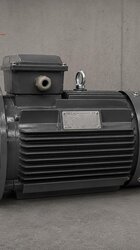
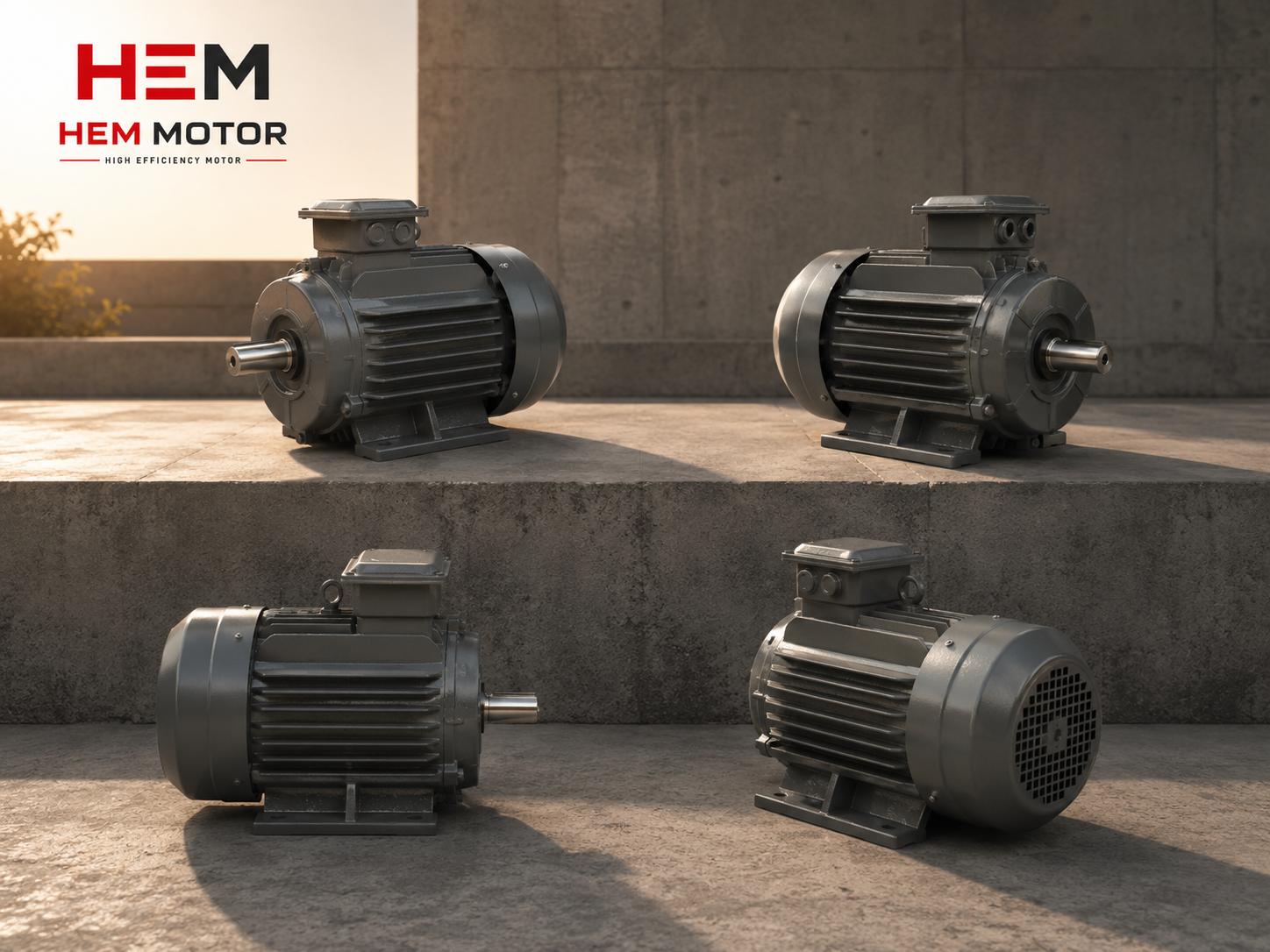

The sound of motors running in a production hall or a building's technical space concerns both worker comfort and occupational safety regulation. But noise is not merely a comfort matter; it often reveals the motor's mechanical condition and whether it was selected correctly. Noise sources in asynchronous motors fall into three main groups: magnetic, mechanical and aerodynamic. Being able to tell these three sources apart is necessary both to buy a low-noise motor and to correctly diagnose an abnormal sound in an existing motor. To source a low-noise asynchronous motor for your plant, you can contact us and review the product family on our high-efficiency electric motors page.
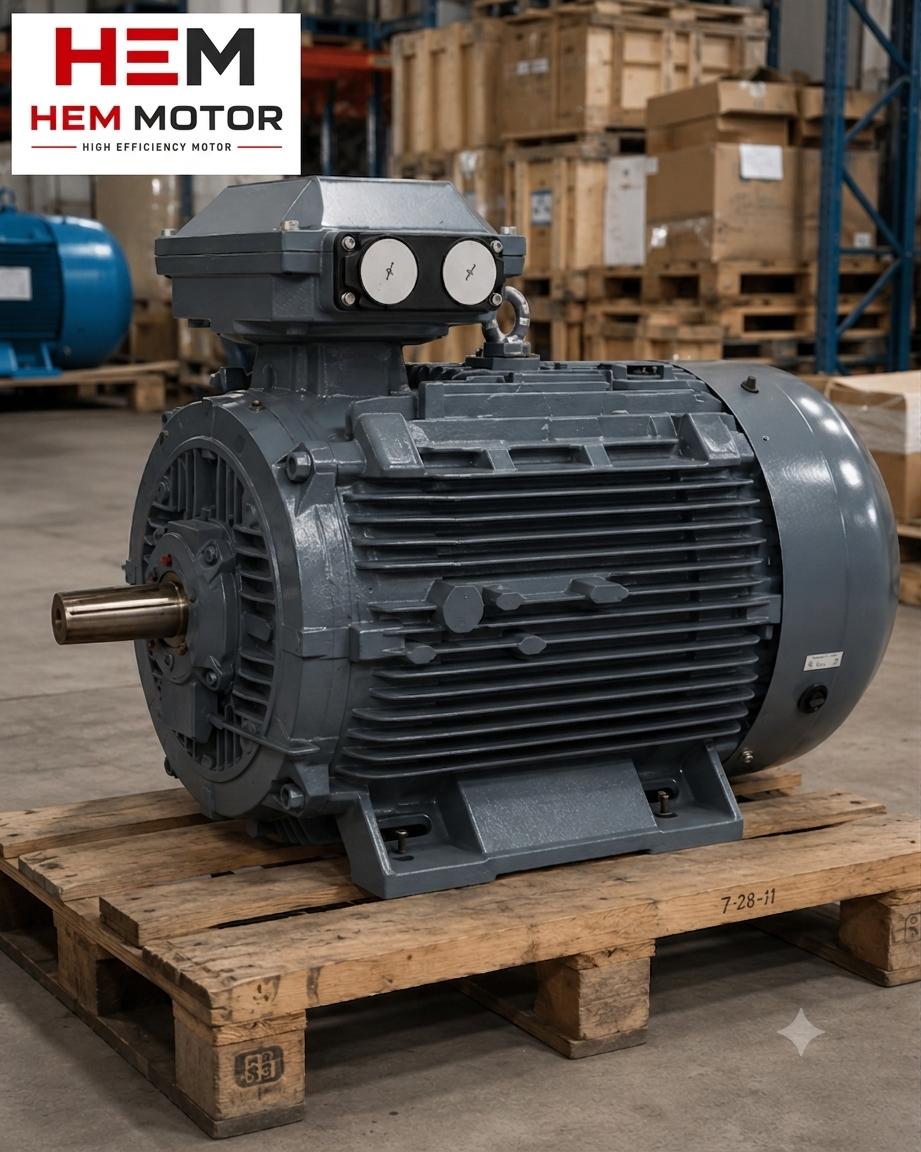
Why Does Motor Noise Matter and How Is It Measured?
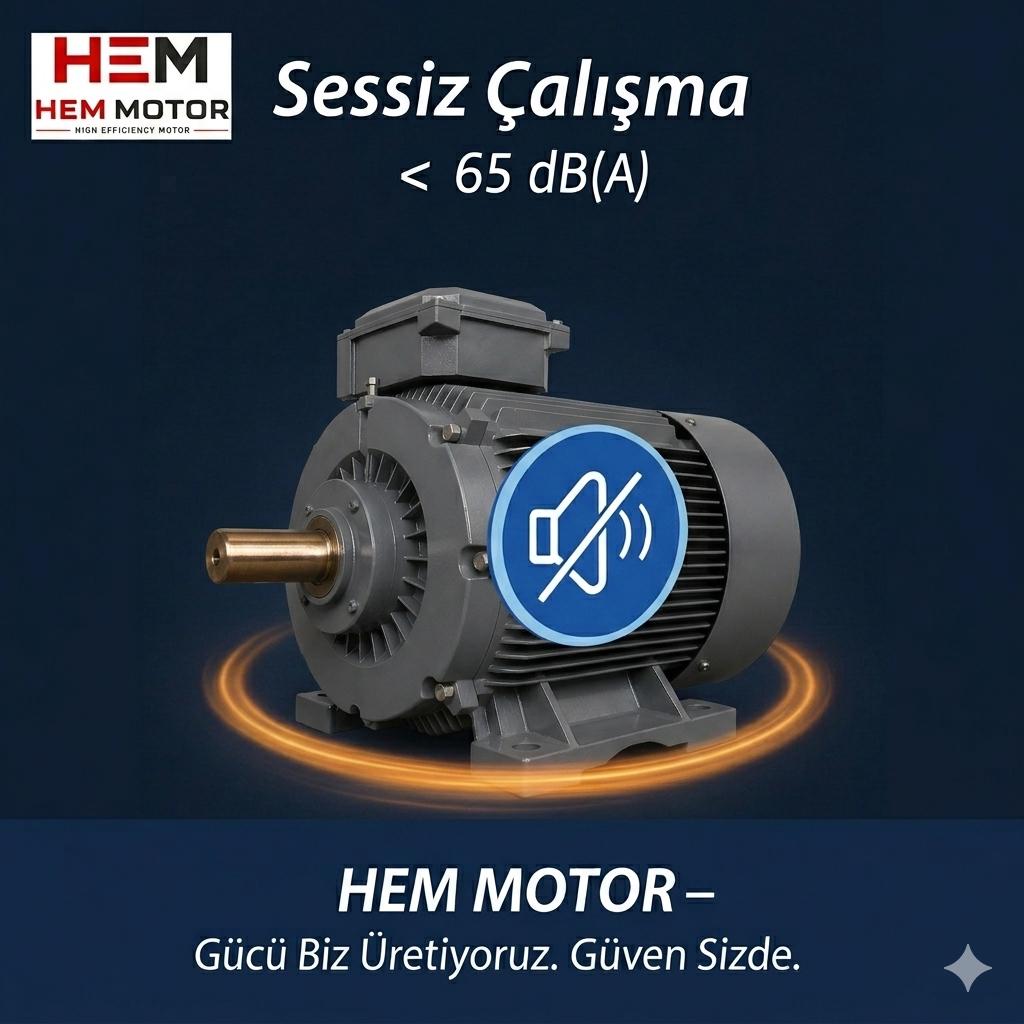
Motor noise is measured as sound pressure level in the unit of decibel A [dB(A)]. The A-weighted measurement is accepted as standard in motor selection because it emphasises the frequencies the human ear is sensitive to. Even a few dB(A) difference between two motors of the same power creates a noticeable comfort difference in an enclosed environment; because the decibel is a logarithmic scale and every 3 dB(A) increase means roughly a doubling of sound energy.
Noise is often assessed together with vibration, because the two can be fed by the same mechanical sources. For a comprehensive view that handles noise and vibration together, our article on noise and vibration in electric motors is a complementary resource. To tell whether an abnormal sound is a failure symptom, our article on electric motor failures can be consulted.
Magnetic Noise: Slot Structure and PWM Effect
Magnetic noise arises when the forces created by the magnetic field between the stator and rotor vibrate the lamination stack and the body. This noise is usually heard as a high-frequency, fine hum or whine and can become more pronounced when the motor is loaded.
The Role of Slot Count and Geometry
The number and geometry of the stator and rotor slots directly determine the frequency and intensity of the magnetic forces. In a well-designed motor the slot counts are chosen so as not to create resonance and pronounced magnetic noise; the skew given to the rotor slots is also an important design measure that reduces magnetic noise. So magnetic noise is largely related to design and manufacturing quality and cannot easily be corrected afterwards; choosing the right motor from the start is the most effective way.
Noise From the Variable Frequency Drive (PWM)
When an asynchronous motor is run with a variable frequency drive (VFD), the pulse-width-modulated (PWM) voltage the drive produces can create an additional high-frequency magnetic noise in the motor. This relates to the drive's switching frequency; when the switching frequency is raised above the hearing band this whine can be largely reduced. When assessing noise in drive-fed systems this effect must be considered. We addressed the details of running a motor with a variable frequency drive in our article on asynchronous motors with a variable frequency drive (VFD).
Mechanical Noise: Bearing and Imbalance
Mechanical noise stems from the motor's rotating and contacting parts. Its two most common sources are bearing noise and rotor imbalance. Unlike magnetic noise, mechanical noise is often the herald of a maintenance or quality problem and should be followed up.
Bearing-Related Sound
A healthy bearing turns almost silently. A rattle, growl or metallic whine coming from the bearing indicates that lubrication has broken down, the bearing has worn or foreign matter has entered. Insufficient or excessive grease, the wrong grease type and bearing clearance are the main causes of these sounds. So a significant part of mechanical noise can be prevented with correct lubrication discipline. We examined the effect of bearing lubrication on life in our article on bearing type and life in asynchronous motors.
Imbalance and Alignment Error
Rotor imbalance causes the motor to produce vibration and a low-frequency rumble as it turns. In a well-made motor the rotor is dynamically balanced at the factory; in a poor-quality or damaged rotor, imbalance creates both noise and rapid bearing wear. Also, if the motor is not well aligned with the machine it drives (coupling misalignment), this too produces mechanical noise and vibration. For correct mechanical matching our article on motor shaft diameter and key dimensions offers guidance.
Aerodynamic Noise: The Cooling Fan
Most asynchronous motors cool themselves with a fan on the rear cover. While creating air movement, this fan inevitably produces aerodynamic noise. Aerodynamic noise is the dominant noise source especially in 2-pole (3000 rpm) high-speed motors; because the faster the fan turns, the more the air noise increases.
The Relationship Between Fan Design and Speed
The number and shape of the fan blades and the geometry of the fan cover (cowl) directly affect aerodynamic noise. Low-noise motors use specially designed quiet fans and optimised air paths. If noise is critical in a high-speed application, a lower-speed (4- or 6-pole) motor with a suitable gearbox combination can be preferred where possible to reduce both noise and aerodynamic loss. We detailed the effect of cooling and fan design on efficiency in our article on cooling and fan design in IE4 motors.
The Effect of Speed Selection on Noise
As a general rule, as speed rises both aerodynamic and magnetic noise increase. If you can meet the same application with a lower-speed motor, the noise level usually drops noticeably. We addressed the relationship of pole count selection with efficiency and noise in our article on asynchronous motor pole selection; in low-noise systems speed selection is the first step of design.
Noise in Fan and Ventilation Applications
Ventilation and fan systems are among the applications where noise is most critical, because these systems usually run close to spaces where people are present. In an HVAC unit or building ventilation, motor noise can be carried into living areas through the ducts. Here both the motor's own noise and the noise of the fan it drives must be assessed together. Low-speed motors with quiet fans stand out in these applications.
Speed selection is especially important in fan motors; turning a large-diameter fan at low speed is usually quieter than turning a small fan at high speed. So in ventilation projects the motor and fan are sized together. We addressed the project-based management of fan motor supply in our article on fan motor supply in HVAC projects. In high-airflow systems such as aspiration and dust collection, aerodynamic noise is more pronounced; for motor selection in these applications our article on aspirator and dust collection fan motor selection offers guidance.
Regulation and Worker Health
In workplaces noise is not only comfort but also an occupational health matter. For workers exposed to a continuously high sound level there are certain limit values and protective measures. Observing a low dB(A) value in motor selection makes it easier to stay below these limits and can reduce the cost of additional noise insulation. So a quiet motor both protects worker health and lowers the cost of extra measures for the plant.
How Do You Tell the Three Noise Sources Apart in the Field?
When you hear an abnormal sound in a motor, correctly diagnosing the source determines the direction of intervention. A practical method is this: changing the motor's load and speed and observing how the sound changes. Magnetic noise changes noticeably when the load changes and, in drive-fed motors, depends on the switching frequency; it disappears instantly the moment the motor power is cut. Mechanical noise, however, continues to be heard even after the motor power is cut, as long as the shaft keeps turning (free coast-down); this is a strong sign that the sound comes from the bearing or balance.
Aerodynamic noise is heard as a continuous, broadband air sound that increases with speed; its character changes when the fan cover is removed. Applying these three tests together largely narrows down the source even without expensive diagnostic equipment. Reading the nature of the sound correctly prevents unnecessary disassembly and part replacement and speeds the right maintenance decision. For a more comprehensive failure diagnosis, our article on electric motor life and early failure causes offers a holistic framework.
Resonance: The Hidden Factor That Amplifies Noise
Sometimes the motor itself is at a reasonable noise level, but the chassis, base or pipeline it is mounted on amplifies this sound. This is called resonance; when the motor's vibration frequency coincides with the natural frequency of the structure it is mounted on, sound and vibration increase unexpectedly. In this case the problem is not in the motor but in the mounting; reinforcing the base, vibration isolation pads or rearranging the connection points can noticeably reduce the noise. So the low-noise target relates not only to motor selection but also to correct mounting.
The Relationship Between Noise, Efficiency and Mechanical Quality
Low noise is often an indicator of high manufacturing quality. A well-balanced rotor, a quality and correctly lubricated bearing, an optimised fan and correct slot design both quieten the motor and reduce mechanical losses, contributing to efficiency. So noise can indirectly be read as an indicator of quality and efficiency. A motor running continuously at high noise is often a motor losing more energy than necessary.
This relationship makes the noise value an important criterion in assessing a cheap motor at the purchasing decision. If the lowest first-cost motor is noisy and inefficient, it can be more expensive over the operating life in both energy and maintenance. So the noise value is a supply criterion to be assessed together with power and efficiency. To tell mechanical quality marks apart, our article on early failure causes helps to understand quality at purchase.
What to Watch in Low-Noise Motor Selection?
To choose a quiet motor several criteria should be assessed together. First, the dB(A) sound level value given by the manufacturer should be checked; assessed together with motor power and speed, this value provides a realistic comparison. Second, speed selection is made: if the application allows, a lower-speed motor is quieter. Third, a quality bearing and a balanced rotor keep mechanical noise low from the start. Fourth, if it will run with a drive, the switching frequency should be set correctly.
In noise-sensitive environments (hospitals, hotels, offices, HVAC plants near residential areas) motor selection should be made from the start with a low-noise target. Such projects require special attention to fan motor and ventilation applications. You can reach all our asynchronous motor topics from the asynchronous / AC motors category, mounting and connection options from our electric motor mounting types page, and our entire product range from our home page.
Frequently Asked Questions
Is the whine in my motor a failure symptom?
A fine, high-frequency hum is often magnetic in origin and can be normal, especially in motors running with a variable frequency drive; it can be reduced by adjusting the drive's switching frequency. But a rattle, growl, metallic friction or a steadily increasing rumble is mechanical in origin; it points to a bearing, lubrication or balance problem and should be followed up. The character of the sound is the first clue to telling its source apart.
Which speed of motor is quieter?
As a general rule, as speed decreases noise drops; 4- and 6-pole (1500 and 1000 rpm) motors are usually quieter than a 2-pole (3000 rpm) motor of the same power. The main reason for this is that aerodynamic fan noise increases markedly at high speed. If your application allows, a lower-speed motor provides an advantage in terms of noise.
What should I look at for a low-noise motor?
Assess together the dB(A) sound level value given by the manufacturer, the speed selection, the bearing and rotor quality and, if it will run with a drive, the switching frequency. If you are in a noise-sensitive environment, share your application details with us; we will help you determine a motor suited to the low-noise target.
Get a Quote
Would you like support on supplying a low-noise asynchronous electric motor for a noise-sensitive application? Send us your power, speed, application and environment details, and we will quickly offer the most suitable solution. Call now on +90 (532) 345 49 86 or send your quote request via our contact page.