English
 Türkçe

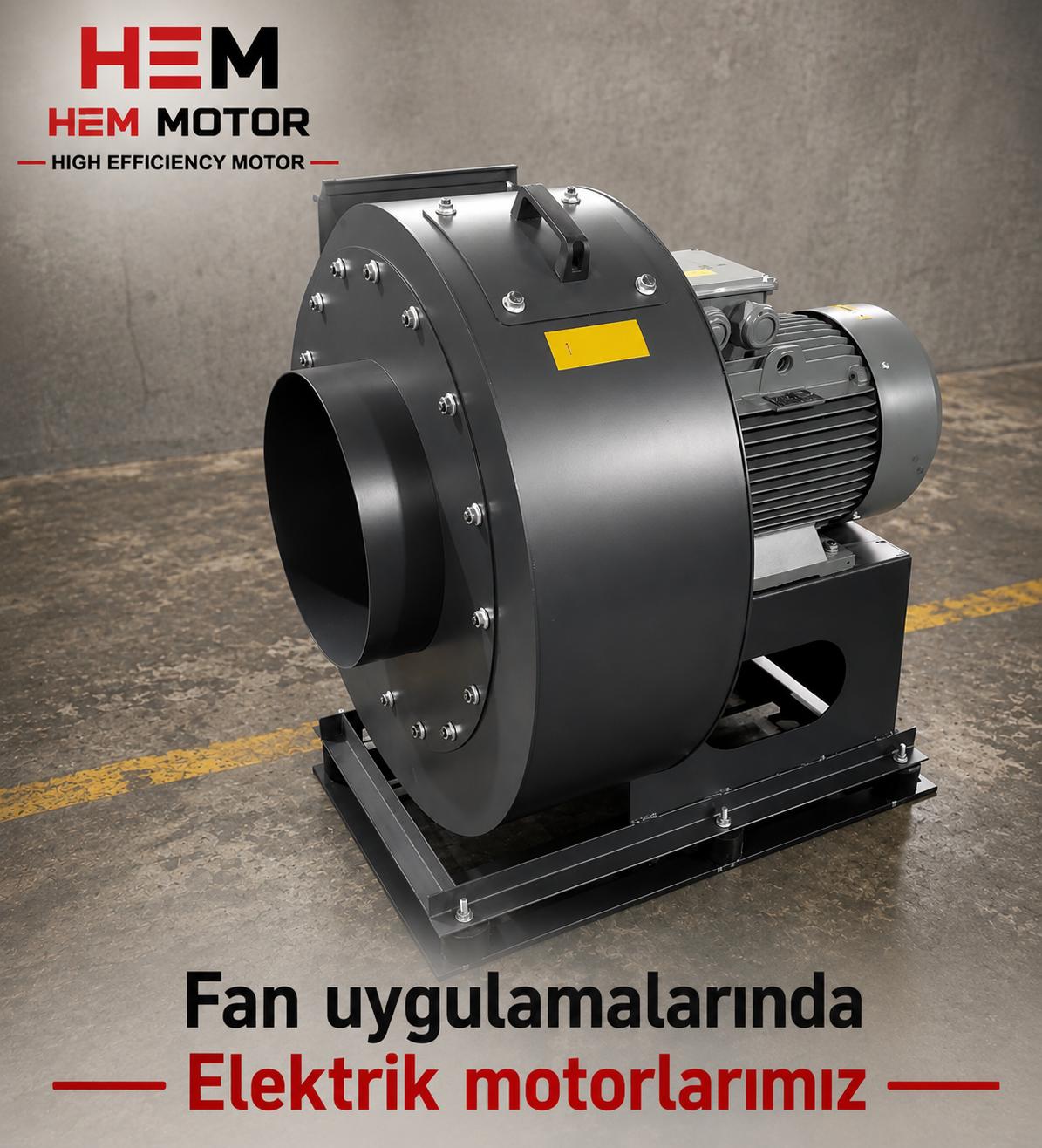

A paint booth is one of the most sensitive and critical sections of any facility. While solvent vapors, paint particles and flammable volatile organic compounds circulate inside, the exhaust fan motor that draws this air out must run continuously and reliably for both operator safety and coating quality. Even a small mistake in paint booth exhaust fan motor selection can cause vapor build-up inside the cabin, dust and insect blemishes on the surface, or even an explosion risk. In this article we examine the airflow calculation, static pressure, ATEX/explosion-proof requirement, continuous duty rating and correct supply criteria from the perspective of an electric motor manufacturer and seller. For current electric motor prices and stock availability, you can review our product categories.
The Job of the Booth Exhaust Fan and Its Effect on the Motor
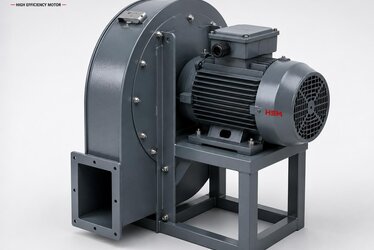
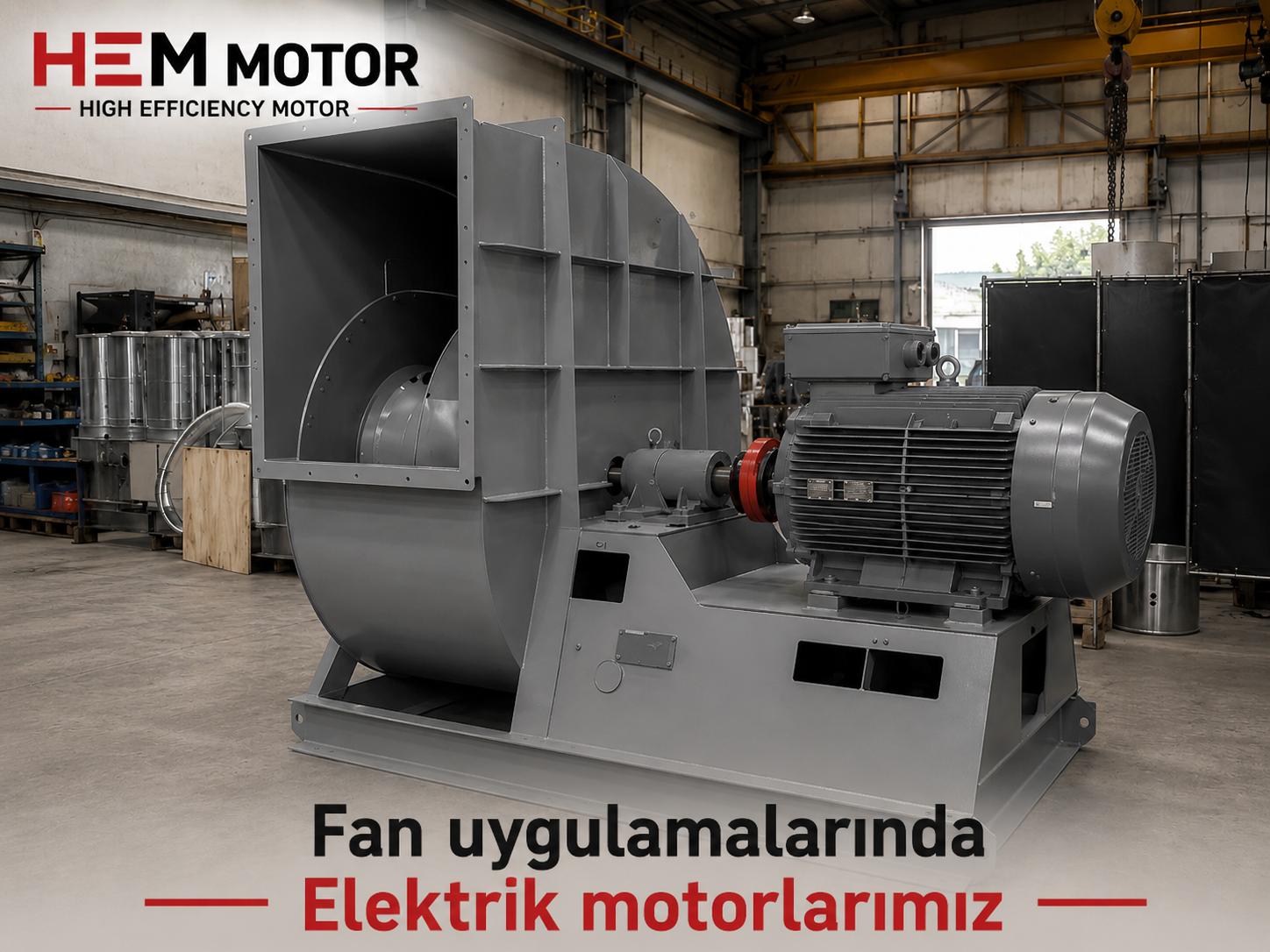
A paint booth exhaust system is a balanced airflow arrangement that pulls contaminated air through a filter and discharges it outside, while supplying fresh air into the cabin. The heart of this system is the centrifugal fan on the exhaust side and the electric motor that drives it. The motor must continuously generate the booth's design airflow against filter resistance and duct losses.
The challenges a motor faces in a paint shop are far heavier than those of an ordinary ventilation fan:
- Solvent vapor: Thinner, xylene and acetone-type volatile solvents enter the air stream; at certain concentrations these vapors form an explosive atmosphere.
- Continuous duty: Throughout painting and curing cycles the fan runs for hours without stopping, which requires an S1 continuous duty rating.
- Filter clogging: As filters fill, system resistance rises, the fan operating point shifts and the motor current changes.
- Paint particles and dust: Paint and dust sticking to the motor frame impair cooling and raise temperature.
For these reasons, a paint booth exhaust fan motor should be selected with IP55 protection, Class F insulation and a continuous-duty design. In an explosive zone, an explosion-proof (ATEX) motor is mandatory rather than a standard motor.
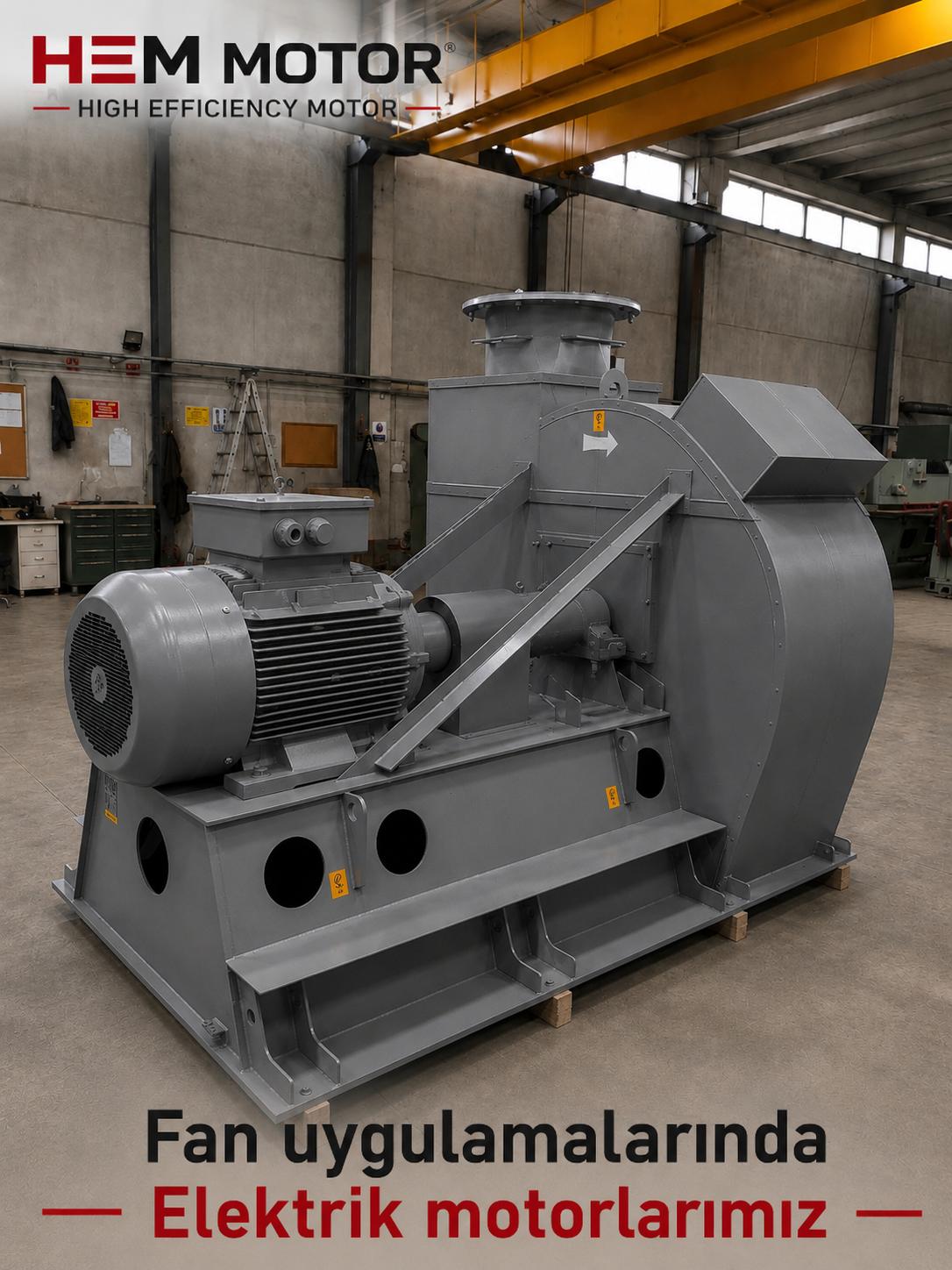
Airflow and Static Pressure: The Basis of Correct Power
The fan motor's power is determined directly by the air volume the fan produces and the total static pressure it must overcome. The required airflow in a paint booth comes from the booth cross-section area multiplied by the desired air velocity. In the industry, a certain air velocity is targeted in cross-draft booths and a higher velocity in downdraft booths; this velocity is critical for carrying paint particles away from the operator and quickly evacuating overspray.
From Airflow to Motor Power
Fan power depends fundamentally on the product of airflow and static pressure, divided by fan efficiency and motor efficiency. In practice you proceed in three steps:
- Determine the required airflow from the booth cross-section and target air velocity.
- Add up the resistances of filters (paint arrestor + final filter), ducting, louvres and stack to find the total static pressure.
- Select the operating point from the fan curve using these two values; the fan shaft power at that point sets the motor power class.
The critical point when sizing motor power is that when the filter clogs, system resistance rises and the fan draws more power. Therefore sizing should be based on the dirty-filter condition, not the clean-filter condition, with a reasonable power margin. Excessive margin makes the motor run permanently at low load with poor power factor; too little margin overloads and overheats the motor as the filter fills.
Speed and Pole Selection
Centrifugal exhaust fans are usually driven directly coupled or via belt-and-pulley by 1500 rpm (4-pole) motors. For low noise and large-diameter fans, 1000 rpm (6-pole) may be preferred. A belt-and-pulley arrangement allows the fan speed to be set independently of the motor and lets one motor serve different operating points; however, direct-coupled systems need less maintenance.
ATEX and Explosion-Proof Requirement: The Most Critical Decision
The most vital decision in paint booth exhaust fan motor selection is whether the motor sits inside or outside the explosive atmosphere. The exhaust fan is often directly within the airflow carrying solvent vapor, which requires the fan and any motor that stays in the stream to be certified for explosive atmospheres.
- Zone classification: The booth interior and exhaust duct are classified as an explosive zone (Zone 1 / Zone 2) according to the vapor concentration in the environment.
- Explosion-proof motor: A motor remaining in the vapor stream should be selected with a suitable protection type such as flameproof (Ex d) or increased safety (Ex e), and the correct temperature class.
- Moving the motor out of the stream: If the design lets the motor be separated from the fan hub by a shaft and placed on the clean-air side (outside the stream), a safe solution with a standard IP55 motor is possible. This is advantageous for both cost and lead time.
To make this decision correctly, the facility's explosion protection document and zone map must be the basis. Our article explosion-proof vs standard asynchronous motor clarifies the right choice according to environment class. For mixers and process motors on the paint and varnish production side, our ATEX electric motor in a paint plant guide is complementary.
Continuous Operation, Cooling and Protection Class
In most facilities the paint booth fan almost never stops during a shift. This continuous duty (S1) means the motor reaches thermal equilibrium and runs for hours at that temperature. Three critical features stand out here:
- Class F insulation, Class B temperature rise: If the winding is sized to operate with a lower temperature rise, its lifetime is noticeably extended.
- IP55 protection: Paint particles and dust must not enter the motor; terminal box sealing must be ensured with the correct cable gland.
- Cast iron frame: A cast iron frame that dissipates heat well and is mechanically robust provides long life in harsh environments such as paint shops.
Vibration and imbalance transmitted from the fan impeller directly affect bearing life. Therefore the fan-motor assembly must be balanced and properly aligned.
Airflow Control with a VFD (Variable Frequency Drive)
In modern paint booths the exhaust fan is often driven by a variable frequency drive (VFD). The reason is that painting and curing phases require different airflows, and operators want to keep the flow constant as the filter fills. When operating with a VFD, the following points must be observed:
- The motor should be selected with reinforced insulation suitable for drive supply.
- Motors that cannot cool with their own fan at low speed may require external cooling.
- Over long cable runs, suitable cable and filters should be evaluated against dV/dt and voltage overshoot risk.
For airflow control and correct power matching, our articles on centrifugal and axial fan motor selection and aspirator and dust collection fan motor provide complementary information.
Factors That Determine the Motor's Lifetime in a Paint Shop
A paint booth exhaust fan motor works in a far more aggressive environment than an ordinary industrial motor. Understanding this environment's effect on the motor correctly is essential both to choose the right product and to achieve the expected lifetime. The life-shortening factors most often encountered in the field are:
- Paint and dust build-up: Paint and dust sticking between the cooling fins of the motor frame seriously reduce heat dissipation. A motor that cannot cool runs permanently at high temperature, and the winding insulation ages rapidly. Therefore periodic cleaning of the frame is indispensable in paint shop motors.
- Chemical effect of solvent vapor: Some solvent vapors can over time damage the motor paint and terminal box gaskets. A corrosion- and chemical-resistant frame paint makes a meaningful difference in this environment.
- Vibration: An unbalanced fan impeller or faulty alignment fatigues the bearings early. Bearing failure in paint shop motors most often results from an inadequately balanced fan-motor assembly.
- Continuous high temperature: In the curing phase the booth temperature rises and the exhaust air heats up. The motor must be selected for the expected ambient temperature; otherwise the motor is thermally stressed even at loads below its rated power.
When these factors are evaluated together, the "cheapest standard motor" approach in paint shop exhaust motor selection often proves costly. Continuous duty, IP55 protection, Class F insulation and a robust cast iron frame may look slightly more expensive in the initial investment, but they reduce the total cost of ownership by lowering failure and downtime costs.
Mounting Type, Shaft and Connection Must Be Selected Correctly
The mechanical connection of the exhaust fan motor is determined by the fan type and the mounting arrangement. A wrong mounting type or shaft diameter selection causes the motor to be unable to connect to the fan at all or to run with vibration.
- B3 foot-mounted motor: In belt-and-pulley-driven fans, the foot-mounted motor sits on a base and the pulley tension is adjusted.
- B5/B35 flange motor: Flange mounting is preferred in direct-coupled systems (directly connected to the fan hub); this is a compact, low-maintenance solution.
- Shaft diameter and key: The shaft diameter and key dimension on which the pulley or impeller hub will sit must be confirmed before ordering.
- Terminal box orientation: The terminal orientation must be ordered correctly according to the side the cable will come from; otherwise cable routing becomes difficult on site.
These mechanical details are as important as the motor's technical power. Even if a motor is at the right power, if it is ordered with the wrong mounting type it will not fit on site at all and the supply process starts over.
Correct Supply: Stock, Equivalent and Fast Delivery
When a paint booth fan fails, production stops; therefore supply speed is at least as important as technical accuracy. As an electric motor manufacturer and seller, the supply criteria we emphasize are:
- An exact equivalent recommendation based on the existing motor's nameplate data (power, speed, frame, mounting type, shaft diameter).
- Fast delivery from stock for standard power-speed combinations; a clear lead time for special explosion-proof requests.
- Ordering the mounting type (B3 foot, B5/B35 flange) and terminal box orientation correctly according to the site.
- Reducing energy cost with IE3/IE4 efficiency classes in the industrial fan motor range.
You can find our motor options designed for fan applications in the HEM Motor product catalog.
Frequently Asked Questions
Must a paint booth exhaust fan motor always be explosion-proof?
If the motor stays within the airflow carrying solvent vapor or is located inside an explosive zone classification, it must be explosion-proof (ATEX) certified. However, if the motor can be separated from the fan by a shaft and placed on the clean-air side (outside the stream), a standard IP55 motor can also be used after a proper zone assessment. The decision must rest on the facility's explosion protection document.
Why is the motor overloaded when the filter clogs?
When the filter clogs, system resistance (static pressure) rises and the fan operating point shifts along its curve. In centrifugal fans this usually increases shaft power and raises motor current. That is why motor power should be selected based on the dirty-filter condition with a reasonable margin; otherwise the motor overheats and the thermal protection trips.
Should I buy the exhaust fan motor with a variable frequency drive?
If you need different airflows during painting and curing phases, or want to keep the flow constant as the filter fills, a variable frequency drive offers a clear advantage and energy savings. In that case the motor should be selected with insulation suitable for drive supply and the need for cooling at low speed should be evaluated. For simple constant-flow systems, direct starting may be sufficient.