English
 Türkçe

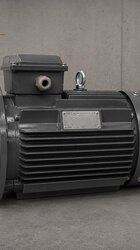
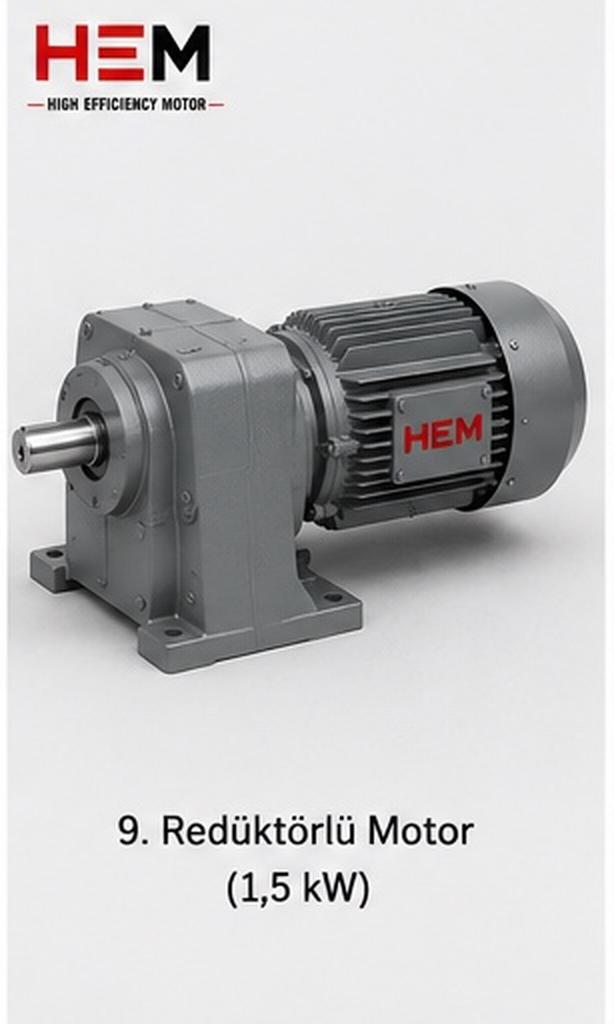

IE5 synchronous reluctance motors (SynRM) are the ultra premium motors at the very top of the efficiency classes, and they differ from asynchronous motors in one fundamental way: they cannot connect to the grid and run on their own; they are always driven by a frequency drive (VFD). The drive manages the motor's magnetic field according to the rotor's actual position. And precisely at this point, a critical component comes into play in some applications: the resolver or position sensor. Rotor angle feedback may be required for the drive to run the motor with the highest efficiency and the most stable torque. In this article we cover why rotor position feedback matters, the difference between sensored (closed-loop) and sensorless (open-loop) control, and what you need to know for correct supply.
At HEM Motor, when we deliver the IE5 SynRM motor and drive as a package, we prioritize understanding the application's real need. Because not every application requires a resolver; while loads such as pumps and fans often run perfectly well with sensorless control, lifting, positioning, and precise-speed applications that need full torque at zero speed require closed-loop feedback. To determine the right package together, you can share your application with us from our electric motor prices page.
Why Must Rotor Position Be Known?
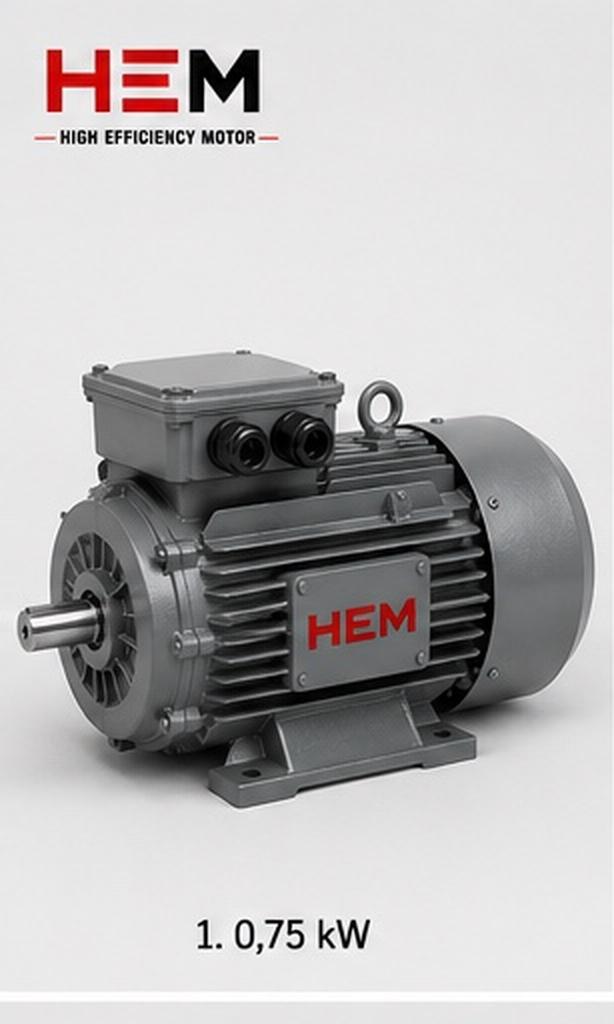
In a synchronous reluctance motor, the rotor does not turn with slip as in an asynchronous motor; it rotates synchronously with the rotating magnetic field produced by the stator. The rotor has no magnet; it produces torque through its tendency to align with the position of lowest magnetic reluctance. For this structure to operate efficiently, the drive must steer the stator's magnetic field at exactly the right moment according to the rotor's instantaneous angular position.
The drive can know where the rotor is in two ways:
- Sensorless estimation: The drive estimates the rotor position from the motor's current and voltage using a mathematical model. It adds no hardware, is low cost, and is sufficient for many applications.
- Sensored (closed-loop) measurement: A resolver or encoder mounted on the shaft end measures the rotor angle directly and gives the drive the actual position. This provides the most stable and most precise control.
We addressed the supply and cost advantages of the magnet-free rotor structure in detail in our supply advantage of the magnet-free rotor article. We examined why SynRM cannot run without a drive in our why SynRM cannot run without a drive article.
The Difference Between a Resolver and an Encoder
There are two common sensor types for measuring rotor position, and the right choice depends on the environment:
- Resolver: A position sensor that works on the principle of magnetic induction, contains no electronics inside, and is extremely durable. It is highly resistant to high temperature, vibration, dust, and moisture; therefore it is preferred in heavy industry, mining, and harsh field applications.
- Encoder: Provides position at high resolution optically or magnetically. It is superior in precise positioning and high-dynamic applications, but because it contains electronics it is not as resistant to temperature and vibration as a resolver.
For this reason, the answer to "resolver or encoder" changes with the application. While a resolver is the safe choice in a dusty, hot, vibrating crusher or mill drive; an encoder may be preferred if very precise positioning is needed on a clean production line. This selection too must be planned together with the motor and drive.
Sensored or Sensorless? Decision by Application
The heart of the correct supply decision lies in this question: does your application require full torque at near-zero speed, or does it operate above a certain speed?
Applications Where Sensorless Control Is Sufficient
- Centrifugal pumps and fans (load decreases with speed, no torque needed at zero)
- Compressors and continuous constant-speed continuous loads
- Most conveyors (soft start is sufficient)
- General process drives
In these applications, sensorless control both lowers cost and provides mechanical simplicity by not adding an extra part to the shaft end. We addressed IE5's savings advantage at continuous load in pumps, fans, and compressors in our savings with IE5 in pumps, fans, and compressors article.
Applications Requiring a Resolver/Closed Loop
- Cranes and lifting systems (full torque is essential while holding the load at zero speed)
- Machines performing precise positioning
- Extruders, winding, and tensioning lines needing high and stable torque at very low speed
- Applications where speed stability under sudden load change is critical
In these applications, the resolver continuously reports the rotor's actual position to the drive, enabling full and vibration-free torque even at zero speed. We examined how torque response is managed under sudden load change in our torque response under sudden load change article.
Motor-Drive-Sensor Compatibility for Correct Supply
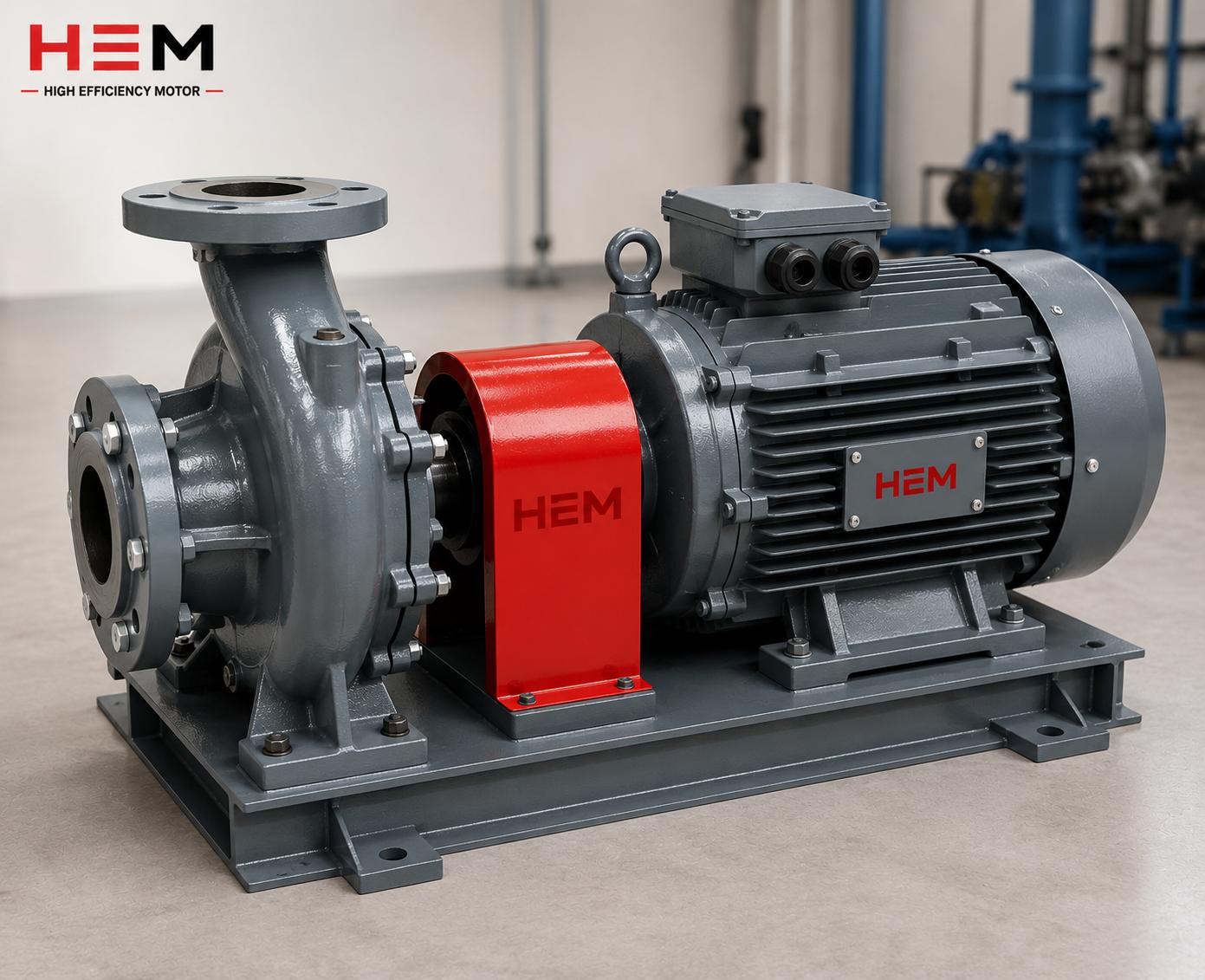
The most common mistake in IE5 SynRM supply is to procure the motor and drive separately and to think about the sensor need afterward. In fact, the motor, the drive, and (if needed) the resolver/encoder must be planned as a whole. Because:
- The drive must support a resolver or encoder input card; adding it later may not always be possible.
- The motor's shaft end being suitable for sensor mounting (B end shield, sensor flange) must be stated at the order stage.
- The sensor type and the drive's feedback protocol must be compatible.
- At commissioning, autotune and parameterization are done according to the chosen control type.
We detailed the drive parameterization and commissioning steps in our SynRM drive parameterization article; and the drive and installation compatibility in our drive and installation compatibility article. At HEM Motor, we plan your IE5 SynRM motor as a compatible package with a suitable drive and, if needed, a position sensor.
What You Should Share Before Ordering
- The type of application (pump, fan, crane, extruder, positioning, etc.)
- Whether full torque is needed at zero or very low speed
- The operating speed range and required power
- Environmental conditions (temperature, dust, vibration, moisture)
- If there is an existing drive, its brand and model information
With this information we determine together whether your application truly needs a resolver, avoiding unnecessary cost, or providing full control with the right sensor where it is needed. If you would like to review our IE5 range, our high-efficiency electric motors page is a good starting point.
The Performance Closed-Loop Control Provides
It is worth making concrete the advantages that closed-loop control with a resolver brings. When the drive continuously measures the rotor's actual position, it becomes possible not just to "turn the motor" but to manage it far more precisely:
- Full torque at zero speed: While a crane load hangs in the air, the motor must produce full torque at zero speed. Because closed-loop control knows the rotor position, it can produce this torque stably; sensorless control struggles to estimate position at near-zero speed.
- High positioning accuracy: In positioning machines, the shaft may need to be brought to a specific angle. Resolver/encoder feedback makes this accuracy possible.
- Stability under sudden load change: When the load suddenly increases or decreases, closed-loop control rapidly compensates for the speed drop. This preserves product quality in applications carrying impact loads.
- Smooth rotation at low speed: While slight cogging may appear in sensorless control at very low speeds, rotation is smoother in a closed loop.
These performance advantages are not necessary in every application; but where needed, they offer a stability and accuracy that sensorless control cannot reach. If you are curious about the SynRM motor's efficiency superiority at partial load, our SynRM efficiency curve and partial load article explains the topic.
Nameplate Reading and Drive Matching
In IE5 SynRM motor supply, a topic as important as the resolver decision is matching the motor's nameplate correctly with the drive. A SynRM motor may have different rated values than an asynchronous motor; rated current and power factor behave differently than in an asynchronous motor. Therefore, the drive must be set with parameters suited to the motor's rated values. Otherwise the motor either cannot deliver its full power or heats unnecessarily.
We addressed the information that must be read correctly from the nameplate and how it is matched with drive parameters in our SynRM nameplate and label reading article. We examined the effect of rated current and power factor on panel and drive selection in our SynRM rated current and power factor article. In an installation using a resolver, the sensor resolution must also be reflected in the drive parameters; when all these details are planned from the start, commissioning proceeds smoothly.
Compatibility With Different Drive Brands
The brand of the drive with which the IE5 SynRM motor will be used directly affects resolver/encoder support. Not every drive may support every sensor type or every feedback protocol. Therefore, if there is a specific drive brand standard in the facility, the motor and sensor must be selected compatible with that brand. We addressed correct matching in a multi-drive option in our compatibility with different drive brands article. At HEM Motor, by asking about your existing drive infrastructure, we recommend a package that guarantees sensor and feedback compatibility from the start.
Frequently Asked Questions
Does my IE5 SynRM motor necessarily require a resolver?
No. Most loads such as pumps, fans, and compressors run perfectly well with sensorless control. A resolver or encoder is needed in applications requiring full torque at zero speed, precise positioning, or high stability under sudden load change. If you describe your application to us, we will determine together which one is needed.
Should I prefer a resolver or an encoder?
The environment is decisive. Because a resolver contains no electronics, it is highly resistant to temperature, dust, vibration, and moisture; it is preferred in heavy industry and field applications. An encoder is superior when very high resolution and precise positioning are needed in a clean environment. We recommend according to your application's conditions.
Can I add the sensor later?
Not always. Both the motor's shaft end and B end shield must be suitable for sensor mounting, and the drive must support a feedback input card. Therefore, planning the motor, drive, and sensor as a package from the start is the safest path. We recommend clarifying your need before ordering.