English
 Türkçe

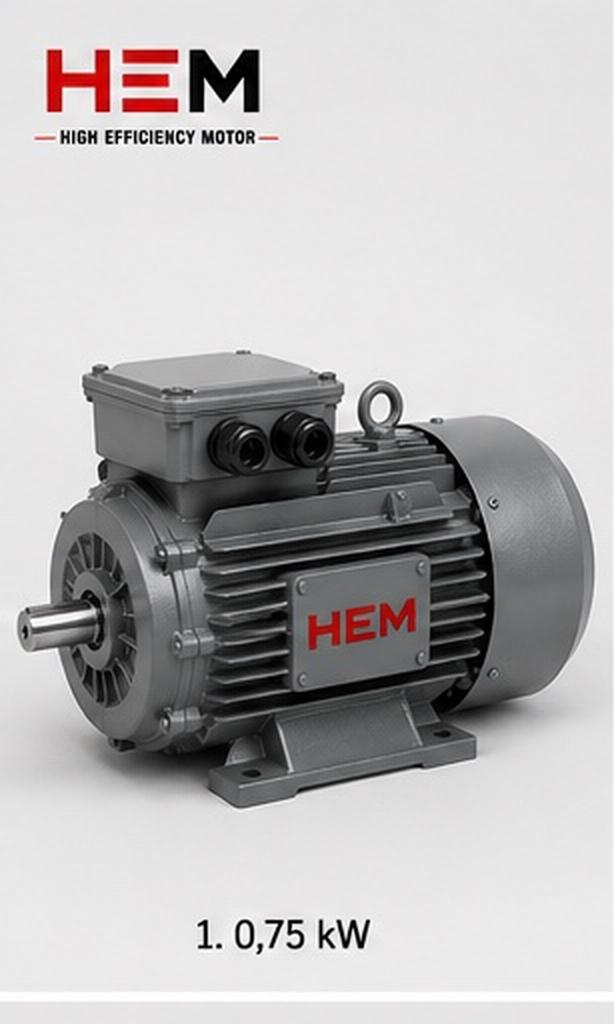

IE5 synchronous reluctance motors always run with a frequency drive (VFD), because the synchronous reluctance rotor cannot start directly from the grid. The voltage at the drive output is not a true sine but a square wave made of high-frequency pulses (PWM). The very steep edges of these pulses, that is the high du/dt value, cause a reflected-wave phenomenon on long motor cables and voltage spikes at the motor terminal that reach almost twice the supply voltage. Over time these spikes stress the winding insulation and can lead to early failure. This is exactly where a sine filter fitted at the drive output smooths the pulsed voltage and delivers an almost clean sine wave to the motor; it protects the winding insulation and provides quiet operation. This article covers the du/dt and reflected-wave phenomenon, the terminal voltage spike, the difference between a sine filter and a du/dt filter, the effect of long cables and the correct filter selection, all from a purchasing-decision perspective.
du/dt, Reflected Wave and Terminal Voltage Spike
A PWM drive produces its output voltage as pulses that rise and fall very fast. The rate of voltage change at a pulse edge is called du/dt, usually expressed in kV/µs. In modern IGBT drives the switching is very fast, so the du/dt value is high. This fast edge travels along the motor cable like a wave. When the cable length exceeds a certain critical value, the wave reflects back at the motor terminal because of impedance mismatch and superimposes on the incoming wave, raising the voltage. This is called the reflected wave.
The voltage spike that forms at the motor terminal as a result of the reflected wave can theoretically reach roughly twice the DC bus supply voltage. So in a drive fed from a 400 V grid the terminal spike can rise to the order of 1000 V. Because these spikes repeat at every switching pulse, the first turns of the winding are continuously exposed to high voltage stress. The insulation fatigues over time under this repeated stress; partial discharges begin and the insulation finally breaks down. In motors such as IE5 that are high-efficiency and always drive-fed, this risk must not be ignored.
The Relationship Between Cable Length and the Spike
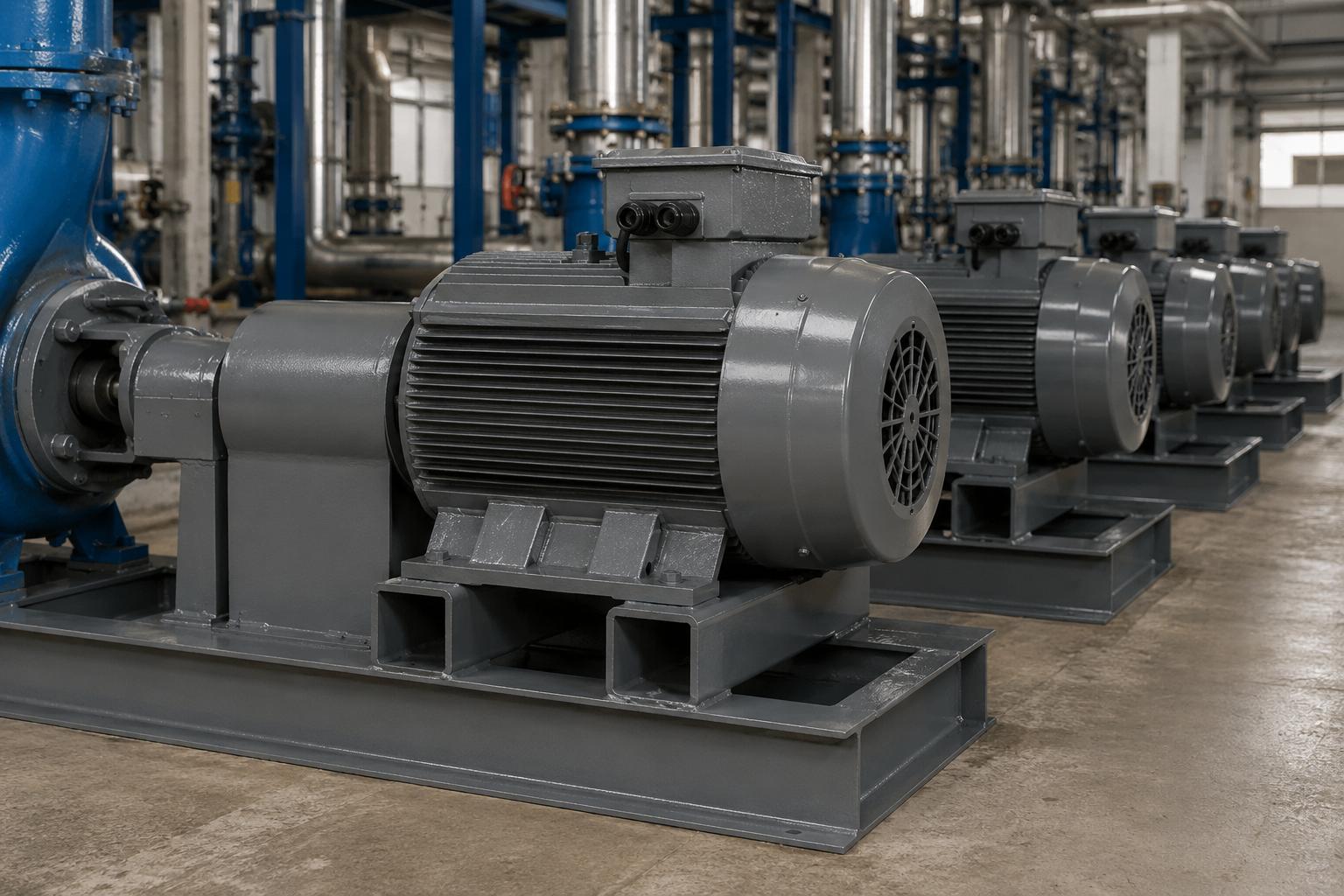
The size of the terminal voltage spike depends on the cable length and the pulse rise time. The longer the cable, the more pronounced the reflection once the critical length is exceeded. The table below summarises the typical relationship between cable length and the terminal spike and the recommended measure; values are a general engineering approach, with the exact limit varying by drive and cable type.
| Cable length | Terminal voltage spike trend | Recommended measure |
|---|---|---|
| Short (≈ under 10 m) | Low; usually not a problem | Usually no filter needed |
| Medium (≈ 10–50 m) | Rising spike; insulation stress begins | Consider a du/dt filter |
| Long (≈ 50–100 m) | High spike (≈ near 2x) | du/dt or sine filter |
| Very long (≈ over 100 m) | Marked spike + extra loss | Sine filter recommended |
We cover inverter-duty winding insulation and filter selection on the IE4 side in our article on inverter-duty motor, du/dt voltage spike and filter selection, which explains the same physics in a complementary way. For bearing current and shaft grounding in drive operation, see IE5 synchronous reluctance shaft grounding and bearing current.
The Difference Between a Sine Filter and a du/dt Filter
There are two basic filters used at the drive output and their purpose differs. A du/dt filter consists of a small reactor and capacitor; it lengthens the pulse rise time and so reduces the du/dt value. The voltage spike still forms, but because the edge is softer the stress on the insulation is reduced. A du/dt filter is smaller, cheaper and lower-loss. A sine filter is a larger LC circuit; it fully filters the PWM pulses and delivers an almost pure sine voltage to the motor. With a sine filter the terminal spike practically disappears, the motor runs quietly and the insulation is fully protected even on long cables.
| Property | du/dt Filter | Sine Filter |
|---|---|---|
| Working principle | Softens the pulse edge | Filters PWM, makes a sine |
| Terminal voltage spike | Reduced (spike remains) | Practically eliminated |
| Output waveform | Still pulsed | Almost pure sine |
| Motor noise | Reduced | Markedly reduced (quiet) |
| Size and cost | Small, economical | Large, more costly |
| Long-cable suitability | Medium distance | Ideal for long distance |
| Extra loss | Low | Higher |
Protecting the Winding Insulation and Quiet Operation
The two most important contributions of a sine filter are protecting the winding insulation and quiet operation. When a near-pure sine voltage reaches the motor terminal, the high voltage stress on the first turns of the winding disappears; the partial-discharge risk falls and insulation life is extended. This directly increases operating reliability, especially in IE5 motors running with long cables in demanding environments. The second contribution is acoustic: PWM pulses create high-frequency vibration in the motor laminations and a characteristic high-pitched whine. Because the sine filter filters these pulses, the motor runs much more quietly; this is an important advantage in noise-sensitive plants.
- Insulation protection: The terminal spike disappears, partial discharge falls, insulation life is extended.
- Quiet operation: High-frequency magnetic noise is markedly reduced.
- Lower extra heating: A pure sine reduces harmonic-related motor heating.
- Long-cable compatibility: The terminal voltage stays under control even over long distances.
We explain why a synchronous reluctance motor cannot run without a drive, and the package selection, in our article why a synchronous reluctance motor cannot run without a drive. Drive parametering, autotune and commissioning steps are also important stages that directly affect the motor's efficiency and quiet operation.
Correct Filter Selection
Filter selection is made according to cable length, motor power, switching frequency and the noise/insulation sensitivity of the application. On short cables a filter is often not needed. At medium distance a du/dt filter may be enough to protect the insulation. On long cables, or in applications where quiet operation and maximum insulation protection are critical, a sine filter is the right choice. The filter's compatibility with the drive and the motor is sized according to current and voltage values.
- Cable length (the most decisive factor).
- Drive switching frequency and voltage level.
- Motor power and current (filter sizing).
- Noise sensitivity (a sine filter provides quietness).
- Insulation protection target and expected motor life.
How Do Partial Discharge and Insulation Fatigue Progress?
Understanding the damage the terminal voltage spike does to the winding insulation clarifies the filter decision. The first few turns of the winding take the entire voltage rise of the pulse coming from the drive; because when a fast-edged pulse enters the winding, the voltage does not distribute evenly between turns but piles up on the first turns. This pile-up creates a high electric field in the turn-to-turn insulation. When the field exceeds the material's strength limit, small sparks called partial discharges begin in microscopic air voids. Each spark tears a tiny piece from the insulation material.
This process does not happen at once but slowly over thousands and millions of pulses. Partial discharges erode the insulation gradually; at first there is no sign, but over the years the insulation thins and finally a full breakdown and winding failure appear. This is where the value of a sine filter becomes clear: by eliminating the pulses it prevents partial discharge from the start and halts this slow fatigue process. In long-cable, critical IE5 applications this protection is the key to the motor running safely for years. The cost of an unplanned winding failure is far above the cost of the filter.
Other Protection Methods Beyond the Filter
A filter is not the only defence against voltage spikes in drive operation; a holistic approach is sounder. The first line of defence is that the motor is built with inverter-duty insulation. In these motors the winding is wound with reinforced wire and insulation material to withstand higher impulse voltage than a standard motor. Second, using a low-inductance, screened and symmetrical cable between the drive and the motor reduces reflection and EMC problems. Third, choosing the drive switching frequency in a balanced way for the application matters; too high a frequency can cause more reflection on the cable and more heating in the drive.
Which combination of these measures is needed is determined by cable length and the criticality of the application. On a short cable inverter-duty insulation alone may be enough, while on a long cable inverter-duty insulation plus a sine filter together form the safest solution. For EMC, screened cable and grounding details, our article on grounding and EMC, screened cable in a VFD system is a complementary resource. Correct cable connection, cross-section and cable lug selection are also complementary topics to watch in long-cable drive systems.
The Place of the Filter in an IE5 Synchronous Reluctance Motor
IE5 synchronous reluctance technology offers one of the highest efficiency classes with its magnet-free rotor and low losses; but because this technology always runs with a drive, drive-related voltage stresses are a permanent reality for these motors. So the filter is not an accessory on IE5 motors but a component that determines the system's life and quietness. To enjoy the return on the high-efficiency investment for many years, the correct filter selection that protects the winding insulation should be treated as part of the investment.
The efficiency curve of synchronous reluctance motors is superior especially at part load; this makes them ideal for variable-load, drive-fed applications. You can find the detail of this efficiency advantage in our article on the efficiency curve of synchronous reluctance motors and part load. In a variable-load, drive-fed system, the filter both protects the insulation and guarantees quiet operation. For this reason the motor, drive and filter trio should be designed together as a single system.
Frequently Asked Questions
Is a sine filter mandatory on every IE5 motor?
No, it is not mandatory in every application. On motors with short cables and inverter-duty winding insulation, a filter is often not needed. But as the cable lengthens, the terminal voltage spike rises; on long-cable installations either a du/dt or a sine filter is recommended. The decision is made according to cable length and the sensitivity of the application.
Does a du/dt filter replace a sine filter?
The two serve different purposes. A du/dt filter softens the pulse edge but the voltage spike partly remains; it is more economical and smaller. A sine filter eliminates the spikes entirely, provides quiet operation and is superior on long cables. At medium distance and on a limited budget a du/dt filter may be enough; when long cable and quietness are required a sine filter is preferred.
Does a sine filter affect motor efficiency?
A sine filter introduces some loss of its own; but in return it delivers a pure sine to the motor and reduces harmonic-related motor heating and extra losses. The net effect depends on the application. The gain in insulation protection and quiet operation more than compensates for the small extra loss of the filter in most long-cable applications.
For your IE5 synchronous reluctance motor and drive package, we can define the sine or du/dt filter configuration suited to your long-cable, winding-insulation-protection and quiet-operation needs. As HEM Motor, with broad stock and fast delivery, contact us to guide you to the motor-drive-filter solution that fits your application; sharing your cable length and application details to get a quote is enough.