English
 Türkçe

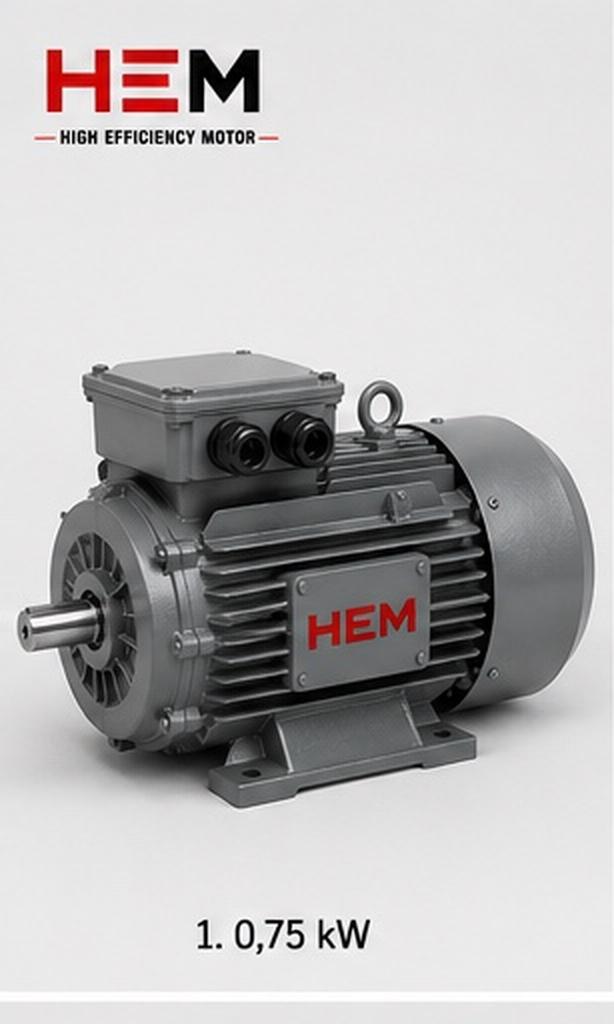

The IE5 ultra premium efficiency class is a threshold that asynchronous motors struggle to reach, and synchronous reluctance technology is the most common way to achieve it. So where exactly does this high efficiency come from? Most of the answer is hidden somewhere invisible: the lamination stack that forms the motor's magnetic heart, the magnetic slot wedge that closes the slot opening, and the core (iron) loss minimised in this structure. In this article we explain, in field-practical terms, why thin low-loss silicon steel is critical in an IE5 synchronous reluctance motor, what the magnetic wedge does, how eddy and hysteresis losses affect efficiency, and what to look for in choosing the right motor.
The rotor of a synchronous reluctance motor has no magnets; instead it has air gaps (barriers) that channel the magnetic flux. The rotor locks at synchronous speed by following the "least reluctance" path to the rotating field created by the stator. Because there are no magnets, rotor losses are very low; but this does not mean losses disappear. The centre of gravity of the losses shifts to the stator and the core. This is precisely why the quality of the lamination stack becomes decisive in IE5.
Lamination Stack: Why Thin and Silicon?
The stator and rotor of the motor are not made from a single steel block, but by pressing thin steel laminations on top of each other. Each of these laminations is insulated from its neighbour by a thin oxide or varnish layer. The purpose is simple: the rotating magnetic field induces eddy currents in the steel, and these currents turn into heat, causing loss. The thinner the lamination, the smaller the cross-section in which the eddy current circulates, and the lower the loss.
On ordinary motors 0.50 mm thick laminations are common. In the IE5 class, high-silicon (usually 3% silicon) electrical steel of 0.35 mm, 0.30 mm or even 0.20 mm thickness is used. Silicon increases the electrical resistance of the steel, lowering the eddy current further. These thin laminations are more expensive and harder to process; but the efficiency gain justifies the cost.
- Thin lamination: Shrinks the eddy-current cross-section, reduces eddy loss.
- High silicon: Increases electrical resistance, lowers loss.
- Low-loss grade: Provides a guaranteed loss value in W/kg at a given flux density.
- Good insulation coating: Prevents lamination-to-lamination contact, limiting stack loss.
| Lamination thickness (mm) | Typical use | Approx. core loss at 1.5 T (W/kg) | Effect on efficiency class |
|---|---|---|---|
| 0.50 | Standard IE1-IE2 motor | 5.0 - 7.0 | Baseline |
| 0.35 | IE3-IE4 motor | 3.0 - 4.5 | Marked improvement |
| 0.30 | IE4-IE5 motor | 2.3 - 3.3 | High efficiency |
| 0.20 | IE5 and special application | 1.5 - 2.5 | Lowest core loss |
The table values are for guidance; the real loss depends on lamination quality, flux density and frequency. We examined how efficiency losses are distributed among iron, copper and friction in detail in our article on efficiency losses in an IE4 motor; it is a good starting point for understanding how this balance changes in synchronous reluctance.
Core (Iron) Loss: Eddy and Hysteresis
Core loss consists of two fundamental losses produced by magnetic material under a changing field:
- Eddy current loss: The heat loss of the circulating currents induced in the steel by the changing field. It increases with the square of frequency and the square of lamination thickness. Thin laminations directly reduce this loss.
- Hysteresis loss: The energy spent by the magnetic domains as they reverse direction each cycle. It depends on the magnetic quality of the material and the frequency. Low-loss silicon steel, with its narrow hysteresis loop, lowers this loss.
Synchronous reluctance motors usually run with a drive (VFD); the switching harmonics of the drive add high-frequency components on top of the fundamental frequency. These harmonics create extra loss in the core. This is precisely why both thin laminations and a good drive-motor match matter in IE5 design. You can find how filters that soften the voltage peak at the drive output protect the core and winding in our article on the output sine filter and du/dt.
Magnetic Slot Wedge: The Subtlety of Closing the Slot
On the inner surface of the stator there are slots in which the winding wires are placed. The opening of these slots faces the air gap. When the slot opening stays open, the magnetic permeability in the air gap is distributed unevenly along the slot; this creates ripples (slot harmonics) in the air-gap field. These ripples cause both extra core loss and magnetic whine and vibration.
The magnetic wedge is a piece placed at the slot opening that holds the winding in the slot. There are two kinds: an insulating (non-magnetic) wedge serves only a mechanical holding role; a magnetic wedge is made of a material with slight magnetic permeability and softens the magnetic irregularity at the slot opening. This makes the air-gap field smoother, reduces slot harmonics, and lowers both surface loss and noise. In designs pushed to the very edge of efficiency such as IE5, the magnetic wedge provides a small but meaningful gain.
- Mechanical role: Holds the winding firmly in the slot, protecting it against vibration.
- Magnetic role: Smooths the slot-opening permeability, reduces slot harmonics.
- Loss effect: Lowers rotor-surface and tooth-tip losses.
- Noise effect: Reduces magnetic whine, contributing to quiet operation.
The Effect of Core Loss on Efficiency
The total loss of a motor breaks down into copper (winding) loss, iron (core) loss, friction-windage loss and stray load loss. While rotor loss has a significant share in an asynchronous motor, the rotor is nearly loss-free in synchronous reluctance. In that case the share of core loss within the total loss rises relatively; that is, lowering core loss is directly the most effective path to reaching IE5 efficiency. Thin laminations, high silicon and the magnetic wedge are therefore the three cornerstones of IE5 design.
We covered why synchronous reluctance can be more efficient and have higher torque density than asynchronous in the same frame in our article on rated torque and torque density; and the supply and life advantage of the magnet-free rotor in our article on the magnet-free rotor advantage.
| Loss type | Share in asynchronous motor | Share in synchronous reluctance | Reduction method in IE5 |
|---|---|---|---|
| Copper (stator) | Medium | Medium-high | More copper, lower resistance |
| Rotor loss | High | Very low | Magnet-free, flux-barrier rotor |
| Core (iron) | Medium | Relatively high share | Thin silicon steel, magnetic wedge |
| Friction-windage | Low | Low | Optimised fan, quality bearings |
Frequently Asked Questions
Is thinner lamination always better?
For efficiency, yes, thin laminations reduce eddy-current loss. However, very thin laminations are more expensive, harder to manufacture and lower in mechanical strength. So the designer chooses between 0.35, 0.30 or 0.20 mm by balancing the targeted efficiency class (IE4/IE5) against cost. For IE5, 0.30 mm and below is usually preferred.
How much does the difference between a magnetic wedge and a standard wedge affect efficiency?
A magnetic wedge alone does not create a big jump, but in designs such as IE5 where every loss point matters, it provides both a small efficiency gain and a marked noise reduction by lowering slot harmonics. It should be evaluated as part of the total design.
Why is core loss more decisive in a synchronous reluctance motor?
Because there are no magnets and no rotor conductors in the rotor, rotor loss is very low. Since the share of iron loss within the total loss rises relatively, the most effective way to reach IE5 efficiency is to lower core loss; and that means thin silicon steel and good magnetic design.
Manufacturing Quality of the Lamination Stack: Cutting, Pressing and Insulation
Choosing the right lamination material alone is not enough; how that lamination is processed also directly affects core loss. Electrical steel is shaped by die punching or laser cutting. The mechanical stress that forms in the edge region during cutting locally degrades the magnetic properties of the material; this "cut-edge effect" increases loss. In quality manufacturing, stress-relief annealing after cutting reduces this effect.
Pressing the laminations together is also a critical step. If the stack is pressed too tightly or crookedly, the insulation between laminations is damaged and adjacent laminations make electrical contact; this leads to unwanted current paths within the stack and extra loss. A good lamination stack is one that is properly aligned, pressed with controlled force, and has undamaged insulation coating. These details are invisible from the outside but show themselves as efficiency throughout the motor's life.
- Clean cut: Burr-free edge, less edge-region loss.
- Stress-relief annealing: Repairs the magnetic degradation from cutting.
- Controlled press: Prevents inter-stack current by protecting the insulation.
- Proper alignment: Keeps the air gap uniform, reduces loss and noise.
The Flux-Barrier Rotor and the Role of the Air Gap
The secret of the synchronous reluctance rotor is the flux barriers machined into it. These barriers let the rotor pass magnetic flux easily in one axis (the d axis) and with difficulty in the perpendicular axis (the q axis). The larger this difference between the two axes (the saliency ratio), the higher the motor's torque and power factor. The geometry, number and width of the barriers are carefully calculated, because they determine both the torque and the torque ripple.
The smallness of the air gap also affects efficiency. A very small air gap improves magnetic performance but strains mechanical tolerances and enlarges slot harmonics. Here the magnetic wedge comes into play again: by softening the slot opening it balances the harmonic disadvantage brought by a small air gap. In synchronous reluctance, barrier design carries this balance to a different point than in asynchronous motors.
The Quiet Operation of IE5 and Magnetic Design
Thin laminations and the magnetic wedge improve not only efficiency but also noise. When slot harmonics decrease, the magnetic whine and tonal noise produced by the motor drop. Thanks to their magnet-free and smooth magnetic design, synchronous reluctance motors usually run more quietly than equivalent asynchronous motors. Quietness is an important reason for preference, especially in indoor, HVAC and precision production environments. We covered the noise advantage of the IE5 synchronous reluctance motor in detail in our article on noise and sound level (dB).
The effect of magnetic design on noise is also observed in IE4 super premium motors. You can find the design origins of low vibration and quiet operation in our article on IE4 quiet and low vibration. Since the cooling fan design affects both efficiency and sound level, our article on the effect of fan design on efficiency is complementary reading.
Summary for Choosing the Right IE5 Motor
- Verify the efficiency class (IE5) and the guaranteed efficiency value on the nameplate.
- Since it will run with a drive, evaluate the motor-drive package together.
- In a long-cable system, protect the core and winding with an output filter.
- If quiet operation matters, ask about the magnetic wedge and low-noise design.
- Clarify the frame-power match and stock availability in advance.
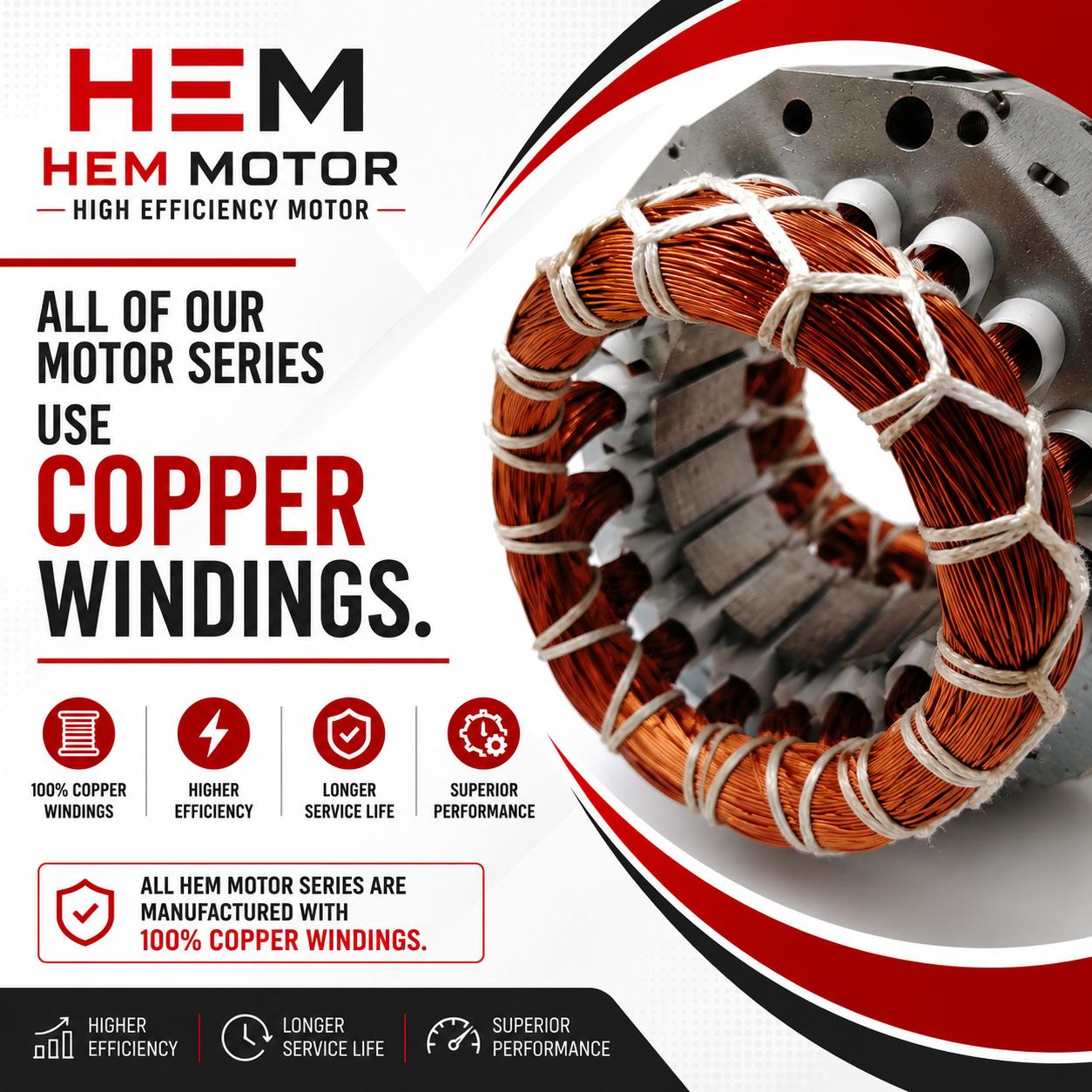
The high efficiency of an IE5 synchronous reluctance motor is the result of careful magnetic design ranging from the thin silicon lamination stack to the magnetic wedge. For a power, frame and drive package suited to your application, request a technical quotation from the HEM Motor team; low-loss IE5 synchronous reluctance motors are delivered quickly from stock with a suitable drive match.