English
 Türkçe


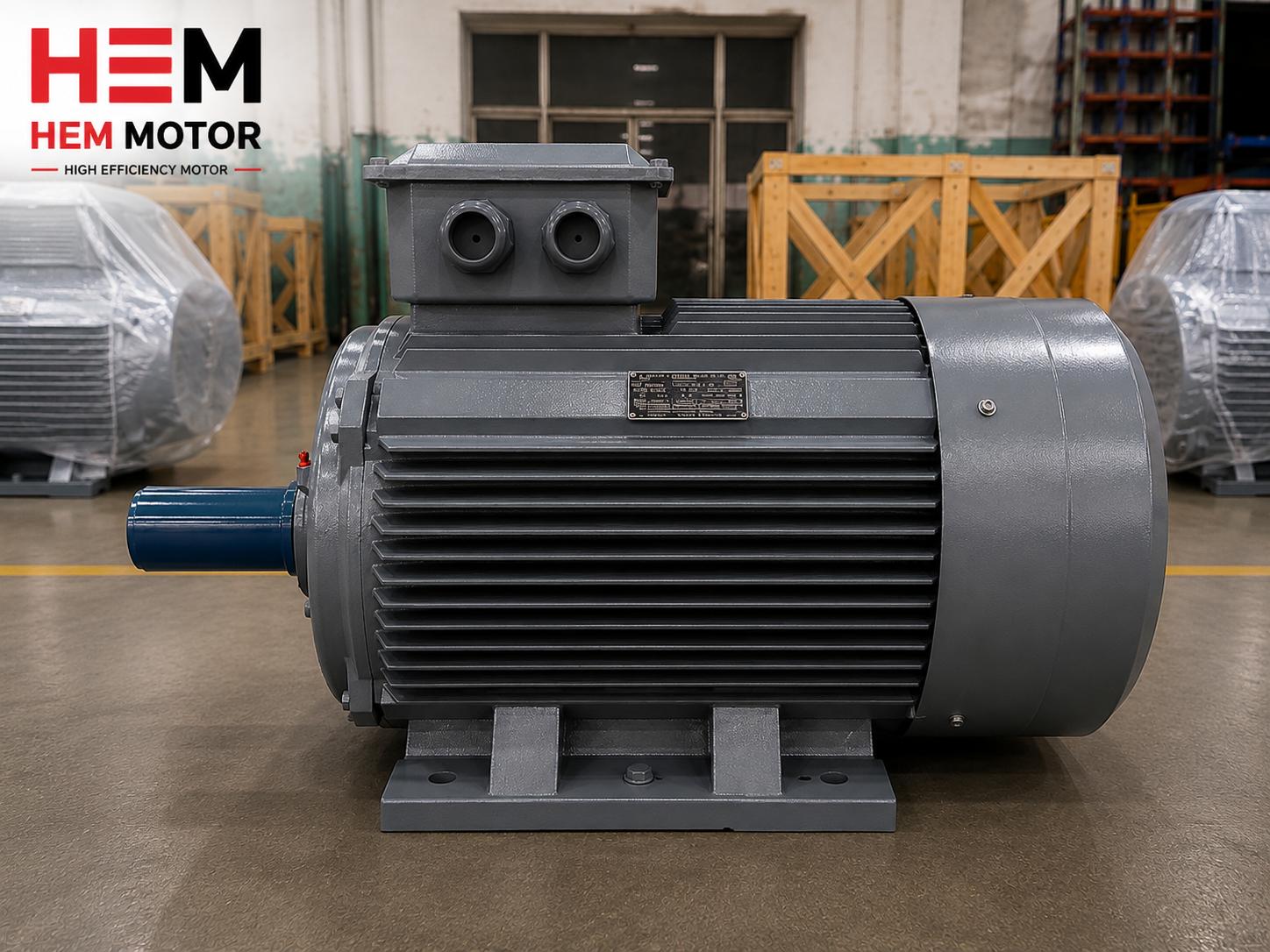

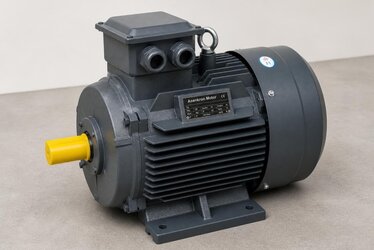
When you export a machine or a plant to a country where the 60 Hz grid applies, the electric motor you mount on it behaves differently than it does at 50 Hz. While Turkiye and Europe run at 50 Hz, North America, some Gulf countries and various markets feed at 60 Hz. This difference directly affects the motor's speed, power and torque. When selecting an IE4 super premium efficiency motor for 60 Hz, simply saying "the same motor" is not enough. In this article we cover 60 Hz export selection on IE4 motors, the speed/power change, NEMA/IEC compatibility and correct stock supply.
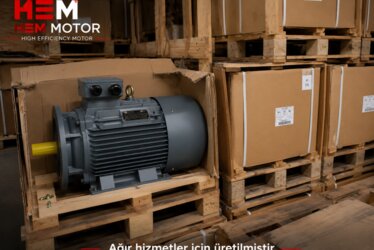
At HEM Motor, as both a manufacturer and a seller, we see that in motor supply to exporting facilities and overseas projects, 60 Hz compatibility is the most frequently overlooked technical point. Correct nameplate data, correct connection and correct certification are the keys to avoiding problems at customs and in the field. For current electric motor prices and 60 Hz compatible stock options, review our product pages.
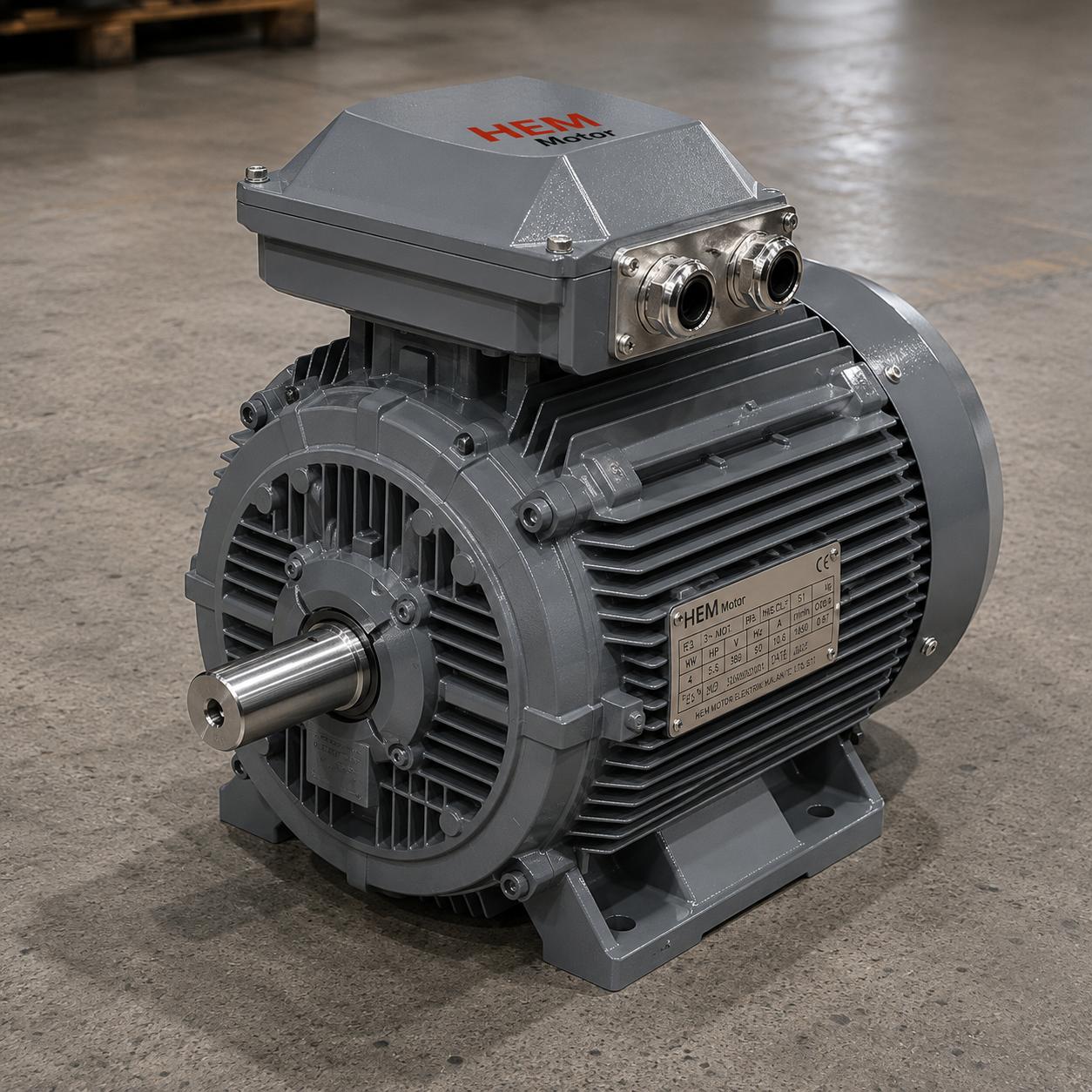
What Changes When You Move From 50 Hz to 60 Hz?
The synchronous speed of an asynchronous motor is directly proportional to the supply frequency. When the frequency rises from 50 Hz to 60 Hz, the synchronous speed increases by about 20%. So a 4-pole motor that runs at 1500 rpm synchronous speed at 50 Hz reaches about 1800 rpm synchronous speed at 60 Hz. This speed increase has direct consequences:
- Speed increases: At the same pole count the motor turns faster. On speed-sensitive loads such as pumps and fans, this significantly changes flow and pressure.
- Power behavior changes: When the same voltage is applied at 60 Hz the magnetic flux drops; the power and torque relationship must therefore be re-evaluated.
- Torque changes: If speed increases at constant power, torque drops. Depending on the load type this can be critical.
To see the effect of the frequency-voltage relationship on speed, power and torque in more detail, our article on motor rated voltage and the effect of the 50/60 Hz difference on speed, power and torque is a clear reference.
Voltage and Frequency Must Be Evaluated Together
Voltage levels are also different in 60 Hz markets. For example, some markets use 460 V / 60 Hz, others 380 V / 60 Hz or different combinations. Voltage and frequency must be defined together on the motor nameplate. The wrong voltage-frequency combination either causes the motor to overheat or prevents it from producing the required torque.
In multi-country facilities or export projects, motors compatible with multiple voltages and dual frequency (50/60 Hz) provide great convenience. On this topic, our article on multi-voltage and 50/60 Hz frequency compatibility guides correct selection in export and multi-country facilities.
How Is the IE4 Efficiency Class Defined at 60 Hz?
Efficiency classes (IE codes) are defined according to the IEC 60034-30-1 standard, which specifies efficiency values for both 50 Hz and 60 Hz. The IE4 super premium class offers high efficiency at 60 Hz operation as well; however, the efficiency value and power point at 60 Hz differ from 50 Hz. For this reason, the 60 Hz efficiency class and values must be stated separately on the export motor's nameplate.
Our article on 60 Hz export on high-efficiency motors, which addresses the effect of the efficiency class and IEC-NEMA matching on speed and power more broadly, is a complementary resource on the efficiency side.
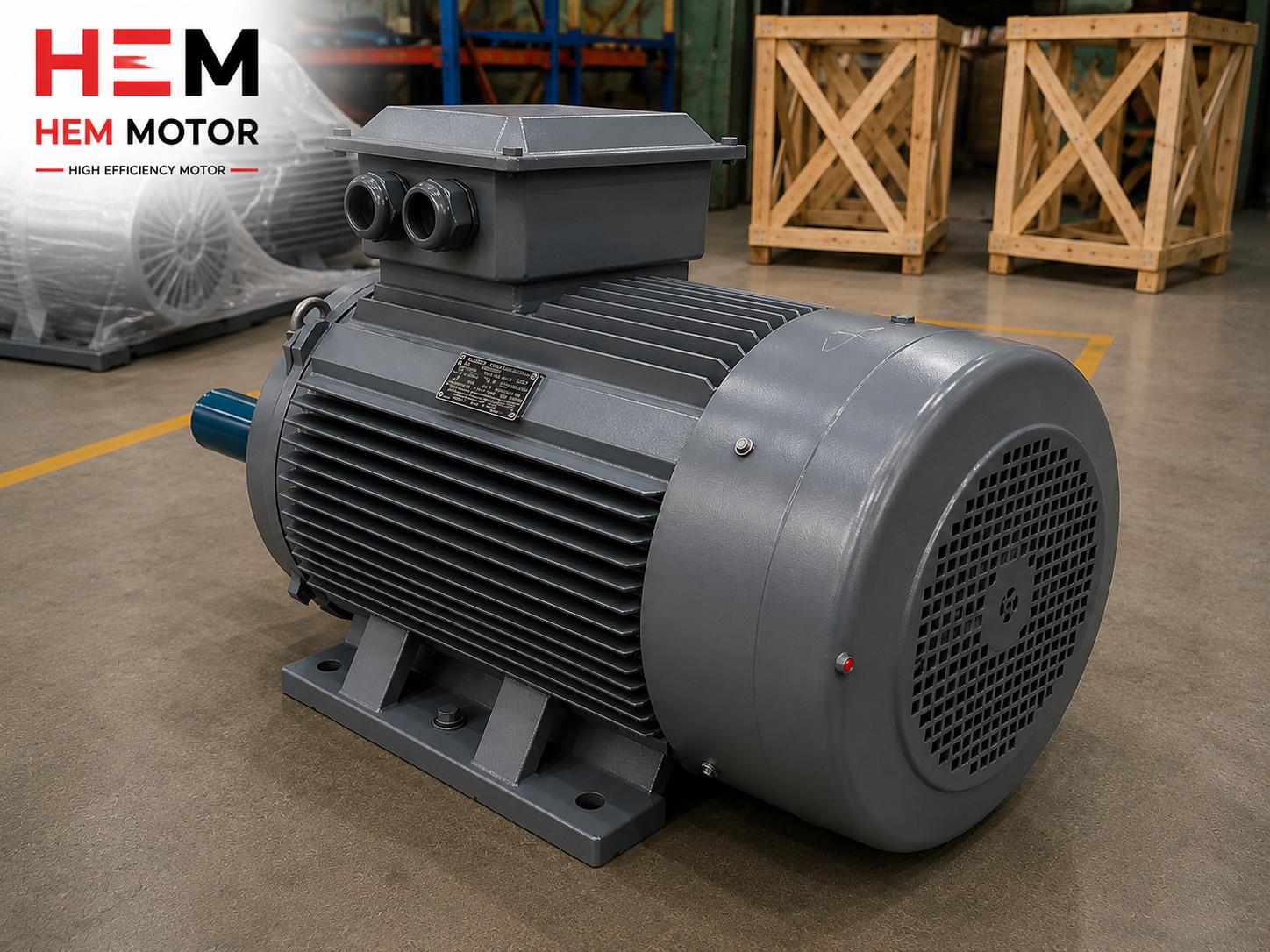
NEMA or IEC? Frame and Connection Compatibility
A significant portion of the markets where 60 Hz is dominant work to the NEMA standard. NEMA and IEC differ in frame dimensions, shaft dimensions, mounting holes and nameplate terminology. In an export project, clarifying this compatibility from the start is essential:
- Frame dimensions: IEC frame codes (e.g. 132, 160, 200) differ from NEMA frame codes. Whichever the machine's mounting interface was designed for, the motor must match it.
- Shaft dimensions: NEMA shaft diameters and lengths belong to a different dimension family than IEC. Coupling and pulley compatibility is decisive here.
- Mounting foot/flange holes: Foot spacing and flange hole layout vary by standard.
Our article on NEMA-IEC frame matching and export, which examines frame matching and frame compatibility with an export focus, offers a useful checklist for frame and connection compatibility.
Additional Dimensions of 60 Hz Export at High Power
On high-power motors (90 kW and above), 60 Hz export requires additional planning. At high power the speed increase also affects the starting current and mechanical stresses. Therefore in high-power projects:
- The starting method (direct, star-delta, soft starter) should be chosen according to the starting current at 60 Hz.
- The lead-time and shipping plan should be made early; if sea freight is involved, rotor locking and moisture protection should be considered.
- Certification (CE, EAC, etc.) should be clarified according to the target market.
For the lead-time, shipping and commissioning plan of high-power motors, our article on high-power motor supply above 90 kW is a comprehensive supply guide.
Certification and Shipping in Export
In supplying 60 Hz compatible IE4 motors, certification matters as much as technical selection. Conformity documents such as CE and EAC, and test certificates, may be required depending on the target market. The nameplate must also correctly print both the 50/60 Hz values and the relevant voltages, because the nameplate is the reference at the customs and commissioning stage.
Our article on the 60 Hz certified motor supply program for exporting facilities, which explains the 60 Hz certified motor supply process and documented shipping end to end, clarifies the sales and logistics side of the process.
Order Information for Correct Stock Supply
At HEM Motor, to provide a fast and correct quotation for a 60 Hz export motor, we recommend clarifying the following:
- Target market and grid frequency (60 Hz) with the voltage level.
- Pole count and the intended operating speed.
- Load type (pump, fan, compressor, conveyor) and torque requirement.
- Frame standard preference (IEC or NEMA frame).
- Mounting type, shaft dimensions and coupling/pulley information.
- Required documents (CE, EAC, etc.) and nameplate language.
- Lead-time pressure and shipping method.
With this information, we can supply a motor that both hits the correct speed-power-torque point at 60 Hz and complies with the target market's frame and document requirements. The lead-time difference between standard 50/60 Hz compatible motors available from stock and projects requiring a special frame or special nameplate is also planned at this stage.
The System Effect of 60 Hz on Pumps and Fans
The loads where 60 Hz export is most critical are pumps and fans, because these machines are very speed-sensitive. On a centrifugal pump or fan, when speed increases, flow rises in proportion to speed, pressure with the square of speed, and the power drawn with the cube of speed. So the roughly 20% speed increase in the transition from 50 Hz to 60 Hz can raise the power drawn by a much larger proportion.
This produces two important consequences in the field. First, a motor that is sufficient at 50 Hz may be overloaded when the same pump/fan runs at 60 Hz, because the load side draws much more power. Second, flow and pressure on the pump/fan side may come out higher than intended, which requires the system to be re-evaluated. For this reason, 60 Hz motor selection in pump and fan applications must always be done together with the system curve.
- Flow rises in proportion to speed; it may exceed the intended flow.
- Pressure rises with the square of speed; the installation's pressure limits must be checked.
- Power drawn rises with the cube of speed; the motor must be selected for this new power point.
Starting and Inrush Current at 60 Hz
A 60 Hz supply also affects the motor's starting behavior. Since inrush current and starting torque change with frequency and voltage, the starting equipment (contactor, thermal relay, soft starter) must be sized for the target frequency. Especially on high-power motors, the effect of the inrush current on the panel and grid may be different at 60 Hz.
At high powers where direct-on-line starting is not suitable, starting methods such as star-delta or soft starter are preferred. In export projects, the starting strategy should be determined while also considering the grid conditions and short-circuit capacity in the target country. An incorrectly sized contactor or thermal relay can cause early failures in the field.
Accuracy in Nameplate and Documentation
On an export motor, the nameplate is not just technical information but an official reference in the customs and commissioning process. Frequency, voltage, power, speed, current, power factor and efficiency class must be printed correctly on the nameplate and in a way suited to the target market. On dual-frequency (50/60 Hz) motors, the values for both frequencies must be stated separately.
In addition, the nameplate language should be chosen according to the target market; some markets require an English nameplate and specific unit notations. The consistency of the nameplate information with the technical documents (test report, declaration of conformity) is the basic condition for avoiding problems at customs and in the field. When this consistency is clarified at the order stage, the shipping process proceeds smoothly.
Frequently Asked Questions
Can I run a motor made for 50 Hz on a 60 Hz grid?
In some cases it is possible, but speed increases, the power and torque relationship changes, and the efficiency point shifts. The correct approach is to use a motor selected for the target frequency with 60 Hz values defined on its nameplate. Otherwise overheating, insufficient torque, or flow-pressure deviation on the pump/fan side may occur.
Is a motor more powerful at 60 Hz?
Saying it is simply "more powerful" is misleading. Because speed increases, the same motor operates at a different power-torque point at 60 Hz. On loads such as pumps and fans, the speed increase can significantly raise the power drawn; therefore the load type and system curve must always be evaluated together.
Which documents are required for an export motor?
It varies by target market. CE for Europe, and EAC and similar conformity documents for some markets, along with test certificates, may be requested. Having the correct frequency, voltage and efficiency class values printed on the nameplate is critical to avoid problems at the customs and commissioning stage.
When selecting an IE4 super premium motor for a 60 Hz market, the speed/power change, voltage-frequency compatibility, NEMA/IEC frame matching and certification must be considered together. At HEM Motor, as both manufacturer and seller, we supply a 60 Hz compatible, correctly framed and certified motor for your export projects, from stock or to lead time. The right selection means smooth field commissioning and long-life operation.