English
 Türkçe


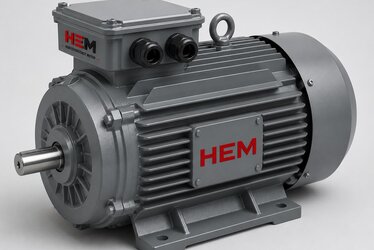
One of the most common technical obstacles in export-oriented motor supply is that frame and connection standards differ from country to country. While Europe and many countries use the IEC standard, the North American market is based on the NEMA standard. If the differences in frame, shaft, flange and supply frequency between these two worlds are not managed correctly, even the most efficient motor will not fit the machine in the target market. When exporting a top-efficiency product such as an IE5 synchronous reluctance motor, getting the NEMA-IEC frame matching right is the cornerstone of a successful supply.
In this article we cover how to match NEMA and IEC frame standards in IE5 SynRM motor export, what the 50/60 Hz frequency difference means, and how to ensure frame and connection compatibility. Correct matching guarantees the motor's smooth installation and performance in the target market. You can review all efficient motor families through the homepage.
The IE5 efficiency class is the highest currently available; synchronous reluctance (SynRM) technology provides this high efficiency without any winding or magnet in the rotor. But however high the efficiency, the motor cannot be commissioned if it does not match the target market's standard mechanically and electrically.
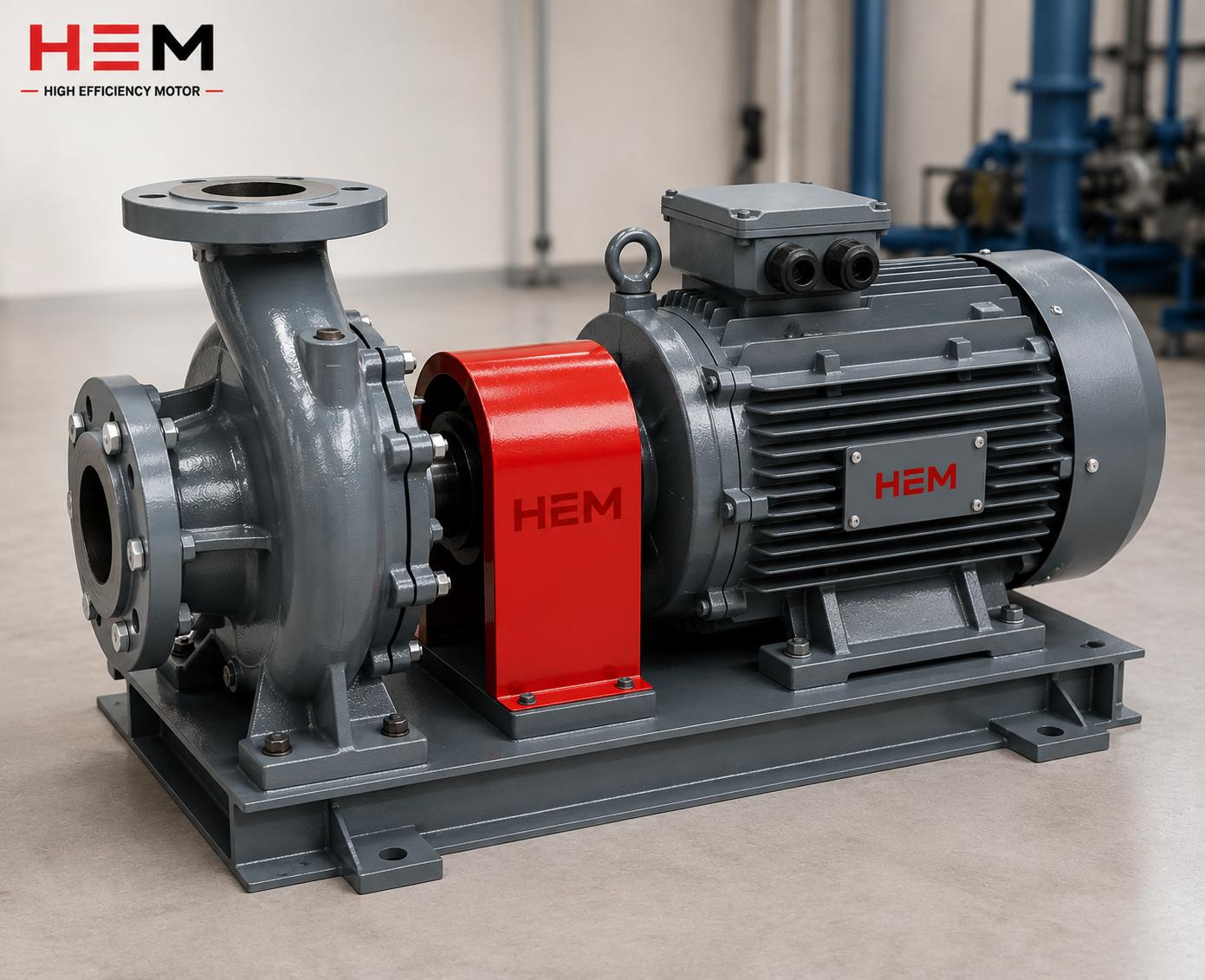
IEC and NEMA Frame Standards
IEC frame sizes are millimetre-based and defined by the height of the shaft centre from the ground (shaft height); for example 90, 112, 132, 160. NEMA uses inch-based "frame" numbers; for example 143T, 182T, 254T. There is no direct one-to-one correspondence between these two systems; matching is done considering shaft diameter, shaft length, foot-hole spacing and flange dimensions.
Shaft and Flange Differences
In NEMA motors, shaft diameters and flange dimensions are inch-based; in IEC, millimetre-based standard values are used. If an IE5 synchronous reluctance motor is to be sent to the NEMA market, the shaft diameter and keyway must suit the coupling or pulley on the target machine. Otherwise an adapter or special manufacturing is required in the field; this is both a cost and a time loss. Correct frame matching prevents this problem from the outset.
Mounting Type Equivalents
The IEC B3 (foot), B5 (large flange) and B14 (small flange) mounting types also have NEMA equivalents; but the dimensions and bolt layout differ. For example, the NEMA C-face flange performs a function similar to the IEC B5/B14 flange but with a different bolt circle and dimensions. In export, the target machine's mounting interface must be clearly known and the motor selected accordingly. Our motor selection guide also helps with mounting types.
- IEC: millimetre-based shaft height (90, 112, 132...)
- NEMA: inch-based frame number (143T, 182T, 254T...)
- Shaft diameter, keyway and flange dimensions differ
- B5/B14 versus NEMA C-face/D-flange equivalents
- 50 Hz and 60 Hz supply frequency difference
- Low loss and export advantage with IE5 SynRM efficiency
- Label, certification and documentation suited to the target market
Axis Height and Power Equivalents
In the IEC system, shaft height (the height of the motor shaft from the ground) is standardised in millimetres, and a given shaft height corresponds to a given power range. For example, a 132 shaft height covers a certain power band. In NEMA, the frame number performs a similar function on an inch basis. In export, knowing which frame the target market expects at which power ensures the right product is selected. An important point is that the same power may correspond to different physical dimensions in IEC and NEMA. So selecting a frame by looking only at the kW value is misleading; the mechanical interface must always be checked. In a high-efficiency product such as the IE5 SynRM motor, correct frame selection secures both mounting compatibility and the cooling-performance balance.
The 50 Hz and 60 Hz Frequency Difference
A subject as important as frame compatibility in export is supply frequency. Europe and many countries use a 50 Hz grid, North America and some markets a 60 Hz grid. When the same motor is run at 60 Hz, its speed increases by about twenty percent; this changes the power it draws in loads such as pumps and fans. So when an IE5 synchronous reluctance motor is exported, the target market's frequency must be clarified up front and the motor selected accordingly.
The Effect on Speed and Power
In SynRM motors, because speed is controlled by the drive, the 50/60 Hz difference can be managed more flexibly than in fixed-speed asynchronous motors; the drive can provide the desired speed at either frequency. Even so, the motor and drive must be selected to suit the target voltage and frequency. In 60 Hz markets, voltage values also differ (for example 460 V, 575 V); the motor and drive must be determined according to these values. Our power and speed guide offers guidance on the power-speed relationship.
The Difference Between SynRM and Asynchronous Motors
When offering an IE5 SynRM motor in the export market, it is important that the customer understands the difference between synchronous reluctance technology and an asynchronous motor. In an asynchronous motor, the rotor turns behind the rotating field by "slip", and this slip produces loss. In a SynRM motor, the rotor turns synchronously with the rotating field thanks to the magnetic reluctance difference; there is no slip loss. This means less heating in the rotor and higher efficiency.
The absence of a winding or magnet in the rotor makes the SynRM motor both durable and secure in terms of supply. The rare-earth-element dependency of permanent-magnet motors does not exist in SynRM; this is an advantage against price fluctuations and supply risks. In the export market, these features are a strong reason for preference, especially for customers seeking long life and low operating cost.
The Export Advantage of IE5 SynRM Technology
Synchronous reluctance motors provide high efficiency without a permanent magnet in the rotor; this is an important advantage for both cost and supply security. The IE5 SynRM motor, with its above-super-premium efficiency class, offers a strong sales argument in export markets where energy cost is high. In many countries, energy-efficiency incentives and regulations prioritise high-efficiency motors. An IE5-class motor amply meets all of these regulations and is a safe investment against future tightening.
Supply Together with the Drive
SynRM motors always run with a variable speed drive, because starting and speed control are done through the drive. In export, supplying the motor and drive together as a compatible package makes commissioning easier in the target market. Subjects such as drive-to-motor cable length, shielding and voltage spikes (dV/dt) should also be planned according to the target plant's conditions. You can review our efficient electric motor product group for efficient motor and drive solutions.
Export Documentation and Certificates
Alongside frame and frequency compatibility, the label, certificates and documentation required by the target market are also critical in export. The label of a motor sent to the NEMA market must carry the units and information that market expects. Conformity certificates, test reports and technical drawings ensure the motor is accepted smoothly in the target country. A correct IE5 synchronous reluctance motor export requires both technical compatibility and documentary compatibility together.
Commissioning and Field Support
An exported IE5 synchronous reluctance motor shows its full performance when correctly commissioned in the target market. Because SynRM motors run with a drive, setting the drive parameters correctly for the motor is critical. Wrong parameters reduce the motor's efficiency or cause starting problems. So in export supply, sending the drive setting values and commissioning instructions together with the motor makes the field team's job easier. In distant markets, field support may not always be physically possible; in that case clear documentation, a commissioning guide and remote technical support come into play. A well-prepared technical package ensures the motor runs smoothly in the target country.
A Practical Approach to Frame Matching
The safest way to do NEMA-IEC matching correctly is to start from the target machine's actual mounting interface. The dimensions of the coupling, pulley or gearbox flange to which the motor will connect should be taken clearly; the shaft diameter, keyway size, flange bolt circle and foot-hole spacing should be recorded. Once these dimensions are in hand, it becomes clear which IEC or NEMA frame will fit, and guesswork is eliminated. Especially when an existing motor is being replaced, the frame information and all mechanical dimensions from the old motor's nameplate must be transferred exactly. Even though the IE5 synchronous reluctance motor is more efficient, it cannot be commissioned if it does not physically fit in place of the old motor.
Spare Parts and Continuity
For export customers, spare-part and continuous-supply assurance alongside the motor is also important. Being able to supply motors of the same series in the future allows the customer to make long-term plans. A standardised motor family simplifies both spare-part management and plant-wide maintenance. This continuity means trust and repeat business in the export market.
Frequently Asked Questions
Is there a one-to-one correspondence between IEC and NEMA frames?
There is no exact one-to-one correspondence; IEC is millimetre-based and NEMA is inch-based. Matching is done considering shaft diameter, shaft length, foot-hole spacing and flange dimensions. The target machine's mounting interface must be clearly known and the motor selected accordingly; otherwise an adapter or special manufacturing is required.
Can a 50 Hz motor be used in a 60 Hz market?
Because SynRM motors run with a drive, speed can be controlled at either frequency; but the motor and drive must be selected to suit the target voltage and frequency. In 60 Hz markets, voltage values also differ. So before export, the target market's frequency and voltage must be clearly determined.
What is the export advantage of the IE5 SynRM motor?
Because the IE5 SynRM motor is in the highest efficiency class and has no permanent magnet in its rotor, it provides both energy savings and supply security. It is a strong sales argument in markets where energy cost is high and efficiency regulations are strict. With correct frame and frequency compatibility, it is commissioned smoothly in the target market, and because rotor losses are lower it runs cooler with longer life and lower maintenance.