English
 Türkçe

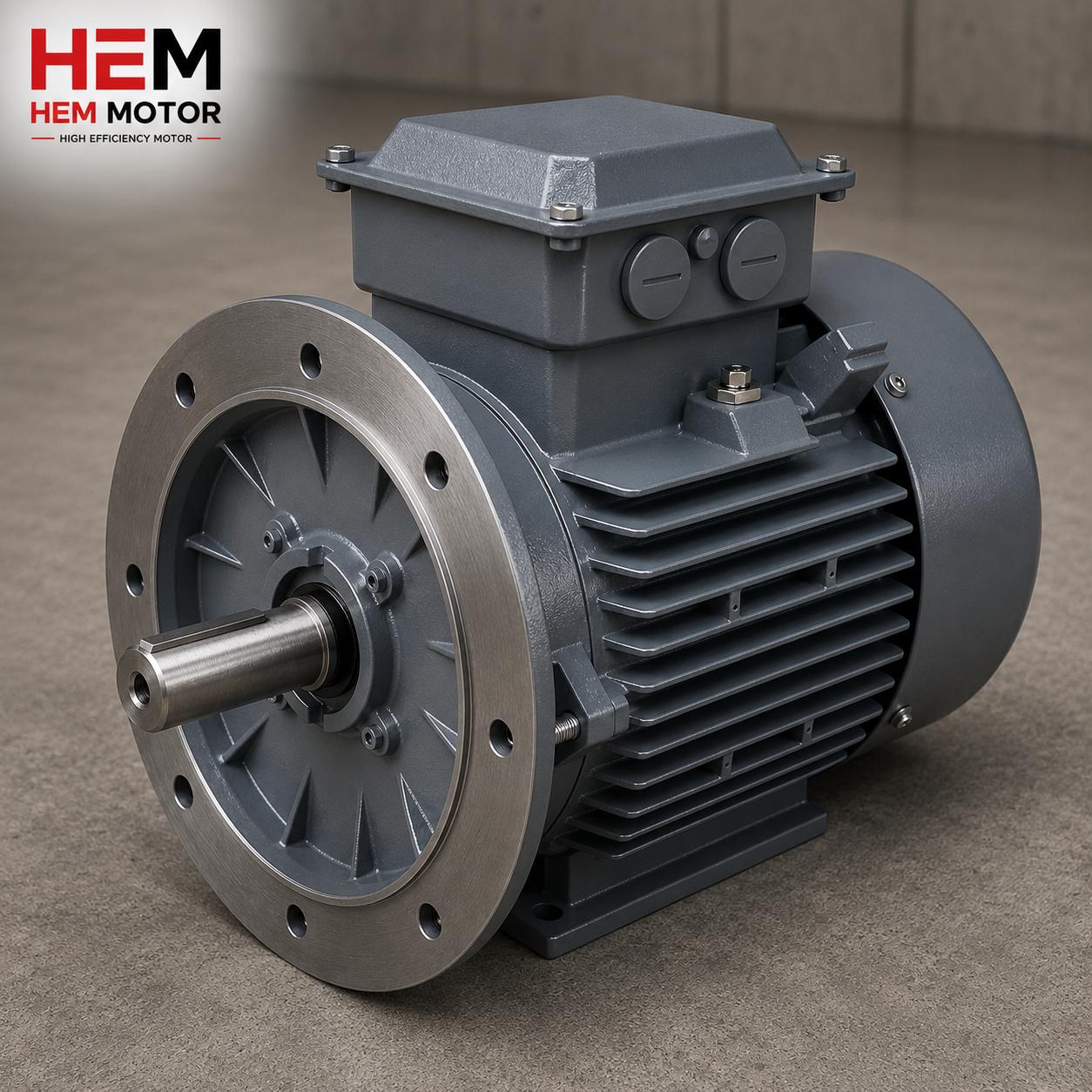

The success of an electric motor purchase is often decided long before the order is placed — at the request-for-quotation stage. When you ask for an IE3 motor price quote with an incomplete or vague technical specification, the offers you receive become impossible to compare, you may take delivery of a motor that does not fit the field, and you face additional costs later. A well-prepared RFQ (Request for Quotation), on the other hand, makes the supplier's job easier and strengthens the buyer's hand.
In this guide we walk through the full process of preparing an IE3 electric motor quotation request and evaluating the offers that come back, written for industrial plants, OEM manufacturers and maintenance teams. The goal is to help you decide not only on unit price, but on efficiency class, mounting type, lead time, stock, warranty and total cost of ownership. You can review our product families through the homepage for the full range of motors and stock information.
The IE3 efficiency class is the legally mandated floor level for most power ranges. For that reason, when comparing offers, evaluating all suppliers on the same efficiency and the same mounting type is the first condition of a fair and accurate comparison.
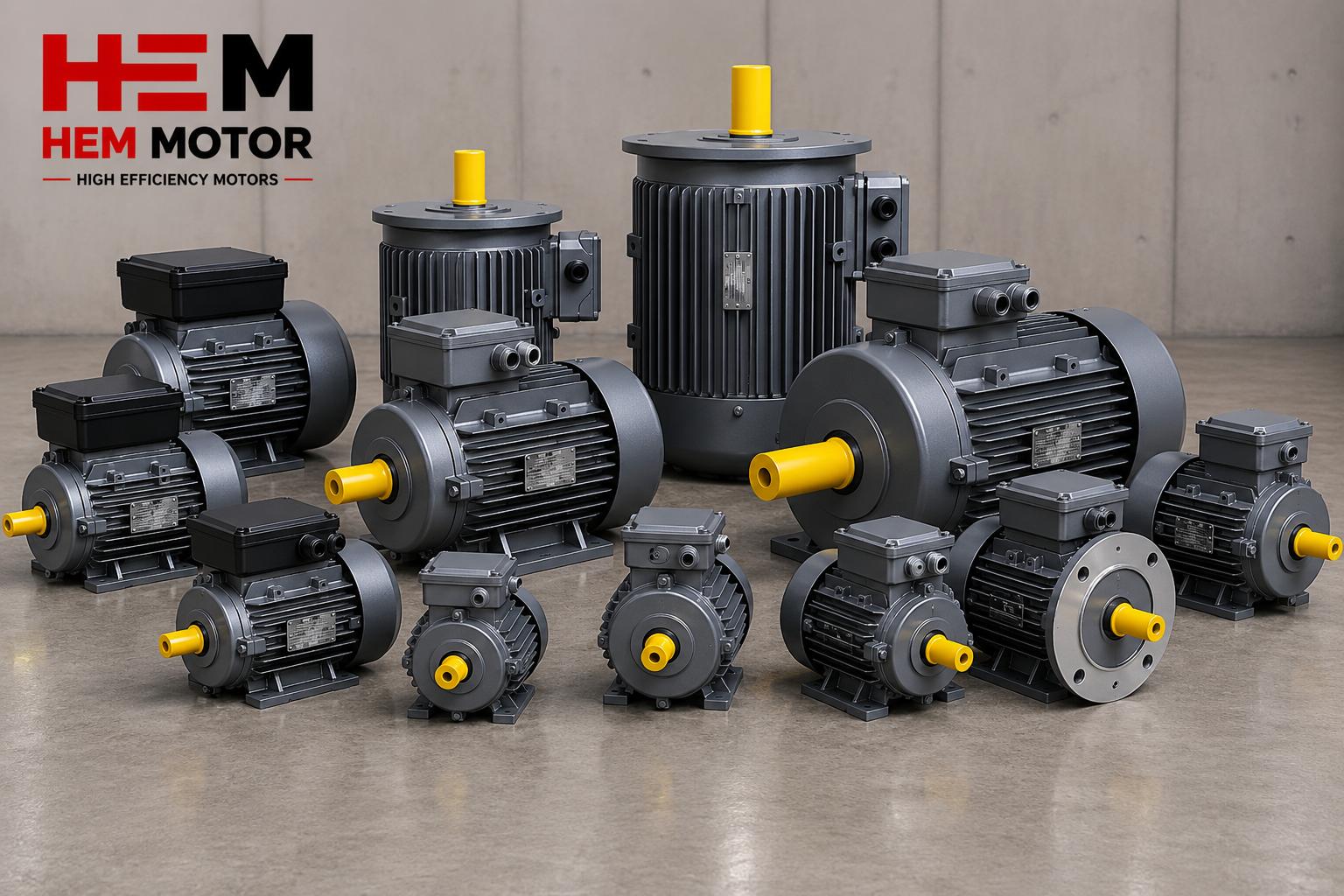
Essential Information That Must Appear in the RFQ
To receive an accurate IE3 motor quote, your request must fully define the motor's electrical and mechanical identity. When a supplier sees missing information, it either makes an assumption or asks questions that delay the process; both cost time and accuracy.
Power, Pole and Speed
State the rated power clearly in kW. Standard values such as 7.5 kW, 11 kW or 22 kW should leave no ambiguity. Likewise, specify the pole count and the corresponding synchronous speed (2-pole 3000 rpm, 4-pole 1500 rpm, 6-pole 1000 rpm, 8-pole 750 rpm) explicitly. The character of the load — pump, fan, conveyor or gearbox — directly affects speed selection. If you are unsure about the load type, our power and speed selection guide will help.
Efficiency Class and Voltage
Write clearly that the quote is requested on the basis of the IE3 efficiency class. Because IE2 may still be found in the market for some ratings, if you do not put "IE3" in the specification you risk being compared against a lower-efficiency, cheaper motor. Specify the supply voltage (400 V 50 Hz, 230/400 V, 690 V, or 60 Hz for export) and the connection type (star/delta) clearly.
Mounting Type, Frame and Protection Class
The mounting form (B3 foot, B5 flange, B35 foot-flange, B14 small flange) and the IM code must always be written. The frame material (aluminium or cast iron), IP protection class (usually IP55), insulation class (standard F) and duty type (S1 continuous duty is common) should appear in the quote. Shaft diameter, shaft length, flange dimensions and any pulley/coupling requirement should also be added.
- Power (kW) and pole/speed value
- IE3 efficiency class and supply voltage/frequency
- Mounting type (B3/B5/B35/B14) and IM code
- Frame material: aluminium or cast iron
- IP protection class (IP55, IP65/66 on request) and F insulation
- Duty type (S1, S3, etc.) and shaft/flange dimensions
- Quantity, delivery location and lead-time expectation
- Options such as thermal protection (PTC/PT100) and terminal box orientation
Comparing Offers on the Same Basis
The biggest mistake in evaluating offers is placing motors of different efficiency class or different mounting type side by side and looking only at price. If one supplier offers an IP55 cast-iron B35 IE3 motor while another offers an IP54 aluminium B3 motor, the price difference may stem from the technical difference; that is not an advantage.
Beyond Unit Price: Total Cost of Ownership
For IE3 and higher-efficiency motors, the purchase price is small compared with the energy the motor consumes over its life. The annual electricity consumption of a continuously running motor far exceeds its purchase price. For that reason, quote evaluation must account for energy efficiency and therefore operating cost. Even if a high-efficiency motor's initial price is a little higher, its payback period under most continuous loads is quite short.
Lead Time, Stock and Spare-Part Assurance
For a plant with a stopped production line, a quote that says "delivery in two months" is, in practice, no quote at all. IE3 motor supply from stock and fast shipment can be more critical than price, especially for emergency failure replacements. Question the supplier's stock depth, its capacity to hold spares in similar ratings, and its serial-supply commitment for OEM projects. Our article on premium motor supply processes also offers guidance.
Warranty and After-Sales Support
Warranty period, warranty scope and exclusions should be written in the quote. A supply model that combines manufacturer assurance with seller assurance makes responsibility clear when a problem arises. Spare-motor agreements, commissioning support and technical consultancy should also enter the evaluation.
Common Mistakes in the RFQ
The most common field problem is conveying the request verbally or in half-sentences. A request that starts with "we need an 11 kW motor" corresponds to dozens of different motors because pole count, mounting type and voltage are not specified. The supplier then makes the most common assumption, but that assumption may not suit your application. When requesting an IE3 motor price quote, having the information written and complete protects both you and the supplier.
The second common mistake is not stating the character of the load to which the motor is connected at all. The same 7.5 kW motor runs under constant load in a centrifugal pump but under impact and variable load in a crusher or conveyor. Load character affects pole selection, duty type, bearing choice and, if needed, additional cooling. Adding application information to the RFQ ensures the motor really survives in the field. Our pole selection content provides detail on the load-speed relationship.
Nameplate Data and Spare-Part Compatibility
When searching for a replacement of an existing motor, transferring all data from the old motor's nameplate (power, speed, voltage, current, cosφ, IM code, frame size, bearing numbers) into the request is the safest route. In particular, mechanical dimensions such as shaft diameter, shaft length, flange bolt circle and foot-hole spacing ensure the motor fits the existing mounting exactly. If even one of these dimensions is wrong, even a correctly rated motor cannot be installed.
RFQ in OEM and Project-Based Supply
For machine builders and panel manufacturers, the question is not a single motor but a repeating, standardised supply. In that case the RFQ should also include estimated annual quantity, delivery schedule, packaging and labelling requirements. In serial supply of IE3 electric motors, continuity of supply and consistency within the same batch become decisive alongside price. You can review our efficient electric motor product group for high-efficiency motor families.
Standardising the Technical Specification
For repeating purchases, instead of writing a specification from scratch each time, standardising the frequently used power-pole-mounting combinations in a table both speeds up the quotation process and reduces the margin of error. This table creates a common language with the supplier and gradually becomes the company's institutional memory.
Efficiency and Load-Point Relationship
The IE3 efficiency class guarantees the motor's efficiency at full load. However, most field motors run not at full load but at a load point between fifty and seventy-five percent. The efficiency curve usually stays high in this region; but at very low loads (below twenty-five percent) efficiency drops noticeably. Therefore quote evaluation should also consider the real operating load point. An oversized motor loses money both in initial investment and in low-load efficiency.
Lead Time and Logistics Planning
In IE3 electric motor supply, lead time is not just production or stock time. Shipment, customs (for imported goods), internal logistics and commissioning are all part of the total duration. In project work, the motor must be on site at a time that suits the machine's assembly schedule; arriving early means storage, arriving late means a delayed line. For emergency failure replacements the process reverses: the motor stopped, the line stopped, and every hour is costly. In this scenario a supplier that finds an IE3 motor from stock and can ship the same or next day creates value many times the price.
Quote Validity and Price Stability
Because of fluctuations in raw-material and copper prices, motor prices can change over time. It is therefore important to clarify the validity period of the offer and the conditions under which the price remains fixed. If a project runs long, agreeing up front on how prices will be updated for staged deliveries prevents surprise costs later. For long projects, locking the specification and the commercial terms together protects both parties.
Choosing the Right Supplier
At the final stage, the decision should rest not only on the lowest figure on paper, but on the supplier's technical competence, stock strength and continuity. A supplier that combines manufacturer and seller assurance, that can quickly supply the correctly rated motor, and that stands beside you during commissioning and afterwards, creates value far beyond the price difference in a continuously running plant. For efficient motor and gearbox applications, our electric motors for gearboxes options can also be evaluated. Packaging, labelling and delivery conditions — wooden crating, pallet fixing, moisture absorbers and shaft locks — protect the motor's bearings and shaft during long-distance transport and export, and should be specified in the RFQ when relevant.
Frequently Asked Questions
What is the most critical information in an RFQ?
Power (kW), pole/speed, IE3 efficiency class, supply voltage and mounting type are the five most critical. When these five are complete, the supplier can give an accurate and comparable quote. When they are missing, assumptions are made and offers cannot be compared with one another.
Is the cheapest offer always the right choice?
No. Unit price is only one part of total cost of ownership. The lifetime energy consumption of an IE3-efficient motor far exceeds its purchase price. Lead time, stock, warranty and after-sales support must also enter the evaluation, and offers must be compared on the same efficiency and mounting basis.
What should I do if an IE2 offer arrives instead of IE3?
In most power ranges IE3 is the legal floor class; an IE2 motor cannot be placed on the market at these ratings. If you do not write IE3 in your specification, some suppliers may offer a cheaper IE2 motor and present it as a price advantage. So write the efficiency class clearly in the RFQ and request all offers on the same class. If a higher IE4 or IE5 class suits the application, requesting it as a separate alternative line lets you compare energy savings and payback period.