English
 Türkçe


Summary (TL;DR)
- The 75 kW IE3 motor is a general-purpose industrial motor in the high-power class; however, 75 kW sits exactly at the IE4 threshold. From 1 July 2023, under EU Ecodesign and Turkish regulation, three-phase 2/4/6 pole motors in the 75-200 kW range fed directly from the mains (DOL) must be IE4.
- An IE3 75 kW motor remains relevant for VFD-fed applications, for replacement and spare orders in existing installations, for ex-duty/special cases, and for applications outside the IE4 MEPS scope.
- For correct buying, first choose pole and speed: 2 pole ~3000 rpm (compressors, high-speed pumps/fans), 4 pole ~1500 rpm (most common general purpose), 6 pole ~1000 rpm (crushers, mills, high torque).
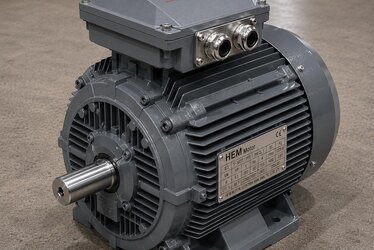
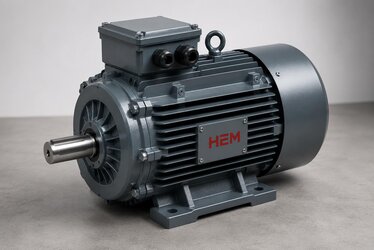
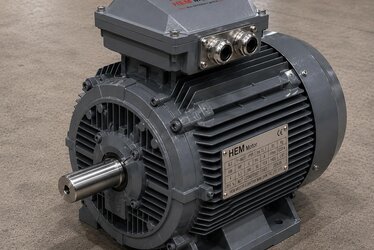
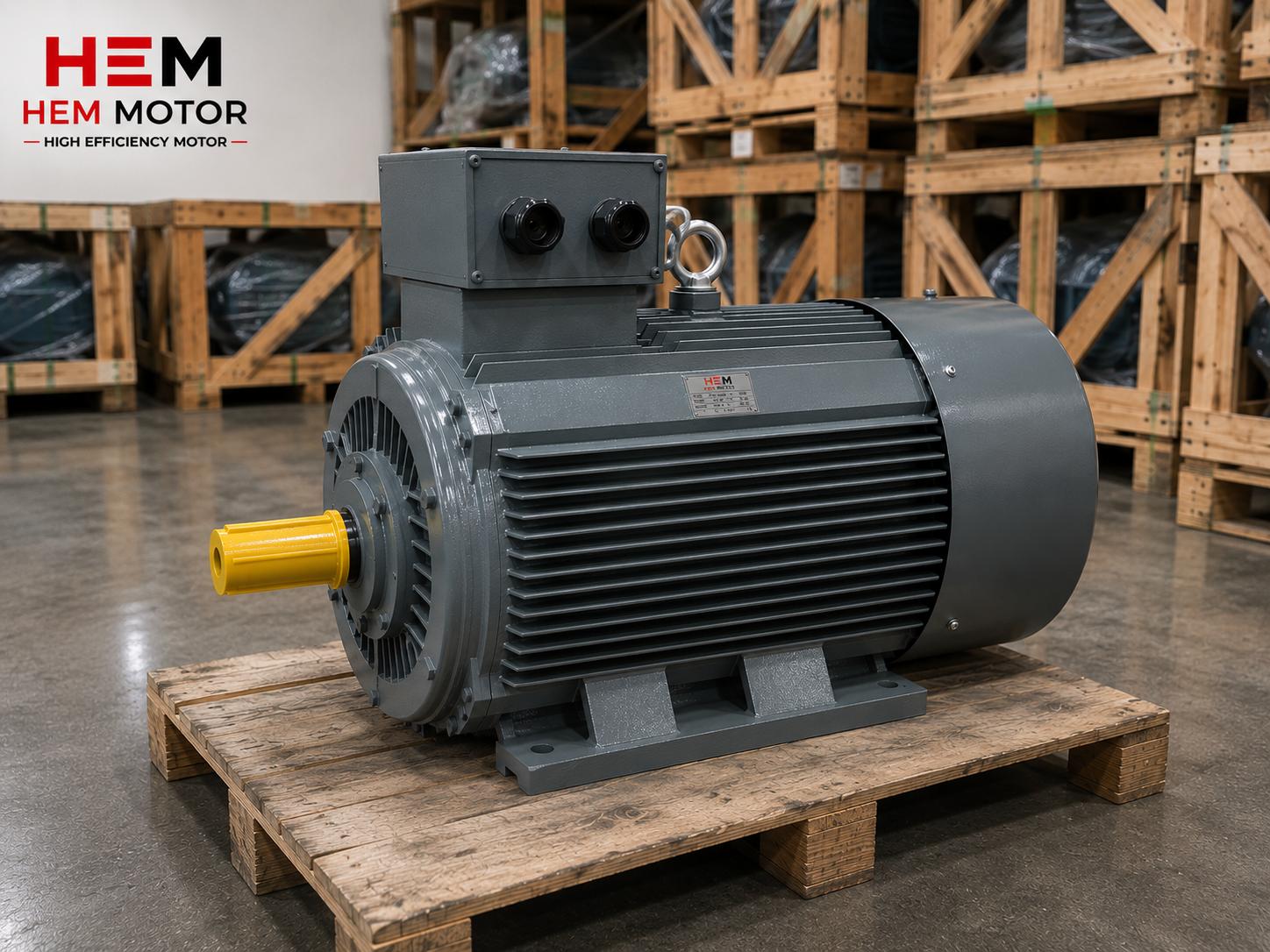
- For 75 kW the frame is typically IEC 280 (280M/280S); a cast iron body is mandatory at this power, with IP55, F insulation, S1 duty and IC411 cooling as standard.
- High powers are project items: stock status, lead-time, quotation and manufacturer assurance drive the purchase; correct frame and mounting are essential for proper supply planning.
75 kW is a power value at the very heart of industry, marking the transition into the "high-power" class of three-phase asynchronous motors. It appears across heavy-duty applications, from pumps and compressors to crushers, large fans and conveyors. In this guide we walk through how to make the right decision when buying a 75 kW IE3 motor, in terms of speed, pole, frame, mounting and especially stock and supply. Let us clarify the most critical point first: the 75 kW power level sits exactly on a special threshold in efficiency regulation, and this directly affects your buying decision.
Why 75 kW Is Special: The IE4 Threshold and Regulation
The EU Ecodesign Regulation (EU 2019/1781) and the parallel Turkish regulation introduced phased minimum energy performance standards (MEPS) for motor efficiency. From 1 July 2021, three-phase 2, 4 and 6 pole motors in the 0.75-1000 kW range had to be at least IE3. However, from 1 July 2023 a higher step came into force: three-phase 2/4/6 pole motors in the 75 kW to 200 kW range fed directly from the mains (DOL) must now be in the IE4 efficiency class.
At this point 75 kW is a critical threshold value, because it forms the exact lower bound of this range. In other words, if you intend to buy a 75 kW DOL motor and the application falls within this scope, the rule requires you to look toward IE4. So why is an IE3 75 kW motor still manufactured and sold? Because the regulatory scope is limited by specific conditions, and many real-world scenarios fall outside it.
When an IE3 75 kW Motor Is Still Valid
- VFD (variable frequency drive) fed applications: The MEPS regulation mainly targets motors run directly from the mains. In systems fed continuously through a frequency converter and operating at variable speed, the assessment can differ; IE3 motors remain a common choice in inverter-controlled pump and fan systems.
- Replacement and spare orders: When a failed motor in an existing installation must be renewed with the exact same frame, shaft and mounting type, the mechanical compatibility of the commissioned system takes priority. IE3 motor supply is critical in these replacement scenarios.
- Ex-duty and special applications: Explosive atmosphere (Ex), high inertia, special ambient conditions or out-of-scope motor types are subject to different rules.
- Markets and applications outside IE4 MEPS scope: Some export markets apply different efficiency regimes; there are also out-of-scope categories such as brake motors and certain special high-speed constructions.
By contrast, if you are planning a new, mains-fed standard 75 kW general-purpose application, stepping up directly to IE4 is the most correct approach for full regulatory compliance and long-term energy savings. For details, see our article on IE3 and IE4 efficiency mandate regulation.
Pole and Speed: Choosing the Right Speed for 75 kW
In an electric motor, the number of poles determines the synchronous speed and therefore the rotational speed at the output. On a 50 Hz supply, 2 poles correspond to about 3000 rpm, 4 poles to about 1500 rpm and 6 poles to about 1000 rpm synchronous speed (the actual loaded speed is slightly lower due to slip). At a high power like 75 kW, the pole choice directly affects both the torque-speed characteristic of the application and the mechanical drive design.
2 Pole (~3000 rpm)
Preferred for applications requiring high speed: air and gas compressors, high-speed centrifugal pumps, high-pressure fans and blowers. A 75 kW 2 pole motor has high power density; bearing life, vibration and balancing are more sensitive issues at this speed. In 2 pole constructions the frame can sometimes be 280S.
4 Pole (~1500 rpm)
This is industry's most common general-purpose choice. The majority of pump, fan, conveyor, mixer, gearbox-driven and general machinery applications run on 4 pole 75 kW motors. Because it offers a balanced characteristic between torque and speed, the starting point in most projects is 4 pole. At this power, 4 pole motors are usually produced in IEC 280M or 280S frames.
6 Pole (~1000 rpm)
Chosen for heavy-duty applications requiring high torque and low speed: crushers, mills, grinding machines, heavy conveyors and high-inertia loads. A 6 pole 75 kW motor produces higher torque at the same power but is physically larger and heavier.
To plan the power-speed match holistically, our IE3 electric motor stock guide: power and speed is a useful reference.
Frame, Shaft Diameter and Mounting Type
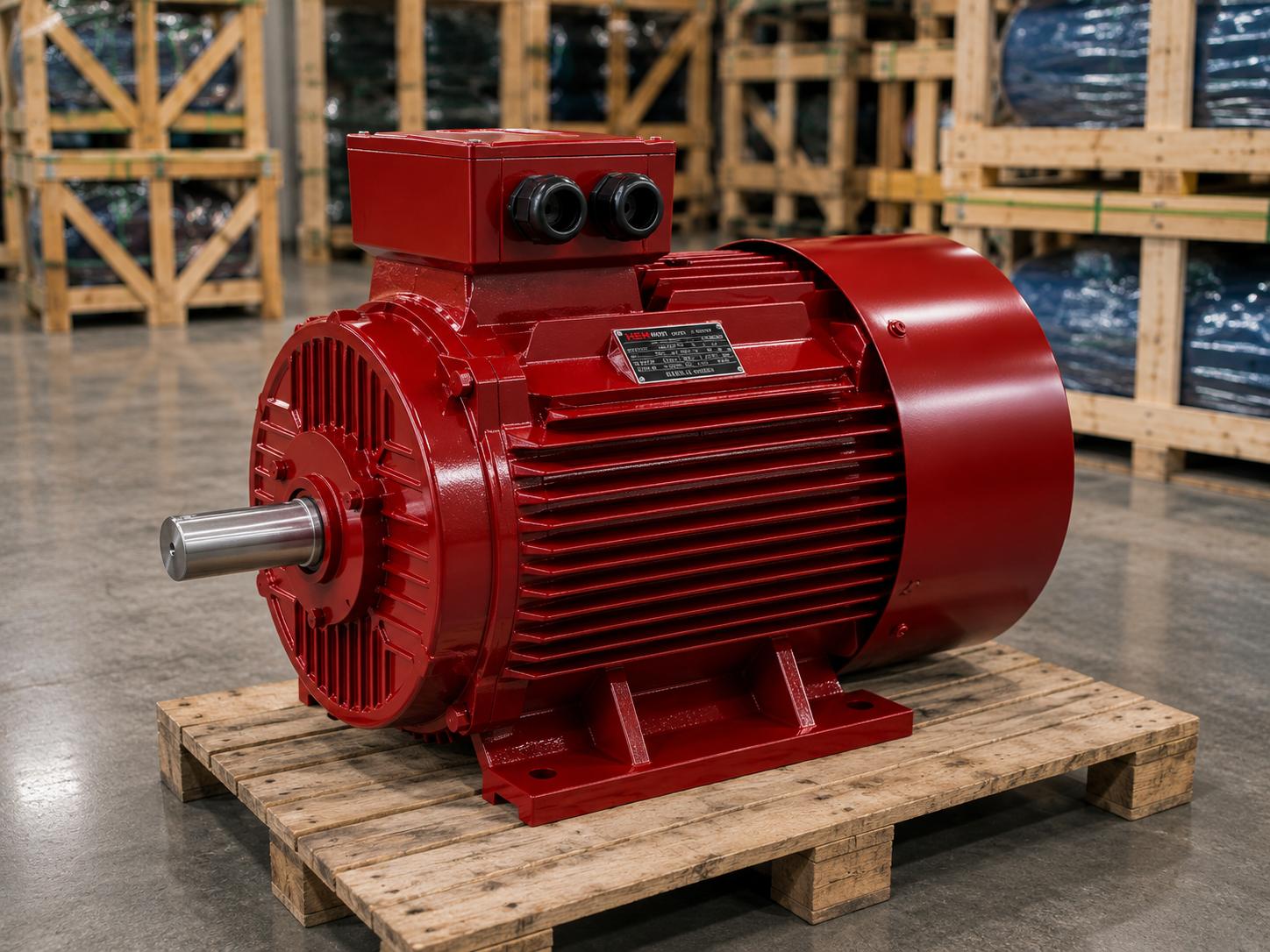
At 75 kW the frame size is typically in the IEC 280 class (280M or 280S). The frame length varies with the number of poles: 4 pole motors are mostly 280M or 280S, while 2 pole motors are sometimes 280S. These are general approximations; for exact frame and connection dimensions, always refer to the motor's technical data sheet and dimension table. Rather than making exact promises, we confirm per project.
Shaft Diameter
In an IEC 280 frame the shaft diameter is determined by standard series and is critical for correctly sizing the coupling, pulley or gearbox connection. Shaft diameter, keyway and shaft length directly affect the choice of drive element. To see the shaft-frame relationship as a whole, refer to our IE3 motor shaft and frame table (IEC 56-355).
Mounting Type: B3, B5, B35
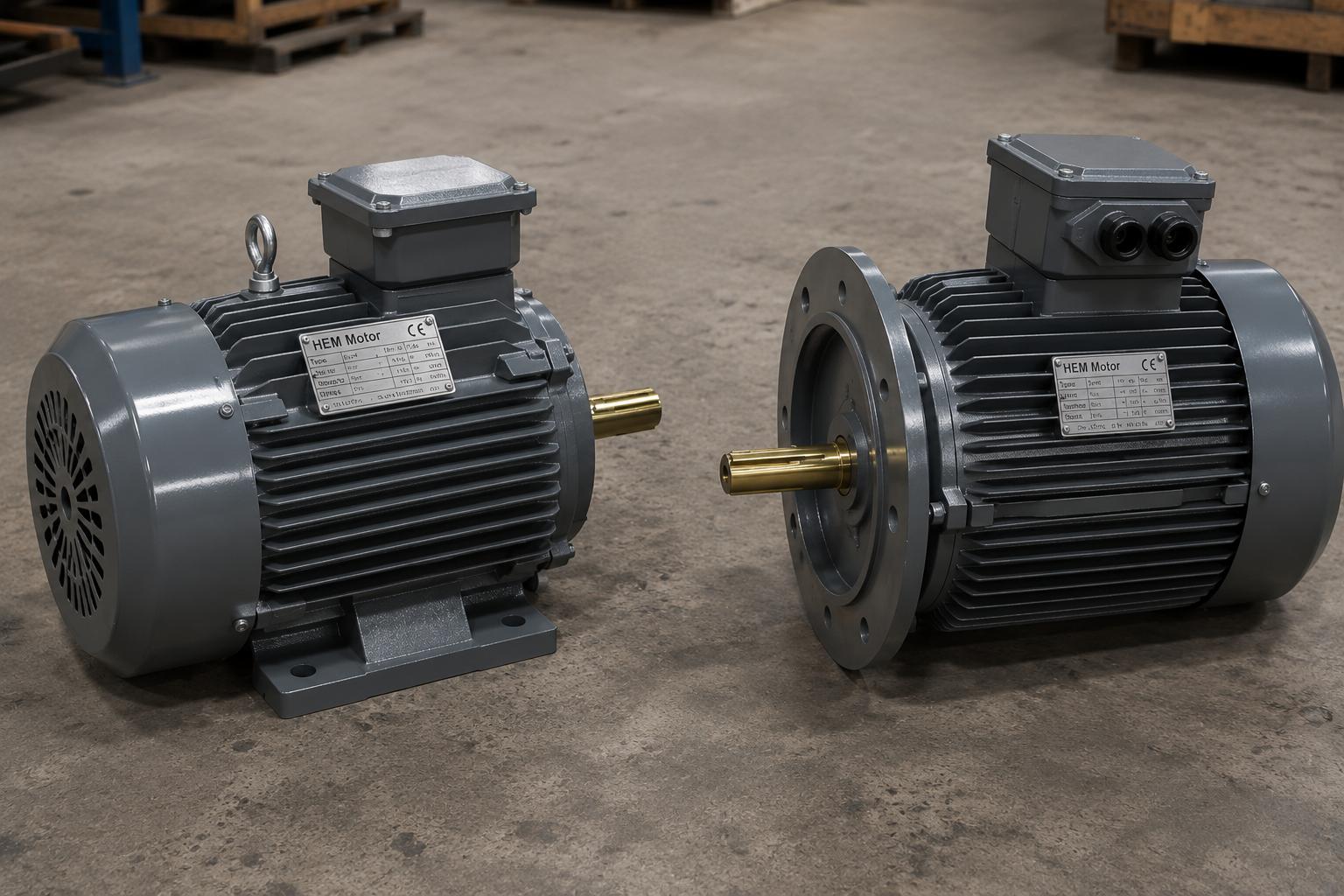
- B3 (foot-mounted): The motor is fixed to the floor or base frame via its feet. Common in conveyor, pump base and general machinery installations.
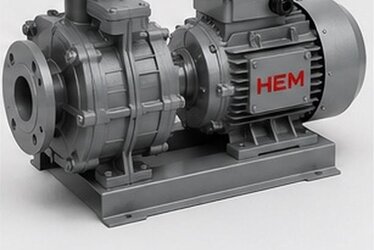
- B5 (flange-mounted): Connected directly to the machine or gearbox via a large flange. Preferred in pump and gearbox applications.
- B35 (foot-and-flange): Has both foot and flange connections; used in heavy applications requiring additional mechanical support. For heavy motors like 75 kW, B35 is often preferred for mounting rigidity.
In replacement orders the mounting type must match exactly; ordering a B5 instead of a B3 creates mechanical incompatibility and makes commissioning impossible.
Technical Specifications of the 75 kW IE3 Motor
- Body material: At this power a cast iron body is mandatory. Cast iron is superior to aluminium in mechanical strength, vibration damping and thermal stability, and is the standard for heavy-duty motors.
- Protection class: IP55 — industrial standard protection against dust and water jets.
- Insulation class: Class F insulation (usually operated with a Class B temperature rise, providing reserve and long life).
- Duty: S1 (continuous operation).
- Cooling: IC411 — surface cooling with a frame-mounted fan.
- Winding: 100% copper winding for high efficiency and low heating.
- Bearings: Reinforced bearings for high power and load.
- Terminal box: Terminal box suitable for star-delta or inverter connection and large-section cables.
Starting: Star-Delta, Soft Starter, VFD
The high inrush current of a 75 kW motor at the moment of direct-on-line (DOL) starting can cause voltage dips on the network and mechanical shocks. For this reason, at high powers star-delta starting, a soft starter or a variable frequency drive (VFD) is generally preferred. VFD-fed installations both control the starting current and provide energy savings through variable speed; this can also open the possibility of evaluation outside the IE4 DOL scope mentioned earlier.
Weight and Lifting
A 75 kW motor in an IEC 280 frame can weigh several hundred kilograms. For this reason the motor has a lifting eyebolt, and handling must be done with a crane or forklift. Transport, commissioning and installation planning must take this weight into account.
Buying and Supply: A Project Approach at High Power
Motors of 75 kW and above are no longer shelf items but are often a project item. In this power class, correct buying does not end with matching technical specifications; it requires proper management of stock, lead-time, quotation and manufacturer assurance processes.
Stock or Lead-Time?
High-power motors may not always be available in every variant in stock, due to the many combinations of pole, frame and mounting. Therefore the buyer should confirm in advance the stock status of the exact configuration required (for example 75 kW, 4 pole, B35, cast iron); if not in stock, the lead-time and delivery plan should be clarified. In urgent replacement needs, this information is critical to prevent production downtime.
Correct Quotation and Replacement Order
- In replacement orders the nameplate data of the existing motor (power, pole/speed, frame, mounting type, shaft diameter, insulation, protection class) must be fully provided.
- The mounting type (B3/B5/B35) and flange/foot dimensions must match exactly.
- If a VFD feeding plan exists, this should be stated from the start; the terminal box, insulation and thermal protection should be evaluated accordingly.
- For a clear quotation, the application, duty cycle and ambient conditions should be shared.
As HEM Motor, we supply IE3 and IE4 motors from 0.25 to 355 kW, at 1000/1500/3000 rpm (and with 6/8 pole options), with cast iron body, IP55, F insulation, 100% copper winding, S1 duty, B3/B5/B35 mounting and reinforced-bearing construction up to IEC 355 frame. You can see the full product family on our IE3 Electric Motors page, and contact us for current electric motor prices.
Frequently Asked Questions
Should a 75 kW motor be IE3 or IE4?
From 1 July 2023, three-phase 2/4/6 pole motors in the 75-200 kW range fed directly from the mains must be IE4. If you are making a new, DOL installation, IE4 is the correct choice. However, for VFD-fed applications, for replacement/spare needs in an existing plant, or for out-of-scope special scenarios, an IE3 75 kW motor is still a valid solution. If you share your application with us, we determine the correct class together.
Which frame and speed are suitable for 75 kW?
For 75 kW the frame is typically IEC 280 (280M/280S). Speed is chosen by application: 2 pole ~3000 rpm for compressors and high-speed pumps/fans, 4 pole ~1500 rpm for general purpose, 6 pole ~1000 rpm for high-torque applications like crushers and mills. Exact frame dimensions are confirmed via the technical data sheet.
How quickly can you supply a 75 kW IE3 motor?
The time depends on the stock status of the requested configuration. When you share your need (power, pole, frame, mounting), we confirm stock and, if not in stock, provide the lead-time and a clear quotation. For urgent replacement needs, sharing the correct nameplate data speeds up fast supply.