English
 Türkçe

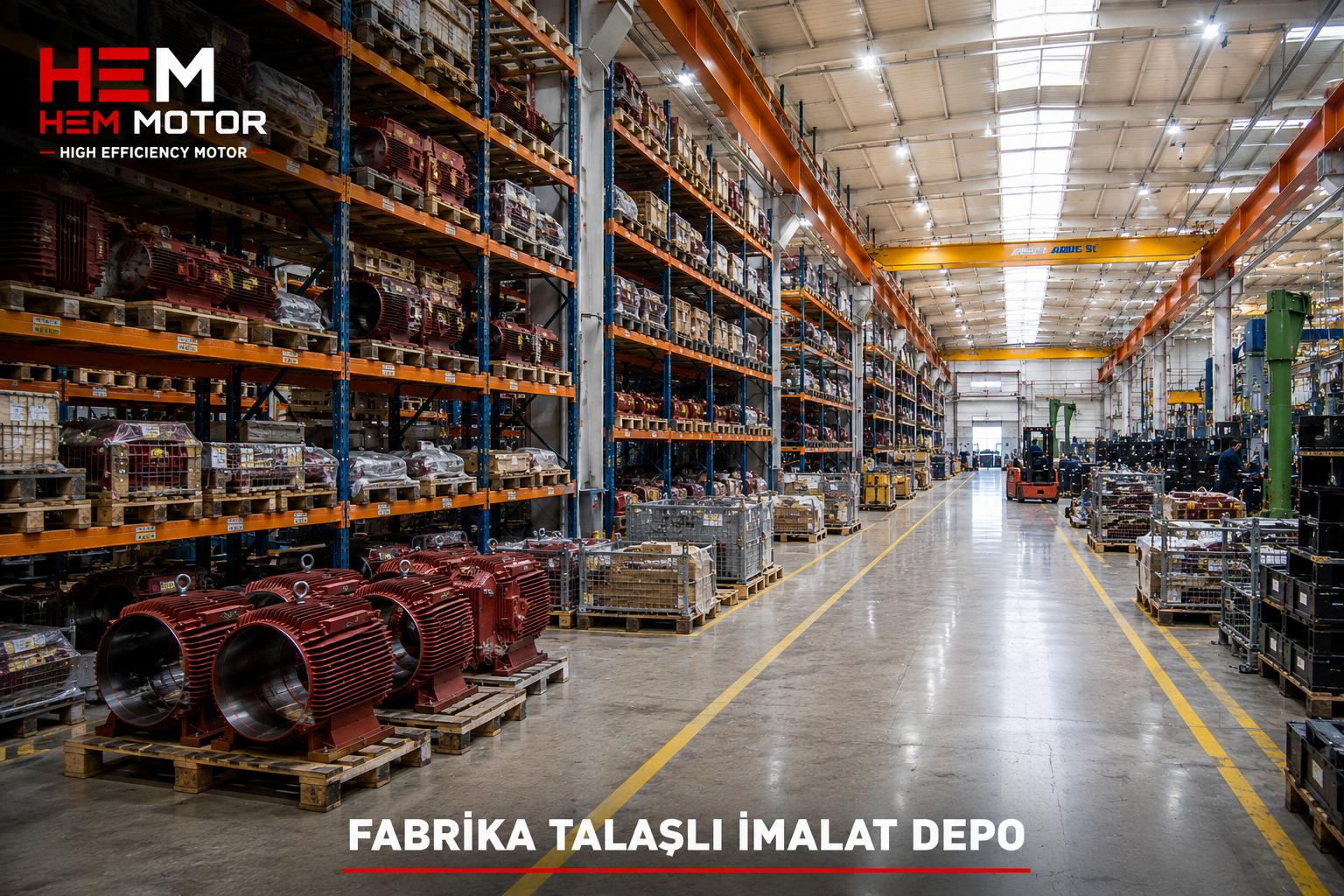

If your facility has an IE2 electric motor that has been running for years and appears to work without any problems, you may be paying the price of keeping it alive on your energy bill every single hour. The few-percentage-point gap between efficiency classes looks negligible on a motor that runs only briefly; but on a continuously operating pump, fan or compressor, that gap turns into a substantial energy loss that accumulates over the year. In this article we examine when the decision to retrofit from an IE2 motor to an IE3 motor becomes profitable, the logic behind the amortization (payback period) calculation, and why replacing an old motor is increasingly driven by both compliance and savings. As HEM Motor, with manufacturing experience built since 1979, we match your old motor to the correct IE3 or IE4 equivalent and supply it quickly from stock.
Efficiency Classes: The Difference Between IE2, IE3 and IE4
The energy efficiency of electric motors is defined by IE (International Efficiency) classes according to the international standard IEC 60034-30-1. The higher the number, the less electricity the motor consumes to produce the same mechanical power; in other words, losses decrease. It helps to distinguish these classes briefly:
- IE2 (High Efficiency): The standard level of the previous generation. Widely installed in the past, these motors are now lagging behind in energy terms.
- IE3 (Premium Efficiency): The current mandatory level, with increased copper content, higher-grade laminations and reduced losses. At the same power it produces noticeably fewer losses than IE2.
- IE4 (Super Premium Efficiency): The highest efficiency class. It minimizes total energy consumption especially at higher powers and longer running hours.
The critical point here is this: the difference between efficiency classes grows as running hours increase. A few percentage points of efficiency difference between two motors stays small in an application that runs a few hours a day; but on a pump that spins around the clock, it returns as a bill every single hour. For this reason, the choice of efficiency class depends more on the usage profile than on the motor power. For the technical details of the IE classes and the logic of choosing the right one, our article on the IE3 vs IE2 motor difference is a good starting point.
Regulatory Framework: Why Is Old IE2 Stock Being Phased Out?
Renewing IE2 motors is not only about energy savings; it is also a matter of compliance. The Ecodesign 2019/1781 regulation in force in Türkiye and the European Union legally defines the minimum efficiency classes of electric motors. The key milestones of this framework are as follows:
- Since July 2021: motors connected directly to the grid (DOL) in the 0.75 kW to 1000 kW range must be at least IE3 class. For small motors in the 0.12 kW to 0.75 kW range, a minimum of IE2 class is required.
- Since July 2023: 2-, 4- and 6-pole motors in the 75 kW to 200 kW range must be at least IE4 class.
- IE2 class DOL motors can no longer carry the CE mark and cannot enter the EU market as new products.
The practical consequence of this regulation is clear: IE2 direct-on-line motors are being withdrawn from the market for new installations. Therefore the old IE2 stock you hold is ageing both technically and legally. When the time comes to replace a motor, in most cases an IE3 or IE4 replacement is already mandatory. For the class-by-class details of the regulation, you can review our article on the IE3 and IE4 efficiency mandate regulation.
Payback (Amortization) Logic: Where Do the Savings Come From?
The main factors determining a motor's annual energy cost are: running hours, load factor and efficiency. The electrical power a motor draws is found by dividing the mechanical power it produces by its efficiency; that is, the lower the efficiency, the more electricity is drawn to do the same job. On a continuously running motor this extra consumption repeats every hour and reaches a large total by the end of the year.
The relationship between efficiency and consumption is proportional: a motor's annual energy consumption is roughly proportional to the expression (mechanical power × load factor × annual running hours) / efficiency. When you compare two motors of different efficiency, the savings amount is directly proportional to the difference (1/old efficiency) - (1/new efficiency). Because efficiency is expressed as a percentage, the few points gained by moving from IE2 to IE3 turn into a gain repeated in this formula for every operating hour.
The amortization (payback period) concept is then expressed by this simple relationship:
- Payback period = Additional investment ÷ Annual savings
Here, the additional investment is the extra cost of the new IE3 motor compared to the old one; the annual savings is the amount deducted from the bill each year thanks to the efficiency increase. As the annual savings grow, this fraction shrinks and the motor pays for itself faster. The variables that increase annual savings are clear: high kW power, long annual running hours and a low efficiency of the old motor.
The Variables That Enter the Calculation
When evaluating the payback period for your own facility, it is enough to determine the following variables; you can derive the numerical result from them:
- Motor power (kW): as power grows, the savings amount grows proportionally.
- Annual running hours: a motor running around the clock accumulates thousands of hours a year; with shift work this figure drops.
- Load factor: how heavily the motor is actually loaded relative to its rated power. Savings become pronounced on motors running near full load continuously.
- Old efficiency (%): the real efficiency of the existing motor, either from its nameplate or reduced due to rewinding.
- New efficiency (%): the efficiency of the IE3 or IE4 motor to be installed.
- Electricity unit price: the multiplier that converts the savings into monetary terms.
These six variables form the entire equation of the payback period. On a continuously running, large-kW motor the equation works in favour of fast amortization; on a small motor that rarely engages, the fraction grows and the renewal pays back over a longer period.
When Is Replacement Clearly Profitable?
In some cases the renewal decision is unhesitating because the equation works strongly in favour of savings. The typical conditions under which replacing an old motor is clearly profitable are:
- High running hours (continuous operation): motors spinning 16-24 hours a day for most of the year. The savings repeated every hour accumulate quickly.
- Pump, fan and compressor applications: these loads are usually continuous and steady; the efficiency difference turns directly and continuously into savings.
- Large kW power: as power increases, the same efficiency difference produces a much larger absolute saving and shortens the payback period.
- Old or rewound motors: motors whose windings have been renewed several times and whose efficiency has dropped already draw more energy than expected; renewing them is the fastest-amortizing scenario.
If you have a motor fitting these profiles, postponing renewal is a hidden cost paid every day. On continuous loads such as pumps and fans, switching to IE3 often pays for itself within a reasonable time, and every subsequent year remains a net gain.
When Does It Make Sense to Wait?
Replacing every motor immediately is not the right move. Under some conditions the payback period stretches out too far and it is wiser to let the existing motor finish its life:
- Low running hours: on motors running only a few hundred hours a year, the savings stay small.
- Small kW power: the absolute savings are limited on very low-power motors.
- A motor already near the end of its life: in this case the most sensible approach is to fit an IE3 motor when it fails. By turning the moment of failure into a renewal opportunity, you achieve compliance while avoiding an unnecessarily early investment.
Even when you decide to wait, planning a new IE3 motor instead of a rewind when failure comes is the healthiest strategy. This way, every motor change gradually raises the average efficiency of your facility.
Rewind or New Motor?
When an old motor fails, the first thing that comes to mind is rewinding, because at first glance it looks more economical. But there is a critical fact overlooked here: every rewinding operation lowers the motor's efficiency a little further. The heat treatment applied during winding disturbs the magnetic properties of the lamination stack; the new winding geometry is never exactly identical to the original. As a result, a rewound IE2 motor loses even more of its already-trailing efficiency, which reflects negatively on the energy bill.
Especially on small-frame motors, the cost of rewinding approaches the cost of a new IE3 motor; in this case a new motor is clearly more sensible because it offers both higher efficiency and a factory assurance. At higher powers rewinding can sometimes be a temporary solution, but given the efficiency loss and regulatory pressure, IE3 renewal is the long-term winner for most facilities. For a detailed comparison of this decision, our article on motor rewind vs new buy covers all the variables.
How Do You Determine the Efficiency of Your Existing Motor?
To make a payback calculation you first need to know the real efficiency of the existing motor. The most reliable way to do this is to read the motor nameplate (rating label). The nameplate carries the power (kW), the number of poles, the speed, and on most current motors the IE class and efficiency percentage. However, on old or rewound motors the nameplate value may not reflect the real efficiency; in that case field measurement is needed to verify it. For the steps of reading nameplate values correctly and confirming them in the field, our article on reading the motor nameplate efficiency value and IE code guides you step by step.
An IE3/IE4 Renewal Program With HEM Motor
The key to running a renewal program successfully is being able to quickly procure a fully compatible equivalent for the old motor. This is exactly where HEM Motor steps in:
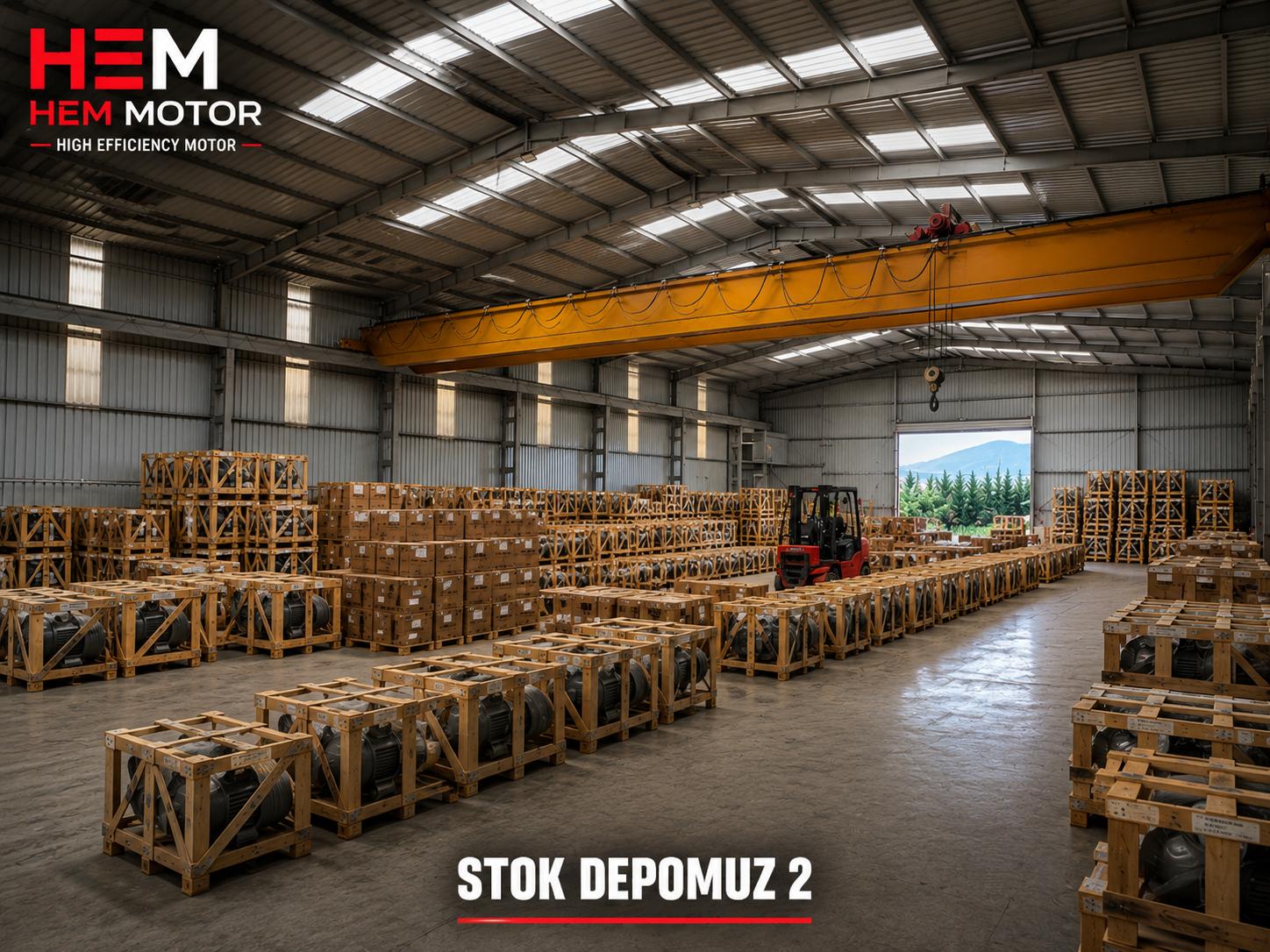
- IE3 and IE4 replacement motors from stock: we supply high-efficiency motors across a wide power range from stock, minimizing waiting time.
- Matching by nameplate: we determine the exactly compatible new motor based on the frame size, mounting type (foot/flange) and shaft dimension of your old motor, enabling a renewal that requires no mechanical modification.
- Manufacturer assurance: we provide single-source technical support and assurance on the motors we manufacture and supply.
- Fast delivery and supply: on retrofit programs where many motors are replaced in stages, we manage the process with planned shipments.
To inventory and prioritize the old IE2 motors at your facility, start with the ones that will amortize fastest, and request a quotation, you can get in touch with us. For current electric motor prices and suitable equivalent models, you can review our high-efficiency electric motors product group.
Frequently Asked Questions
Can an IE2 motor still be sold?
Under the Ecodesign 2019/1781 regulation, since July 2021 motors connected directly to the grid in the 0.75-1000 kW range must be at least IE3 class, and IE2 class DOL motors cannot carry the CE mark or enter the EU market as new products. Only on small motors in the 0.12-0.75 kW range is IE2 still accepted. For this reason, the supply of IE2 motors for new installations has largely closed.
In how many years does a motor pay for itself?
It is not possible to give a clear number of years because the result depends entirely on the variables: the payback period is found by dividing the additional investment by the annual savings. The annual savings are directly proportional to motor power, annual running hours, load factor and the difference between old and new efficiency. On continuously running, large-kW pumps and fans this period shortens noticeably, while on lightly used small motors it lengthens.
Is it better to rewind the old motor or buy a new one?
Every rewinding operation lowers the motor's efficiency a little further. On small-frame motors the rewinding cost approaches that of a new motor, so buying a new IE3 motor is more sensible in terms of both efficiency and assurance. At higher powers rewinding can be a temporary solution, but considering the efficiency loss and the regulations, IE3 renewal is the long-term winner in most cases.
How do I find the efficiency of my existing motor?
The first source is the motor's nameplate; it shows the power, the number of poles, the speed and, on most motors, the IE class and efficiency percentage. However, on old motors rewound more than once, the nameplate value may not reflect the real efficiency; in that case verification by field measurement is recommended. Our related guide explains the nameplate-reading and field-confirmation method step by step.